
What Should a Cargo UTV Suspension Supplier Provide?
Direct answer: a Cargo UTV suspension supplier should provide more than a heavier rear shock or stiffer spring. For a professional B2B project, the supplier should help connect the UTV's cargo duty, vehicle configuration, front/rear load distribution, existing suspension dimensions, spring requirement, damping behavior, operating terrain, prototype validation, product identification, and repeat-production controls.
The objective is to create a cargo-duty suspension specification that works under the intended load and can be reordered consistently—not simply to buy a component marketed as “heavy duty.”
Why Cargo UTV Suspension Is a Separate Procurement Category
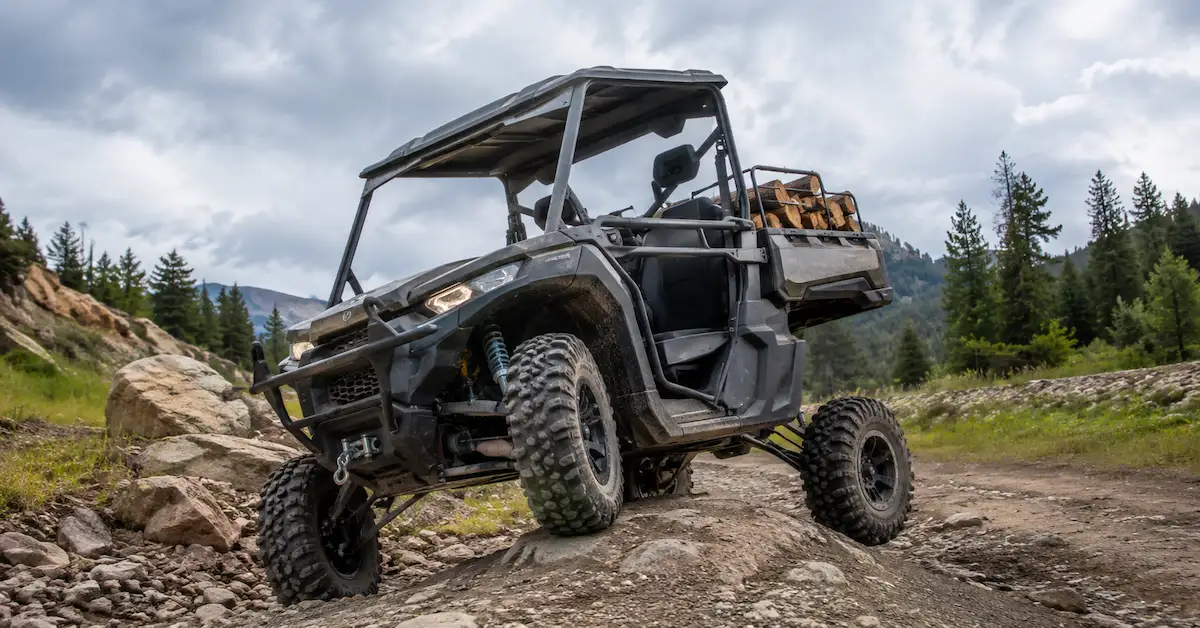
UTVs are used in many different ways. A recreational machine, hunting vehicle, farm UTV, construction utility vehicle, resort service cart, industrial transporter, and maintenance UTV may share a similar vehicle format but operate under different suspension demands.
Cargo-oriented UTVs are distinguished by the relationship between rear load and operating duty.
The cargo may include:
- Tools
- Agricultural supplies
- Feed
- Construction materials
- Maintenance equipment
- Spare parts
- Service boxes
- Outdoor equipment
- Industrial supplies
- Permanent work accessories
The important variable is not only how much weight is carried.
Procurement teams should also know:
- Where the cargo is located
- How often the vehicle is loaded
- How long it remains loaded
- Whether equipment is permanent or removable
- Whether passengers are carried simultaneously
- Whether the vehicle returns empty
- What terrain it operates on while loaded
BEDO already discusses the engineering side of these load questions in its UTV heavy-payload suspension guide. This sourcing guide focuses on the next commercial step: turning those vehicle requirements into a repeatable supplier program.
Start With a Cargo-Duty Application Matrix
Before contacting a Cargo UTV suspension supplier, build an application matrix.
This prevents one generic request from covering several vehicle configurations that should actually be evaluated separately.
| Application Field | What Buyer Should Record | Why It Matters |
|---|---|---|
| UTV platform | Exact model or project code | Defines vehicle architecture |
| Suspension position | Front / rear | Prevents component confusion |
| Base configuration | Vehicle plus permanent accessories | Defines true baseline load |
| Passenger condition | Typical and maximum occupants | Changes load distribution |
| Cargo condition | Typical and maximum intended cargo | Defines working suspension demand |
| Cargo location | Bed, rear platform, cabin, front rack | Determines axle influence |
| Permanent equipment | Service body, tools, tank, rack, winch | Changes baseline spring requirement |
| Operating terrain | Farm, construction, gravel, trail, industrial | Influences damping and durability |
| Current issue | Sag, bottoming, bounce, poor control | Defines engineering target |
| Order model | OEM, aftermarket, fleet, private label | Defines commercial deliverables |
This matrix is particularly important when a distributor wants one “cargo UTV suspension” SKU to cover several vehicle variants.
Different UTVs may require different:
- Shock lengths
- Mounting widths
- Mounting-hole diameters
- Stroke
- Spring specifications
- Damping settings
- Front/rear configurations
A supplier should verify equivalence before applications are merged under one SKU.
Separate Cargo UTVs by Duty Pattern Before Quotation
A useful cargo-duty classification does not need arbitrary weight thresholds.
Instead, divide vehicles by how the load behaves.
Variable Cargo UTV
The vehicle may carry substantial cargo during part of the day and little or none during another part.
This creates a wide operating range.
The suspension needs to avoid excessive loaded sag without becoming unnecessarily harsh when the bed is empty.
Permanent-Equipment UTV
The vehicle carries a service body, tank, toolbox, mounted machinery, battery system, or other equipment at all times.
This changes the baseline suspension condition.
For these vehicles, the permanent equipment should be included in the base operating weight before spring selection begins.
Passenger-plus-Cargo UTV
The UTV routinely carries both occupants and rear cargo.
Passenger location and cargo-bed position can influence different suspension areas.
Buyers should therefore separate:
- Driver-only condition
- Normal passenger condition
- Normal cargo condition
- Passenger + cargo condition
- Maximum intended operating condition
Rough-Duty Cargo UTV
This vehicle combines meaningful cargo with repeated rough-road or off-road operation.
The sourcing requirement is no longer only load support.
It may also require stronger focus on:
- Remaining shock travel
- Compression control
- Rebound recovery
- Heat management
- Durability
- Environmental protection
Rear Suspension Is Usually the First Cargo Question—but Not the Only One
Cargo beds are typically located toward the rear of a UTV, so the rear suspension often experiences the largest change.
This makes rear shock absorbers and rear springs a logical starting point.
BEDO's custom UTV rear shocks guide explains how rear shocks can be developed around load, geometry, dimensions, spring requirements, and damping targets.
However, a Cargo UTV suspension supplier should still review the complete vehicle.
Front Load Can Change Too
Front suspension may be affected by:
- Winches
- Heavy bumpers
- Front protection systems
- Front racks
- Operator/passenger load
- Mounted equipment
If the cargo project includes significant front additions, a rear-only suspension package may not address the complete vehicle.
Trailer Tongue Load Can Increase Rear Demand
If a UTV is used with a trailer, buyers should distinguish cargo carried in the bed from load transferred through the hitch.
The suspension supplier should not be asked to infer this condition from total vehicle weight alone.
Supplier briefing rule: describe where the load enters the vehicle. “UTV carries 200 kg” is weaker information than “rear bed carries the working load while two occupants remain in the cabin.”
Decide What You Are Actually Buying From the Supplier
The phrase “cargo UTV suspension” can refer to several commercial scopes.
| Supply Scope | Best Fit | Main Buyer Question |
|---|---|---|
| Rear shock absorbers only | Existing spring and geometry remain suitable | Does damping solve the target problem? |
| Rear springs only | Load support is the main issue | Will current damping remain appropriate? |
| Rear shock + spring package | Spring and damping require matching | Is the package validated under cargo? |
| Front + rear package | Vehicle load changes at both ends | Is vehicle balance maintained? |
| Custom suspension development | New platform or unusual cargo duty | Can the supplier engineer and validate it? |
| Aftermarket private-label program | Distributor or brand launch | Can engineering and commercial data be controlled? |
This scope should be agreed before price comparison begins.
Otherwise one Cargo UTV suspension supplier may quote a complete coilover assembly while another quotes only the damper, creating a misleading unit-price comparison.
What Should a Cargo UTV Rear Shock Specification Include?
A rear shock quotation should be tied to physical fitment and vehicle duty.
Relevant fields may include:
- Extended length
- Compressed length
- Effective stroke
- Upper mounting-hole diameter
- Lower mounting-hole diameter
- Upper mounting width
- Lower mounting width
- Bushing or sleeve arrangement
- Body diameter
- Spring configuration
- Adjustment architecture where applicable
- Reservoir configuration where applicable
Do Not Use “Total Length” as an Undefined Measurement
If an existing product page or supplier document uses “total length,” confirm exactly where the measurement starts and ends before treating it as a mounting-center dimension.
A controlled drawing should define the measurement reference.
Stroke Alone Does Not Prove Compatibility
Two shocks can share the same effective stroke and still differ in:
- Total length
- Compressed length
- Mounting width
- Mounting-hole diameter
- Body diameter
- Spring specification
- Damping behavior
For procurement teams, this is why a catalog comparison should never replace fitment validation.
Buyers can review the current BEDO shock absorber category as a commercial reference before discussing a vehicle-specific project.
The Spring Should Be Matched to the Cargo Duty, Not the Marketing Name
“Cargo spring” and “heavy-duty spring” are useful product descriptions, but neither defines the actual engineering requirement.
The spring should be evaluated against:
- Base vehicle weight
- Permanent equipment
- Passenger load
- Typical cargo
- Maximum intended operating load
- Suspension geometry
- Desired ride height
- Sag
- Available shock travel
- Unloaded return condition
Why Empty-Bed Behavior Matters
A cargo UTV can spend a significant portion of its operating cycle with the bed empty.
If the spring is selected only for the highest cargo condition, the vehicle may become excessively stiff during light-load operation.
The goal is not simply maximum spring rate.
The goal is a useful operating range.
Ask for Complete Spring Data
When the project reaches engineering approval, request clear spring information rather than a vague “stronger spring” description.
Project documentation may need:
- Defined spring-rate unit
- Free length
- Outer diameter
- Wire diameter where relevant
- Installed condition
- Surface finish
- Product identification
BEDO's Suspension Springs category provides the commercial destination for buyers discussing spring development.
Spring and Damping Should Be Quoted as a Matched Decision
The spring supports the cargo load. The damper controls how that loaded suspension moves.
If spring rate changes substantially, damping should be reviewed.
Compression Damping Questions
A Cargo UTV suspension supplier should understand:
- How much compression travel remains under normal cargo
- Whether bottoming occurs
- How rough the operating surface is
- How quickly the vehicle travels
- How often the suspension cycles
More compression damping is not automatically better.
The correct target should allow suspension movement while controlling excessive compression speed.
Rebound Damping Questions
After compression, the spring releases energy and the suspension extends.
If rebound damping is too low, the rear of the vehicle may feel bouncy or unsettled.
If rebound is too high, the suspension may recover too slowly between repeated bumps.
This is why a Cargo UTV shock supplier should be given real vehicle feedback rather than only a requested force number.
Useful Buyer Feedback
- Rear suspension loses too much ride height under normal cargo.
- Vehicle bottoms on rough work roads.
- Rear end rebounds several times after large bumps.
- Vehicle works loaded but becomes very harsh when empty.
- Shock response changes during long loaded operation.
Supplier Selection Should Be Evidence-Based, Not Catalog-Based
There are many ways to describe a suspension supplier online.
For cargo UTV projects, the useful evidence is whether the supplier can convert the application into a controlled product.
Engineering Evidence
Can the supplier review:
- Vehicle application
- Cargo duty
- Front/rear load information
- Existing shock
- Suspension geometry
- Drawings
- CAD
- Spring data
- Damping feedback
Prototype Evidence
Can the supplier support:
- Development samples
- Fitment verification
- Loaded vehicle validation
- Engineering revisions
- Pilot batches
Production Evidence
Can the supplier identify and control:
- Drawing revision
- Spring revision
- Damping configuration
- Mounting interfaces
- Inspection criteria
- Approved samples
- Product labels
- Repeat orders
BEDO's public About Us page states that Ningbo Bedo Auto Parts Co., Ltd. focuses on shock absorbers and springs, supports customized solutions and design support, and supports small-batch ordering.
Prototype Approval Should Include Loaded and Empty Conditions
A cargo UTV prototype should not be approved after one unloaded installation test.
At minimum, validation should reflect the intended operating states.
| Test Condition | What to Check |
|---|---|
| Base vehicle | Fitment, ride height, clearance |
| Typical passenger condition | Front/rear balance |
| Typical cargo | Sag, remaining travel, damping |
| Passenger + cargo | Vehicle balance and rear support |
| Maximum intended project condition | Travel reserve and component clearance |
| Empty return | Ride compliance and rebound behavior |
| Representative terrain | Dynamic suspension response |
These conditions should be based on the actual project.
Do not copy universal load numbers, sag targets, or test cycles from another UTV without confirming that they apply.
Fitment Approval Should Check the Full Suspension Movement
A shock can bolt onto the vehicle and still be wrong.
At Ride Height
Check:
- Shock angle
- Spring position
- Body clearance
- Reservoir clearance
- Loaded static position
- Adjustment access
At Compression
Check:
- Remaining clearance
- Shock compressed length
- Tire interference
- Spring interference
- Chassis interference
- Bump-stop relationship
At Extension
Check:
- Shock extended length
- Mount alignment
- Spring seating
- Droop
- Joint movement
For a new platform, BEDO's UTV suspension design service guide provides supporting context for using geometry and prototype validation rather than selecting shocks only by catalog size.
Do Not Let a Successful Prototype Become an Uncontrolled Production SKU
One good prototype proves that one sample worked.
It does not prove that the supplier can reproduce the same cargo-duty suspension for repeated orders.
Before pilot production, define what makes the approved product the approved product.
| Controlled Item | Purpose |
|---|---|
| Product code | Commercial identification |
| Drawing revision | Controls geometry |
| Spring code/specification | Controls cargo support |
| Damping configuration | Controls shock behavior |
| Mounting specification | Controls fitment |
| Surface specification | Controls finish |
| Approved prototype | Physical reference |
| Inspection criteria | Defines production acceptance |
| Packaging specification | Controls commercial delivery |
This is particularly important for private-label brands and distributors managing more than one cargo UTV application.
Build the SKU Architecture Around Verified Cargo Applications
A distributor may want to reduce inventory by using one shock for several UTV models.
That can be efficient only when the relevant applications are actually equivalent.
A Shared SKU Needs More Than Similar Appearance
Before consolidating applications, compare:
- Front/rear position
- Extended length
- Compressed length
- Stroke
- Mounting dimensions
- Spring requirement
- Damping requirement
- Cargo-duty range
- Suspension geometry
- Clearance
If these differ materially, keep separate SKUs until validation supports consolidation.
A Cargo SKU Should Have a Clear Application Boundary
Useful product data can identify:
- Vehicle platform
- Suspension position
- Standard or cargo-duty application
- Relevant configuration limitations
- Commercial quantity
- Product code
Avoid broad labels such as:
“Universal heavy-duty UTV shock.”
Unless universal compatibility has actually been established, that claim creates unnecessary return risk.
Private-Label Cargo UTV Suspension Needs Technical and Commercial Control
A private-label product has two specifications.
Technical Specification
This covers:
- Fitment
- Shock dimensions
- Spring
- Damping
- Mounting interfaces
- Surface treatment
- Validation
Commercial Specification
This covers:
- Branding
- Product code
- Color
- Label
- Packaging
- Application information
- Carton identification
These records should remain connected.
A technically correct cargo shock packed in the wrong application carton can still create a field return.
BEDO's custom suspension solutions guide explains the distinction between deeper engineering customization and commercial changes such as color, branding, and packaging.
Quality Control for a Cargo UTV Suspension Supplier
Quality control should focus on the characteristics that define the approved application.
Incoming Components
Depending on product architecture, the manufacturer may need to control:
- Springs
- Seals
- Machined components
- Tubes
- Mounting components
- Bushings
- Surface-treated parts
Dimensional Inspection
Fitment-critical dimensions may include:
- Length
- Stroke
- Mounting-hole diameter
- Mounting width
- Body dimensions
- Spring dimensions
Assembly Control
For hydraulic shocks, relevant controls can include:
- Component cleanliness
- Seal installation
- Assembly accuracy
- Oil filling
- Gas charging where applicable
- Fastening
- Adjustment assembly
Functional Inspection
Depending on the project, final checks may address:
- Leakage
- Movement
- Adjustment function
- Damping behavior
- Appearance
- Product identification
BEDO's shock absorber testing guide provides additional context for dimensional checks, damping verification, leakage, load evaluation, durability, and vehicle validation before mass production.
Pilot Batches Are Particularly Useful for Cargo UTV Projects
A cargo suspension project often contains more variables than a standard replacement project.
There may be:
- Multiple cargo states
- Different drivers
- Different terrain
- Different vehicles within one fleet
- Permanent accessories
- Private-label packaging
A pilot batch allows the buyer to evaluate whether the approved prototype can be reproduced under manufacturing conditions.
What to Check During the Pilot Batch
- Dimensional consistency
- Spring identification
- Damping consistency
- Mounting accuracy
- Surface condition
- Packaging accuracy
- Vehicle installation
- Repeat loaded behavior
BEDO's public company information states that it supports small-batch ordering, which can be relevant for prototype and early-stage cargo UTV projects. The exact quantity and lead time should still be confirmed for the actual specification.
How to Compare Cargo UTV Suspension Supplier Quotations
Supplier quotations should be normalized before purchasing decisions are made.
| Comparison Point | Question |
|---|---|
| Vehicle application | Are both quotations for the same UTV? |
| Cargo duty | Are both based on the same working condition? |
| Supply scope | Shock only, spring only, or complete assembly? |
| Spring | Is the same spring requirement included? |
| Damping | Are both quoting equivalent damping architecture? |
| Prototype | Is development work included? |
| Testing | What validation is included? |
| Pilot batch | Is production verification included? |
| Branding | Are logo/color requirements included? |
| Packaging | Bulk or private-label retail packaging? |
A cheaper quotation may simply contain less engineering, testing, packaging, or commercial scope.
The useful comparison is:
Same Cargo Duty + Same Technical Scope + Same Validation Scope + Same Commercial Scope = Meaningful Price Comparison
Total Sourcing Cost Is More Than the Shock Price
For cargo UTV fleets and aftermarket brands, the real cost can include:
- Unit price
- Prototype cost
- Engineering revisions
- Testing
- Packaging
- Freight
- Installation labor
- Incorrect-fitment returns
- Warranty investigation
- Inventory
- Slow-moving SKU cost
- Rework
A supplier offering a lower component price can become the more expensive choice if the cargo-duty application is not correctly defined.
Field Returns Should Feed Back Into Supplier Development
If a cargo UTV suspension product returns from the field, record more than:
“Shock failed.”
Useful return data includes:
- Vehicle model
- Product code
- Production batch
- Suspension position
- Typical cargo
- Maximum cargo if known
- Cargo position
- Terrain
- Operating duration
- Leakage
- Spring condition
- Mounting damage
- Rod condition
- Observed vehicle behavior
This makes it easier to determine whether the problem is:
- Product defect
- Wrong application
- Overload
- Fitment issue
- Installation issue
- Spring mismatch
- Damping mismatch
- Unexpected duty cycle
A development-oriented Cargo UTV suspension supplier should be able to use field information to improve future revisions when evidence supports a change.
What Should Be in a Cargo UTV Suspension RFQ?
Vehicle Information
- UTV manufacturer/model or project code
- Front/rear application
- Stock or modified configuration
- Base operating weight
- Wheel and tire configuration
Cargo Information
- Typical cargo weight
- Maximum intended cargo
- Cargo position
- Permanent equipment
- Passenger condition
- Front/rear load if available
- Trailer tongue load if relevant
Existing Suspension
- Existing shock sample
- Extended length
- Compressed length
- Stroke
- Mounting dimensions
- Existing spring information
- Sag measurements
- Current damping data where available
Operating Requirement
- Farm, construction, industrial or trail use
- Typical vehicle speed
- Loaded/unloaded operating pattern
- Current suspension problem
- Target improvement
Commercial Requirement
- Prototype quantity
- Pilot quantity
- Expected production volume
- Private-label requirements
- Color/logo
- Packaging
- Target market
- Launch plan
If spring rate or damping targets are unknown, mark them as:
Engineering proposal required.
Do not insert unsupported numbers simply to make the RFQ appear complete.
How BEDO Supports Cargo UTV Suspension Projects
Ningbo Bedo Auto Parts Co., Ltd. publicly states that it focuses on shock absorbers and springs and supports customized solutions, professional design support, quality-control systems, R&D, and small-batch ordering.
For a cargo UTV project, buyers can start from several different levels.
Existing Suspension Reference
If the UTV already uses an existing shock, send:
- Physical sample
- Current dimensions
- Spring information
- Vehicle load
- Current problem
Drawing-Based Project
If technical drawings already exist, the supplier can review fitment and product requirements against the cargo-duty information.
CAD-Based OEM Project
For a new platform, chassis hard points and suspension movement can be reviewed before prototype production.
Private-Label Cargo Suspension
After technical approval, the buyer can discuss commercial requirements such as product identification, colors, logo and packaging.
Commercial entry points include the BEDO Products page, Shock Absorber category, and Suspension Springs category.
Need a Cargo UTV Suspension Supplier for an OEM or Aftermarket Project?
Send BEDO your UTV platform, typical and maximum cargo, load location, passenger condition, existing shocks or drawings, sag data, terrain, prototype needs, and production forecast.
FAQ: Cargo UTV Suspension Supplier
What should I look for in a Cargo UTV suspension supplier?
Look for a supplier that can review vehicle and cargo data, confirm fitment, evaluate spring and damping requirements, support prototypes, validate loaded and unloaded conditions, control production revisions, and provide repeatable supply.
Is cargo UTV suspension different from standard UTV suspension?
It can be. Cargo duty may change rear load, sag, available shock travel, spring requirement, rebound behavior, and suspension balance. The actual difference depends on cargo mass, cargo position, vehicle geometry and operating pattern.
Should cargo UTVs always use stiffer springs?
No. A higher spring rate may be appropriate when normal cargo creates excessive sag or insufficient remaining travel, but the correct spring should be developed around the operating range rather than selected simply because it is stiffer.
Do cargo UTV rear shocks need different damping?
They may. If load and spring characteristics change significantly, compression and rebound damping should be evaluated under the actual cargo condition.
Should I replace only the rear suspension?
Not automatically. Rear suspension is often most affected by cargo-bed loads, but front suspension should also be reviewed if the vehicle has front accessories, passengers, equipment, or other weight changes.
Can one cargo UTV shock fit several vehicle models?
Only after fitment and functional requirements are verified. Similar length or mounting appearance does not establish interchangeability.
What should a cargo UTV suspension prototype be tested with?
Validate the base vehicle, typical cargo, passenger-plus-cargo condition, maximum intended project condition, unloaded return condition, and representative terrain as relevant to the project.
Does cargo suspension increase a UTV's payload rating?
No. Suspension changes do not automatically increase the vehicle manufacturer's payload, GVWR, towing, tire, brake, frame, axle or other system limits.
What information should I send for a Cargo UTV suspension quotation?
Send the UTV model, front/rear application, vehicle weight, passenger load, typical and maximum cargo, cargo position, permanent equipment, current shock dimensions, spring information, sag, terrain, current problem, prototype quantity and production plan.
Can a Cargo UTV suspension supplier work from an existing sample?
Yes. A sample can provide a useful dimensional and structural reference, but the buyer should also provide cargo-duty information because a sample alone does not define the required spring and damping behavior.
Why use a pilot batch before volume production?
A pilot batch helps verify that the approved prototype can be reproduced consistently in production, including dimensions, spring specification, damping configuration, mounting interfaces, labeling and packaging.
Can BEDO support custom Cargo UTV suspension projects?
BEDO's public website states that it manufactures shock absorbers and springs and supports customized solutions, design support and small-batch ordering. Cargo UTV requirements should be reviewed using the actual vehicle, cargo duty, suspension specification and production plan.
Conclusion
A reliable Cargo UTV suspension supplier should help turn cargo duty into a controlled suspension product—not simply supply a stiffer rear shock. Define the vehicle, cargo position, passenger condition, existing fitment, spring and damping needs, prototype acceptance, SKU identity and production controls before comparing quotations.
For a Cargo UTV suspension project, review BEDO's shock absorber range and suspension springs, then send your cargo-duty data, existing sample or drawing, prototype requirement and production forecast through the BEDO Contact Us page.