
How to Choose the Right OEM Shock Absorber for Vehicle Projects
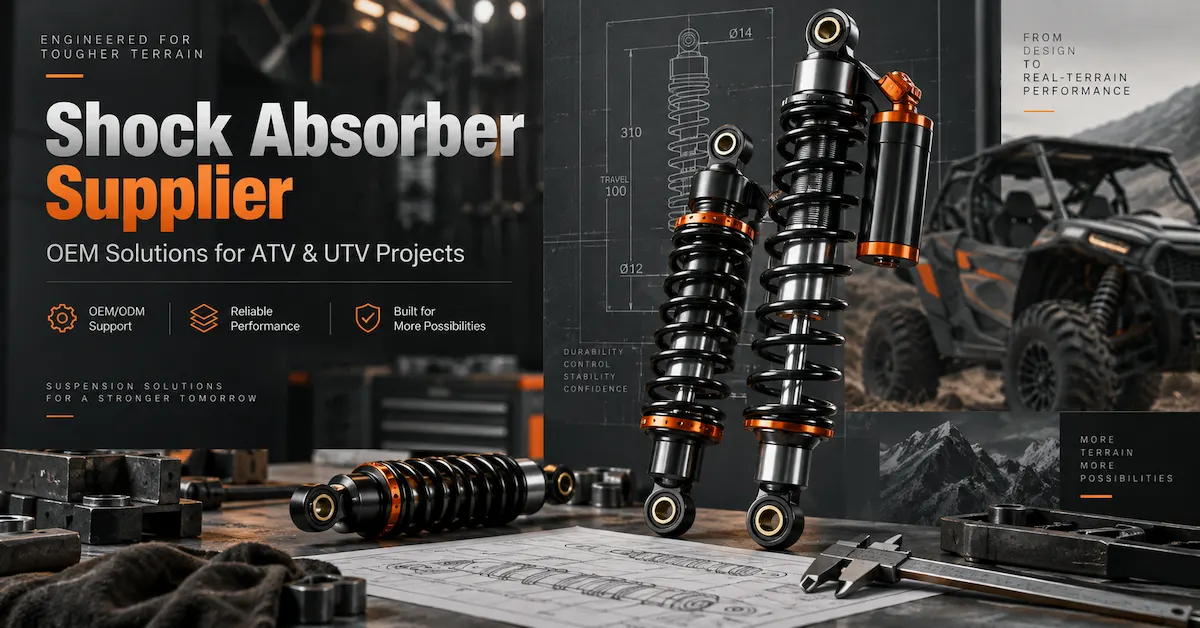
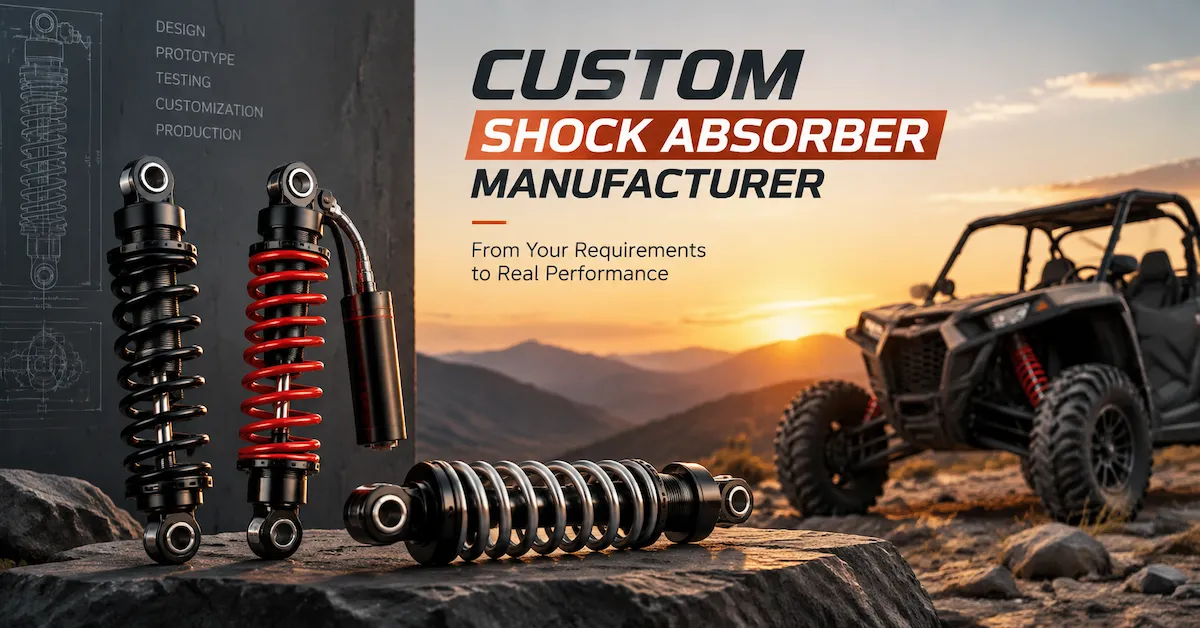
An OEM Shock Absorber is more than a suspension replacement component. For ATV, UTV, off-road vehicles, and specialty vehicle projects, an OEM shock absorber should be developed according to the vehicle application, load conditions, suspension geometry, performance requirements, and production goals.
OEM buyers usually need more than a product supplier. They need a manufacturing partner that can support:
- technical requirement analysis;
- suspension engineering;
- prototype development;
- testing validation;
- production preparation;
- long-term supply.
The right OEM shock absorber solution should connect vehicle requirements with manufacturing capability.
A complete development process usually includes:
Requirement Analysis → Engineering Review → Prototype → Testing → Approval → Production
BEDO supports customized suspension solutions for ATV and off-road applications. Buyers can review the available shock absorber products to understand different suspension configurations.
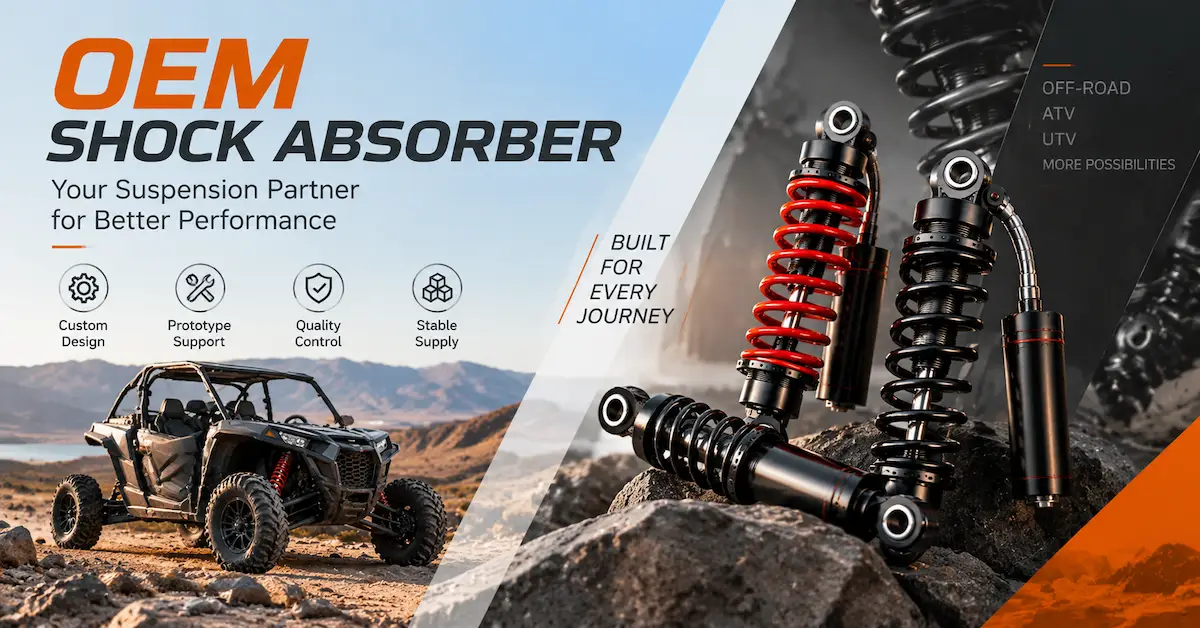
What Is an OEM Shock Absorber?
An OEM shock absorber is a suspension component developed for a specific vehicle manufacturer, brand, or application requirement.
Compared with general replacement products, OEM shock absorbers usually require closer cooperation between:
- vehicle requirements;
- engineering specifications;
- manufacturing processes;
- quality standards.
An OEM project may involve:
- original vehicle production;
- private-label aftermarket products;
- upgraded suspension systems;
- specialty vehicle applications.
The objective is not simply producing a shock absorber that fits.
The objective is creating a suspension component that performs correctly in the intended vehicle environment.
Why OEM Shock Absorber Projects Require Engineering Support
Suspension performance depends on multiple factors.
A shock absorber must work together with:
- spring rate;
- vehicle weight;
- suspension geometry;
- tire configuration;
- terrain conditions;
- intended usage.
A supplier should evaluate:
- mounting position;
- shock dimensions;
- stroke;
- load requirements;
- damping targets;
- manufacturing feasibility.
A dimensionally correct shock absorber may still provide unsuitable performance if the engineering requirements are not properly evaluated.
BEDO’s custom shock absorber development process explains how suspension projects begin with application information, drawings, samples, and performance requirements.
What Should OEM Buyers Evaluate in a Shock Absorber Supplier?
Selecting an OEM supplier requires evaluating more than product price.
Important factors include:
| Evaluation Area | Buyer Consideration |
|---|---|
| Engineering | Can the supplier support development? |
| Customization | Can specifications be modified? |
| Prototype | Can samples be developed? |
| Testing | Can performance be validated? |
| Production | Can quality remain consistent? |
| Communication | Can technical changes be managed? |
| Quality Control | Are processes defined? |
A strong OEM partner should support the entire product lifecycle.
OEM Shock Absorber Customization Capability
OEM projects often require customization beyond standard products.
Common customization areas include:
Dimensions
Including:
- extended length;
- compressed length;
- stroke;
- body size;
- mounting interfaces.
Spring Configuration
Including:
- spring rate;
- preload;
- load support;
- ride height.
Damping Performance
Including:
- compression damping;
- rebound damping;
- adjustment options.
Appearance and Branding
Including:
- finish;
- logo;
- packaging;
- product identification.
BEDO’s shock absorber customization guide explains different levels of customization from appearance changes to engineering modifications.
Spring Selection in OEM Shock Absorber Development
The spring is a critical part of OEM suspension performance.
A suitable spring specification depends on:
- vehicle weight;
- rider/passenger load;
- cargo requirements;
- accessories;
- terrain;
- suspension design.
An unsuitable spring can affect:
- ride height;
- suspension travel;
- vehicle stability;
- comfort.
A professional OEM supplier should evaluate spring requirements together with shock absorber design.
BEDO’s custom spring rate guide explains why spring selection should match actual application conditions.
Damping Development for OEM Suspension Systems
Damping determines how the suspension controls movement.
Compression Damping
Controls resistance during compression.
Rebound Damping
Controls suspension recovery after compression.
OEM projects may require damping development because vehicles can have different:
- loads;
- speeds;
- terrain;
- performance targets.
BEDO’s compression and rebound damping customization guide explains why damping should be developed according to vehicle requirements.
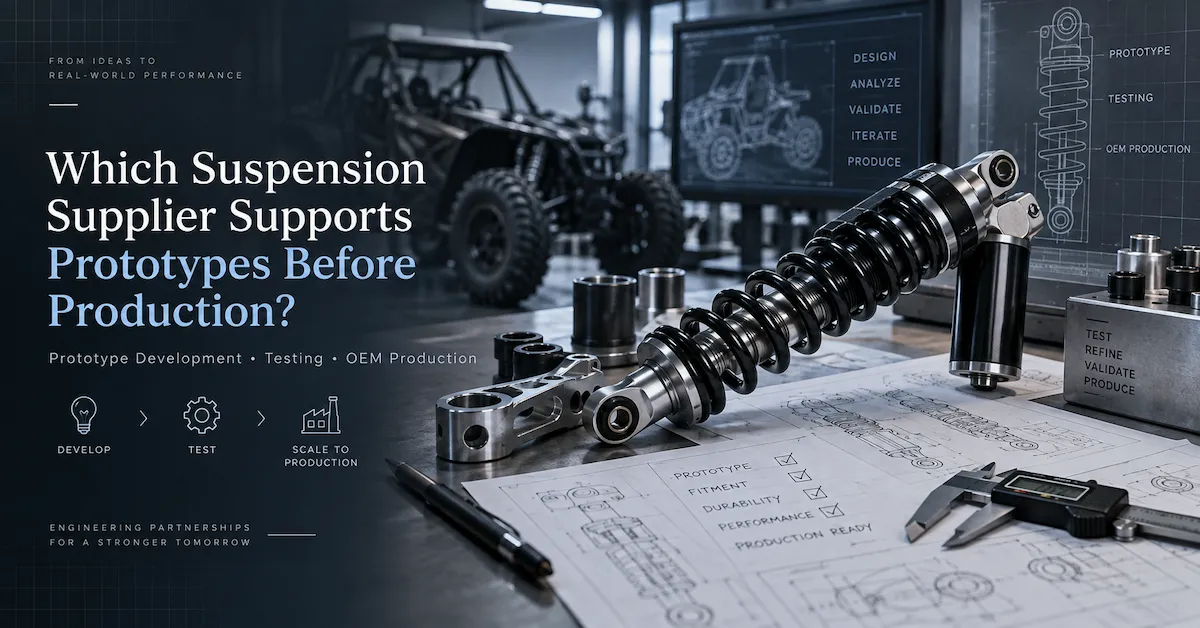
Prototype Development Before OEM Production
A reliable OEM supplier should support prototype development before mass production.
Prototype validation helps confirm:
- installation compatibility;
- suspension movement;
- spring performance;
- damping behavior;
- manufacturing feasibility.
A typical OEM prototype process includes:
Engineering Review
Review:
- drawings;
- CAD files;
- samples;
- technical requirements.
Prototype Manufacturing
Produce initial development samples.
Testing
Verify:
- dimensions;
- fitment;
- performance;
- quality requirements.
Approval
Confirm the final production specification.
BEDO’s shock absorber prototype development guide explains why prototype validation reduces production risks.
Testing Requirements for OEM Shock Absorbers
Testing is an important part of OEM development.
Possible validation areas include:
- dimensional inspection;
- leakage testing;
- damping evaluation;
- spring inspection;
- prototype testing;
- production inspection.
BEDO’s shock absorber testing guide provides additional information about suspension validation.
Before production approval, buyers should confirm:
- what tests are included;
- what acceptance criteria apply;
- how issues are corrected;
- how production consistency is maintained.
OEM Shock Absorber Production Control
A successful prototype does not automatically guarantee stable production.
OEM buyers should evaluate whether the supplier controls:
- materials;
- components;
- assembly procedures;
- inspection processes;
- approved specifications;
- engineering changes.
The production goal is:
Approved Prototype → Controlled Manufacturing → Consistent Products
A supplier should be able to reproduce the approved OEM shock absorber configuration for future orders.
How OEM Shock Absorber Suppliers Support Different Applications
Different vehicles require different suspension priorities.
| Application | Main Requirement |
|---|---|
| Recreational ATV | Comfort and control |
| Utility ATV | Load support and durability |
| Performance ATV | Suspension response |
| Utility UTV | Cargo capability |
| Off-road UTV | Impact control |
| Specialty Vehicle | Application-specific tuning |
A supplier with experience across different applications can provide more suitable engineering recommendations.
OEM Shock Absorber vs Standard Shock Absorber
Not every project requires a completely new OEM design.
A standard shock absorber may be suitable when:
- dimensions match;
- vehicle conditions are unchanged;
- existing performance is acceptable.
OEM development is more suitable when:
- vehicle platforms are new;
- performance requirements change;
- mounting designs change;
- load conditions are different.
BEDO’s standard shock vs custom suspension guide explains how buyers can decide between existing platforms and custom development.
OEM Shock Absorber RFQ Information Buyers Should Prepare
A complete RFQ helps suppliers provide accurate solutions.
Provide:
| Information | Purpose |
|---|---|
| Vehicle model | Defines application |
| Suspension position | Defines product location |
| Existing shock | Provides reference |
| Drawings/CAD | Defines geometry |
| Vehicle weight | Supports design |
| Rider/cargo load | Defines operating conditions |
| Terrain | Defines performance target |
| Spring requirements | Supports tuning |
| Damping requirements | Defines adjustment |
| Prototype quantity | Defines development scope |
| Production forecast | Supports planning |
BEDO’s OEM suspension RFQ guide explains what information buyers should prepare before requesting quotations.
MOQ and Lead Time for OEM Shock Absorber Projects
OEM projects often include multiple stages:
- engineering review;
- prototype;
- testing;
- revision;
- production.
Buyers should separate:
- sample quantity;
- pilot production;
- mass production MOQ;
- repeat order quantity.
BEDO’s custom shock absorber MOQ guide explains why MOQ depends on configuration, customization, and production requirements.
Development time may depend on:
- engineering complexity;
- prototype requirements;
- testing scope;
- revision cycles.
BEDO’s custom shock development lead time guide provides related planning information.
Common Mistakes When Selecting an OEM Shock Absorber Supplier
Choosing Only Based on Price
A lower price may exclude engineering, testing, or development support.
Ignoring Vehicle Application
Suspension must match the actual operating environment.
Skipping Prototype Validation
Production without validation increases risk.
Not Defining Performance Targets
Clear requirements help suppliers develop suitable solutions.
Ignoring Production Consistency
A good sample does not guarantee stable long-term supply.
How to Reduce OEM Suspension Development Risk
OEM buyers can reduce risk by:
Provide Complete Technical Information
Share:
- drawings;
- samples;
- vehicle data;
- performance requirements.
Validate Prototypes
Confirm:
- fitment;
- suspension behavior;
- quality.
Control Approved Specifications
Maintain:
- drawings;
- samples;
- testing records;
- revisions.
Choose a Long-Term Partner
A reliable OEM supplier should support:
- future models;
- product updates;
- repeat production.
Frequently Asked Questions
1. What Is an OEM Shock Absorber?
An OEM shock absorber is a suspension component developed for a specific vehicle application, manufacturer, or brand requirement.
2. How Do I Choose an OEM Shock Absorber Supplier?
Evaluate engineering capability, customization support, prototype experience, testing ability, quality control, and production reliability.
3. Can OEM Shock Absorbers Be Customized?
Yes. Customization may include dimensions, springs, damping, mounting structures, and branding.
4. Why Are Prototypes Important for OEM Shock Absorbers?
Prototypes help verify design, fitment, performance, and manufacturing feasibility before production.
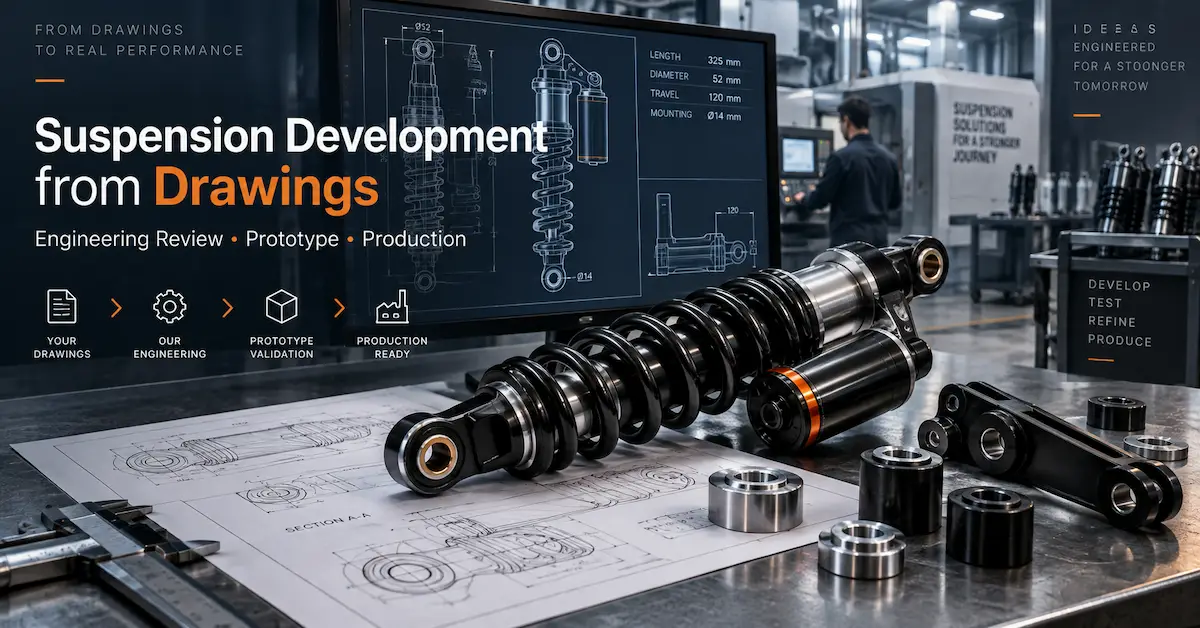
5. Can Shock Absorber Suppliers Develop Products From Drawings?
Yes. Many OEM projects begin with drawings, CAD files, or existing samples.
6. Can Spring Rates Be Customized?
Yes. Spring rates can be developed according to vehicle loads and suspension requirements.
7. Can Compression and Rebound Damping Be Customized?
Yes. Damping can be adjusted and validated according to application needs.
8. What Information Should Buyers Provide Before Requesting a Quote?
Provide vehicle details, drawings, samples, load conditions, performance goals, and expected quantities.
9. How Long Does OEM Shock Development Take?
Development time depends on customization scope, prototype requirements, testing, and revision cycles.
10. How Can I Start an OEM Shock Absorber Project With BEDO?
Prepare your vehicle information, technical requirements, drawings, samples, and production plans, then contact BEDO through Contact Us.
Conclusion
Choosing the right OEM Shock Absorber supplier requires evaluating more than manufacturing capability. A reliable OEM partner should provide engineering support, customization ability, prototype development, testing validation, quality control, and stable production management. For ATV, UTV, and off-road vehicle projects, the right supplier can transform vehicle requirements into reliable suspension solutions through professional development and manufacturing processes. BEDO supports OEM shock absorber and suspension development based on customer requirements, drawings, samples, and application conditions. To discuss your project, contact BEDO with your vehicle information, technical requirements, performance targets, and production plans to develop a suitable OEM suspension solution.