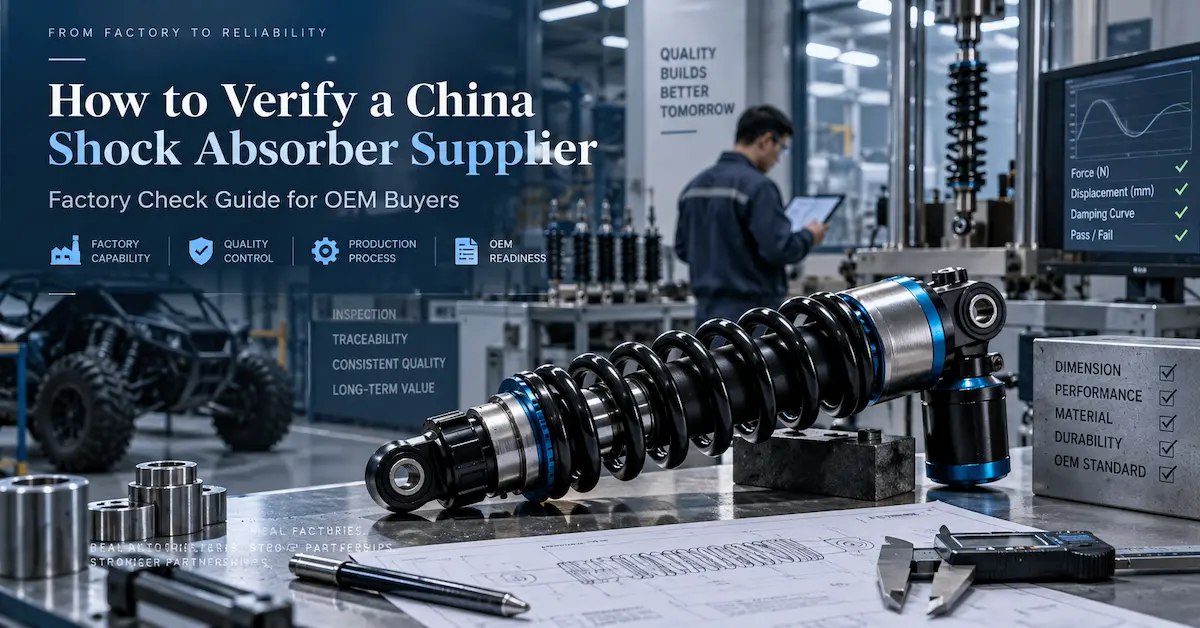

How to Choose a Custom Shock Absorber Manufacturer for OEM Projects
Choosing a Custom Shock Absorber Manufacturer is not only about finding a company that can produce shock absorbers. For OEM ATV, UTV, and off-road vehicle projects, the right manufacturer should understand vehicle requirements, suspension engineering, prototype development, testing validation, and production consistency.
A custom shock absorber project usually involves more than changing product appearance.
It may require:
- different shock dimensions;
- new mounting structures;
- custom spring rates;
- compression and rebound damping adjustments;
- prototype validation;
- application-specific testing;
- private-label support.
The best supplier should help customers move from requirements to a validated production solution.
A complete development process usually includes:
Application Analysis → Engineering Review → Prototype Development → Testing → Approval → Mass Production
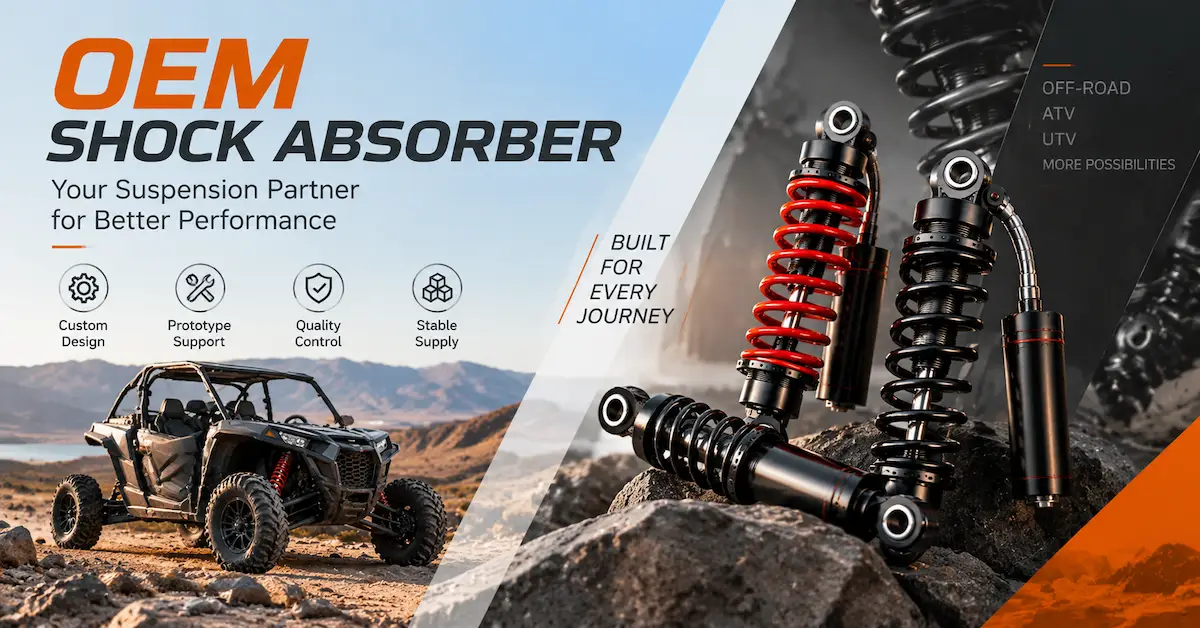
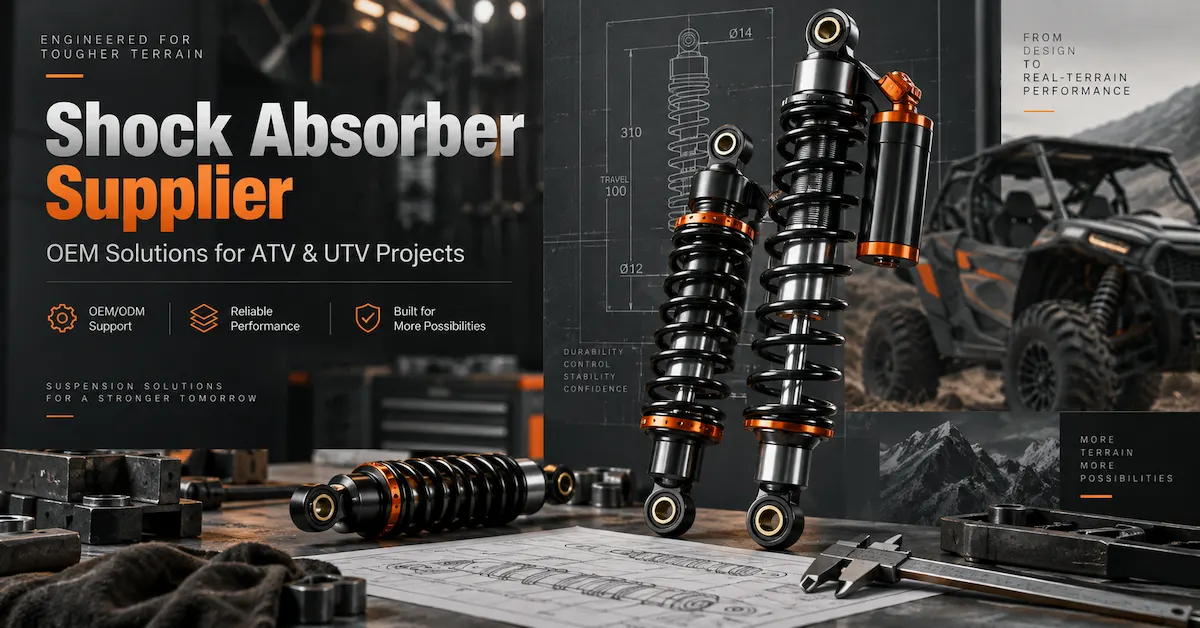
BEDO supports customized suspension solutions for ATV and off-road applications. Buyers can review the available shock absorber products to understand different suspension configurations.
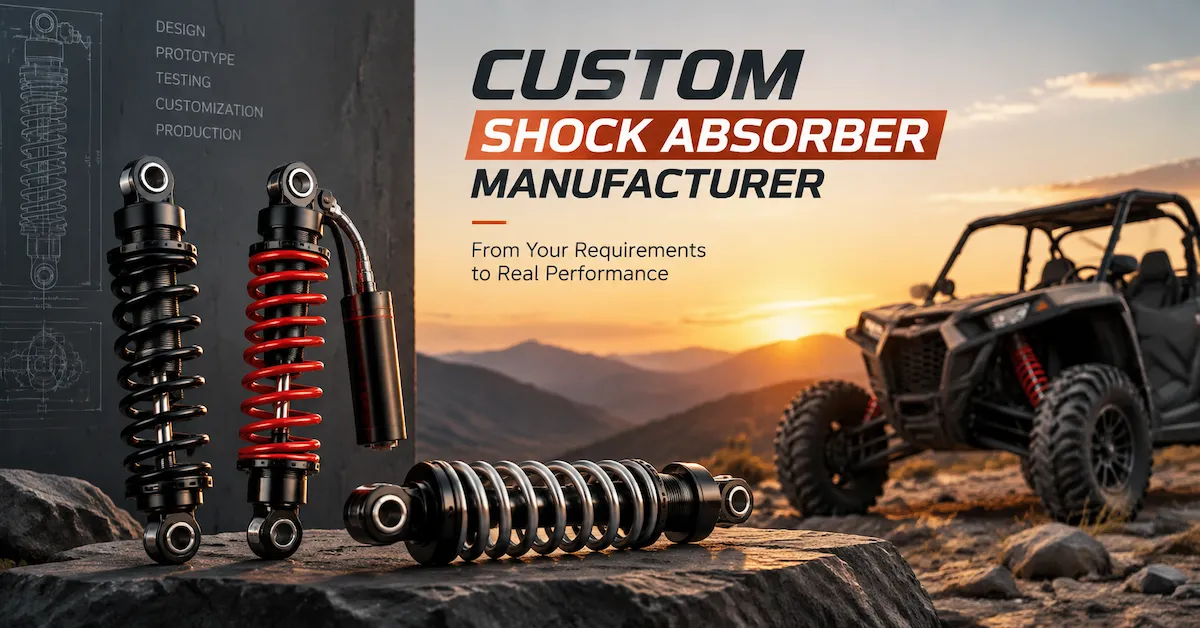
Why OEM Buyers Need a Custom Shock Absorber Manufacturer
Standard shock absorbers are suitable when existing products already meet vehicle requirements. However, many OEM and aftermarket projects require suspension systems designed around specific applications.
Common reasons for custom shock absorber development include:
- new vehicle platforms;
- different vehicle loads;
- larger tires or accessories;
- special terrain requirements;
- performance upgrades;
- private-label products;
- unique mounting requirements.
A custom shock absorber manufacturer should understand that suspension performance depends on the relationship between:
- shock absorber;
- spring;
- vehicle weight;
- suspension geometry;
- terrain;
- intended usage.
A product that fits physically may still fail to deliver the required ride and control characteristics.
What Capabilities Should a Custom Shock Absorber Manufacturer Have?
A reliable manufacturer should provide support across multiple stages.
Engineering Capability
The supplier should be able to evaluate:
- drawings;
- CAD files;
- existing samples;
- vehicle information;
- performance targets.
Engineering review helps identify:
- missing specifications;
- manufacturing limitations;
- potential fitment issues;
- testing requirements.
BEDO’s custom shock absorber development process explains how suspension projects can begin from customer requirements, samples, and technical information.
Customization Capability
Custom shock absorber projects may involve different levels of modification.
| Customization Level | Examples |
|---|---|
| Basic customization | Logo, finish, packaging |
| Component customization | Mounting changes, dimensions, springs |
| Performance customization | Damping tuning, adjustability, application development |
A professional supplier should clearly explain the development scope before production.
Custom Shock Absorber Development Starts With Application Requirements
A common mistake is starting development only from a product photo or dimension.
A manufacturer should understand:
- vehicle model;
- suspension position;
- vehicle weight;
- rider/passenger load;
- cargo requirements;
- terrain;
- tire configuration;
- performance goals.
For example, a utility UTV carrying equipment may require different suspension characteristics compared with a recreational trail vehicle.
The same shock absorber design cannot automatically serve every application.
How Are Custom Shock Absorbers Designed?
A custom shock absorber development project usually begins with technical evaluation.
Important design factors include:
Shock Dimensions
Including:
- extended length;
- compressed length;
- stroke;
- body dimensions;
- mounting interfaces.
Spring Requirements
Including:
- spring rate;
- preload;
- load support;
- ride height.
Damping Requirements
Including:
- compression damping;
- rebound damping;
- adjustment requirements.
Vehicle Integration
Including:
- clearance;
- suspension movement;
- installation position.
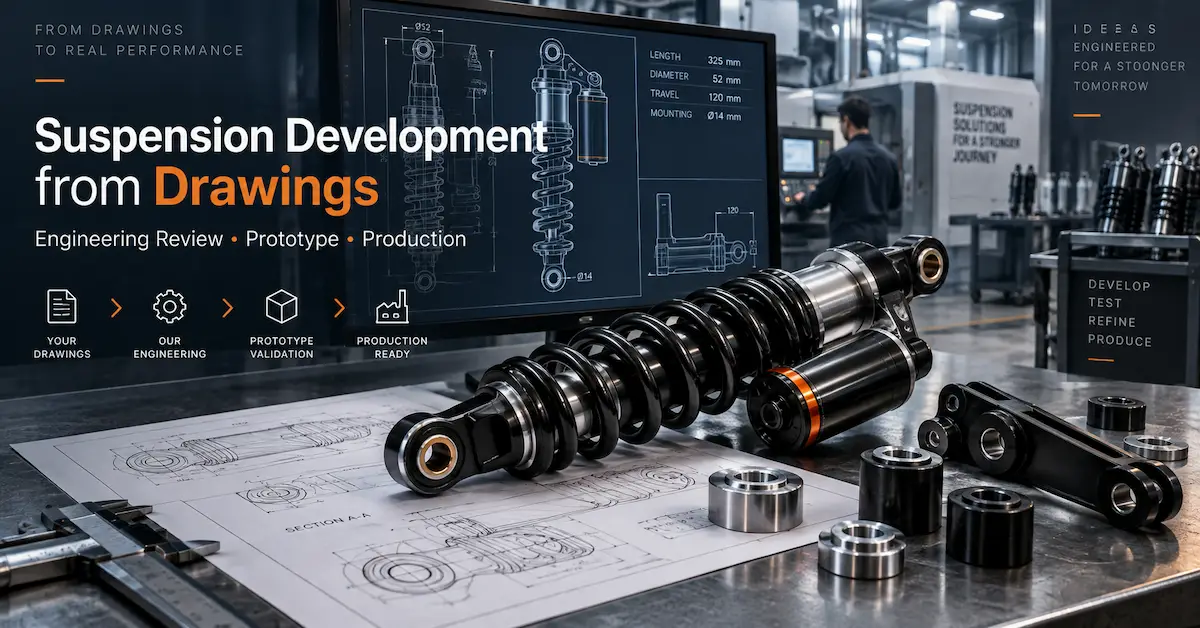
BEDO’s shock absorber drawing service guide explains how drawings support suspension development and manufacturing communication.
Spring Rate Development Is Part of Custom Suspension Design
A custom shock absorber manufacturer should understand that the shock and spring work together.
The correct spring specification depends on:
- vehicle weight;
- rider load;
- cargo;
- accessories;
- suspension geometry;
- intended use.
An unsuitable spring can create:
- excessive sag;
- reduced suspension travel;
- harsh ride;
- poor vehicle control.
BEDO’s custom spring rate guide explains why spring selection should be based on actual application requirements.
Damping Customization Determines Suspension Behavior
Damping adjustment is one of the most important aspects of custom shock development.
Compression Damping
Controls resistance when the suspension compresses.
Rebound Damping
Controls how quickly the suspension returns after compression.
A custom shock absorber manufacturer should understand how damping interacts with:
- spring rate;
- vehicle weight;
- terrain;
- suspension geometry.
BEDO’s compression and rebound damping customization guide explains why damping should be developed according to vehicle requirements.
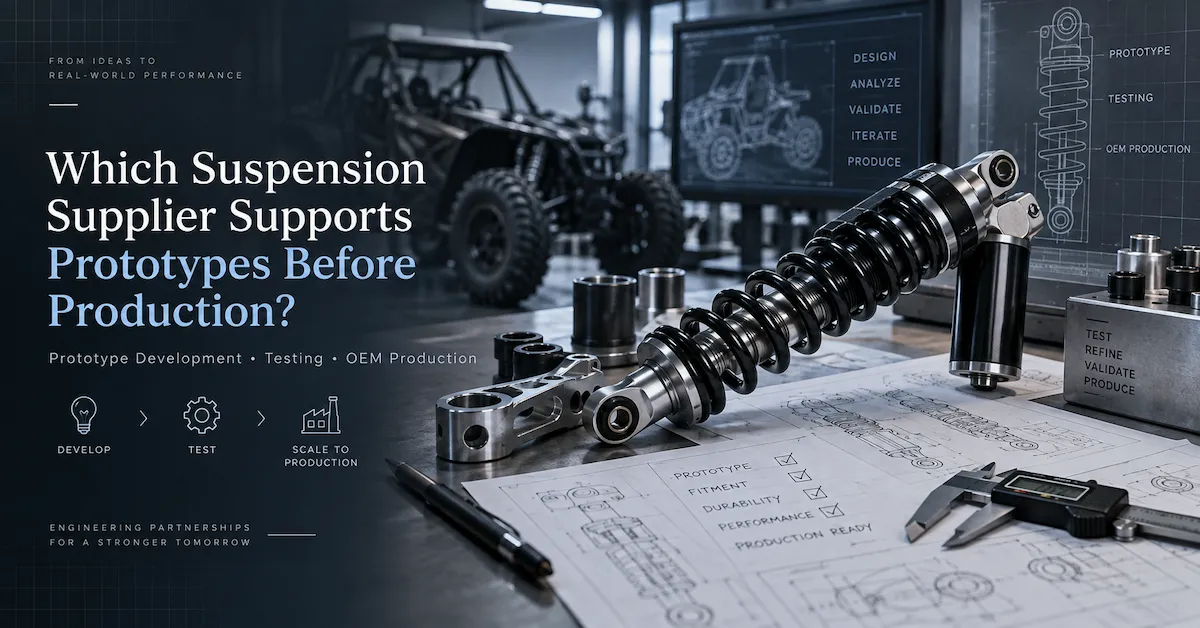
Prototype Development Before Mass Production
A professional custom shock absorber manufacturer should support prototypes before production.
Prototype development helps verify:
- dimensions;
- installation;
- suspension movement;
- spring behavior;
- damping performance;
- manufacturing feasibility.
The prototype process usually includes:
Requirement Review
Confirm:
- drawings;
- samples;
- application;
- performance targets.
Prototype Manufacturing
Produce initial samples.
Testing and Evaluation
Verify:
- fitment;
- performance;
- quality requirements.
Revision and Approval
Adjust the design before production.
BEDO’s shock absorber prototype development guide explains why prototype validation helps reduce production risks.
Testing Capability Is Essential for Custom Shock Development
A reliable manufacturer should define how custom shocks are tested.
Possible validation includes:
- dimensional inspection;
- leakage testing;
- damping evaluation;
- spring inspection;
- prototype testing;
- production inspection.
BEDO’s shock absorber testing guide provides additional information about suspension validation.
Testing helps confirm:
- whether the product matches requirements;
- whether the design performs correctly;
- whether production remains consistent.
How to Evaluate a Custom Shock Absorber Manufacturer
OEM buyers should evaluate suppliers through several areas.
| Evaluation Area | Buyer Question |
|---|---|
| Engineering | Can they support development? |
| Customization | Can they modify suspension systems? |
| Prototype | Can they produce samples? |
| Testing | Can they validate performance? |
| Production | Can they maintain consistency? |
| Communication | Can they manage revisions? |
| Quality Control | Are processes defined? |
The lowest quotation is not always the lowest-risk choice.
Custom Shock Absorber Manufacturer vs Standard Supplier
A standard supplier may be suitable when:
- an existing product fits the application;
- no performance changes are required;
- vehicle conditions remain unchanged.
A custom manufacturer becomes more valuable when:
- the vehicle is new;
- dimensions change;
- load requirements change;
- performance targets change;
- existing products cannot meet requirements.
BEDO’s standard shock vs custom suspension guide explains how buyers can determine whether customization creates practical value.
OEM and Private Label Support
Many aftermarket brands need both technical and commercial customization.
A custom shock absorber manufacturer may support:
- product branding;
- logo application;
- finish options;
- packaging;
- labels;
- product identification.
However, branding changes and engineering changes should be evaluated separately.
A private-label product does not always require a completely new shock design.
What Information Should Buyers Provide Before Requesting a Quote?
A complete RFQ improves quotation accuracy.
Provide:
| Information | Purpose |
|---|---|
| Vehicle model | Defines application |
| Suspension position | Defines product location |
| Existing shock | Provides reference |
| Drawings/CAD | Defines geometry |
| Vehicle weight | Supports spring selection |
| Rider/cargo load | Defines conditions |
| Terrain | Defines performance target |
| Spring requirements | Supports design |
| Damping requirements | Defines tuning |
| Prototype quantity | Defines development scope |
| Production forecast | Supports planning |
BEDO’s OEM suspension RFQ guide explains what information buyers should prepare before requesting accurate quotations.
MOQ and Lead Time Considerations
Custom shock absorber projects often include multiple stages:
- engineering review;
- prototype;
- testing;
- revision;
- production.
Buyers should separate:
- sample quantity;
- pilot quantity;
- production MOQ;
- repeat order quantity.
BEDO’s custom shock absorber MOQ guide explains why MOQ depends on customization, components, and project requirements.
Lead time may depend on:
- engineering complexity;
- prototype requirements;
- testing scope;
- revision cycles.
BEDO’s custom shock development lead time guide provides related planning information.
Common Mistakes When Choosing a Custom Shock Manufacturer
Choosing Only Based on Price
Low quotations may exclude engineering, testing, or development work.
Ignoring Application Requirements
A shock absorber should match the vehicle, not only the dimensions.
Skipping Prototype Validation
Production without validation increases risk.
Not Defining Performance Targets
Terms like “better performance” are difficult to engineer.
Ignoring Production Control
A good prototype does not guarantee stable mass production.
How to Reduce Development Risks
OEM buyers can reduce risk by:
Provide Complete Technical Information
Share drawings, samples, vehicle data, and performance requirements.
Define Prototype Objectives
Clarify what the prototype should verify.
Review Testing Results
Use validation data before production approval.
Control Approved Specifications
Maintain:
- drawings;
- samples;
- revisions;
- test records.
Select a Long-Term Development Partner
A supplier should support future production and product updates.
Frequently Asked Questions
1. What Does a Custom Shock Absorber Manufacturer Do?
A custom shock absorber manufacturer develops suspension products according to vehicle requirements, including engineering review, customization, prototypes, testing, and production.
2. Can a Manufacturer Develop Shocks From Drawings?
Yes. Many OEM projects begin with drawings, CAD files, or samples before prototype production.
3. Can Spring Rate Be Customized?
Yes. Spring specifications can be developed according to vehicle load and performance requirements.
4. Can Compression and Rebound Damping Be Customized?
Yes. Damping can be adjusted according to application requirements and testing results.
5. Why Are Shock Absorber Prototypes Important?
Prototypes help verify fitment, performance, and manufacturing feasibility before mass production.
6. How Should I Choose a Custom Shock Supplier?
Evaluate engineering capability, customization experience, testing ability, prototype support, and production consistency.
7. Can Custom Shock Absorbers Support ATV and UTV Applications?
Yes. Custom shocks can be developed for recreational, utility, performance, and specialty off-road vehicles.
8. Does Custom Development Require Large MOQ?
Not always. Prototype and small-batch development may be available depending on project requirements.
9. How Long Does Custom Shock Development Take?
The timeline depends on engineering scope, prototype requirements, testing, revisions, and production preparation.
10. How Can I Start a Custom Shock Absorber Project With BEDO?
Provide your vehicle information, drawings, samples, performance targets, and production requirements through BEDO Contact Us.
Conclusion
Choosing the right Custom Shock Absorber Manufacturer requires evaluating engineering capability, customization experience, prototype development, testing processes, and production reliability. A professional suspension partner should help transform vehicle requirements into a validated product through technical review, prototype testing, and controlled manufacturing. For OEM ATV, UTV, and off-road projects, BEDO supports custom shock absorber and suspension development based on drawings, samples, and application requirements. To discuss your project, contact BEDO with your vehicle information, technical requirements, performance goals, and production plans to develop a suitable custom suspension solution.