
What Is a Shock Absorber Drawing Service?
A shock absorber drawing service converts suspension requirements into technical documentation that engineers, buyers, prototype teams, and manufacturers can use to communicate the intended product clearly.
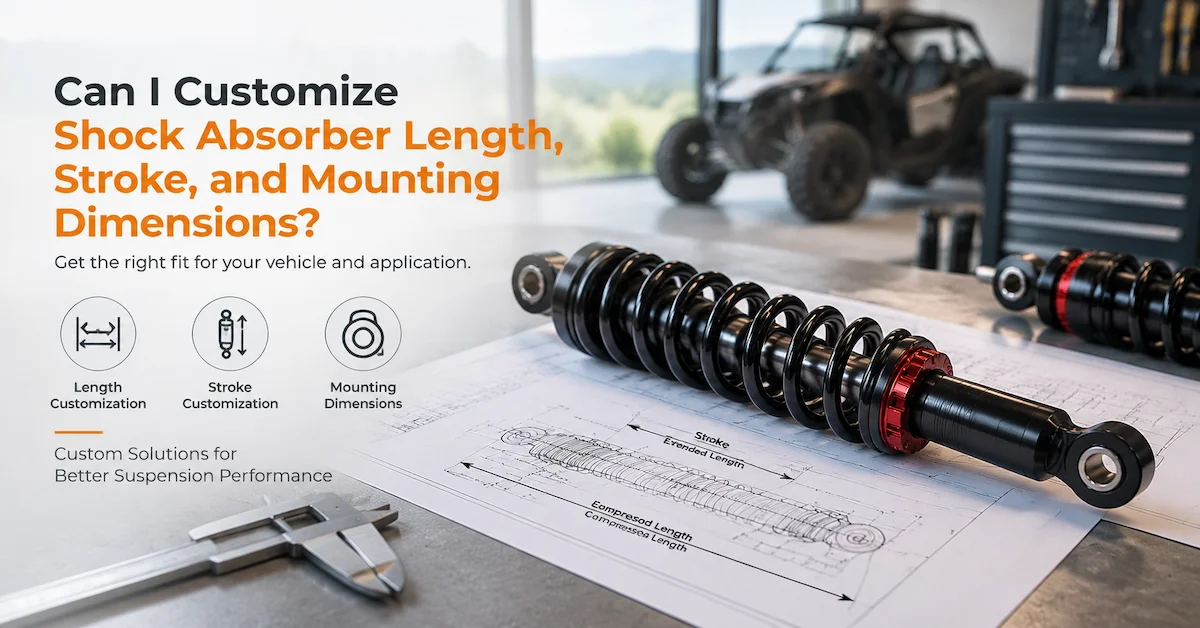
For an OEM project, a useful drawing should do more than show what a shock absorber looks like. It should define critical interfaces and dimensions such as extended length, compressed length, stroke, mounting configuration, eye or fork dimensions, body and spring envelope, and other information required for engineering review and prototype production.
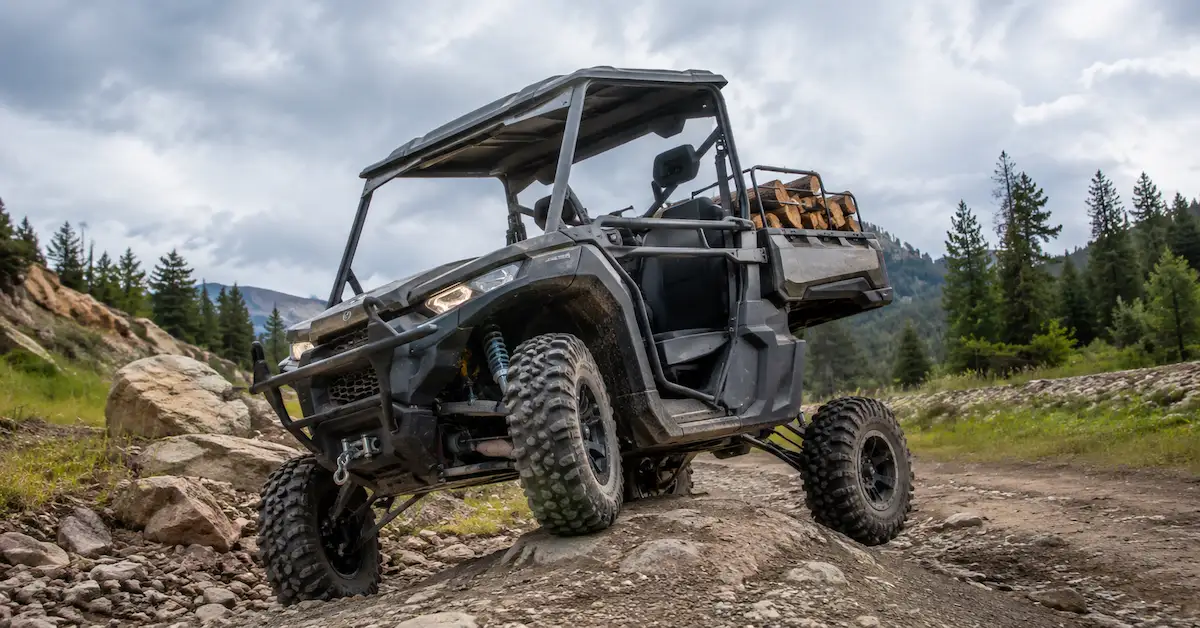
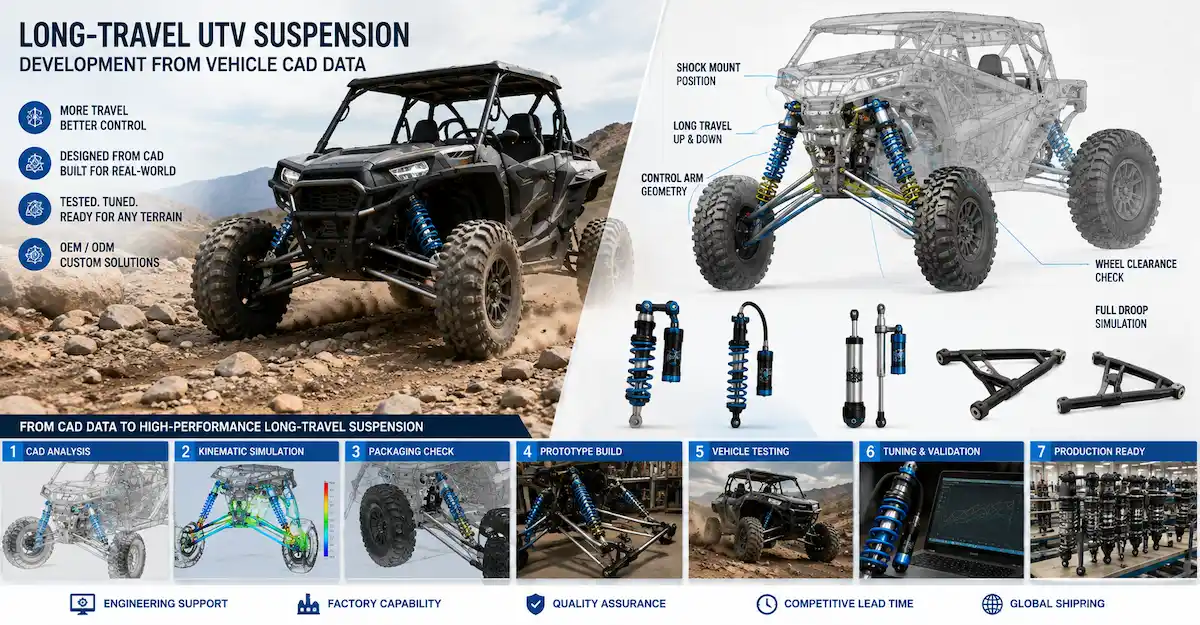
This is particularly important when developing custom suspension for ATV, UTV, motorcycles, electric vehicles, utility vehicles, golf carts, or specialty vehicle platforms. Bedo Auto's existing prototype workflow includes sample analysis, drawing review, suspension design support, prototype manufacturing, spring development, damping adjustment, testing validation, and OEM manufacturing.
Buyers starting from a concept, existing sample, or incomplete drawing can use the drawing stage to identify missing information before moving into shock absorber prototype development.
Why Are Technical Drawings Important Before Shock Absorber Prototyping?
A shock absorber can have the correct overall appearance while still being unsuitable for a vehicle application.
Bedo Auto's prototype guidance identifies variables such as valve structure, oil specification, gas pressure, piston design, spring rate, damping characteristics, material quality, and manufacturing tolerance as factors that influence suspension performance.
A technical drawing cannot define every dynamic characteristic by itself, but it creates a controlled engineering reference for the dimensions, interfaces, notes, and specifications that must remain consistent during development.
That distinction matters.
A drawing answers questions such as:
- Where does the shock mount?
- What is the required installation length?
- How much physical stroke is available?
- What mounting hardware must fit the vehicle?
- What space is available for the spring and reservoir?
- Which dimensions require tighter control?
- Which requirements still need prototype testing?
Performance targets such as compression and rebound behavior then need to be linked to testing and validation rather than treated as dimensions alone. Bedo's shock absorber testing service guide describes prototype validation and testing support for customized suspension development.
Who Needs a Custom Shock Absorber Drawing Service?
A custom shock absorber drawing service is especially useful when the buyer does not already have a complete, production-ready design.
Typical users include:
- Vehicle OEM engineering teams
- ATV and UTV manufacturers
- Motorcycle and electric motorcycle brands
- Specialty vehicle developers
- Suspension aftermarket brands
- Startups developing new vehicle platforms
- Importers developing proprietary products
- Buyers replacing an obsolete or unavailable shock
- Companies modifying an existing suspension design
The service is also useful when a customer has a physical sample but no reliable drawing.
In that case, the reference shock can support dimensional analysis, but the development team still needs to understand whether the new product will retain the same application, vehicle load, suspension geometry, spring requirements, and damping targets.
Bedo Auto states that prototype projects can begin from customer samples, drawings, and vehicle requirements rather than requiring one single starting format.
What Information Should You Provide for Shock Absorber Drawing Development?
The better the engineering input, the more useful the resulting drawing can be.
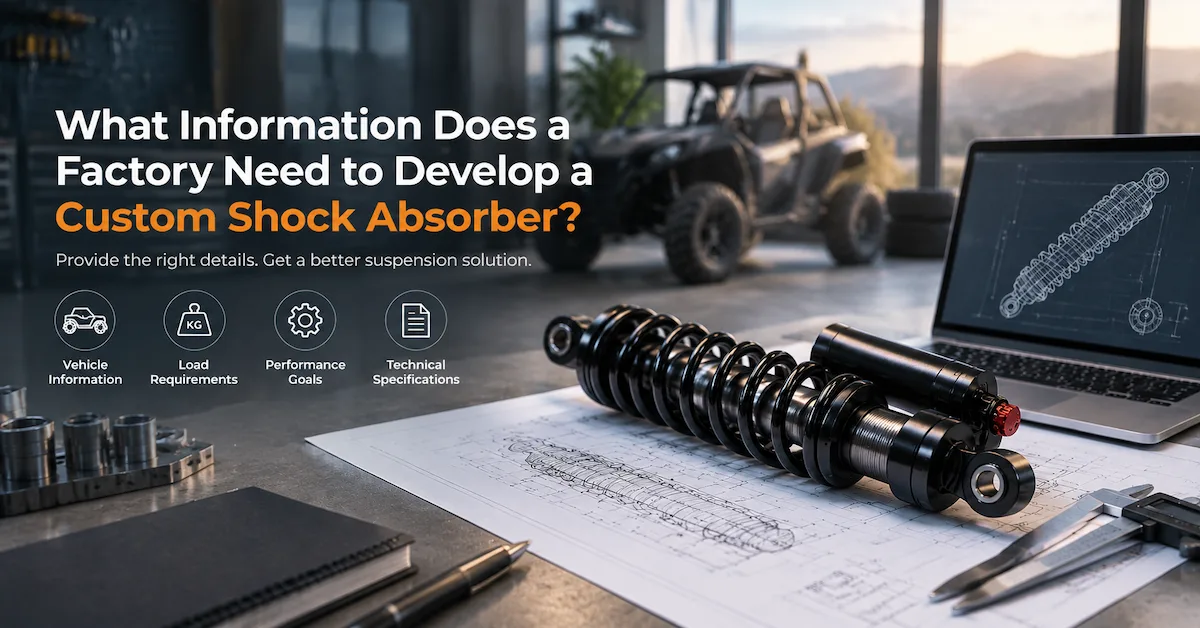
A buyer should provide as much of the following information as is available.
| Input | What to Provide | Why It Matters |
|---|---|---|
| Vehicle application | ATV, UTV, motorcycle, EV, utility vehicle, etc. | Establishes the operating context |
| Shock position | Front/rear and left/right if relevant | Defines installation requirements |
| Extended length | Mounting-center reference at full extension | Controls overall fitment |
| Compressed length | Minimum installation length | Helps avoid interference |
| Stroke | Required shock travel | Defines usable movement |
| Upper mount | Eye, fork, stud, clevis, etc. | Controls vehicle interface |
| Lower mount | Eye, fork, stud, clevis, etc. | Controls vehicle interface |
| Mount dimensions | Hole, width, bush and spacing data | Required for installation |
| Spring data | Free length, OD, rate or reference spring | Supports spring packaging and development |
| Vehicle weight | Empty and loaded conditions | Supports suspension engineering review |
| Payload | Rider, passenger, cargo or equipment | Helps define the load case |
| Installation angle | Shock orientation where available | Relevant to application review |
| Reference sample | Existing shock or competitor unit | Provides physical reference |
| CAD / 2D files | Existing technical data | Reduces remeasurement |
| Performance target | Comfort, utility, off-road, racing, etc. | Guides later spring/damping validation |
If some information is unknown, it is better to mark it as to be confirmed than to insert an assumed value into the drawing.
That follows the people-first approach in your content-quality standard: the content should help the reader complete the task accurately rather than give a false impression that every engineering question has a universal answer.
What Should a Shock Absorber Technical Drawing Include?
The drawing content depends on project complexity, but an OEM shock absorber drawing normally needs several groups of information.
Overall Installation Dimensions
The first group establishes whether the shock can physically fit the suspension.
Key dimensions can include:
- Extended eye-to-eye length
- Compressed length
- Stroke
- Upper mount geometry
- Lower mount geometry
- Mounting-hole diameter
- Bush width
- Maximum body diameter
- Spring outside diameter
- Reservoir position and envelope
These dimensions should use clearly identified reference points so that the customer and supplier measure the same feature in the same way.
Component and Interface Dimensions
Where necessary, the drawing can further define:
- Piston rod diameter
- Shock body dimensions
- Spring seat position
- Adjustment collar location
- Hose routing
- Reservoir mounting
- Bearing or bushing interface
- Fastener-related dimensions
Not every internal component needs to appear on a customer approval drawing. The appropriate level of detail depends on whether the document is being used for fitment approval, component manufacturing, assembly, or full production control.
Dimensions and Tolerances
Technical documentation should distinguish nominal dimensions from dimensions that require controlled tolerance.
ISO 129-1:2018 establishes general principles for presenting dimensions and associated tolerances on 2D technical drawings, while ISO 128-1:2020 provides general rules for executing technical drawings in mechanical engineering and other fields.
Where geometrical tolerancing is required, ISO 1101:2017 defines the symbol language and interpretation rules used for geometrical specification of workpieces.
The practical point for OEM buyers is simple: do not treat every dimension as equally critical.
Mounting interfaces, alignment-sensitive features, sealing-related components, and assembly-critical dimensions may need more explicit control than non-critical visual dimensions.
Materials, Finish, and Engineering Notes
Depending on the drawing's purpose, it may also identify:
- Material requirement
- Surface treatment
- Coating or finish
- Heat treatment where applicable
- Assembly notes
- Special inspection requirements
- Customer-specific appearance requirements
These notes reduce ambiguity when a drawing moves from engineering into sourcing and manufacturing.
Drawing Data vs Suspension Performance Data
One of the most important distinctions in a shock absorber project is the difference between geometric definition and dynamic performance definition.
| Drawing / Geometry Data | Performance Data |
|---|---|
| Extended length | Compression damping |
| Compressed length | Rebound damping |
| Stroke | Force-velocity behavior |
| Mount dimensions | Spring response |
| Body diameter | Load response |
| Spring envelope | Ride characteristics |
| Reservoir location | Thermal behavior |
| Adjustment location | Adjustment effect |
A drawing can define the geometry of an adjustable shock absorber, but it does not automatically prove that the damping calibration is correct.
For this reason, the drawing should be part of a broader development path:
Requirement → Drawing → Prototype → Testing → Revision → Approval → Production
Bedo's suspension-development content follows this same general logic by connecting design review with prototype manufacturing, testing, optimization, and production support.
Can a Shock Absorber Drawing Be Created From a Physical Sample?
Yes. A physical sample can be a useful starting point when original CAD files or production drawings are unavailable.
The first stage is normally to establish measurable information such as:
- Overall length
- Stroke
- Mount dimensions
- Body dimensions
- Spring dimensions
- External reservoir arrangement
- Adjustment locations
Bedo's prototype service specifically lists sample analysis and drawing review as part of its development support.
However, reverse-measuring a sample should not automatically be treated as a complete OEM engineering specification.
The original sample may have been designed for a different:
- Vehicle weight
- Suspension ratio
- Payload
- Riding environment
- Performance target
- Tire configuration
- Vehicle geometry
If the application changes, the design may also need engineering changes.
This is where a suspension design partner provides more value than a supplier that simply measures and copies an existing part. Bedo's published suspension-development materials emphasize engineering review, prototype development, spring and damping optimization, and validation before production.
2D Drawing or 3D CAD: Which Does an OEM Buyer Need?
The answer depends on the development stage.
2D Drawings Are Useful For
- Critical dimensions
- Tolerance definition
- Approval records
- Manufacturing notes
- Inspection criteria
- Customer and supplier communication
3D CAD Is Useful For
- Packaging checks
- Vehicle-space analysis
- Assembly visualization
- Interference review
- Component development
For many OEM projects, the two formats complement each other rather than compete.
ISO 128-1:2020 covers general rules for technical drawings in both 2D and 3D representation, while ISO 129-1:2018 establishes principles for the presentation of dimensions and tolerances.
The correct deliverable therefore depends on what the buyer wants to approve: fitment, manufacturing dimensions, full component geometry, or the entire suspension development package.
How Does the Shock Absorber Drawing Process Work?
A practical OEM workflow can be organized into seven stages.
1. Application Review
The supplier identifies the vehicle, shock position, load conditions, target use, and available engineering information.
2. Sample or Existing Drawing Analysis
Available samples, photos, sketches, CAD files, and previous drawings are reviewed.
3. Critical Dimension Confirmation
The parties confirm the dimensions required for fitment and prototype development.
4. Preliminary Drawing
An initial drawing is prepared for engineering review.
5. Customer Review
The buyer checks mounting dimensions, installation envelope, stroke, interfaces, and project-specific requirements.
6. Prototype Development
After drawing approval, a physical prototype can be manufactured for verification.
7. Testing and Revision
The prototype is evaluated, and the design can be revised when testing identifies a fitment or performance issue.
This workflow should not be interpreted as a promise that every project requires exactly seven steps. Development complexity depends on how complete the buyer's original information is and how much customization is required.
What Should Buyers Check Before Approving a Shock Absorber Drawing?
Before approving the design for prototype production, confirm at least the following:
- Are extended and compressed lengths clearly defined?
- Is stroke explicitly stated?
- Are upper and lower mounting references unambiguous?
- Are mounting-hole and bushing dimensions correct?
- Is the spring envelope compatible with the vehicle?
- Does the reservoir have enough installation clearance?
- Are critical tolerances identified?
- Are materials and finishes defined where necessary?
- Is the revision number or approval status controlled?
- Are unresolved engineering items clearly identified?
A drawing approval checklist is particularly valuable when purchasing teams, engineers, and external suppliers are located in different countries.
The drawing becomes a shared technical reference rather than relying on email descriptions or photographs alone.
What a Shock Absorber Drawing Service Should Not Promise
A useful drawing service should also be clear about its limits.
A technical drawing alone cannot guarantee:
- Correct ride comfort
- Correct compression damping
- Correct rebound damping
- Long-term durability
- Vehicle-level handling
- Production consistency
Those results require prototype and testing evidence.
Bedo's own development content separates drawing review from prototype manufacturing, spring development, damping adjustment, and testing validation, which is a more realistic representation of suspension engineering.
This distinction is important for E-E-A-T and buyer trust because it prevents technical documentation from being presented as proof of performance when it is only one stage of development.
How to Choose a Shock Absorber Drawing and Development Partner
For a simple replacement component, a drawing-only vendor may be sufficient.
For a new OEM suspension project, buyers should look beyond CAD capability.
Evaluate whether the supplier can connect drawings to:
- Sample analysis
- Vehicle application review
- Prototype production
- Spring development
- Damping adjustment
- Testing
- Engineering revisions
- Small-batch validation
- OEM production
Bedo Auto's published prototype process includes these connected development capabilities for motorcycle, electric motorcycle, ATV, UTV, golf cart, utility vehicle, and specialty vehicle projects.
Buyers can review Bedo's current shock absorber product range before discussing a custom project, or move directly to a technical review when an existing product does not meet the required geometry or performance target.
How Bedo Auto Supports Shock Absorber Drawing Projects
Bedo Auto positions drawing review as part of a broader custom suspension development workflow rather than an isolated drafting task. Its published prototype support includes sample analysis, drawing review, suspension design support, prototype manufacturing, spring development, damping adjustment, testing validation, small-batch production, and OEM manufacturing.
This approach is particularly relevant to buyers who have:
- A reference shock but no production drawing
- An existing drawing that needs engineering review
- A new suspension concept
- New vehicle mounting requirements
- A need to move from drawing to prototype
- A prototype that requires further validation
After the drawing stage, the project can continue into suspension prototype development, testing, and production preparation.
For projects requiring smaller initial quantities, Bedo also describes a path from custom development into low-volume shock absorber OEM production.
What Should You Send With a Drawing Service RFQ?
A useful RFQ does not need to be perfect, but it should make the project objective clear.
Send whichever of the following you already have:
- Vehicle type and model
- Front or rear suspension position
- Photos of the installation
- Existing shock absorber sample
- Current 2D drawing
- 3D CAD data
- Extended and compressed dimensions
- Required stroke
- Mounting details
- Vehicle empty and loaded weight
- Existing spring data
- Target performance
- Prototype quantity
- Expected future production requirements
If important parameters are unknown, identify them as unknown so they can be reviewed rather than guessed.
You can submit drawings, reference samples, and technical requirements through the Bedo Auto contact page. Bedo's existing project guidance directs prototype customers to provide samples, drawings, and technical requirements for review.
FAQ
What is a shock absorber drawing service?
A shock absorber drawing service prepares technical documentation for suspension development using vehicle requirements, dimensions, reference samples, sketches, or existing CAD information. Depending on the project, it can support fitment review, prototyping, manufacturing, and inspection.
Can you create a shock absorber drawing from a sample?
A physical sample can be used for dimensional analysis and drawing development. Bedo Auto lists sample analysis and drawing review as part of its prototype-development support.
What dimensions are most important on a shock absorber drawing?
Common critical data includes extended length, compressed length, stroke, mounting-hole diameter, bushing width, mounting type, body envelope, spring envelope, and reservoir position. The exact requirements depend on the suspension application.
Does a drawing include spring rate?
Spring information can be added to project documentation, but spring rate is a performance-related specification rather than simply a geometric dimension. It should be selected and validated according to the vehicle application.
Does a drawing define compression and rebound damping?
A drawing can reference target specifications, but damping behavior requires engineering definition and physical validation. Bedo connects prototype development with damping adjustment and testing rather than relying only on drawings.
Do I need both 2D drawings and 3D CAD?
Not always. 2D drawings are useful for dimensions, tolerances, notes, and approvals, while 3D CAD can support packaging and interference review. The required deliverable should match the development task.
Can an existing drawing be modified for a new vehicle?
Yes, but the supplier should first verify whether the new vehicle has different mounting dimensions, weight, suspension geometry, payload, or performance requirements.
What standards can be used for technical drawing presentation?
ISO 128-1:2020 provides general rules for technical drawings, and ISO 129-1:2018 covers presentation of dimensions and associated tolerances. ISO 1101:2017 provides rules and symbols for geometrical specification.
What happens after a shock absorber drawing is approved?
The normal next stage for a new custom design is prototype manufacture and validation. The prototype can then be tested and revised before pilot or OEM production. Bedo describes this connected prototype-to-production workflow in its current development guidance.
How do I request a custom shock absorber drawing?
Prepare your available sample, drawings, vehicle specifications, mounting dimensions, load conditions, target application, and performance requirements, then submit them through Bedo Auto's contact page for project-specific review.
Conclusion
A shock absorber drawing service is most valuable when it converts incomplete suspension information into a clear engineering reference that can support fitment review, prototype manufacturing, validation, and later production.
For OEM buyers, the key is not simply receiving a CAD file. The drawing should clearly define the critical geometry and interfaces, identify the information that still requires verification, and connect naturally to prototype and testing work.
Technical drawing standards such as ISO 128-1 and ISO 129-1 provide useful principles for consistent representation, dimensions, and tolerances, but suspension performance still needs to be proven through engineering development and physical validation.
Bedo Auto's current development workflow combines sample analysis, drawing review, suspension design support, prototype manufacturing, spring and damping development, testing validation, and OEM production support.
If you are developing a custom ATV, UTV, motorcycle, electric vehicle, utility vehicle, or specialty suspension project, send your reference shock, sketches, CAD files, vehicle information, and required dimensions through Bedo Auto for technical review.