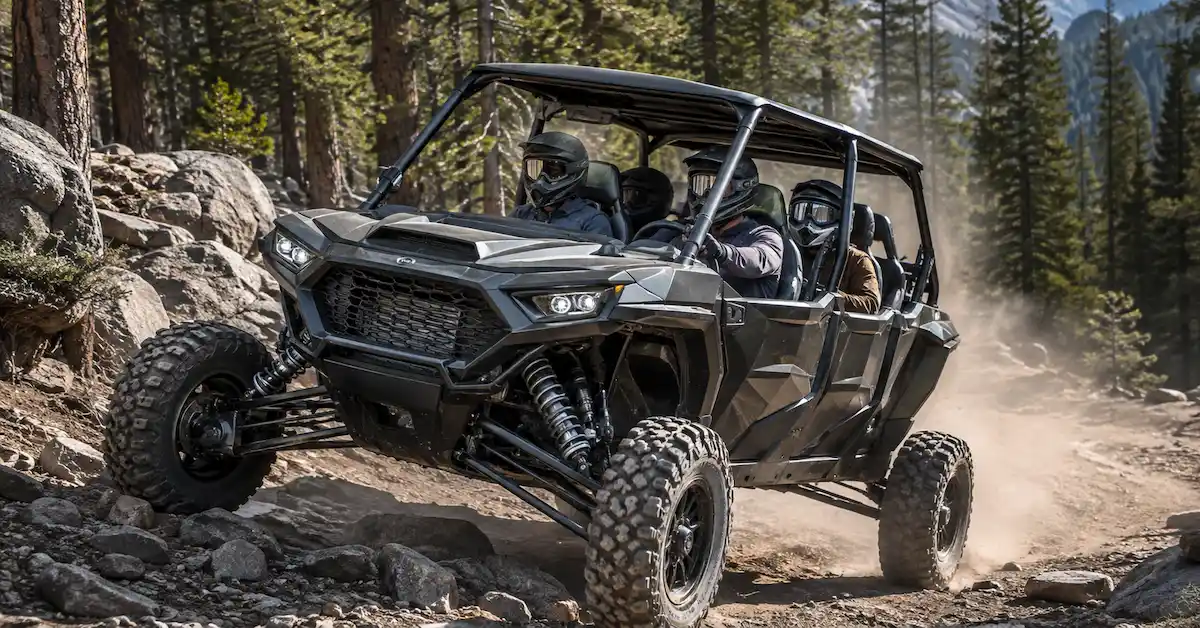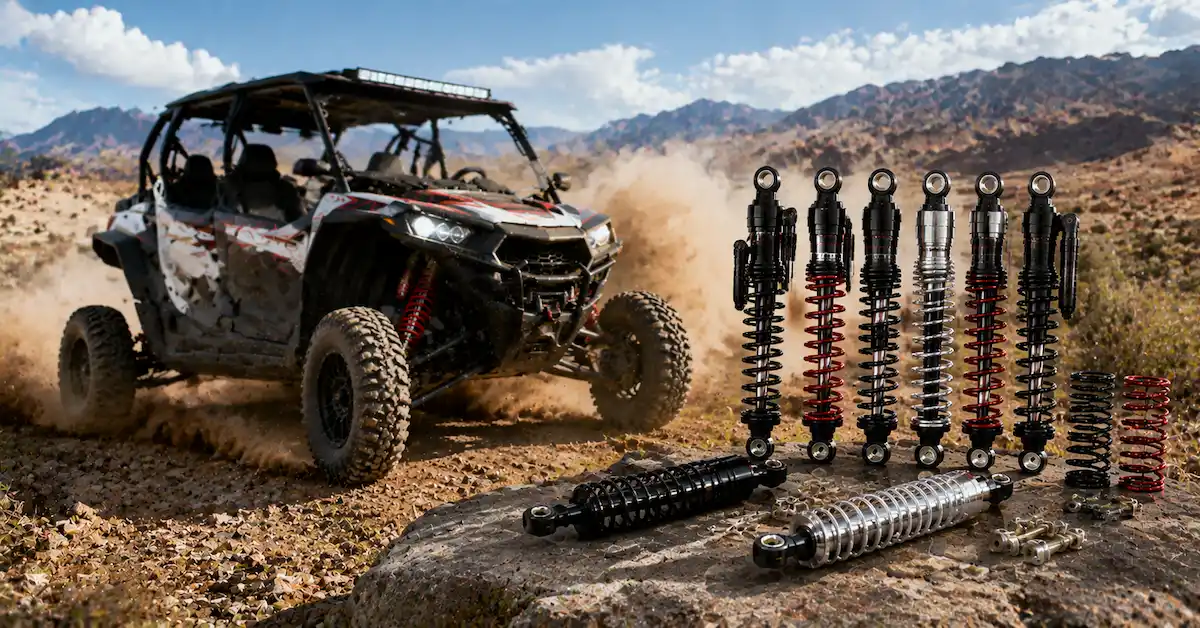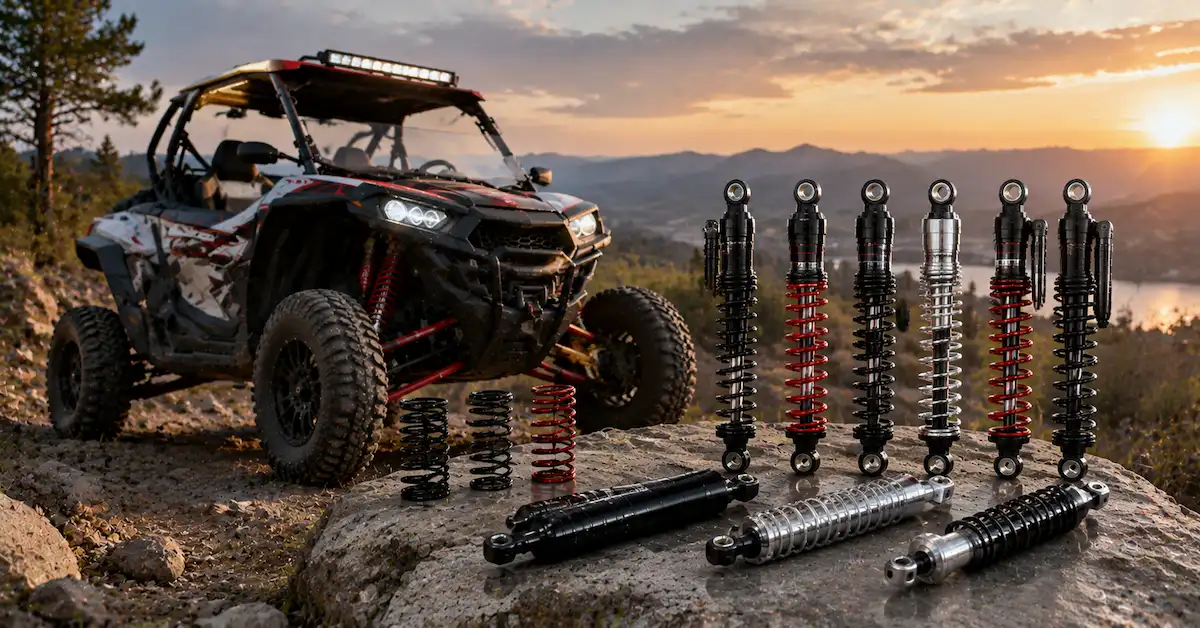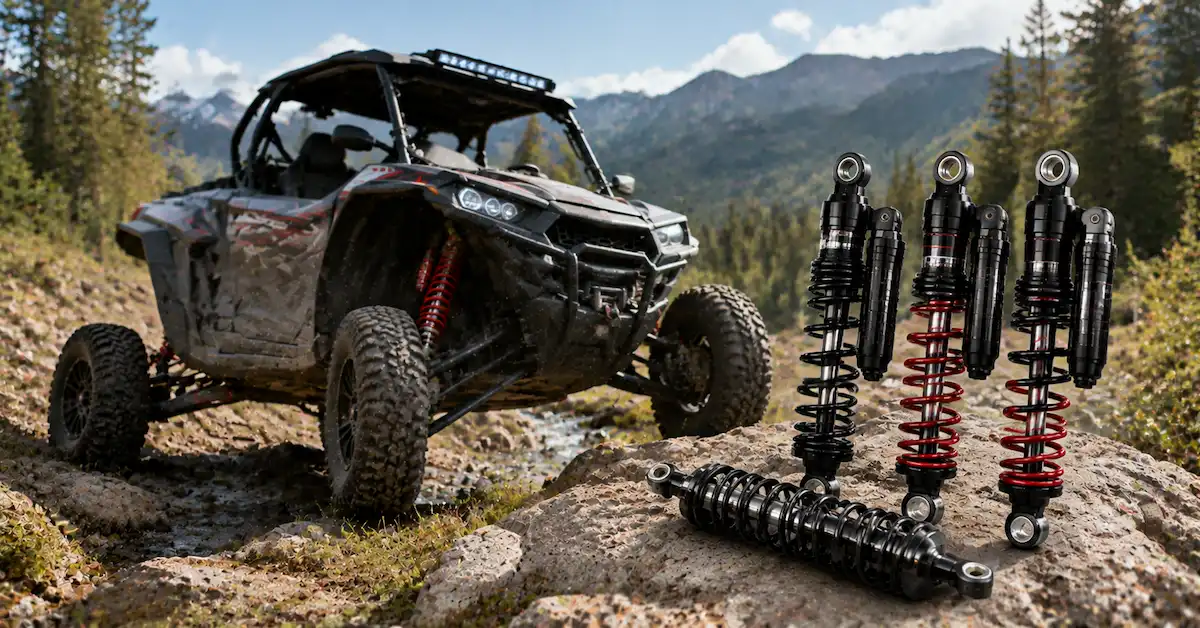

Choosing the right utility vehicle suspension supplier is essential for manufacturers, engineering companies, distributors, fleet operators, and aftermarket brands developing vehicles for demanding working environments.
Unlike standard passenger vehicles, utility vehicles are designed around specific tasks. They may transport cargo, operate on farms, support industrial work, carry equipment, or perform specialized operations in challenging environments.
These vehicles often experience:
- Heavy payloads
- Uneven weight distribution
- Long operating hours
- Low-speed continuous movement
- Rough terrain
- Weather exposure
- Frequent suspension cycles
Because of these conditions, suspension components must provide reliable load support, stable handling, durability, and long service life.
A professional supplier does not simply provide standard shock absorbers. It evaluates the complete vehicle application, including weight, payload, terrain, suspension geometry, and operating conditions, before developing the correct suspension solution.
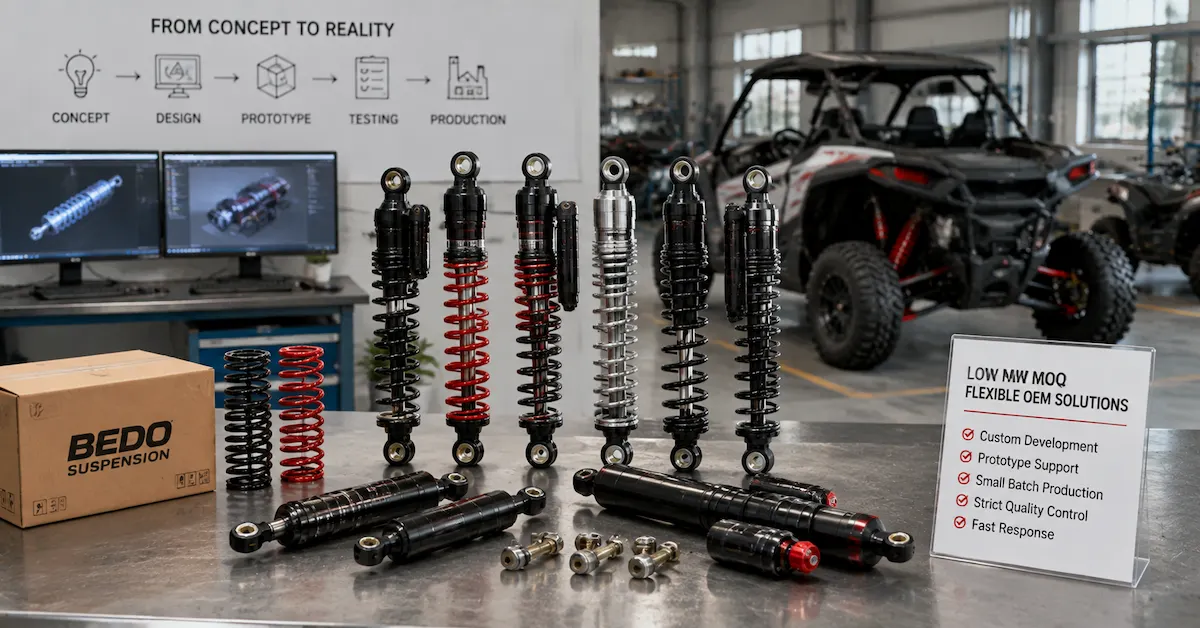
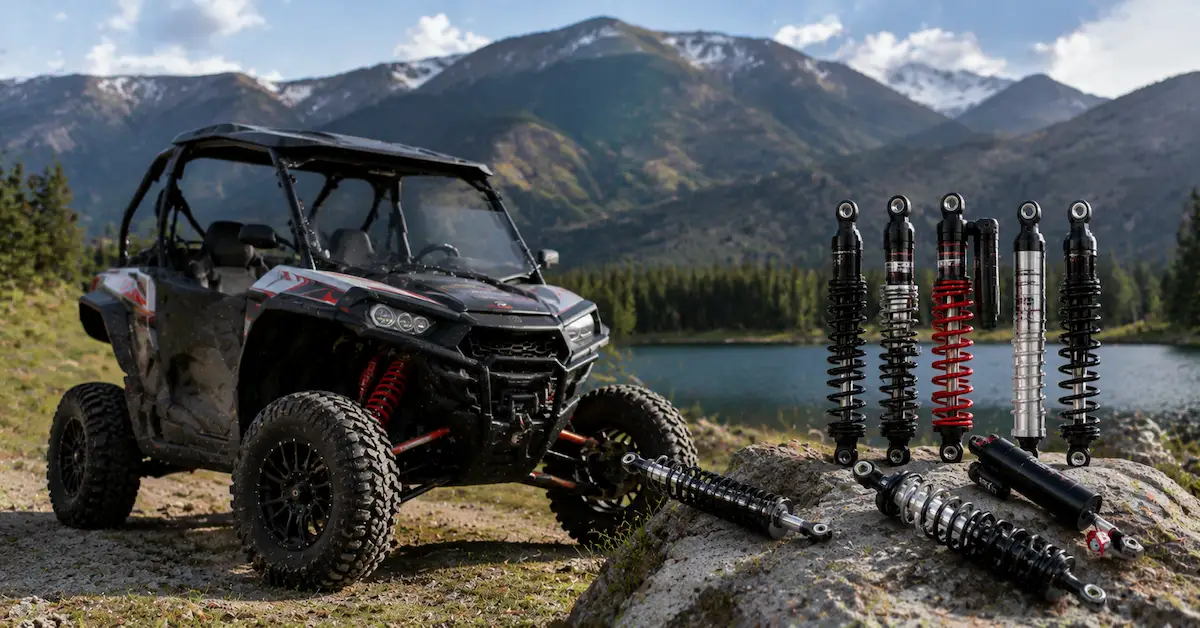
Bedo Auto provides customized suspension components, including shock absorbers and coil springs, for ATV, UTV, utility vehicles, motorcycles, electric vehicles, and specialty applications.
What Does a Utility Vehicle Suspension Supplier Provide?
A professional utility vehicle suspension supplier can support complete suspension development from concept to production.
Typical products and services include:
| Product / Service | Purpose |
|---|---|
| Shock absorbers | Control compression and rebound movement |
| Coil springs | Support vehicle and payload weight |
| Heavy-duty suspension systems | Improve durability under demanding loads |
| Custom mounting components | Match vehicle installation requirements |
| Reservoir shock solutions | Improve heat management |
| Adjustable suspension | Support different load conditions |
| Prototype development | Validate designs before production |
| OEM manufacturing | Provide long-term supply |
| Private labeling | Support brand development |
A complete suspension solution may include:
- Front suspension components
- Rear suspension components
- Shock absorbers
- Springs
- Bushings
- Mounting hardware
- Adjustment systems
Different utility vehicles require different suspension strategies.
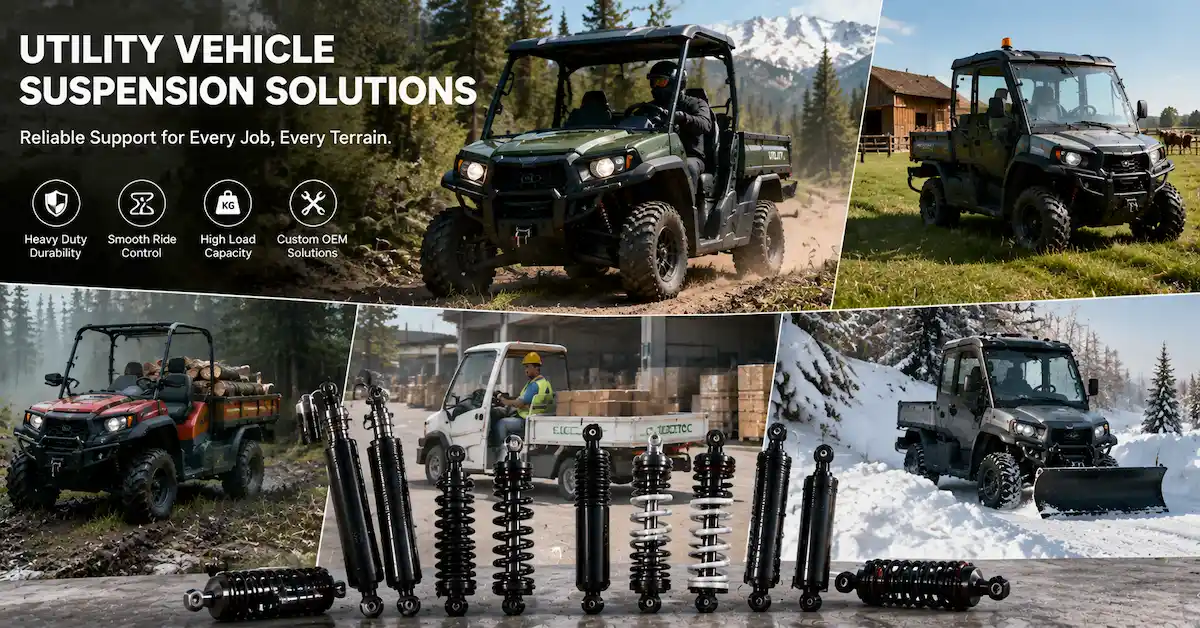
An agricultural vehicle may prioritize load support. An electric utility vehicle may require suspension designed around battery weight. An industrial vehicle may need durability under continuous operation.
Applications Requiring Custom Utility Vehicle Suspension
Utility vehicles cover a wide range of industries.
Common applications include:
Agricultural Vehicles
Agricultural vehicles operate on:
- Fields
- Dirt roads
- Uneven farmland
- Muddy environments
Suspension requirements include:
- Heavy load support
- Corrosion resistance
- Long operating cycles
- Stable low-speed performance
Electric Utility Vehicles
Electric utility vehicles introduce additional challenges:
- Higher battery weight
- Different weight distribution
- Increased total vehicle mass
- Commercial operating requirements
Suspension systems must handle battery load while maintaining comfort and stability.
Industrial Transport Vehicles
Industrial vehicles may operate in:
- Warehouses
- Construction areas
- Factory environments
- Maintenance facilities
Important suspension factors include:
- Reliability
- Low maintenance
- Load capacity
- Component durability
Specialized Vehicles
Examples include:
- Patrol vehicles
- Rescue vehicles
- Maintenance vehicles
- Airport vehicles
- Snow vehicles
- Custom off-road vehicles
Each application requires different suspension parameters.
Why Utility Vehicles Need Custom Suspension Development
Standard suspension products are usually designed for general applications.
Utility vehicles often require different specifications because of:
- Higher payload
- Different center of gravity
- Additional equipment
- Continuous operation
- Custom chassis designs
- Special mounting positions
Incorrect suspension selection may cause:
- Excessive sag
- Reduced ground clearance
- Frequent bottoming
- Poor handling
- Increased vibration
- Faster component wear
- Reduced tire contact
- Shorter service life
A professional supplier should analyze the vehicle before recommending suspension components.
Key Information Buyers Should Provide
A successful OEM suspension project requires accurate technical information.
| Information | Why It Matters |
|---|---|
| Vehicle type | Defines suspension application |
| Vehicle weight | Determines basic load requirements |
| Maximum payload | Defines spring and damping needs |
| Front/rear axle load | Helps balance suspension performance |
| Operating environment | Defines durability requirements |
| Vehicle speed | Influences damping design |
| Duty cycle | Determines component strength |
| Shock mounting position | Confirms installation structure |
| Extended length | Defines shock size |
| Compressed length | Prevents interference |
| Stroke | Defines suspension movement |
| Mounting dimensions | Ensures fitment |
| Existing sample | Supports development |
| Technical drawing | Defines manufacturing requirements |
| Production quantity | Supports planning |
Buyers should also explain the target goal:
- Increase payload capacity
- Improve ride comfort
- Reduce maintenance
- Extend service life
- Replace discontinued parts
- Develop a new vehicle platform
- Create aftermarket upgrades
Shock Absorber Development for Utility Vehicles
Shock absorbers are the core components controlling suspension movement.
Important specifications include:
- Shock length
- Stroke
- Piston diameter
- Rod diameter
- Oil capacity
- Valve design
- Compression damping
- Rebound damping
- Mounting structure
- Reservoir configuration
Utility vehicles often require stronger damping control because they operate with changing loads.
For example:
A cargo vehicle may need stronger rear suspension support when fully loaded.
An empty vehicle may require enough compliance to maintain comfort.
The supplier must balance:
- Load support
- Ride comfort
- Stability
- Suspension travel
- Durability
Spring Rate Selection for Utility Applications
The coil spring supports the complete operating load.
This includes:
- Vehicle structure
- Driver
- Passengers
- Cargo
- Batteries
- Tools
- Equipment
- Accessories
Spring rate affects:
- Ride height
- Suspension sag
- Ground clearance
- Bottoming resistance
- Load capacity
- Comfort
A spring that is too soft may create:
- Excessive sag
- Poor cargo support
- Reduced clearance
- Frequent bottoming
A spring that is too stiff may create:
- Harsh operation
- Reduced tire contact
- Increased vibration
- Poor comfort
The correct spring should be developed according to:
- Vehicle weight
- Payload range
- Axle load
- Suspension geometry
- Terrain
- Duty cycle
Compression and Rebound Damping
The spring carries the load, while damping controls movement.
Compression Damping
Compression damping controls suspension response during:
- Load changes
- Road impacts
- Braking
- Acceleration
- Rough terrain
Insufficient compression damping may cause:
- Excessive movement
- Bottoming
- Poor load control
Excessive compression damping may cause:
- Harsh impacts
- Reduced comfort
- Higher stress on mounts
Rebound Damping
Rebound damping controls suspension recovery after compression.
Too little rebound damping may cause:
- Bouncing
- Poor stability
- Reduced tire contact
Too much rebound damping may cause:
- Slow recovery
- Reduced travel
- Poor performance on repeated bumps
A professional utility vehicle suspension supplier should match spring and damping characteristics together.
Fixed and Adjustable Suspension Solutions
Utility vehicles may use fixed or adjustable suspension systems.
| Feature | Fixed Suspension | Adjustable Suspension |
|---|---|---|
| Setup | Factory preset | Adjustable according to conditions |
| Complexity | Lower | Higher |
| Cost | Lower | Higher |
| Load flexibility | Limited | Better adaptability |
| Maintenance | Simple | Requires adjustment control |
| Application | Stable operation | Variable loads |
Adjustable options may include:
- Preload adjustment
- Rebound adjustment
- Compression adjustment
- Shock-length adjustment
Adjustable systems are useful when vehicles operate under different payload conditions.
Heavy Duty Suspension Considerations
Heavy-duty utility applications require additional attention to:
Material Strength
Components should resist:
- Repeated impact
- Fatigue
- Bending
- Wear
- Corrosion
Heat Management
Long operating cycles generate heat.
Important factors include:
- Oil capacity
- Shock-body size
- Reservoir design
- Valve structure
- Operating temperature
Environmental Protection
Utility vehicles may face:
- Mud
- Water
- Dust
- Chemicals
- Snow
- Salt exposure
Protection may include:
- Improved seals
- Protective coatings
- Corrosion-resistant materials
- Durable surface treatments
Sample-Based OEM Suspension Development
Many projects begin with an existing suspension sample.
A supplier can analyze:
- Overall dimensions
- Mounting structure
- Spring specifications
- Shock body
- Rod diameter
- Reservoir design
- Surface treatment
However, samples do not reveal:
- Internal damping curves
- Valve design
- Oil specification
- Gas pressure
- Material grade
For accurate development, buyers should provide:
- Vehicle information
- Load requirements
- Operating conditions
- Performance targets
Drawing-Based Suspension Manufacturing
Technical drawings provide precise manufacturing references.
Important information includes:
- Dimensions
- Mounting positions
- Stroke requirements
- Material specifications
- Surface treatment
- Tolerances
- Branding requirements
Before production, engineers should verify:
- Installation clearance
- Structural strength
- Suspension movement
- Manufacturing feasibility
- Component compatibility
Quality Control in Suspension Manufacturing
A reliable supplier should control every production stage.
Material Inspection
Check:
- Metal materials
- Springs
- Seals
- Bushings
- Machined components
Dimensional Inspection
Verify:
- Shock length
- Stroke
- Mounting width
- Hole diameter
- Spring dimensions
Assembly Control
Control:
- Cleanliness
- Seal installation
- Oil filling
- Gas charging
- Torque requirements
Performance Testing
Testing may include:
- Leakage testing
- Compression testing
- Rebound testing
- Functional movement testing
Final Inspection
Final checks include:
- Appearance
- Dimensions
- Labels
- Packaging
- Quantity
Why Prototype and Small-Batch Testing Matter
Before mass production, prototype validation helps confirm:
- Vehicle fitment
- Suspension movement
- Load support
- Ride height
- Clearance
- Durability
Small-batch testing helps identify:
- Production variation
- Installation issues
- Quality problems
- Customer feedback
This reduces risks before large-scale manufacturing.
How to Choose a Utility Vehicle Suspension Supplier
Buyers should evaluate:
Engineering Capability
Can the supplier:
- Review drawings?
- Analyze samples?
- Develop suspension parameters?
- Produce prototypes?
Manufacturing Capability
Does the supplier have:
- Stable production processes?
- Quality control systems?
- Small-batch capability?
- Mass production ability?
Testing Capability
Can the supplier verify:
- Dimensions?
- Leakage?
- Damping?
- Product consistency?
Communication Capability
A professional supplier should understand:
- Vehicle purpose
- Load conditions
- Environment
- Performance goals
- Production requirements
How Bedo Auto Supports Utility Vehicle Suspension Projects
As a professional utility vehicle suspension supplier, Bedo Auto provides customized suspension solutions for:
- Utility vehicles
- ATV
- UTV
- Electric vehicles
- Motorcycles
- Specialty vehicles
Support includes:
- Shock absorber customization
- Spring development
- Sample analysis
- Drawing review
- Prototype production
- Small-batch validation
- OEM manufacturing
- Private-label support
- Customized packaging
Buyers can review suspension products through the Bedo Auto Products page.
For custom suspension projects, samples, drawings, and technical requirements can be submitted through the Contact Us page.
FAQ
What does a utility vehicle suspension supplier provide?
A supplier provides customized shock absorbers, springs, mounting components, suspension assemblies, prototypes, and OEM production support.
Can utility vehicle suspension be customized?
Yes. Dimensions, spring rates, damping settings, materials, mounting structures, and branding can be customized.
What information is needed for OEM suspension development?
Vehicle weight, payload, dimensions, operating environment, suspension position, drawings, samples, and production requirements are typically required.
Can suspension systems be developed for electric utility vehicles?
Yes. Electric utility vehicles often require customized suspension because battery weight changes load distribution.
Why are prototypes important?
Prototype testing verifies fitment, performance, durability, and manufacturing feasibility before mass production.
Can Bedo Auto support small-volume projects?
Yes. Bedo Auto supports sample development and small-batch validation for specialized suspension applications.
Conclusion
Choosing the right utility vehicle suspension supplier helps manufacturers and operators develop suspension systems that provide reliable load support, durability, comfort, and long-term performance.
Utility vehicles often operate in demanding environments where standard suspension components may not provide sufficient reliability. Custom development allows the supplier to match shock absorbers, springs, damping, materials, and mounting structures to the actual application.
Through engineering analysis, prototype development, testing, and OEM/ODM manufacturing, Bedo Auto supports global buyers developing reliable suspension solutions for utility and specialty vehicles.