
What Is Suspension Sample Development?
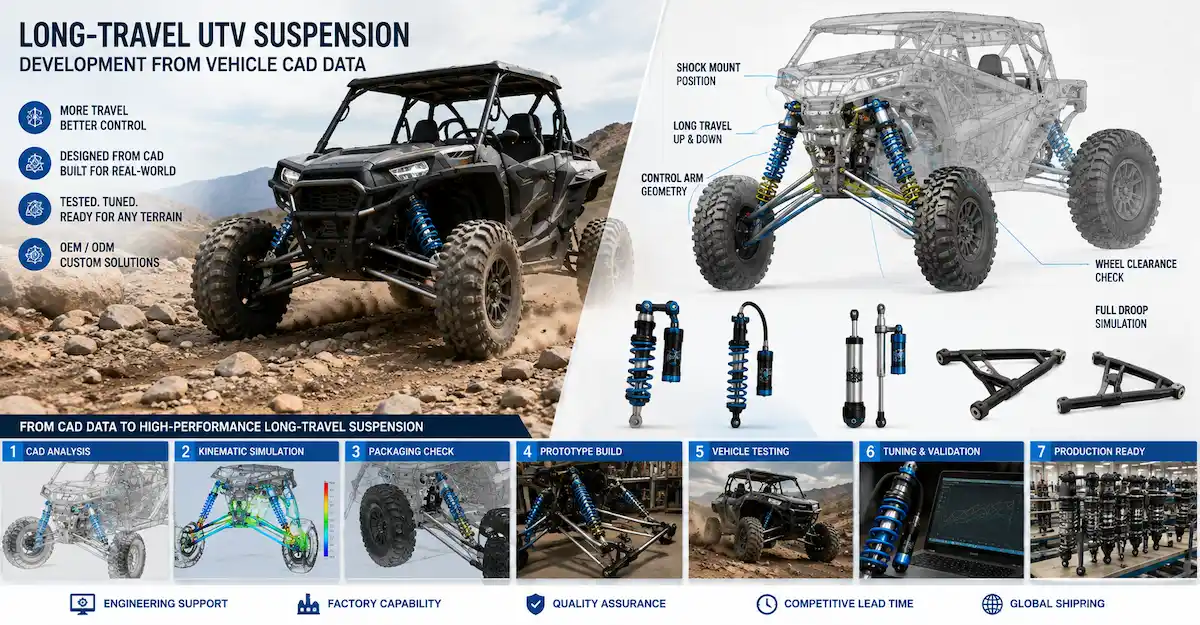
Suspension sample development is the process of transforming a suspension concept, drawing, reference sample, or vehicle requirement into a functional prototype that can be tested, optimized, and prepared for production.
For OEM vehicle manufacturers, a suspension sample is not simply a physical product for inspection. It is an engineering verification stage used to confirm:
- Installation compatibility
- Suspension travel
- Spring characteristics
- Damping performance
- Structural reliability
- Manufacturing feasibility
This development process is especially important for ATV, UTV, motorcycles, electric vehicles, utility vehicles, and specialty vehicle projects where suspension requirements can vary significantly depending on vehicle weight, terrain, load conditions, and performance targets.
A professional suspension supplier should support the complete process from requirement analysis and prototype development to testing, optimization, and production preparation.
Bedo Auto provides suspension development support covering technical consultation, sample analysis, drawing review, prototype manufacturing, spring development, damping adjustment, testing validation, and OEM production preparation.
Learn more about Bedo Auto suspension solutions:
https://www.bedoauto.com/products/shock-absorber
Why Do OEM Buyers Need Suspension Sample Development?
Developing a suspension product directly into mass production without sample validation can create significant risks.
A sample development stage allows manufacturers to identify and solve problems before larger investments are made.
Reduce Fitment Risks
Suspension components must match the vehicle structure correctly.
Important factors include:
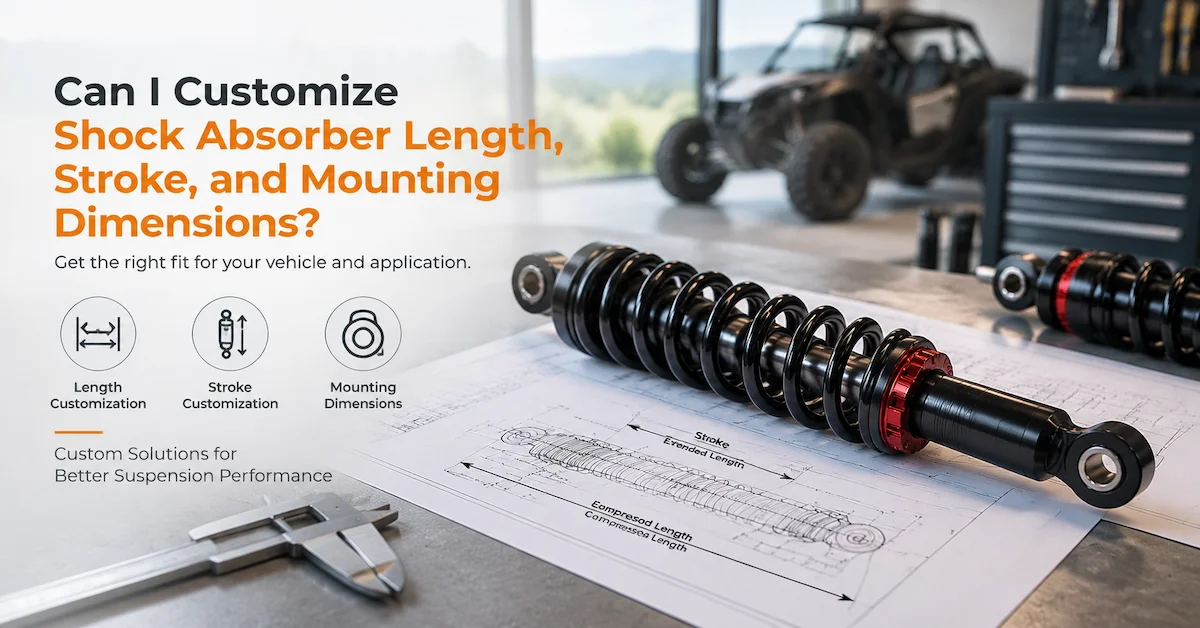
- Mounting dimensions
- Extended length
- Compressed length
- Installation position
- Suspension geometry
- Available space
Even a shock absorber with similar dimensions may perform differently if the installation conditions change.
Verify Suspension Performance
Suspension performance depends on multiple factors working together:
- Spring rate
- Damping force
- Stroke length
- Vehicle load
- Suspension design
- Operating environment
A prototype allows engineers to evaluate whether the suspension system delivers the intended balance between comfort, stability, and control.
Improve Production Reliability
Sample development helps suppliers identify manufacturing challenges before mass production, including:
- Component compatibility
- Assembly processes
- Material selection
- Quality requirements
- Production consistency
This reduces the possibility of redesign after production begins.
What Is the Difference Between Suspension Sample, Prototype, and Production Unit?
| Stage | Purpose | Main Focus |
|---|---|---|
| Sample | Initial evaluation | Basic design verification |
| Prototype | Engineering validation | Performance and optimization |
| Production Unit | Commercial manufacturing | Consistency and scalability |
A suspension sample may represent the first physical version of a design, while a prototype usually includes additional engineering validation before final production.
For OEM projects, the prototype stage is where engineers confirm whether the suspension design can meet actual vehicle requirements.
How Does Suspension Sample Development Work?
A professional suspension sample development process usually includes several engineering stages.
Requirement Analysis and Project Review
The first step is understanding the vehicle application and performance requirements.
Engineers typically review:
- Vehicle category
- Vehicle weight
- Maximum payload
- Riding environment
- Suspension position
- Target performance
- Existing reference components
For example, an ATV used for recreational riding may require different suspension characteristics compared with a utility vehicle carrying additional loads.
The supplier should understand the application before recommending suspension parameters.
Drawing and Sample Evaluation
If the customer provides drawings or existing samples, engineers can analyze the current design.
Common evaluation points include:
- Overall shock length
- Stroke
- Mounting structure
- Spring dimensions
- Cylinder design
- Reservoir configuration
- Installation requirements
This stage helps identify whether the existing design can be improved or whether a completely new suspension solution is required.
Bedo Auto supports sample analysis and drawing review during prototype suspension development.
Related guide:
https://www.bedoauto.com/blog/shock-absorber-prototype-supplier-guide
Prototype Suspension Design
After requirements are confirmed, engineers develop the initial suspension solution.
Depending on the application, development may involve:
Spring Development
The spring determines how the suspension supports vehicle weight and responds to different loads.
Important considerations include:
- Spring rate
- Preload
- Free length
- Wire diameter
- Vehicle weight
- Payload requirements
A spring that is too soft may cause excessive compression, while a spring that is too stiff may reduce comfort and traction.
Damping Development
Damping controls how quickly suspension movement occurs.
Important factors include:
- Compression damping
- Rebound damping
- Damping force
- Adjustment range
- Riding conditions
Proper damping matching helps improve vehicle stability and suspension response.
Structural Design
Prototype development may also involve:
- Shock body design
- Mounting structure
- Material selection
- Surface treatment
- Reservoir configuration
Prototype Manufacturing
Once the design is approved, the supplier manufactures the first functional prototype.
The prototype manufacturing stage focuses on producing a unit that can represent the expected production design.
Depending on project requirements, customization may include:
- Dimensions
- Mounting points
- Spring specifications
- Damping characteristics
- Appearance
- Branding requirements
The purpose of prototype manufacturing is not only to create a sample but also to provide a platform for engineering verification.
Testing and Validation
Testing is one of the most important stages in suspension sample development.
A prototype should be evaluated based on actual performance requirements rather than appearance alone.
Typical validation activities include:
| Test Area | Purpose |
|---|---|
| Dimension inspection | Verify design accuracy |
| Installation test | Confirm vehicle compatibility |
| Damping evaluation | Check suspension response |
| Leakage inspection | Verify sealing performance |
| Load testing | Evaluate support capability |
| Durability testing | Check long-term reliability |
Bedo Auto provides suspension testing support covering performance evaluation, leakage inspection, prototype validation, and production quality checks.
Related article:
https://www.bedoauto.com/blog/shock-absorber-testing-service-guide
Engineering Optimization After Testing
Prototype testing often reveals opportunities for improvement.
Engineering adjustments may include:
- Spring rate changes
- Damping tuning
- Stroke adjustment
- Mounting improvements
- Structural optimization
This development cycle helps suppliers and customers reach a final suspension solution that better matches the vehicle application.
A professional supplier should treat prototype feedback as part of the engineering process rather than as a manufacturing problem.
Moving From Suspension Sample to Production
After prototype validation, the project can move toward production preparation.
Important considerations include:
Production Consistency
The supplier should confirm that the approved prototype design can be reproduced consistently.
Quality Control
Production preparation should include:
- Incoming material inspection
- Manufacturing process control
- Final inspection
- Performance verification
Small Batch Validation
For new vehicle projects, small-batch production can provide an additional opportunity to verify market requirements before larger production volumes.
Bedo Auto supports prototype development, small-batch production, and OEM manufacturing for suspension applications.
Related solution:
https://www.bedoauto.com/blog/low-volume-shock-absorber-oem-guide
How to Choose a Suspension Sample Development Partner?
Choosing the right supplier is not only about manufacturing capability.
OEM buyers should evaluate:
Engineering Experience
A capable supplier should understand:
- Suspension design principles
- Spring and damping relationships
- Vehicle application requirements
- Prototype optimization
Development Capability
Ask whether the supplier can support:
- Drawing review
- Sample analysis
- Prototype production
- Testing
- Engineering revisions
Manufacturing Transition
A strong development partner should help customers move from:
Concept
↓
Sample
↓
Prototype
↓
Validation
↓
Production
This reduces communication costs and avoids repeating development work with different suppliers.
Why Work With Bedo Auto for Suspension Sample Development?
Bedo Auto focuses on suspension components and custom development for:
- ATV
- UTV
- Motorcycle
- Electric vehicles
- Utility vehicles
- Specialty vehicles
The company supports OEM customers through:
- Technical consultation
- Sample analysis
- Drawing review
- Prototype manufacturing
- Spring development
- Damping adjustment
- Testing validation
- Small-batch production
For companies developing new suspension products, Bedo Auto provides a development path from early samples to production-ready solutions.
Contact Bedo Auto:
https://www.bedoauto.com/contact-us
FAQ
What is suspension sample development?
Suspension sample development is the process of creating and validating a suspension product sample before production. It includes design review, prototype manufacturing, testing, and optimization.
Why is a suspension sample important for OEM projects?
A suspension sample helps verify fitment, performance, durability, and manufacturing feasibility before mass production.
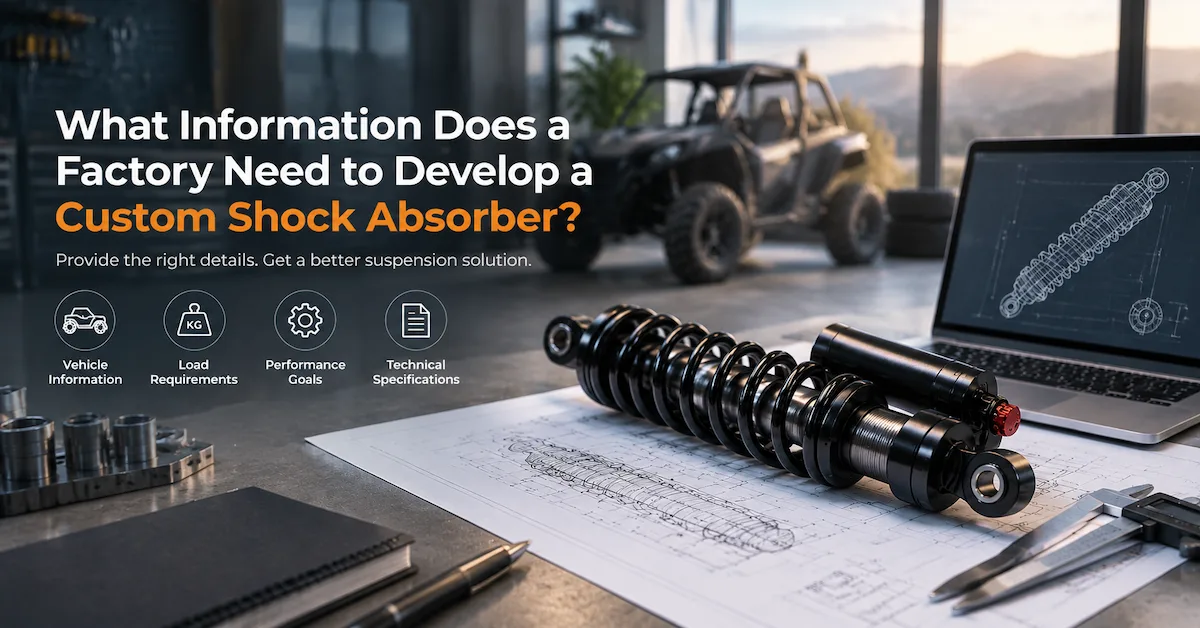
What information should buyers provide for suspension development?
Buyers should provide vehicle information, dimensions, load requirements, application environment, drawings, reference samples, and performance expectations.
Can suspension samples be customized?
Yes. Depending on the project, suppliers can customize dimensions, spring characteristics, damping performance, mounting structures, and appearance.
How are suspension prototypes tested?
Testing may include dimensional inspection, installation verification, damping evaluation, leakage inspection, load testing, and durability evaluation.
Can a prototype suspension design move into mass production?
Yes. After validation and optimization, the approved design can transition into small-batch production and OEM manufacturing.
What vehicles need suspension sample development?
Common applications include ATV, UTV, motorcycles, electric vehicles, utility vehicles, and specialty vehicles.
How do spring rate and damping affect suspension performance?
Spring rate controls load support, while damping controls suspension movement speed. Both need to work together for balanced suspension performance.
What is the difference between a sample and a production suspension part?
A sample is mainly used for evaluation and testing, while a production part must meet repeatability, quality, and manufacturing requirements.
How can I start a suspension sample development project?
Prepare vehicle information, drawings, reference samples, performance requirements, and expected production plans, then discuss the project with an experienced suspension supplier.
Conclusion
Suspension sample development is a critical step between engineering concepts and successful production.
For OEM vehicle manufacturers, the right development process helps confirm fitment, optimize suspension performance, reduce production risks, and create reliable products for the market.
A professional suspension partner should support more than sample manufacturing. The supplier should provide engineering analysis, prototype development, testing support, optimization, and a clear path toward production.
For ATV, UTV, motorcycle, electric vehicle, and specialty vehicle projects, working with an experienced suspension development partner can significantly improve project efficiency and product reliability.
Bedo Auto supports OEM suspension development from initial samples to production solutions. Contact the engineering team to discuss your suspension project requirements.