

Shock Absorbers Explained:Function, Structure & Installation Tips|Car Suspension Guide📌
Posted by NingboBEDO On Jul 24 2025
Featured Blogs
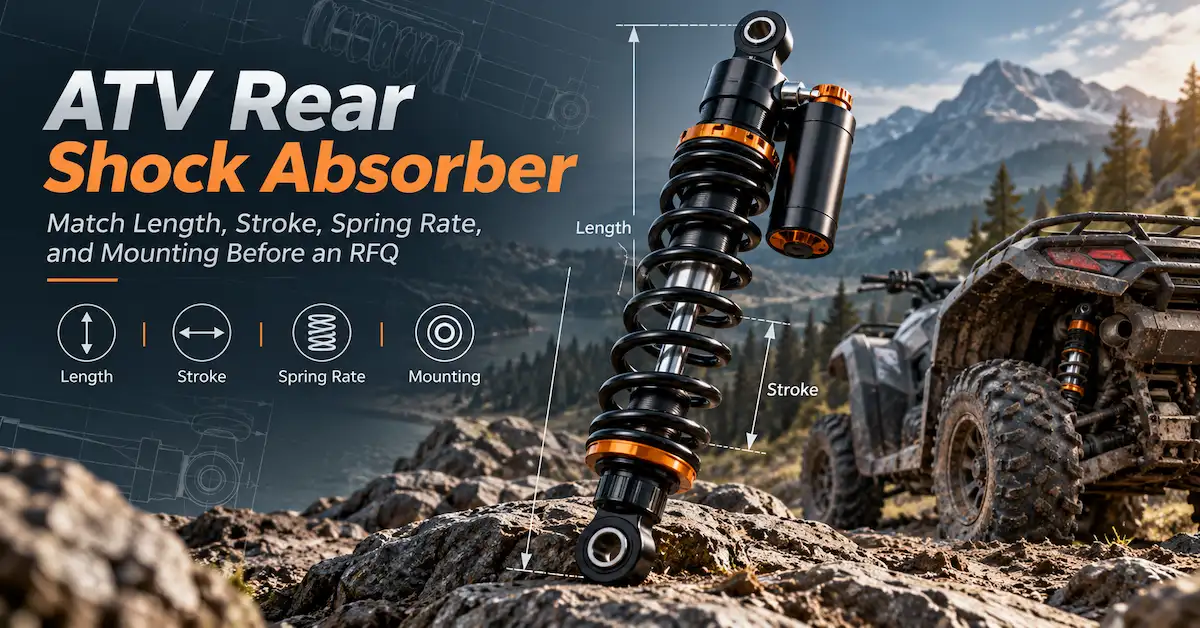
ATV Rear Shock Absorber: Match Length, Stroke, Spring Rate, and Mounting Before an RFQ
Eye-to-eye length alone cannot establish safe fitment or suitable performance for an ATV rear shock absorber. This article helps OEM and aftermarket buyers compare stroke, compressed length, mounting interfaces, spring support, damping data, material evidence, vehicle tests, and production controls before requesting samples.
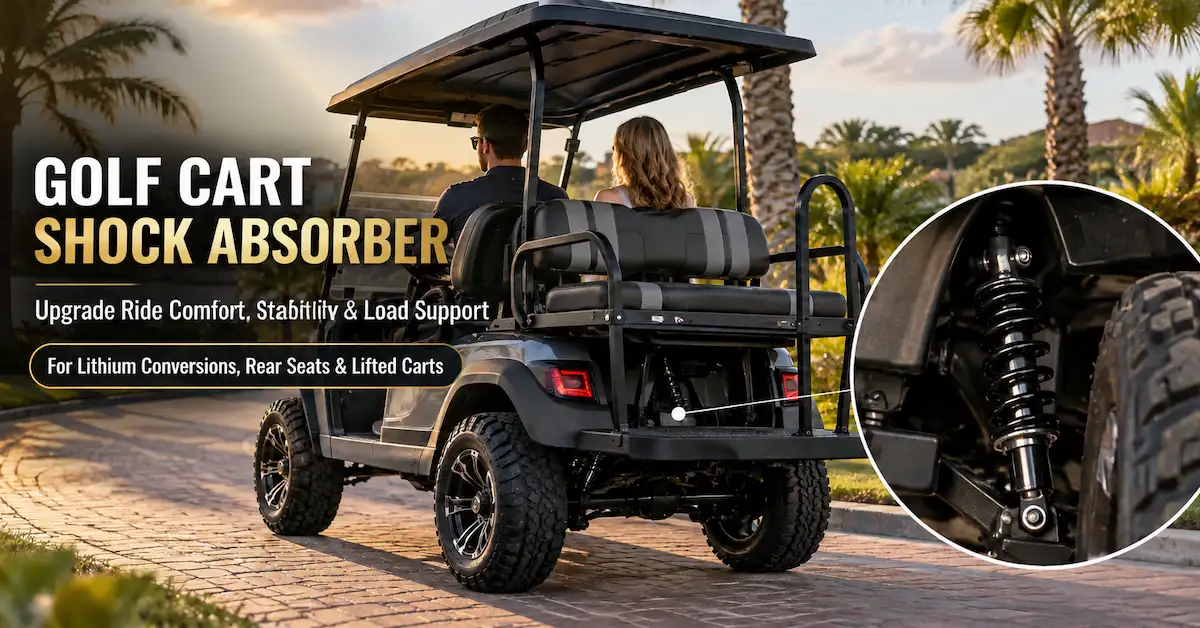
Golf Cart Shock Absorber Guide for Lithium Conversions, Rear Seats & Lifted Carts
A Golf Cart Shock Absorber that works well on a stock vehicle may no longer match the suspension after lithium battery conversion, rear-seat installation, cargo upgrades, lift kits, larger tires, or commercial-duty modifications. This guide explains how golf cart OEMs, conversion companies, aftermarket brands, fleet operators, and distributors can evaluate weight distribution, spring support, shock travel, damping, geometry, testing, and custom development before approving a suspension upgrade.
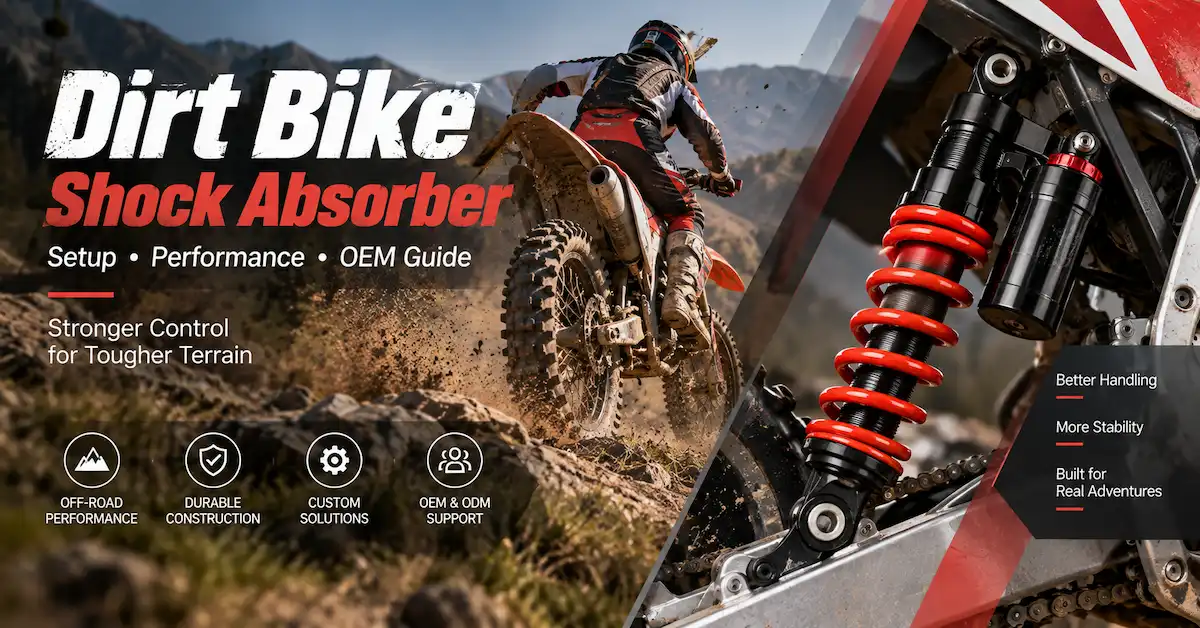
Dirt Bike Shock Absorber Setup for Rider Weight, Sag & Terrain: A B2B Development Guide
A Dirt Bike Shock Absorber must work with rider weight, spring rate, suspension linkage, sag, damping, terrain, and repeated high-speed suspension movement—not simply match the bike by length. This guide helps motorcycle brands, OEM buyers, aftermarket companies, distributors, and suspension developers turn real riding conditions into a controllable shock specification, prototype test plan, and repeatable production standard.
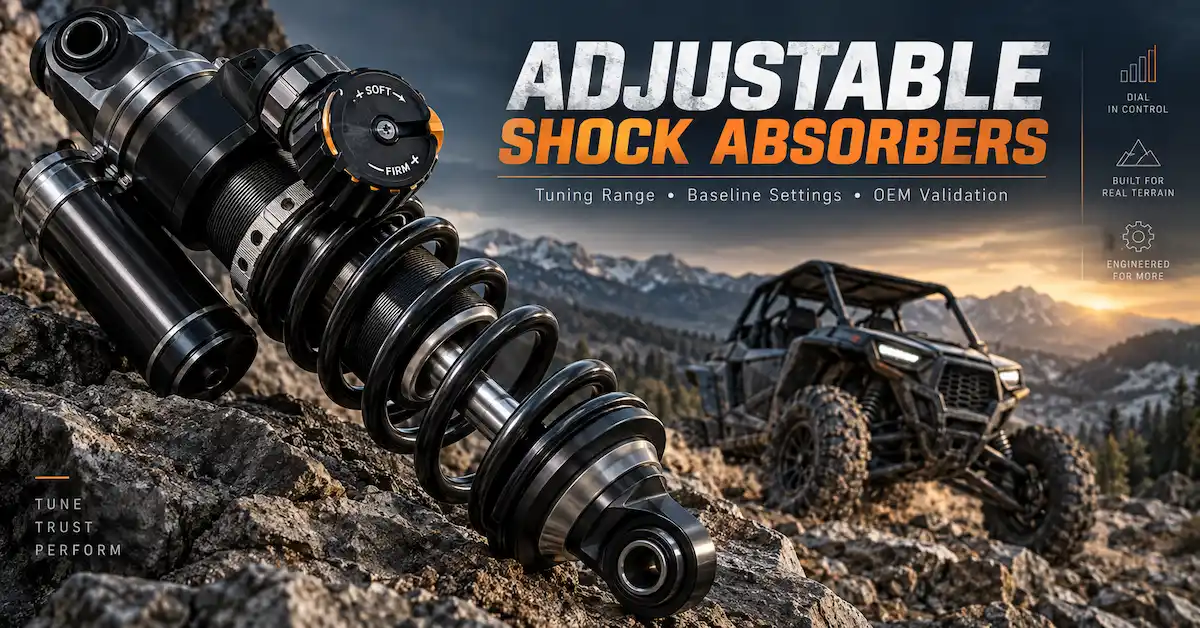
Adjustable Shock Absorbers: How to Define a Usable Tuning Range, Baseline Settings & OEM Validation
Adjustable Shock Absorbers create real value only when each setting produces a controlled, repeatable change that matches the vehicle’s load, terrain, and target behavior. This guide helps OEMs, ATV/UTV brands, motorcycle companies, aftermarket suppliers, and private-label buyers define adjustment functions, establish baseline settings, validate click-to-click consistency, build practical tuning maps, and control adjustable suspension in production.
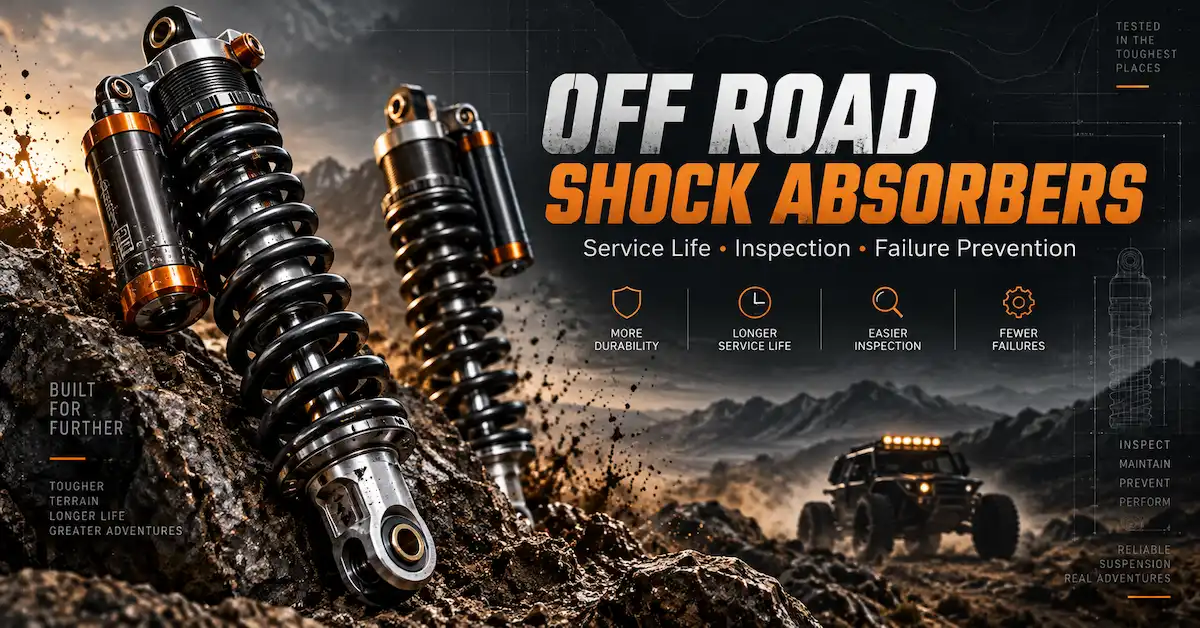
Off Road Shock Absorbers: Service Life, Inspection & Failure Prevention for Harsh Terrain
Off Road Shock Absorbers operate under repeated impact, mud, dust, water, heat, and changing vehicle loads, so long-term reliability depends on more than initial ride performance. This guide helps OEMs, distributors, aftermarket brands, and off-road vehicle developers identify wear indicators, organize inspections, analyze field failures, improve validation, and reduce repeat warranty problems.
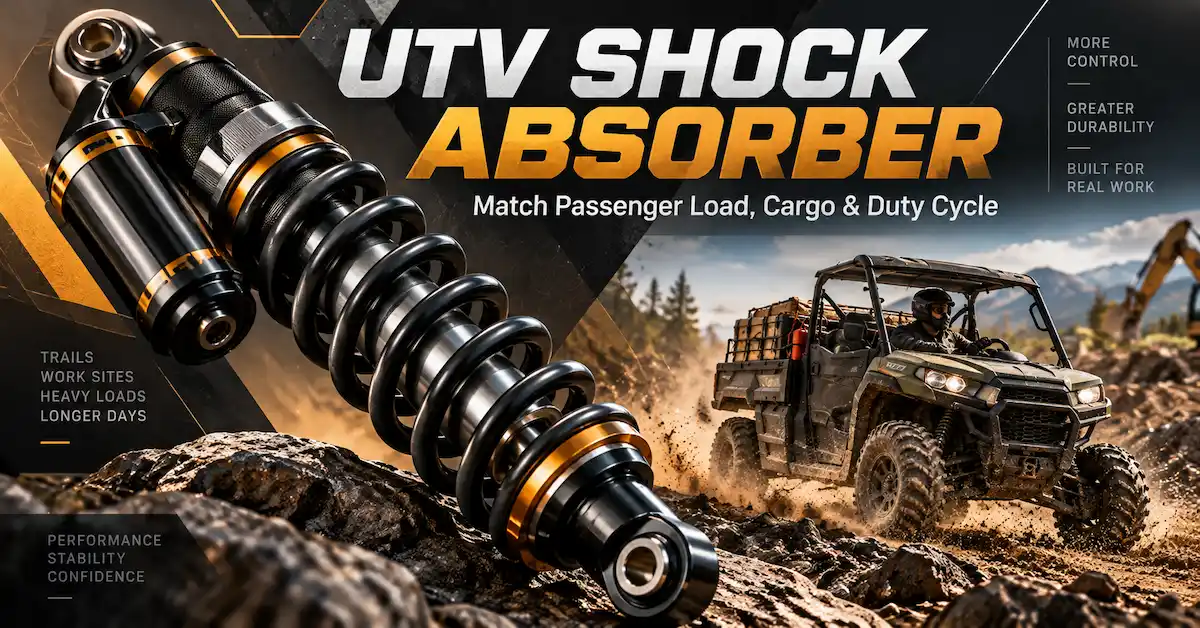
UTV Shock Absorber Guide: How to Match Passenger Load, Cargo & Duty Cycle
A UTV Shock Absorber should be specified around the vehicle’s real operating weight, passenger load, cargo, accessories, terrain, and duty cycle—not curb weight alone. This guide helps OEMs, aftermarket brands, distributors, and utility-vehicle developers build a practical load case, match spring and damping requirements, validate prototypes, and reduce sourcing risk.