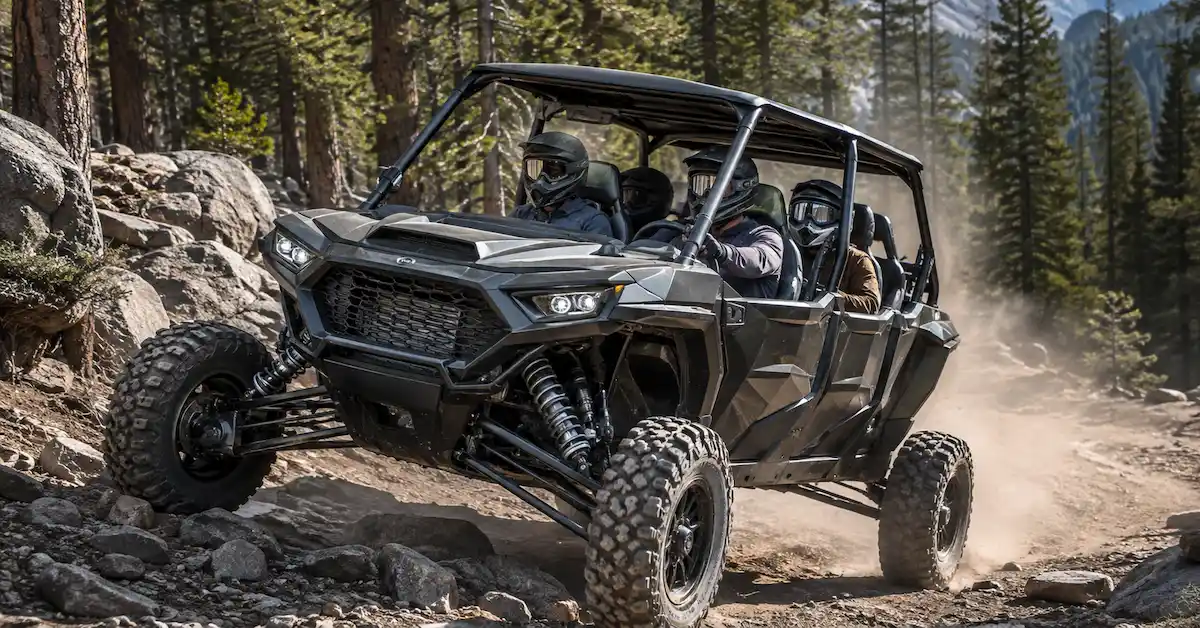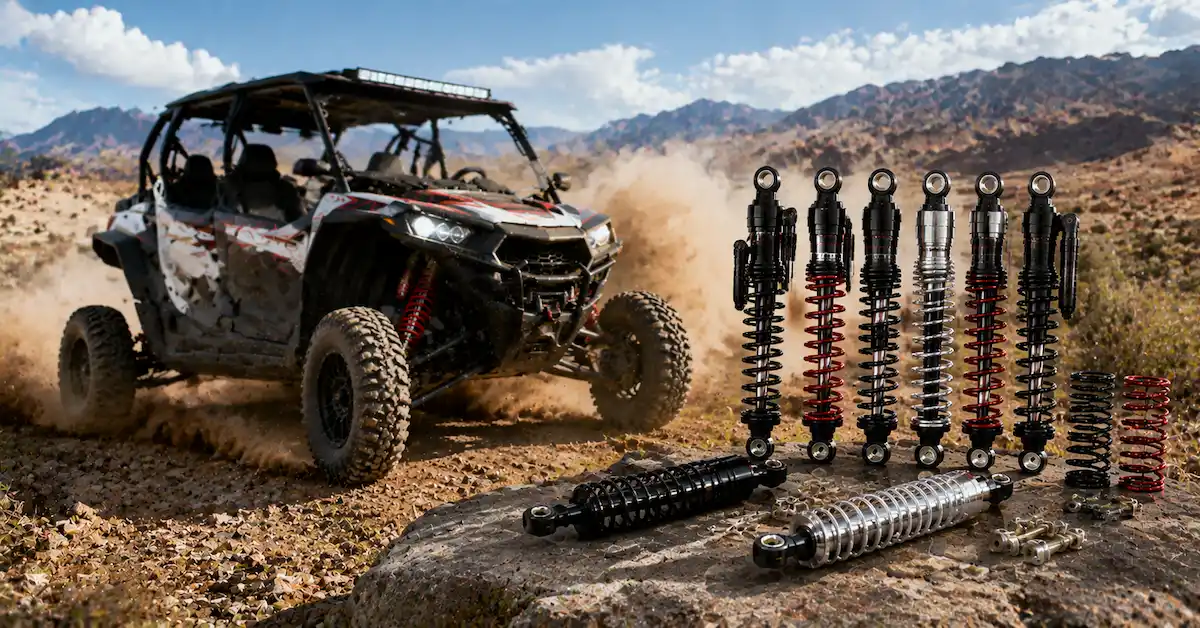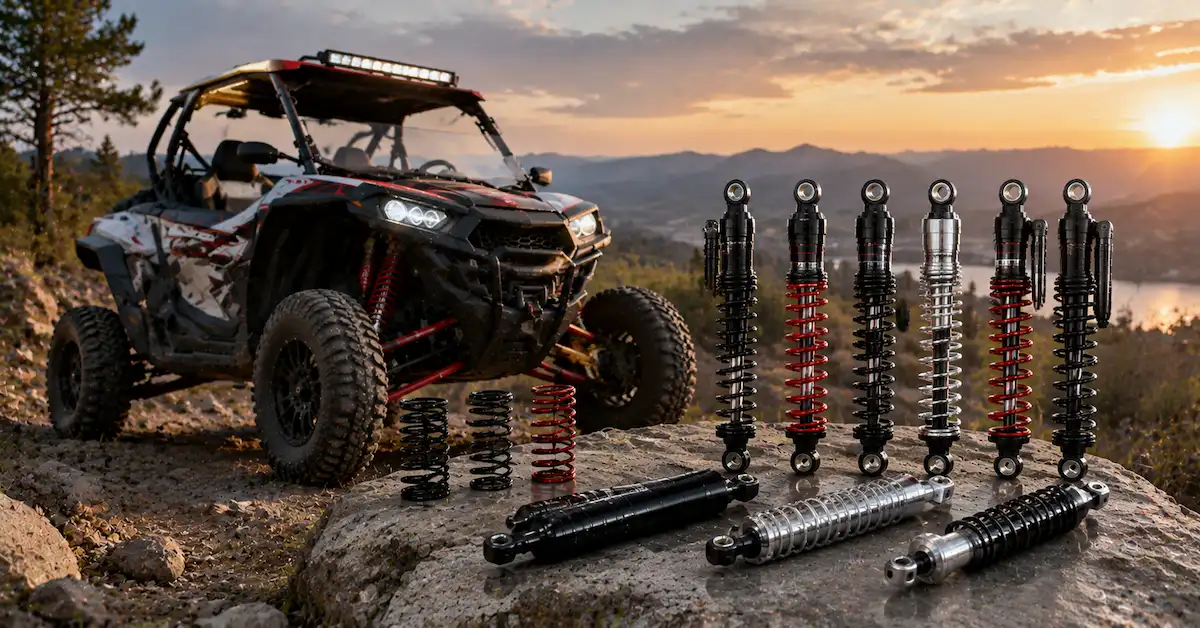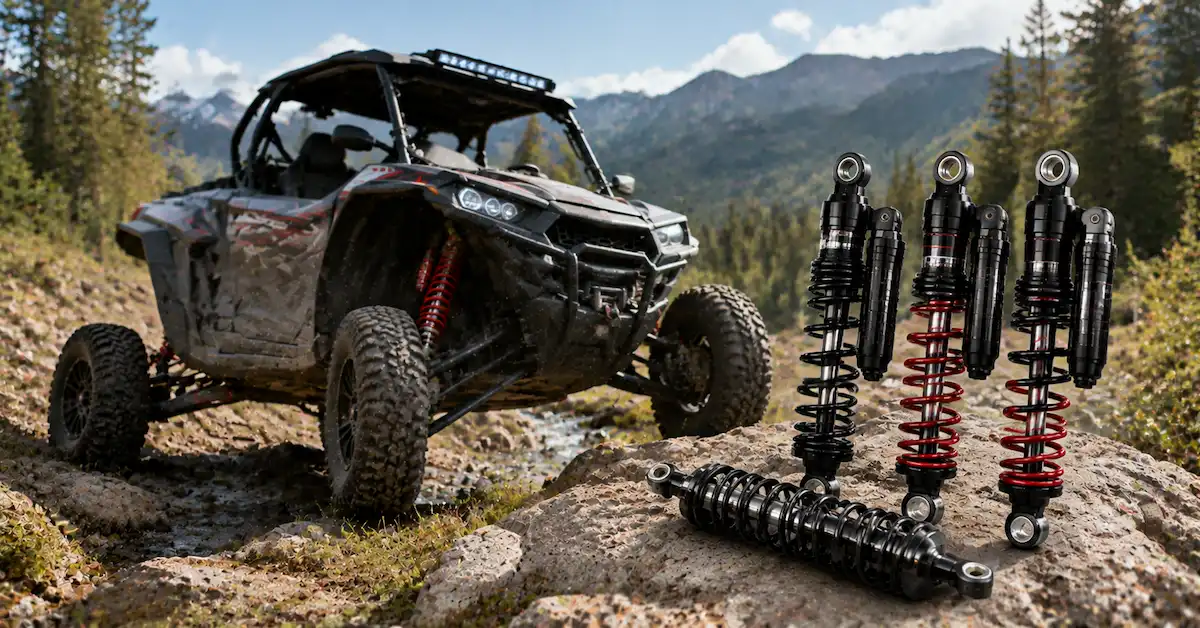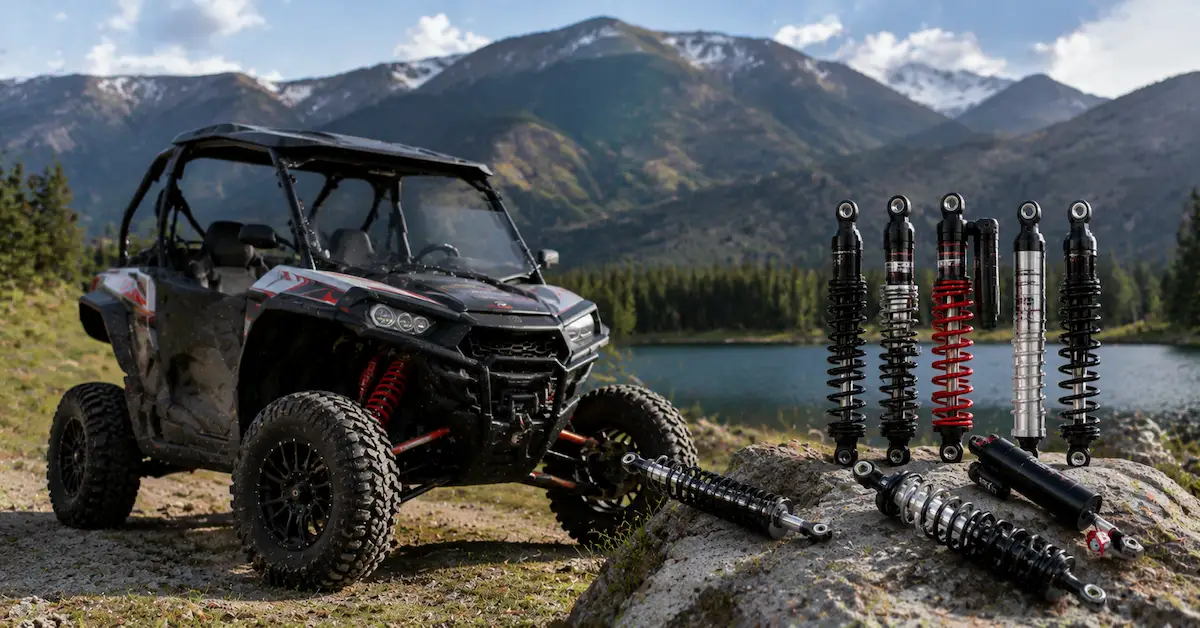

Mountain environments create some of the most demanding conditions for vehicle suspension systems.
Vehicles operating in mountainous areas must handle:
- Rocky trails
- Steep slopes
- Uneven surfaces
- Loose gravel
- Mud
- Snow
- Large elevation changes
- Heavy payloads
For these applications, reliable mountain vehicle suspension parts are essential to maintain vehicle stability, traction, comfort, and long-term durability.
Unlike standard road vehicles, mountain vehicles require suspension components designed for:
- High impact loads
- Long suspension travel
- Variable terrain
- Extreme weather
- Continuous vibration
A professional suspension supplier must consider the complete vehicle system, including shock absorbers, springs, mounting structures, and operating conditions.
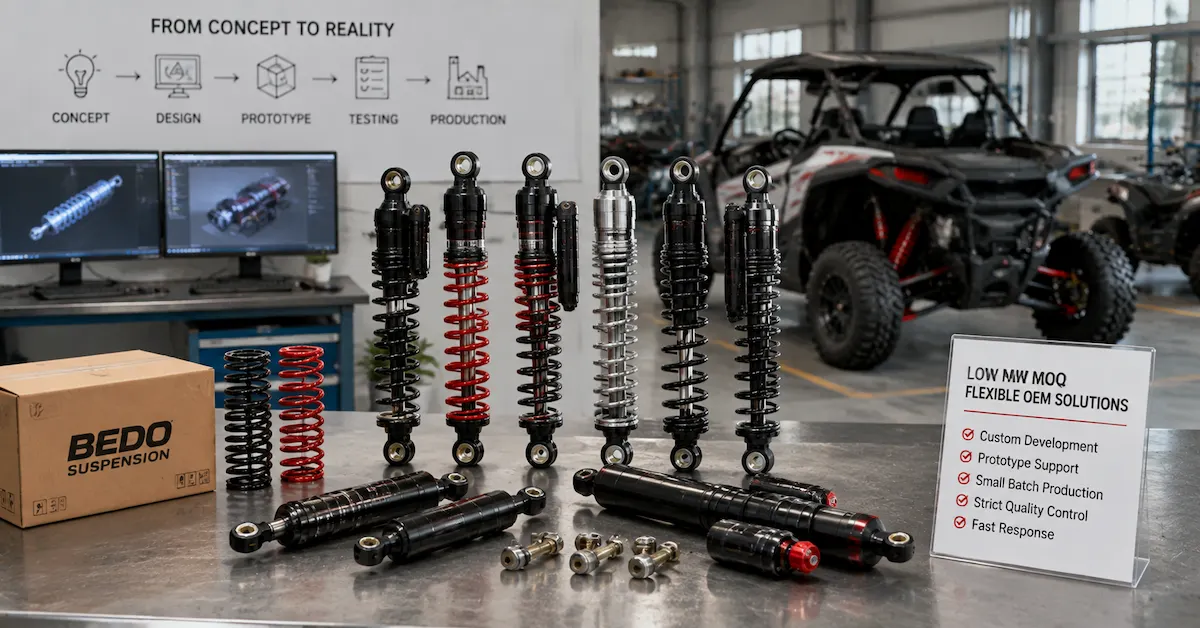
Bedo Auto provides customized suspension components for ATV, UTV, utility vehicles, motorcycles, electric vehicles, and specialty off-road applications.
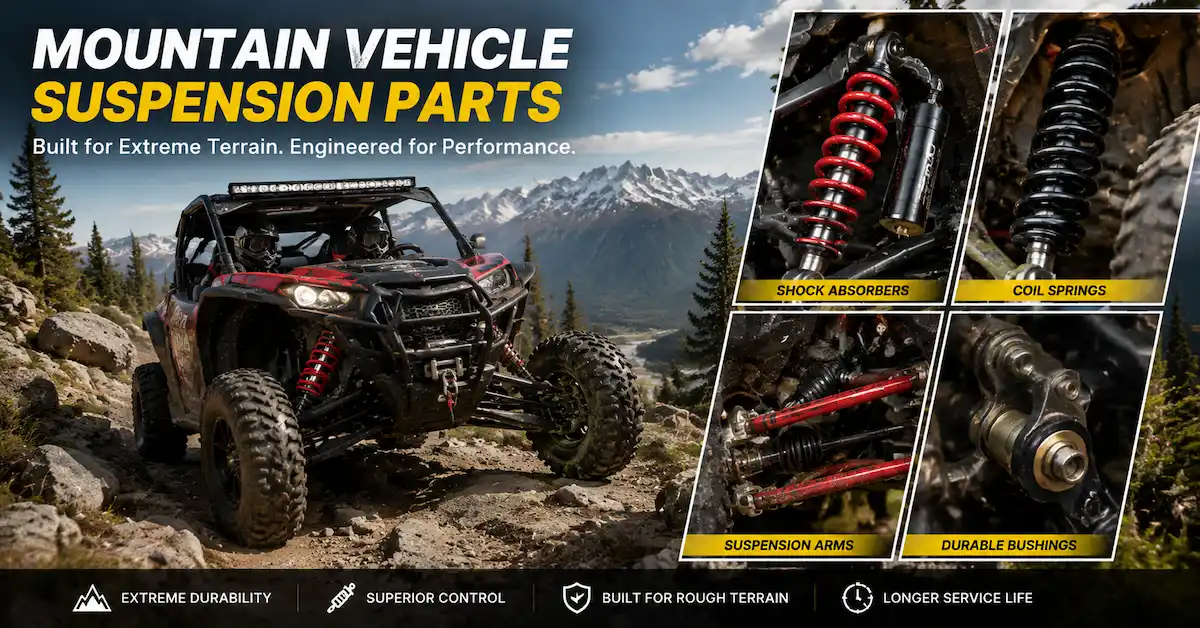
What Are Mountain Vehicle Suspension Parts?
Mountain vehicle suspension parts are components developed to support vehicles operating in steep and challenging terrain.
Common components include:
| Component | Function |
|---|---|
| Shock absorber | Controls suspension movement |
| Coil spring | Supports vehicle weight |
| Suspension arms | Control wheel movement |
| Bushings | Reduce vibration and friction |
| Mounting brackets | Secure suspension components |
| Reservoir shocks | Improve heat management |
| Adjustment systems | Optimize suspension performance |
Each component affects overall vehicle behavior.
A strong suspension system must balance:
- Impact absorption
- Load support
- Vehicle control
- Ride comfort
- Durability
Why Mountain Vehicles Need Specialized Suspension Components
Mountain driving creates forces that are very different from normal road conditions.
Common challenges include:
- Sudden impacts from rocks
- Continuous suspension movement
- Uneven wheel loading
- Steep climbs and descents
- Heavy equipment loads
- Extreme temperature changes
Poor suspension design may result in:
- Loss of traction
- Excessive bouncing
- Suspension bottoming
- Component fatigue
- Reduced vehicle control
- Shorter service life
Professional engineering ensures that suspension parts match the vehicle's actual environment.
Applications of Mountain Vehicle Suspension Parts
Mountain suspension solutions are commonly used in:
ATV Mountain Applications
ATVs operating in mountain environments require:
- High impact resistance
- Compact suspension design
- Strong shock absorbers
- Reliable handling
Applications include:
- Trail riding
- Mountain exploration
- Agricultural operations
- Outdoor transportation
UTV Mountain Applications
UTVs often carry:
- Passengers
- Tools
- Equipment
- Cargo
Suspension requirements include:
- Heavy load support
- Long service life
- Stable handling
- Off-road durability
Utility Mountain Vehicles
Applications include:
- Forestry vehicles
- Farm vehicles
- Maintenance vehicles
- Rescue vehicles
These require:
- Reliable operation
- Strong suspension components
- Weather resistance
Specialty Mountain Vehicles
Examples include:
- Snow vehicles
- Electric utility vehicles
- Custom off-road platforms
Each application requires customized suspension solutions.
Key Requirements for Mountain Suspension Systems
A professional supplier evaluates several factors.
| Requirement | Purpose |
|---|---|
| High impact resistance | Handle rough terrain |
| Long suspension travel | Improve wheel movement |
| Strong load support | Carry equipment and cargo |
| Heat resistance | Maintain shock performance |
| Corrosion protection | Handle moisture and snow |
| Reliable sealing | Prevent contamination |
| Adjustable damping | Adapt to terrain |
The correct suspension design depends on the vehicle's actual usage.
Shock Absorber Requirements for Mountain Vehicles
Shock absorbers are critical components in mountain applications.
They control:
- Compression movement
- Rebound recovery
- Vehicle stability
Important specifications include:
- Shock length
- Stroke
- Compression damping
- Rebound damping
- Reservoir design
- Mounting structure
Compression Damping
Controls suspension response when encountering:
- Rocks
- Drops
- Sharp impacts
Proper compression damping helps:
- Reduce bottoming
- Maintain control
- Protect vehicle components
Rebound Damping
Controls suspension recovery after impact.
Correct rebound settings improve:
- Tire contact
- Traction
- Stability
Coil Spring Selection for Mountain Vehicles
Coil springs support:
- Vehicle weight
- Passengers
- Cargo
- Equipment
Spring characteristics affect:
- Ride height
- Ground clearance
- Load capacity
- Comfort
A spring that is too soft may cause:
- Excessive sag
- Reduced clearance
- Frequent bottoming
A spring that is too stiff may cause:
- Poor comfort
- Reduced traction
- Increased vibration
Spring selection should consider:
- Vehicle weight
- Payload
- Terrain
- Suspension geometry
Suspension Travel and Ground Clearance
Mountain vehicles require sufficient suspension movement.
Longer suspension travel helps:
- Keep tires on uneven surfaces
- Improve traction
- Reduce impact forces
Ground clearance is also important because vehicles must pass:
- Rocks
- Obstacles
- Uneven trails
Suspension geometry must be optimized to provide movement without causing component interference.
Material Requirements for Mountain Suspension Parts
Mountain environments expose components to:
- Impact
- Water
- Dust
- Mud
- Snow
- Temperature changes
Materials should provide:
- Strength
- Fatigue resistance
- Corrosion protection
- Long service life
Important components include:
Shock Body
Requires:
- Structural strength
- Heat resistance
- Precision manufacturing
Piston Rod
Requires:
- Wear resistance
- Surface protection
- Corrosion resistance
Springs
Require:
- Stable spring rate
- Fatigue resistance
- Elastic performance
Environmental Protection and Durability
Mountain vehicles often operate in harsh environments.
Suspension parts should resist:
- Mud contamination
- Water exposure
- Snow
- Dust
- Road salt
Protection methods include:
- Advanced sealing systems
- Protective coatings
- Corrosion-resistant finishes
- Durable materials
Reliable protection improves service life.
OEM Development of Mountain Suspension Parts
A professional OEM process includes:
Requirement Analysis
Engineers evaluate:
- Vehicle type
- Weight
- Terrain
- Load conditions
- Performance targets
Component Design
Development includes:
- Shock absorbers
- Springs
- Mounting parts
- Suspension structures
Prototype Development
Prototype testing verifies:
- Fitment
- Performance
- Durability
Production Validation
Final validation confirms:
- Quality consistency
- Manufacturing stability
- Product reliability
Testing Mountain Vehicle Suspension Parts
Testing helps confirm performance.
Dimensional Testing
Verify:
- Length
- Stroke
- Mounting dimensions
Load Testing
Evaluate:
- Structural strength
- Load capacity
Durability Testing
Simulate:
- Repeated impacts
- Long-term operation
- Harsh environments
Vehicle Testing
Evaluate:
- Stability
- Comfort
- Traction
- Real-world performance
How to Choose a Mountain Suspension Parts Supplier
Buyers should evaluate:
Engineering Capability
The supplier should support:
- Suspension analysis
- Product customization
- Prototype development
Manufacturing Capability
Evaluate:
- Production processes
- Quality systems
- Manufacturing capacity
Testing Capability
Confirm:
- Performance testing
- Durability testing
- Validation support
OEM Experience
A reliable partner should understand:
- Off-road applications
- Vehicle requirements
- Long-term production needs
How Bedo Auto Supports Mountain Vehicle Suspension Projects
As an experienced suspension solution provider, Bedo Auto supports customized mountain vehicle suspension parts for demanding applications.
Support includes:
- Shock absorber development
- Coil spring customization
- Suspension engineering
- Prototype production
- Performance testing
- OEM manufacturing
Applications include:
- ATV
- UTV
- Utility vehicles
- Electric vehicles
- Motorcycles
- Specialty off-road vehicles
Buyers can review suspension solutions through the Bedo Auto Products page.
For custom suspension projects, samples, drawings, and technical requirements can be submitted through the Contact Us page.
FAQ
What are mountain vehicle suspension parts?
They are suspension components designed for vehicles operating in steep, rocky, and challenging terrain.
Why do mountain vehicles need special suspension systems?
Because mountain environments create higher impacts, uneven loads, and harsher operating conditions.
Can mountain suspension parts be customized?
Yes. Shock absorbers, springs, mounting structures, and damping settings can be customized.
What vehicles use mountain suspension components?
Applications include ATV, UTV, utility vehicles, snow vehicles, and specialty off-road platforms.
How are mountain suspension parts tested?
Testing may include dimensional inspection, load testing, durability testing, and vehicle validation.
Can Bedo Auto provide OEM mountain suspension solutions?
Yes. Bedo Auto supports engineering development, prototypes, testing, and OEM manufacturing.
Conclusion
Reliable mountain vehicle suspension parts help vehicles maintain stability, traction, and durability in extreme terrain environments.
Developing mountain suspension requires careful coordination between shock absorbers, springs, geometry, materials, testing, and manufacturing processes.
Through engineering support, prototype development, validation testing, and OEM production, Bedo Auto helps global customers create durable suspension solutions for demanding mountain and off-road applications.