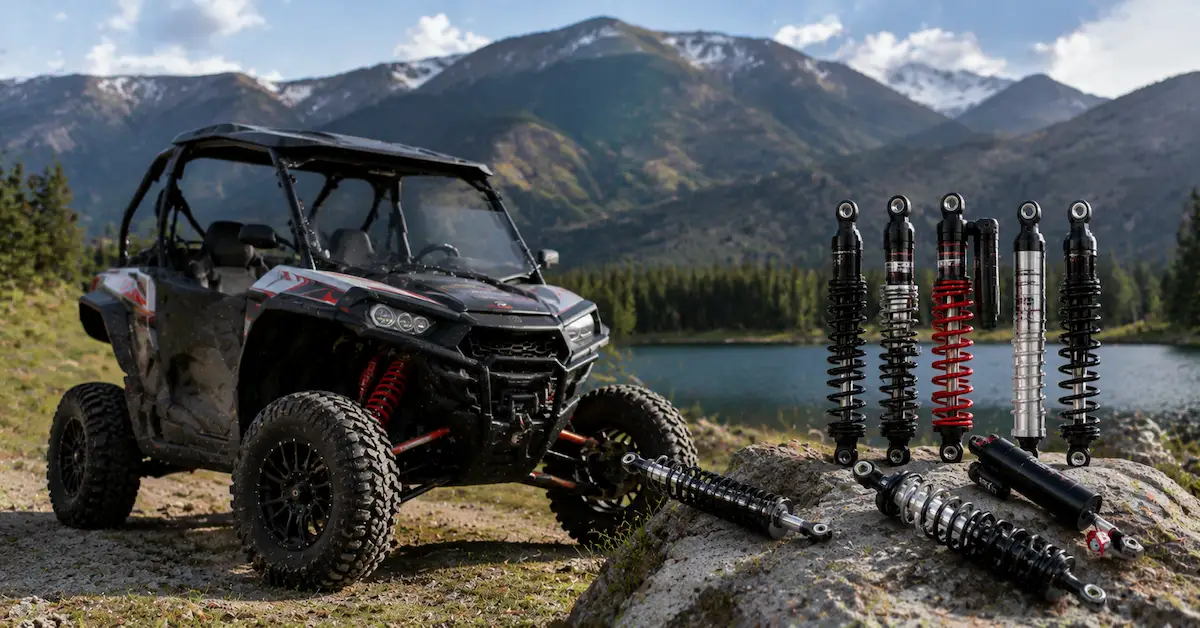

Choosing the right damping tuned suspension supplier is important for vehicle manufacturers, aftermarket suspension brands, and engineering companies developing high-performance suspension systems.
Suspension performance depends on more than selecting a strong shock absorber.
The suspension system must be tuned according to:
- Vehicle weight
- Load conditions
- Spring rate
- Suspension geometry
- Terrain
- Driving style
- Performance requirements
Damping tuning determines how quickly the suspension responds during compression and rebound.
A properly tuned suspension system can improve:
- Vehicle control
- Tire contact
- Ride comfort
- Handling stability
- Impact absorption
- Overall durability
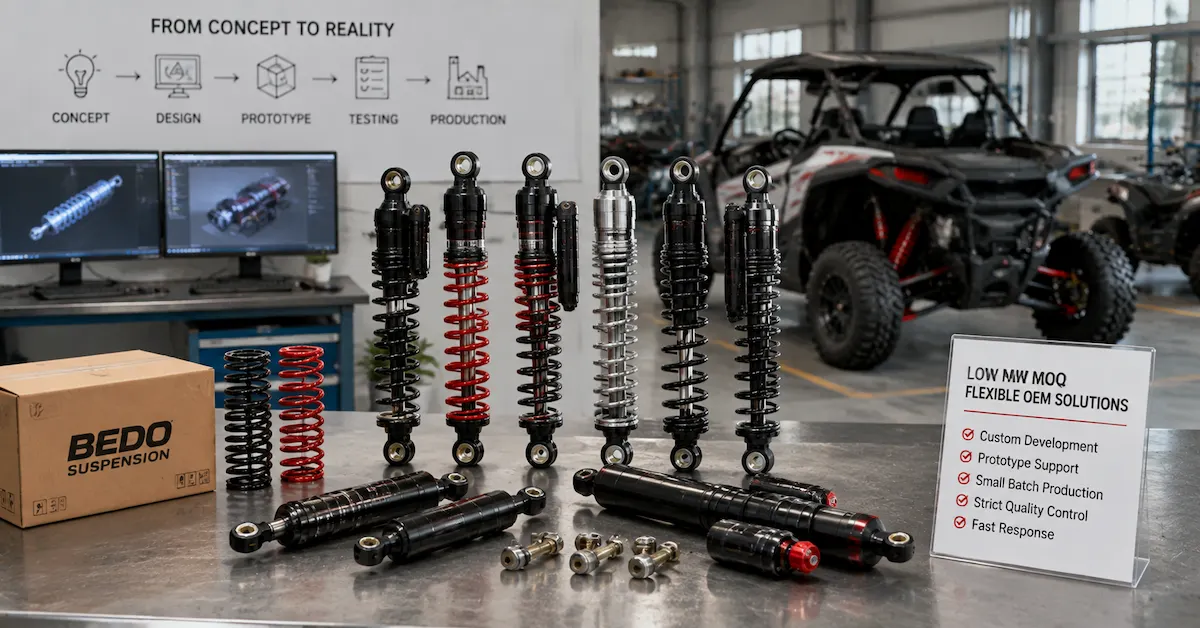
For OEM projects, a professional supplier should combine shock absorber engineering, spring matching, testing, and vehicle validation to create a suspension system optimized for the specific application.
Bedo Auto provides customized suspension development solutions for ATV, UTV, motorcycles, golf carts, utility vehicles, electric vehicles, and specialty vehicle applications.
What Is Damping Tuned Suspension?
Damping tuned suspension refers to a suspension system where shock absorber damping characteristics are optimized according to vehicle requirements.
The main purpose of damping tuning is controlling suspension movement.
A shock absorber regulates:
- Compression speed
- Rebound speed
- Suspension recovery
- Impact response
Different applications require different damping characteristics.
For example:
A racing vehicle may need faster response and precise control.
A utility vehicle may require stronger load support and durability.
An off-road vehicle may need better impact absorption and suspension recovery.
A professional damping tuned suspension supplier develops suspension settings according to actual operating conditions rather than using standard configurations.
Why Suspension Damping Tuning Matters
Incorrect damping settings can negatively affect vehicle performance.
Too Little Damping
Insufficient damping may cause:
- Excessive bouncing
- Poor stability
- Reduced tire contact
- Slow vehicle recovery after impacts
Too Much Damping
Excessive damping may cause:
- Harsh ride quality
- Reduced comfort
- Poor suspension response
- Increased stress on components
The objective of tuning is finding the correct balance between:
- Control
- Comfort
- Stability
- Durability
Main Parameters in Suspension Damping Tuning
A professional suspension tuning process evaluates several factors.
Compression Damping
Compression damping controls the shock absorber during compression.
It affects:
- Impact absorption
- Bottoming resistance
- Load control
- Vehicle support
Proper compression tuning helps vehicles handle:
- Rocks
- Potholes
- Jump landings
- Heavy loads
Rebound Damping
Rebound damping controls suspension recovery after compression.
It influences:
- Tire contact
- Traction
- Vehicle stability
Incorrect rebound settings may cause:
- Bouncing
- Suspension packing
- Reduced control
High-Speed and Low-Speed Damping
Advanced suspension systems may separate damping adjustment into:
Low-Speed Damping
Controls slower movements caused by:
- Braking
- Acceleration
- Weight transfer
- Smooth terrain changes
High-Speed Damping
Controls faster movements caused by:
- Large impacts
- Rocks
- Jump landings
- Sharp obstacles
Separate adjustment allows engineers to create more precise suspension performance.
Applications of Damping Tuned Suspension
A professional damping tuned suspension supplier supports different vehicle categories.
ATV and UTV Suspension
Off-road vehicles require tuning for:
- Uneven terrain
- Heavy loads
- Impact conditions
- Long-distance operation
Damping optimization improves:
- Traction
- Stability
- Rider comfort
- Vehicle control
Motorcycle Suspension
Motorcycle suspension requires precise tuning based on:
- Rider weight
- Riding style
- Road conditions
- Performance requirements
Golf Cart Suspension
Golf carts may require tuning for:
- Passenger comfort
- Battery weight
- Utility applications
- Resort transportation
Utility Vehicle Suspension
Utility vehicles often need:
- Stable load support
- Long service life
- Reliable operation
Electric Vehicle Suspension
EV suspension tuning considers:
- Battery weight
- Vehicle mass
- Different center of gravity
- Energy efficiency
Key Information Required for Suspension Tuning
Before developing tuned suspension, buyers should provide:
| Information | Purpose |
|---|---|
| Vehicle model | Defines application |
| Vehicle weight | Determines suspension load |
| Payload | Influences damping requirements |
| Spring specification | Matches damping performance |
| Shock dimensions | Confirms compatibility |
| Suspension geometry | Guides tuning |
| Terrain | Defines performance needs |
| Driving style | Influences adjustment |
| Performance goals | Defines target settings |
| Existing suspension data | Supports optimization |
Common goals include:
- Improve comfort
- Increase stability
- Reduce bottoming
- Improve off-road performance
- Support heavier loads
- Create premium aftermarket suspension
Damping Tuned Suspension Development Process
Step 1: Application Analysis
Engineers evaluate:
- Vehicle characteristics
- Load conditions
- Operating environment
- Performance requirements
Step 2: Suspension Parameter Development
The supplier defines:
- Spring rate
- Compression damping
- Rebound damping
- Shock specifications
Step 3: Prototype Production
Prototype shocks are manufactured for evaluation.
Step 4: Laboratory Testing
Testing verifies:
- Damping curves
- Force response
- Adjustment range
Step 5: Vehicle Validation
Real vehicle testing confirms:
- Ride quality
- Stability
- Handling
- Durability
Spring and Damping Matching
A damping tuned suspension system requires proper spring and shock coordination.
The spring controls:
- Vehicle support
- Ride height
- Load capacity
The shock absorber controls:
- Movement speed
- Suspension recovery
- Stability
Incorrect matching may create:
- Poor handling
- Harsh ride
- Excessive movement
- Reduced traction
Professional tuning evaluates both components together.
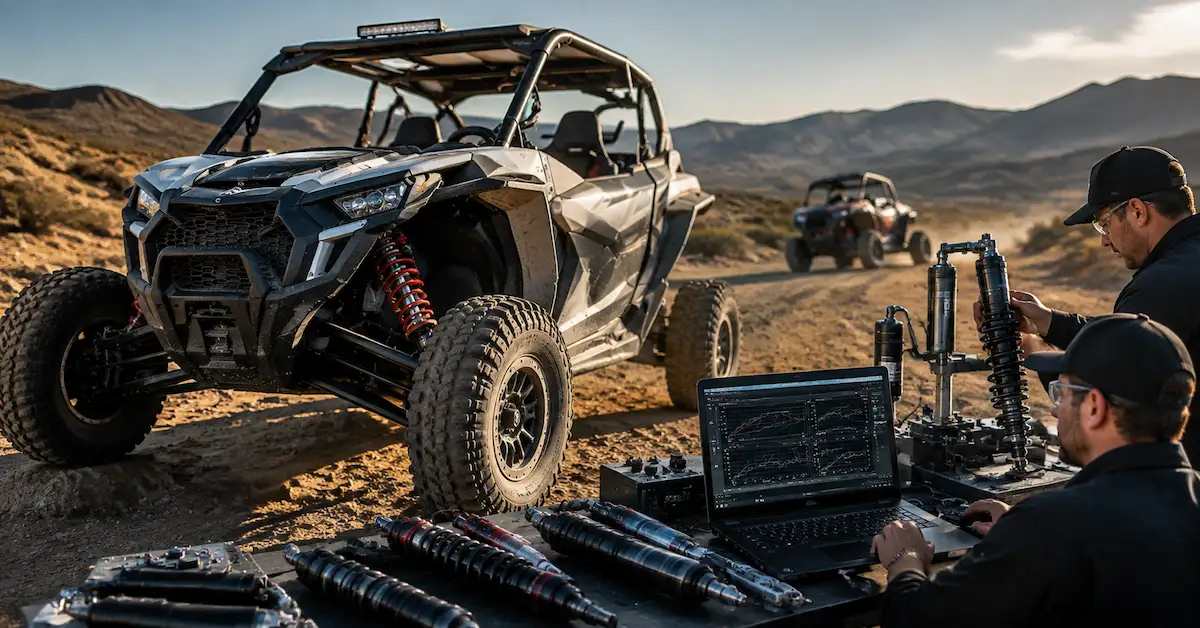
Shock Dyno Testing for Suspension Tuning
Shock dyno testing provides objective suspension data.
It measures:
- Compression force
- Rebound force
- Velocity response
- Adjustment changes
Benefits include:
- Accurate tuning
- Prototype comparison
- Production consistency
- Performance verification
Testing data helps engineers optimize suspension settings rather than relying only on subjective feedback.
Material and Structural Considerations
Damping tuned shock absorbers must maintain performance under demanding conditions.
Important components include:
Shock Body
Requires:
- Strength
- Heat resistance
- Precision manufacturing
Piston Rod
Requires:
- Wear resistance
- Surface protection
- Corrosion resistance
Internal Valve System
Requires:
- Accurate design
- Stable performance
- Consistent response
Quality Control for Tuned Suspension Systems
A professional supplier should verify:
Dimensional Accuracy
Check:
- Shock length
- Stroke
- Mounting dimensions
Damping Performance
Verify:
- Compression response
- Rebound response
- Adjustment range
Leakage Resistance
Test:
- Oil sealing
- Pressure stability
Durability
Evaluate:
- Long-term operation
- Component reliability
Final Inspection
Check:
- Assembly quality
- Appearance
- Packaging
How to Choose a Damping Tuned Suspension Supplier
Buyers should evaluate:
Engineering Capability
The supplier should support:
- Suspension analysis
- Damping development
- Spring matching
- Prototype tuning
Testing Capability
Confirm:
- Shock dyno testing
- Performance validation
- Vehicle testing
Manufacturing Capability
Evaluate:
- Production processes
- Quality systems
- Batch consistency
OEM Support
A suitable supplier should support:
- Prototype
- Small batch
- Mass production
How Bedo Auto Supports Damping Tuned Suspension Projects
As an experienced damping tuned suspension supplier, Bedo Auto provides customized suspension engineering and OEM development support.
Services include:
- Suspension analysis
- Shock absorber tuning
- Spring matching
- Prototype development
- Performance testing
- Vehicle validation
- OEM manufacturing
Applications include:
- ATV
- UTV
- Motorcycle
- Golf cart
- Utility vehicle
- Electric vehicle
- Specialty vehicle
Buyers can review suspension solutions through the Bedo Auto Products page.
For suspension tuning projects, samples, drawings, and technical requirements can be submitted through the Contact Us page.
FAQ
What is damping tuned suspension?
It is a suspension system optimized through compression and rebound tuning to achieve specific vehicle performance goals.
Why does suspension damping need customization?
Different vehicles have different weights, loads, terrains, and performance requirements.
Can damping be adjusted without changing springs?
Sometimes, but the best performance usually requires matching damping with spring characteristics.
What vehicles benefit from tuned suspension?
ATV, UTV, motorcycles, utility vehicles, electric vehicles, and performance vehicles can benefit from damping optimization.
How is damping performance tested?
Testing may include shock dyno testing, compression analysis, rebound testing, and vehicle validation.
Can Bedo Auto support OEM suspension tuning?
Yes. Bedo Auto supports engineering analysis, tuning, prototypes, testing, and OEM production.
Conclusion
A professional damping tuned suspension supplier helps vehicle manufacturers and aftermarket brands create suspension systems with improved control, comfort, durability, and performance.
Suspension tuning requires coordination between shock absorbers, springs, vehicle geometry, testing data, and real-world application requirements.
Through engineering development, damping optimization, prototype validation, and OEM manufacturing support, Bedo Auto helps global customers develop reliable tuned suspension solutions for different vehicle applications.