
Yes, an experienced custom suspension parts manufacturer can produce components based on customer drawings. However, professional manufacturing involves much more than simply copying dimensions from a file.
A complete drawing-based development process requires:
- Engineering review
- Manufacturing feasibility analysis
- Material evaluation
- Prototype development
- Product validation
- Production quality control
A drawing defines the design requirements, but engineering determines whether the design can be manufactured consistently and perform correctly in the real application.
For OEM suspension projects, the ideal process is:
Customer Drawing → Engineering Review → Prototype → Testing → Approval → Production
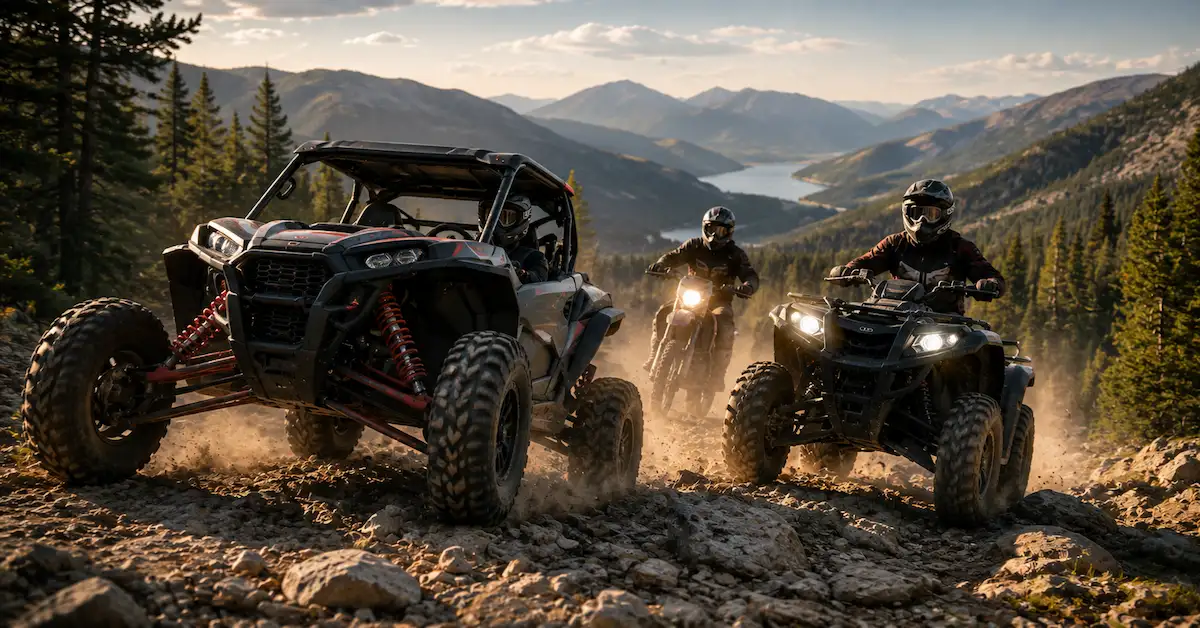
This approach is especially important for ATV, UTV, off-road vehicles, and specialty vehicle applications where suspension components directly influence vehicle performance.
For existing suspension solutions, buyers can review Bedo Auto's Shock Absorber Products.
Can Suspension Parts Be Manufactured Directly From Customer Drawings?
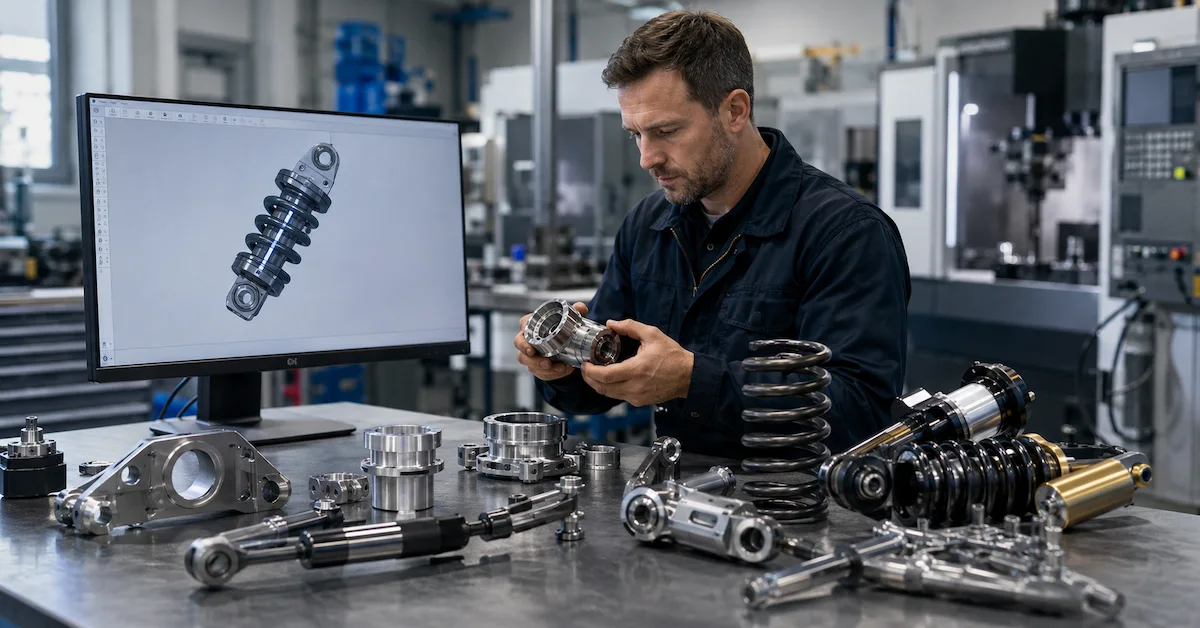
A factory can usually manufacture suspension components from drawings when the technical information is complete and production requirements are clear.
Customer-provided information may include:
- 2D engineering drawings
- 3D CAD files
- Material specifications
- Surface treatment requirements
- Dimensional tolerances
- Production quantities
- Application requirements
The manufacturer's responsibility is not only manufacturing.
A capable engineering team should also evaluate:
- Whether the design is manufacturable
- Whether tolerances are realistic
- Whether materials are suitable
- Whether production processes can maintain consistency
This prevents problems from being discovered after production begins.
What Types of Suspension Parts Can Be Manufactured From Drawings?
Depending on factory capability, custom suspension components may include:
Shock Absorber Components
Examples include:
- Shock bodies
- Piston rods
- Mounting components
- Reservoir parts
- Custom brackets
These components often require precise machining and assembly control.
Suspension Springs
Custom spring development may include:
- Coil springs
- Specific spring rates
- Different wire diameters
- Custom free lengths
Spring design should match:
- Vehicle weight
- Payload
- Suspension geometry
- Application requirements
Mounting Components
Factories may manufacture:
- Brackets
- Mount adapters
- Bushings
- Connection components
These parts require accurate dimensions because small differences can affect vehicle installation.
Complete Suspension Assemblies
Some OEM projects require complete solutions rather than individual components.
Examples:
- Vehicle-specific shock absorber assemblies
- Custom suspension upgrade kits
- Private-label suspension products
What Information Should Be Included in Suspension Part Drawings?
A detailed drawing helps the manufacturer provide a more accurate evaluation and quotation.
Important information includes:
Technical Information
Such as:
- Dimensions
- Tolerances
- Material specifications
- Surface treatment
- Heat treatment requirements
- Thread specifications
Application Information
Including:
- Vehicle type
- Installation location
- Load requirements
- Operating environment
- Performance expectations
Production Information
Including:
- Prototype quantity
- Initial order quantity
- Expected annual volume
- Packaging requirements
- Branding requirements
A drawing without application information may define the part but not explain how the part needs to perform.
How Does a Factory Review Customer Drawings?
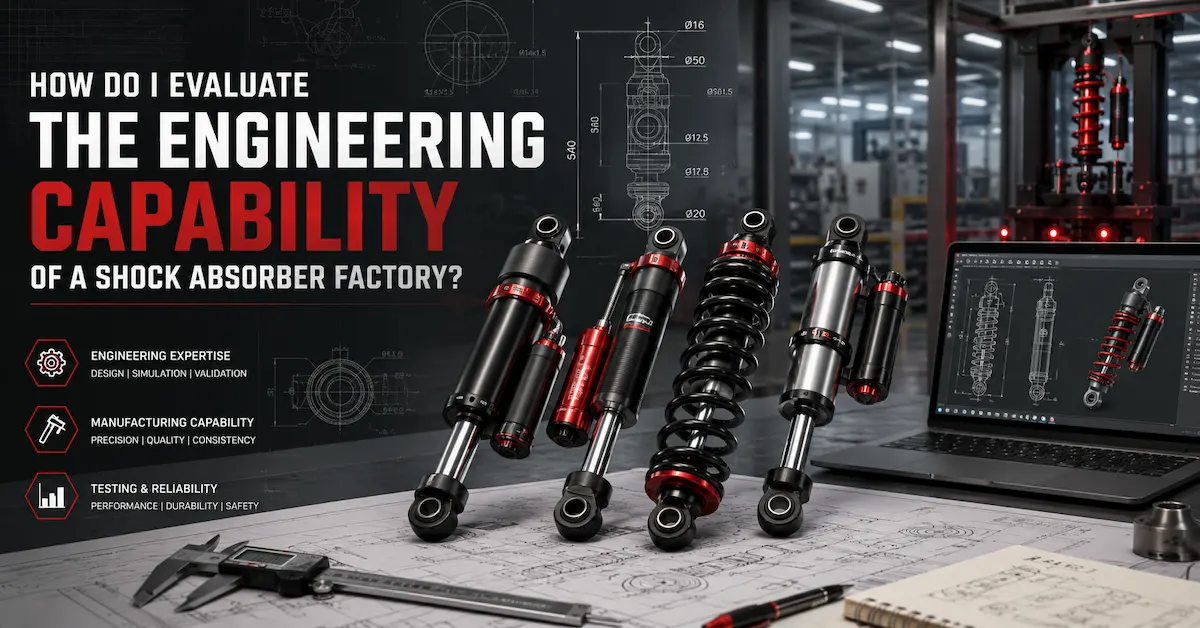
A professional suspension parts manufacturer should review drawings before production.
The process usually includes:
Step 1: Drawing Analysis
Engineers review:
- Dimensions
- Tolerances
- Structure
- Component relationships
The purpose is to understand the design requirements.
Step 2: Manufacturing Feasibility Review
The factory evaluates:
- Machining requirements
- Production methods
- Material availability
- Assembly difficulty
- Quality risks
Some designs may work theoretically but require improvement for efficient manufacturing.
Step 3: Engineering Feedback
A capable manufacturer may suggest:
- Design improvements
- Manufacturing optimization
- Material alternatives
- Cost reduction opportunities
The goal is not changing the customer's idea, but making the product more practical for production.
For CAD-based development, see CAD Based Suspension Development.
Why Is Engineering Review Important Before Production?
Two factories may receive the same drawing but produce different results.
Without engineering review, potential issues may include:
- Difficult machining processes
- Unrealistic tolerances
- Material problems
- Assembly difficulties
- Higher production costs
- Inconsistent quality
Engineering review helps identify these risks before manufacturing starts.
For suspension products, this is especially important because the component must not only fit but also perform under vehicle operating conditions.
Can a Factory Develop Prototypes From Drawings?
Yes.
Prototype development is an important stage between design and mass production.
The typical process is:
Drawing → Engineering Review → Prototype → Testing → Revision → Approval
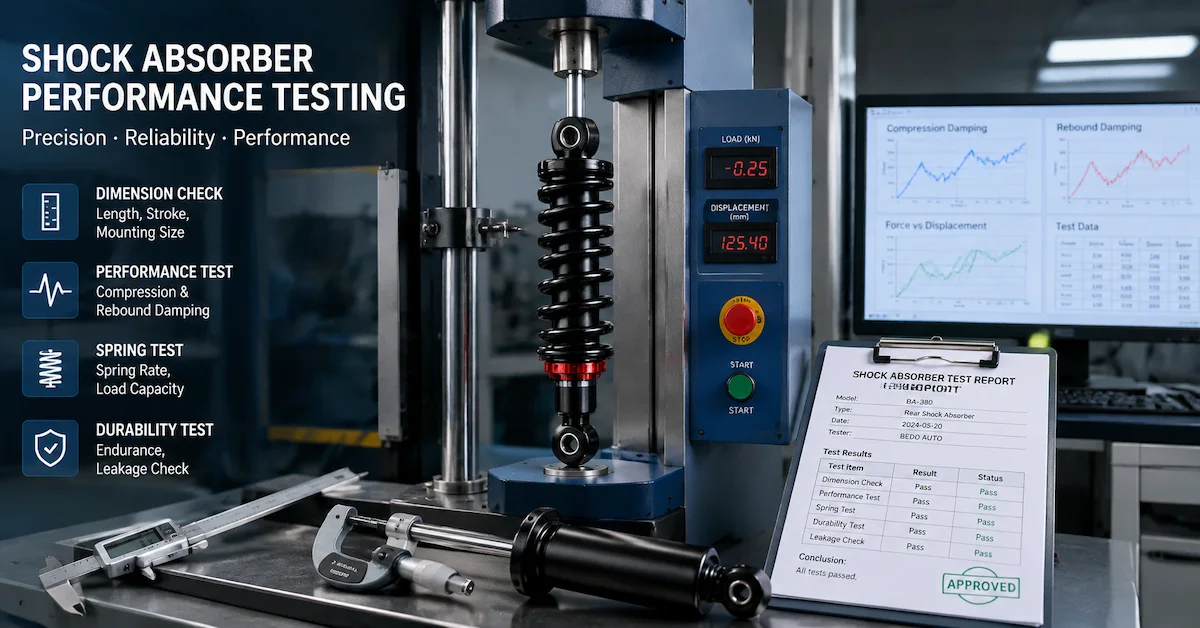
Prototype evaluation can verify:
- Dimensions
- Installation fit
- Component interaction
- Product function
- Manufacturing feasibility
For suspension parts, prototype testing is valuable because a component that meets drawing requirements may still require adjustment after real application testing.
For sample development projects, see Suspension Sample Development.
What Manufacturing Capabilities Should a Suspension Parts Factory Have?
A reliable manufacturer should demonstrate both engineering and production capability.
Precision Manufacturing
Important capabilities may include:
- CNC machining
- Precision processing
- Surface finishing
- Component assembly
Engineering Support
Including:
- CAD review
- Drawing analysis
- Process improvement
- Technical communication
Quality Control
Including:
- Material inspection
- Dimensional inspection
- Process control
- Final inspection
Assembly Capability
For suspension products, assembly consistency is critical.
The factory should control:
- Component matching
- Assembly procedures
- Functional checks
Can a Factory Improve My Suspension Part Design?
A strong engineering manufacturer can provide more value than simple production.
Manufacturing feedback may include:
Design for Manufacturing (DFM)
Suggestions related to:
- Easier machining
- Better assembly
- Improved consistency
- Reduced production risks
Material Recommendations
Depending on application requirements, engineers may suggest:
- Alternative materials
- Different processing methods
- Surface treatments
Cost Optimization
Manufacturing experience may help identify:
- Unnecessary complexity
- Production bottlenecks
- More efficient solutions
The final design should balance:
Performance + Manufacturability + Cost
Drawing-Based Manufacturing vs Standard Product Purchasing
| Factor | Drawing-Based Manufacturing | Standard Product Purchasing |
|---|---|---|
| Custom design | Supported | Limited |
| Engineering review | Required | Usually limited |
| Prototype development | Common | Rare |
| Unique specifications | Supported | Limited |
| OEM branding | Available | Limited |
| Product ownership | Customer-specific | Existing product |
Standard products may be suitable when specifications are already confirmed.
Drawing-based manufacturing is better for brands developing unique suspension solutions.
How Do You Choose a Custom Suspension Parts Manufacturer?
Before cooperation, evaluate:
Engineering Capability
Ask:
- Can you review drawings?
- Can you analyze CAD files?
- Can engineers provide technical feedback?
Manufacturing Capability
Confirm:
- Production equipment
- Processing capability
- Assembly experience
Prototype Support
Ask:
- Can you manufacture samples?
- Can prototypes be revised?
- How is testing feedback handled?
Quality Control
Understand:
- Inspection process
- Production controls
- Repeat order consistency
Communication
Technical communication is important because custom projects often require multiple development discussions.
How Bedo Auto Manufactures Custom Suspension Parts From Drawings
Bedo Auto supports OEM suspension development based on:
- Customer drawings
- CAD files
- Existing samples
- Vehicle requirements
Support includes:
- Engineering review
- Suspension component development
- Custom shock absorber manufacturing
- Spring development
- Prototype production
- Testing support
- Small-batch validation
- Production preparation
Applications include:
- ATV
- UTV
- Off-road vehicles
- Specialty vehicles
Related resources:
- Shock Absorber Products
- CAD Based Suspension Development
- Suspension Sample Development
- Contact Bedo Auto
FAQ
Can a factory manufacture suspension parts from my drawings?
Yes. A capable manufacturer can review drawings, evaluate manufacturability, create prototypes, and produce custom suspension parts.
What file formats can suspension manufacturers accept?
Many manufacturers can work with 2D drawings and 3D CAD files depending on their engineering systems.
Do I need CAD files for custom suspension parts?
CAD files are helpful, but detailed drawings with complete specifications can also support development.
Can a factory improve my suspension part design?
Yes. Engineering manufacturers may provide DFM suggestions to improve manufacturability, reliability, and production efficiency.
Can suspension parts be prototyped before mass production?
Yes. Prototype production helps verify dimensions, fitment, function, and manufacturing feasibility.
What information should I provide with my drawings?
Provide dimensions, materials, tolerances, application requirements, quantity, and performance expectations.
Can a factory manufacture low-volume custom suspension parts?
Yes. Many OEM manufacturers support prototypes, small batches, and later production expansion.
How do I choose a suspension parts manufacturer?
Evaluate engineering capability, manufacturing equipment, quality control, prototype support, and technical communication.
Can drawings be used for private-label suspension products?
Yes. Manufacturers can develop products from customer designs and support branding requirements.
Why is engineering review important before manufacturing?
Engineering review identifies production risks and ensures the design can be manufactured consistently.
Conclusion
A factory can manufacture custom suspension parts from your drawings, but successful OEM production requires more than transferring a design file into manufacturing.
The best manufacturing partner provides:
Engineering Review + Manufacturing Capability + Prototype Validation + Quality Control
The complete development process should be:
Drawing → Engineering → Prototype → Testing → Production
For ATV, UTV, off-road, and specialty vehicle projects, choosing a manufacturer with engineering capability helps transform customer designs into reliable production-ready suspension solutions.