
Which Suspension Manufacturer Is Suitable for ATV and UTV Private-Label Brands?
For ATV and UTV brands looking to launch their own suspension products, choosing the right manufacturing partner is more important than simply finding a supplier with competitive pricing.
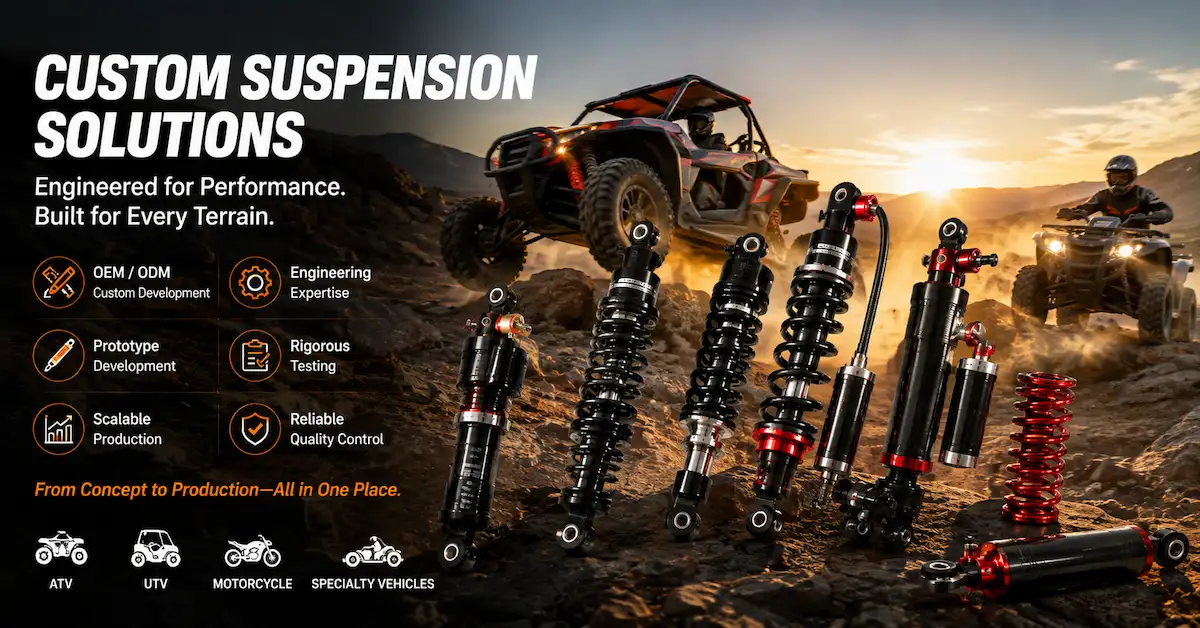
A suitable suspension manufacturer should support more than standard product supply. The ideal partner should help transform a product concept into a market-ready suspension solution through:
- OEM customization
- Engineering support
- Prototype development
- Product testing
- Private-label branding
- Quality control
- Stable production
Private-label suspension development is not only about adding a logo to an existing shock absorber.
A professional OEM partner should understand:
- Vehicle application
- Suspension requirements
- Performance targets
- Brand positioning
- Production expectations
The complete development process should follow:
Product Concept → Engineering Review → Prototype → Testing → Approval → Production
For brands developing ATV, UTV, and off-road suspension products, Bedo Auto provides customized suspension solutions including shock absorber development and OEM manufacturing support.
Explore available solutions through Shock Absorber Products.
What Does a Private-Label Suspension Manufacturer Need to Provide?
Private-label manufacturing involves much more than changing packaging.
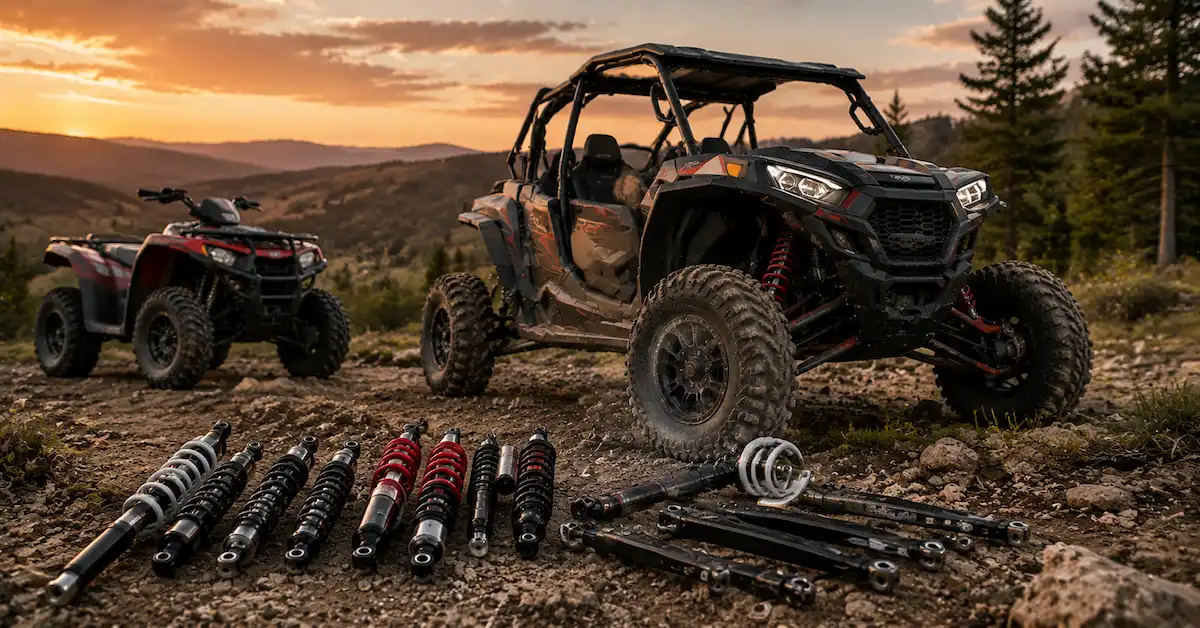
A capable manufacturer should support multiple aspects of brand development.
Product Customization
A private-label brand may require:
- Custom shock absorber dimensions
- Specific spring configurations
- Different mounting designs
- Product appearance changes
- Vehicle-specific suspension solutions
Customization allows brands to create products that match their target customers instead of competing only on price.
Branding Support
A suitable OEM partner may support:
- Logo marking
- Product labels
- Packaging design requirements
- Brand-specific documentation
These details help create consistency between the product and the brand identity.
Production Consistency
Private-label brands depend on repeatable quality.
The manufacturer should control:
- Approved specifications
- Production processes
- Component consistency
- Inspection standards
A successful first sample is not enough. The supplier must be able to reproduce the approved product consistently.
Why Do ATV and UTV Brands Need a Specialized Suspension Manufacturer?
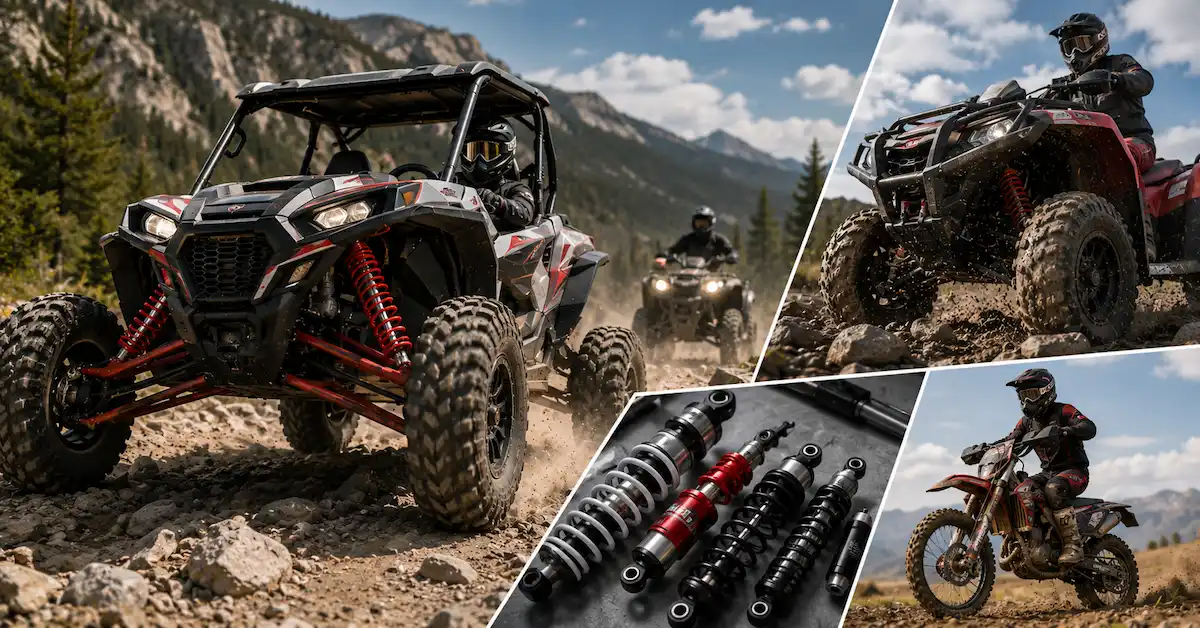
ATV and UTV suspension systems operate in demanding environments.
Unlike standard passenger vehicles, off-road vehicles often experience:
- Uneven terrain
- Heavy impacts
- Variable loads
- Mud and dust
- Long operating periods
A manufacturer experienced in ATV and UTV applications understands that suspension design depends on more than basic dimensions.
ATV Suspension Applications
ATV projects may focus on:
- Rider comfort
- Trail performance
- Impact resistance
- Suspension travel
- Weight balance
Different riding conditions may require different suspension characteristics.
UTV Suspension Applications
UTV applications often involve:
- Higher vehicle weight
- Passenger loads
- Cargo capacity
- Utility operations
The suspension system may need to balance:
- Load support
- Durability
- Ride comfort
- Vehicle control
Off-Road Performance Requirements
Private-label brands should evaluate whether the manufacturer understands:
- Vehicle usage
- Suspension geometry
- Spring requirements
- Shock behavior
- Operating conditions
A supplier familiar with off-road applications can provide more relevant engineering suggestions.
What OEM Capabilities Should an ATV Suspension Manufacturer Have?
Before choosing a supplier, brands should evaluate several key capabilities.
Custom Shock Absorber Development
A capable manufacturer should support customization of:
- Shock length
- Stroke
- Mounting structure
- Spring specification
- Product configuration
For complex projects, the manufacturer should also understand the relationship between:
- Spring rate
- Vehicle weight
- Load requirements
- Damping characteristics
Engineering Support
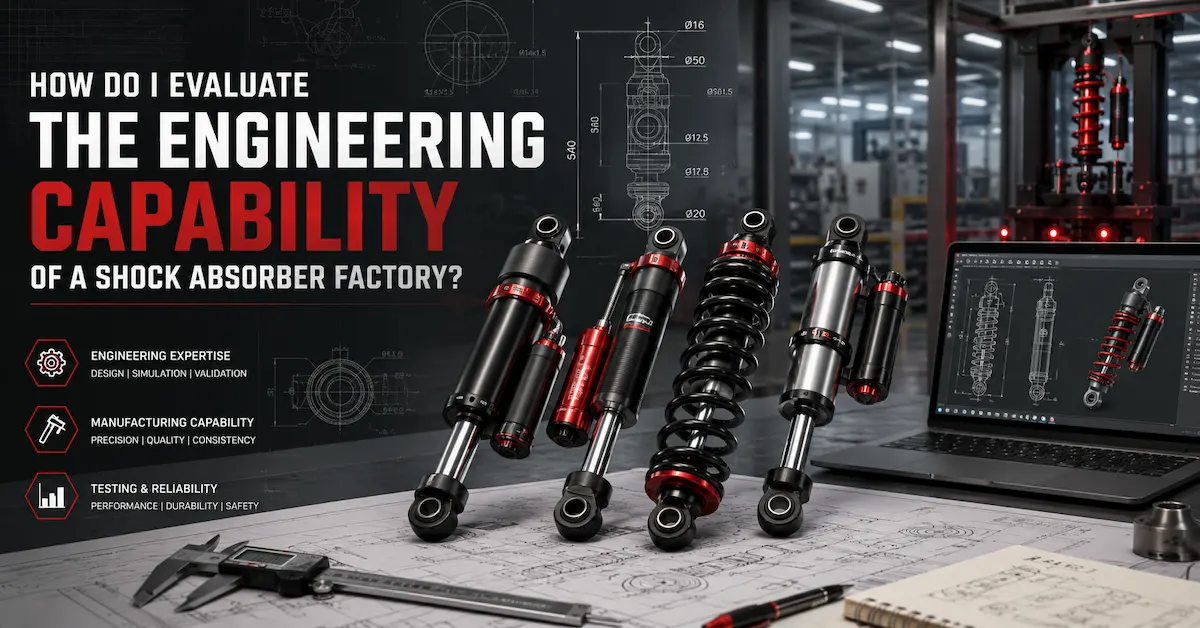
Engineering support may include:
- Drawing review
- CAD file evaluation
- Technical recommendations
- Manufacturing feasibility analysis
A strong engineering partner does not simply manufacture according to files. It helps identify potential problems before production.
For CAD-based development, see CAD Based Suspension Development.
Prototype Development
Prototype capability is important for private-label brands because it allows product validation before commercial launch.
A typical process includes:
Initial Design → Prototype → Vehicle Testing → Improvement → Final Approval
Prototype evaluation may involve:
- Installation
- Dimensions
- Suspension movement
- Performance feedback
- Product adjustments
How Can Brands Develop Suspension Products Under Their Own Name?
Private-label development usually involves several stages.
Step 1: Define Product Requirements
Brands should identify:
- Target vehicle
- Customer application
- Performance expectations
- Market positioning
Step 2: Technical Review
The manufacturer evaluates:
- Existing samples
- Drawings
- CAD data
- Suspension requirements
Step 3: Prototype Production
The factory creates samples for evaluation.
Step 4: Testing and Improvement
Feedback is used to improve:
- Dimensions
- Springs
- Damping
- Mounting structure
Step 5: Production Approval
After confirmation, the manufacturer prepares controlled production.
What Should ATV and UTV Brands Check Before Selecting a Manufacturer?
Choosing a private-label suspension partner requires more than checking product photos.
Evaluate:
| Evaluation Area | Questions |
|---|---|
| Engineering | Can they support custom development? |
| Manufacturing | Are they a direct factory? |
| Prototype | Can they produce and revise samples? |
| Testing | How are products validated? |
| Quality | What inspection process is used? |
| Branding | Can they support private label? |
| Production | Can they scale orders? |
| Communication | Can engineers communicate directly? |
A supplier should demonstrate capability through actual processes, not only marketing claims.
Why Prototype Development Matters for Private-Label Brands
Launching a new suspension product without prototype validation creates risks.
Potential problems include:
- Incorrect fitment
- Poor ride performance
- Customer complaints
- Product returns
- Brand reputation issues
Prototype development helps brands confirm:
- Product compatibility
- Performance expectations
- Manufacturing feasibility
A safer development path is:
Concept → Prototype → Testing → Improvement → Production
For sample development projects, see Suspension Sample Development.
What Quality Control Should Private-Label Suspension Brands Expect?
Quality control directly affects brand reputation.
A professional manufacturer should manage:
Incoming Material Inspection
Including:
- Steel components
- Springs
- Sealing components
- Purchased parts
Production Process Control
Including:
- Machining accuracy
- Assembly procedures
- Component matching
- Process consistency
Final Inspection
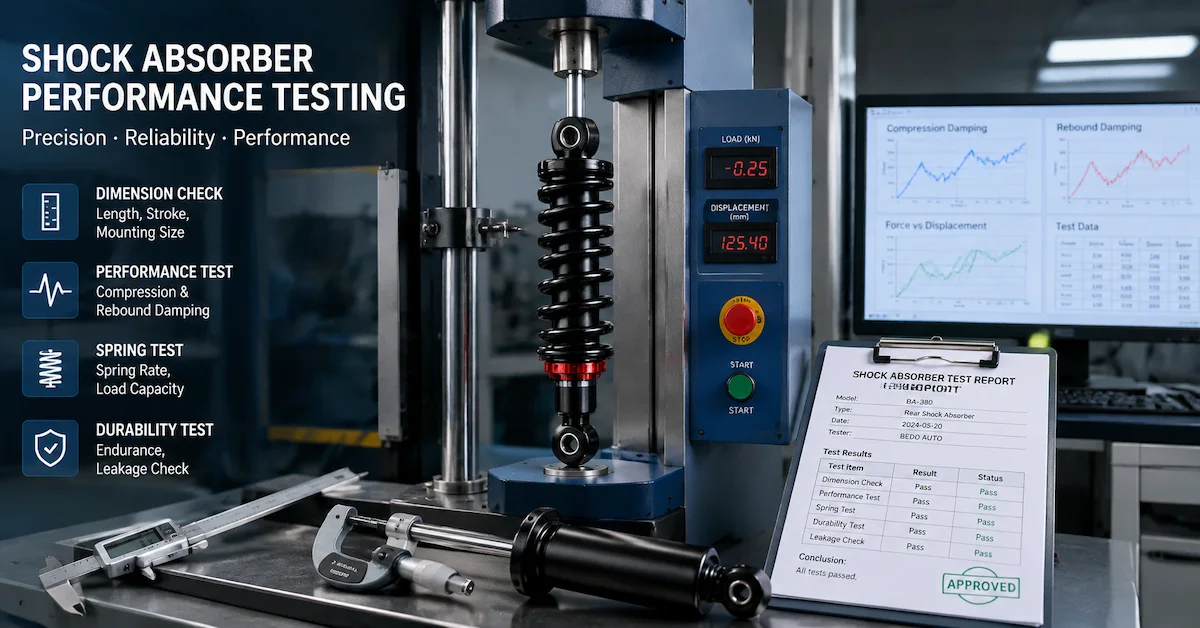
Depending on product requirements, inspection may include:
- Dimensions
- Appearance
- Leakage checks
- Functional verification
Private-label brands should understand how the supplier maintains consistency between batches.
Private-Label Suspension Manufacturer vs Product Distributor
| Factor | Manufacturer | Distributor |
|---|---|---|
| Product customization | Strong | Limited |
| Engineering support | Available | Limited |
| Prototype development | Supported | Rare |
| Branding options | Flexible | Limited |
| Production control | Direct | Indirect |
| Long-term development | Easier | More limited |
For brands building their own suspension product line, working directly with a manufacturer often provides better control over development and quality.
Can a Suspension Manufacturer Support Small Brands and Startups?
Yes, many OEM suspension manufacturers can support smaller brands through:
- Prototype projects
- Small-batch production
- Product testing
- Gradual production expansion
This allows new brands to validate market demand before investing in larger inventory.
A suitable partner should be able to support the transition:
Prototype → Small Batch → Market Launch → Mass Production
How Bedo Auto Supports ATV and UTV Private-Label Suspension Brands
Bedo Auto provides OEM suspension solutions for ATV, UTV, off-road, and specialty vehicle applications.
Support can include:
- Custom shock absorber development
- Suspension engineering support
- Prototype production
- Drawing and CAD review
- Spring development
- Testing support
- Small-batch validation
- Production preparation
- Private-label manufacturing
For brands developing their own suspension products, the process can start from:
- Product ideas
- Existing samples
- Technical drawings
- CAD files
- Vehicle requirements
Related resources:
- Shock Absorber Products
- CAD Based Suspension Development
- Suspension Sample Development
- Contact Bedo Auto
FAQ
Which ATV suspension manufacturer is suitable for private-label brands?
A suitable manufacturer should provide OEM customization, engineering support, prototype development, quality control, branding options, and reliable production capability.
Can suspension manufacturers provide private-label products?
Yes. OEM manufacturers can develop customized suspension products with brand-specific specifications, packaging, and identification.
What is the difference between private-label and standard suspension products?
Standard products are usually sold with existing specifications, while private-label products are customized for a specific brand's requirements.
Can ATV and UTV suspension products be customized?
Yes. Manufacturers can customize dimensions, springs, mounting structures, and product configurations depending on project requirements.
Should private-label brands develop prototypes first?
Yes. Prototype development helps verify product fitment, performance, and quality before commercial production.
How do I choose an ATV suspension manufacturer?
Evaluate engineering capability, OEM experience, customization ability, prototype support, testing process, and production capacity.
Can a suspension manufacturer support new brands?
Yes. Many OEM manufacturers support startups through prototypes, small batches, and gradual production expansion.
What information should I provide for private-label suspension development?
Provide vehicle information, drawings, samples, performance requirements, branding needs, and expected order quantities.
Why choose a factory instead of a trading company?
A direct factory usually provides better control over customization, engineering communication, production consistency, and quality management.
Can private-label suspension products scale to mass production?
Yes. A capable OEM manufacturer can support the transition from prototype development to commercial production.
Conclusion
Choosing the right suspension manufacturer for ATV and UTV private-label brands requires evaluating more than product availability and pricing.
The ideal partner should provide:
OEM Development + Engineering Capability + Prototype Support + Quality Control + Production Reliability
A strong private-label suspension partnership helps brands move from product ideas to market-ready solutions through:
Concept → Engineering → Prototype → Testing → Branding → Production
For ATV, UTV, and off-road brands, selecting a manufacturer with both engineering and manufacturing capability can reduce development risks and create a more reliable long-term supply relationship.