
How Do I Select UTV Suspension for Higher Passenger and Cargo Loads?
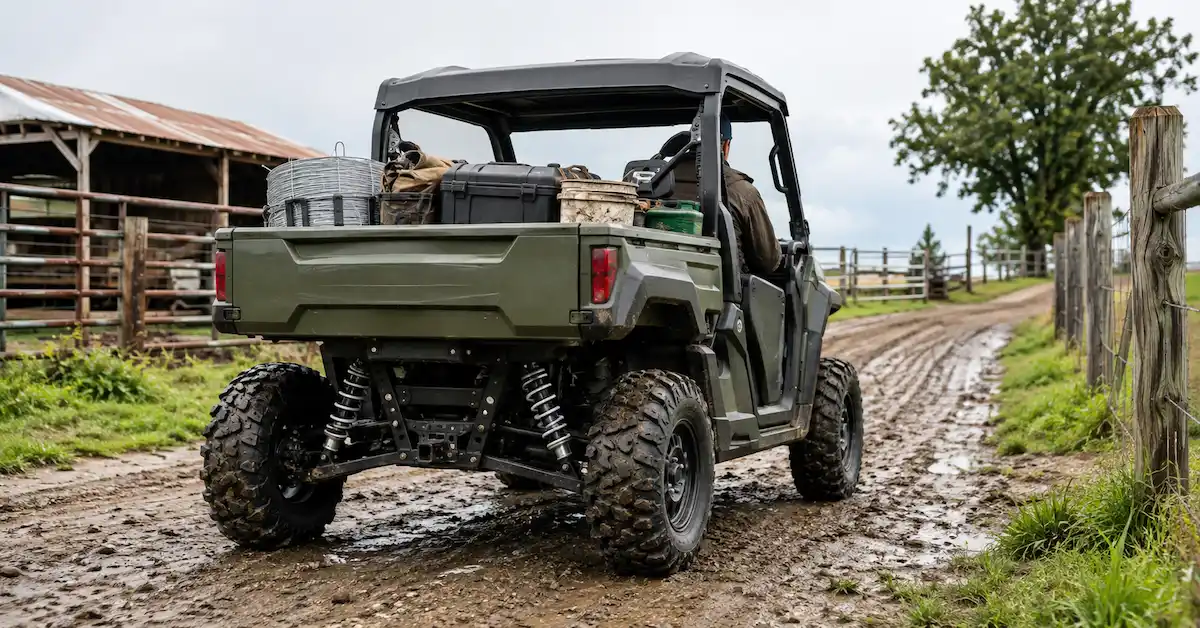
Selecting UTV suspension for passenger and cargo loads should begin with the vehicle’s actual operating weight, load distribution, and working conditions—not simply the number of seats or the size of the cargo bed.
When a UTV carries additional passengers, tools, equipment, supplies, or permanently installed accessories, the suspension must support the added weight while maintaining usable suspension travel, ride height, traction, and vehicle control.
A practical selection process is:
Loaded Vehicle Weight → Front/Rear Load Distribution → Suspension Sag → Spring Rate → Shock Travel → Damping → Vehicle Validation
A stiffer spring alone is not always the correct solution. The spring primarily supports vehicle load, while the shock absorber controls how the suspension moves under that load.
For UTV manufacturers, fleet operators, distributors, and aftermarket suspension brands, the objective should be to select or develop a suspension setup based on the vehicle’s real operating conditions.
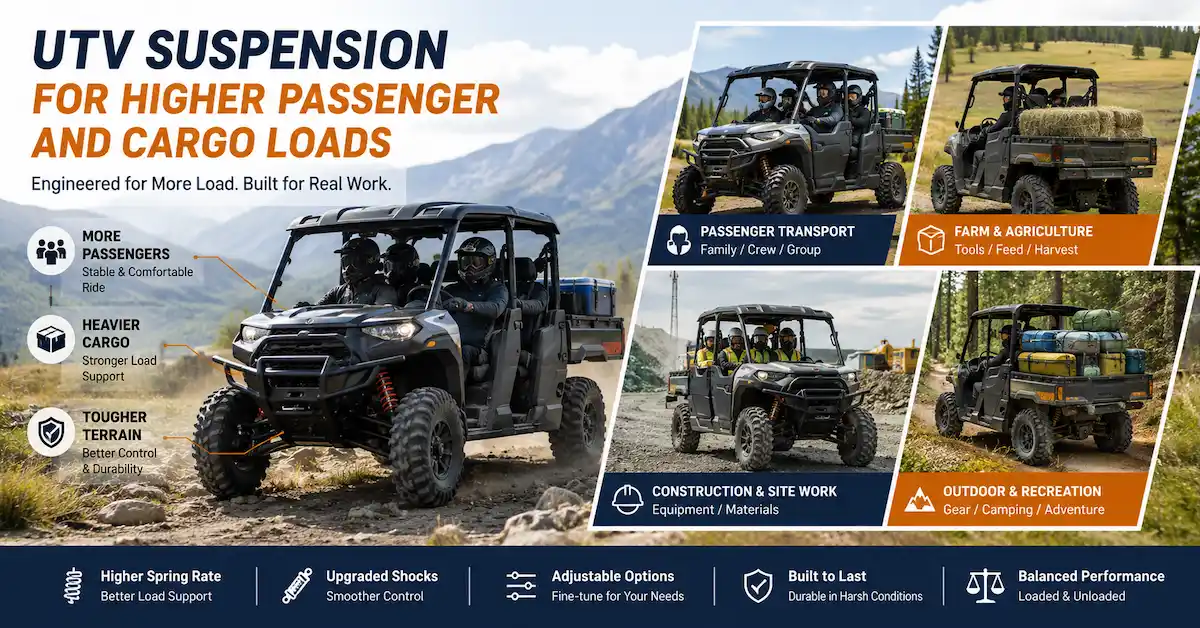
Why Do Passenger and Cargo Loads Change UTV Suspension Behavior?
A suspension system operates within a limited range of spring compression and shock travel.
When additional weight is added, the suspension compresses further even before the UTV starts moving.
This can affect:
- Static ride height
- Suspension sag
- Available compression travel
- Bottoming resistance
- Body movement
- Rebound behavior
- Steering balance
- Tire contact
For example, adding passengers across two seating rows may affect both front and rear suspension.
Placing the same additional weight entirely in the rear cargo bed may create a much greater demand on the rear suspension.
The basic relationship is:
More Load → More Spring Compression → Less Available Travel → Different Suspension Control Requirements
This is why selecting UTV suspension for passenger and cargo loads requires more than comparing spring diameter or shock absorber appearance.
Start With the Actual Loaded Vehicle Weight
The first step is to understand how heavy the UTV really is during normal operation.
Base Vehicle Weight
Start with the vehicle in its actual working configuration.
Include permanent equipment such as:
- Roof systems
- Windshields
- Winches
- Bumpers
- Storage boxes
- Tool racks
- Protection components
- Utility bodies
These items may not be considered “cargo,” but the suspension carries their weight during every operating cycle.
Passenger Load
Record both normal and maximum passenger conditions.
For example:
- Driver only
- Driver plus one passenger
- Four-person crew
- Full seating capacity
Passenger count alone is not enough. Approximate total passenger weight is more useful for suspension evaluation.
Cargo Load
Estimate the typical and maximum cargo carried.
Examples include:
- Tools
- Agricultural supplies
- Maintenance equipment
- Construction materials
- Feed
- Spare parts
- Outdoor equipment
Permanent Vehicle Modifications
Additional weight may also come from:
- Larger tires
- Winches
- Heavy bumpers
- Protection systems
- Storage racks
- Work accessories
A practical calculation is:
Vehicle + Passengers + Cargo + Permanent Accessories = Actual Operating Load
However, an important distinction must be made:
Changing the suspension does not automatically increase the vehicle manufacturer’s rated payload or GVWR.
Suspension selection must still respect the vehicle’s structural and manufacturer-defined load limits.
Why Does Front and Rear Load Distribution Matter?
Total vehicle weight is only part of the suspension problem.
Where the load is positioned can be equally important.
Consider two UTVs carrying the same additional 200 kg.
One carries the weight primarily as passengers near the cabin.
The other carries almost all of it in the rear cargo area.
Their rear suspension requirements may be very different.
| Added Load | Suspension Area Commonly Affected |
|---|---|
| Front passengers | Front and vehicle-dependent rear |
| Rear passengers | Greater rear influence |
| Cargo bed | Primarily rear suspension |
| Trailer tongue load | Rear suspension |
| Front winch or bumper | Front suspension |
| Passenger + cargo | Both ends require evaluation |
For this reason, a suspension supplier should ask two questions:
How much weight is added?
and
Where is the weight located?
For OEM and custom suspension projects, front and rear loaded axle weights can provide even more useful engineering information.
What Is Suspension Sag?
Suspension sag is the amount the suspension compresses under the weight of the vehicle and its load.
It is one of the most useful indicators when evaluating UTV suspension for passenger and cargo loads.
Measure the Light-Load Condition
Choose a repeatable ride-height reference and measure the vehicle with minimal load.
Add the Normal Operating Load
Load the vehicle with the passengers, cargo, and equipment it normally carries.
Measure the same reference again.
Check the Maximum Intended Operating Condition
If the vehicle regularly operates near its maximum working load, evaluate that condition separately.
Possible warning signs include:
- Excessive rear sag
- Excessive front sag
- Significant ride-height loss
- Frequent bottoming
- Very limited remaining compression travel
- Poor stability over uneven terrain
There is no universal sag percentage that is correct for every UTV.
Appropriate sag depends on:
- Suspension geometry
- Available travel
- Vehicle design
- Spring configuration
- Intended application
- Manufacturer specifications
The important question is whether the loaded suspension retains enough usable movement and control.
Should I Increase Preload or Change the Spring Rate?
This is one of the most common decisions in heavy-load UTV suspension selection.
When More Preload May Help
Preload can sometimes be used to:
- Restore ride height
- Fine-tune vehicle stance
- Compensate for moderate load variation
- Adjust suspension within its intended range
This may be useful when additional load is occasional rather than permanent.
When Preload May Not Be Enough
If significant preload is required just to prevent excessive sag under normal working conditions, the existing spring may not be appropriate for the application.
Too much preload may also reduce:
- Available droop
- Suspension compliance
- Ride comfort
Preload should therefore not automatically be treated as a replacement for the correct spring rate.
When a Higher Spring Rate Should Be Evaluated
A different spring specification may be appropriate when the added weight is:
- Significant
- Frequently carried
- Permanent
- Causing repeated sag
- Causing frequent bottoming
The objective is not to install the stiffest spring possible.
The correct UTV spring supports the intended load while preserving useful suspension movement.
What Happens If the Spring Is Too Soft?
A spring that is too soft for the actual operating load may lead to:
- Excessive suspension sag
- Reduced ride height
- Less compression travel
- Frequent bottoming
- Poor cargo support
- Excessive body movement
A cargo UTV may appear acceptable when empty but operate deep into its suspension travel as soon as the cargo bed is loaded.
That leaves less travel available for terrain impacts.
What Happens If the Spring Is Too Stiff?
An excessively stiff spring can create the opposite problem.
Possible effects include:
- Harsh unloaded ride
- Reduced suspension compliance
- Poor tire contact on uneven surfaces
- Limited wheel movement
- Unbalanced front/rear handling
This is especially important for utility UTVs that frequently alternate between loaded and unloaded operation.
A suspension designed only around the maximum possible load may perform poorly during the majority of lighter-load operation.
Does Changing Spring Rate Affect Shock Damping?
It should at least be evaluated.
Spring rate and shock damping perform different functions.
Spring Rate
The spring primarily determines:
- Load support
- Suspension displacement
- Static ride height behavior
Shock Damping
The shock absorber primarily controls:
- How quickly the suspension compresses
- How quickly it rebounds
- Body movement
- Suspension oscillation
This means:
Spring + Damping = Suspension System
If the spring rate changes significantly but damping remains unchanged, the suspension may no longer behave as intended.
How Does Compression Damping Affect a Loaded UTV?
Compression damping controls the speed at which the shock absorber compresses.
It can influence:
- Impact response
- Bottoming tendency
- Chassis movement
- Suspension control over rough terrain
A loaded UTV may operate deeper in its suspension travel, changing the way it responds to bumps and repeated impacts.
However, additional cargo does not automatically mean that compression damping should simply be increased as much as possible.
Too much compression damping can reduce compliance and create a harsh ride.
The correct setting depends on the whole suspension system.
How Does Rebound Damping Affect Passenger and Cargo Loads?
Rebound damping controls how quickly the suspension extends after compression.
It can influence:
- Wheel recovery
- Tire contact
- Body control
- Repeated-bump behavior
If a higher spring rate is introduced to support additional load, rebound characteristics may also need evaluation.
A stronger spring can release stored energy differently from the original spring.
Damping should therefore be matched to:
- Vehicle weight
- Spring rate
- Suspension geometry
- Terrain
- Operating speed
- Intended load
Why Do Shock Stroke and Suspension Travel Still Matter?
A heavier spring does not correct every suspension problem.
Buyers should still confirm:
- Extended shock length
- Compressed shock length
- Shock stroke
- Suspension travel
- Mounting position
- Tire clearance
- Chassis clearance
If the shock is already operating near full compression under load, a spring change may improve ride height but not solve all geometry or travel limitations.
Possible problems include:
- Mechanical bottoming
- Topping out
- Reduced wheel travel
- Component interference
The goal is to keep the suspension operating within an appropriate working range.
Passenger UTV vs Cargo UTV Suspension Requirements
Passenger and cargo applications may require different suspension priorities.
| Application | Main Load Concern | Suspension Priority |
|---|---|---|
| Passenger UTV | Variable occupant weight | Comfort and control |
| Cargo UTV | Concentrated rear weight | Rear load support |
| Utility UTV | Repeated working loads | Stability and durability |
| Modified UTV | Permanent added weight | Spring/damping evaluation |
| Passenger + cargo UTV | Variable combined load | Loaded/unloaded balance |
Passenger-Focused UTVs
Passenger load can vary substantially between trips.
A UTV may operate with:
- One driver
- Two occupants
- Full seating capacity
The suspension must therefore work over a relatively broad load range.
Cargo-Focused UTVs
Cargo is frequently concentrated behind the passenger compartment.
This can increase rear suspension sag much more than front sag.
The rear suspension may therefore require particular attention.
Mixed Passenger and Cargo Applications
Mixed-use vehicles are more challenging because total weight and load distribution can change throughout the working day.
These projects should not be optimized around only one extreme condition.
What If My UTV Operates Loaded and Unloaded?
This is common in:
- Farms
- Industrial sites
- Construction projects
- Property maintenance
- Fleet transportation
A UTV may travel to a work area carrying people, tools, and supplies, then return with very little cargo.
If the suspension is designed only for maximum cargo weight, the unloaded vehicle may become:
- Too stiff
- Less comfortable
- Less compliant
- Poorly balanced on uneven terrain
One of the first questions for a custom suspension project should therefore be:
Is the added load permanent, frequent, occasional, or highly variable?
This can influence:
- Spring rate
- Preload adjustment
- Damping requirements
- Adjustable suspension options
- Prototype testing conditions
A suspension designed only for maximum payload may not be the best solution when the UTV spends most of its time lightly loaded.
Do Passenger Loads and Cargo Loads Affect the Suspension the Same Way?
No.
Even when total added weight is identical, the suspension response can differ because of load position.
Passenger weight may be distributed around the cabin.
Cargo is often concentrated behind the passenger compartment.
This can change:
- Front/rear axle loading
- Vehicle pitch
- Ride height
- Center of gravity
- Suspension sag
- Handling characteristics
This is why a supplier needs more information than simply:
“The UTV carries 300 kg extra.”
The location and frequency of that load matter as well.
Should I Choose Heavy-Duty UTV Shock Absorbers?
Heavy-duty suspension may be appropriate if the vehicle experiences:
- Higher operating weight
- Frequent cargo loads
- Permanent accessories
- Repeated suspension bottoming
- Poor loaded control
- Demanding off-road conditions
However, “heavy-duty” should not be treated as one universal shock absorber specification.
The correct solution should still be based on:
- Vehicle weight
- Load distribution
- Shock dimensions
- Spring rate
- Suspension geometry
- Damping requirements
- Actual vehicle use
Buyers sourcing customized heavy-load products can also review our guide on selecting a heavy-duty UTV shock absorber manufacturer.
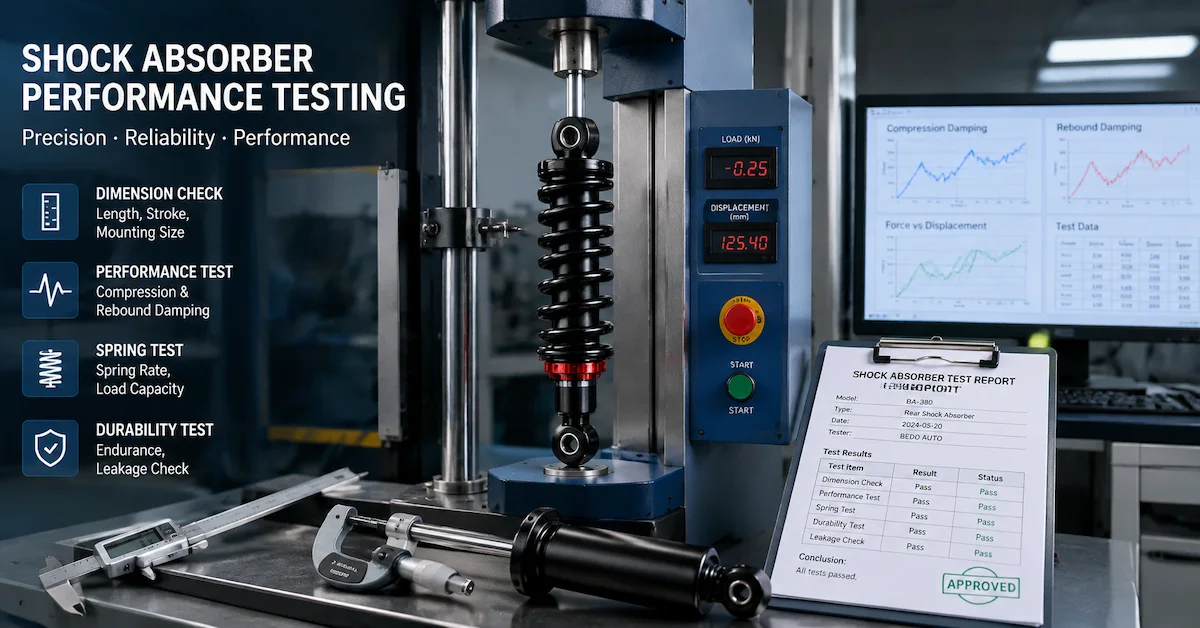
Should UTV Suspension Be Tested Under Full Load?
Yes. Validation should include the operating conditions the vehicle is expected to encounter.
Normal Operating Load
This may be the most important condition because it represents everyday use.
Evaluate:
- Ride height
- Sag
- Clearance
- Suspension movement
- Vehicle control
- Ride behavior
Maximum Intended Working Load
This helps identify:
- Excessive sag
- Insufficient travel
- Bottoming risk
- Clearance problems
- Reduced stability
Light-Load or Unloaded Condition
If the vehicle frequently operates without cargo, this condition should also be evaluated.
The objective is not to create a suspension that works in only one test condition.
How Should Buyers Compare Two UTV Suspension Solutions?
Do not compare only spring stiffness, shock diameter, or unit price.
Compare the complete application.
| Evaluation Factor | Solution A | Solution B |
|---|---|---|
| Normal-load support | ✓ / ✕ | ✓ / ✕ |
| Maximum-load support | ✓ / ✕ | ✓ / ✕ |
| Unloaded ride behavior | ✓ / ✕ | ✓ / ✕ |
| Sag control | ✓ / ✕ | ✓ / ✕ |
| Adequate shock travel | ✓ / ✕ | ✓ / ✕ |
| Damping match | ✓ / ✕ | ✓ / ✕ |
| Front/rear balance | ✓ / ✕ | ✓ / ✕ |
| Prototype validation | ✓ / ✕ | ✓ / ✕ |
This approach helps UTV manufacturers and distributors compare actual suspension performance rather than marketing terminology.
UTV Suspension Selection Checklist for Passenger and Cargo Loads
Before requesting a recommendation or quotation, prepare the following information.
| Item | What to Provide |
|---|---|
| UTV model | Vehicle or platform |
| Base vehicle weight | Working configuration |
| Passenger load | Typical and maximum |
| Cargo load | Typical and maximum |
| Load location | Front, cabin, rear,cargo bed |
| Accessories | Permanent added weight |
| Existing shocks | Dimensions or samples |
| Existing spring | Specification if known |
| Suspension sag | Light vs loaded |
| Shock travel | Extended/compressed/stroke |
| Terrain | Farm, trail, construction, utility |
| Main problem | Sag, bottoming,poor control |
| Operating pattern | Loaded vs unloaded |
This information provides a much stronger basis for selecting UTV suspension for passenger and cargo loads.
What Should I Send a UTV Suspension Supplier?
A useful RFQ should describe the problem, not just request a price.
Vehicle Information
Provide:
- UTV brand and model
- Front/rear application
- Vehicle weight
- Vehicle modifications
Load Information
Provide:
- Typical passenger count
- Approximate passenger weight
- Typical cargo weight
- Maximum cargo weight
- Load location
Current Suspension
If available,send:
- Shock absorber photos
- Existing shock samples
- Extended length
- Compressed length
- Stroke
- Mounting dimensions
- Spring specifications
Current Problem
Avoid vague statements such as:
We need stronger shocks.
A more useful description is:
The rear suspension loses too much ride height with normal cargo and frequently approaches full compression on rough terrain.
This gives the suspension supplier a much clearer development target.
Commercial Requirements
Also include:
- Prototype quantity
- Pilot-order quantity
- Expected production volume
- Target market
- OEM/private-label requirements
- Packaging requirements
How Bedo Auto Supports UTV Passenger and Cargo Load Projects
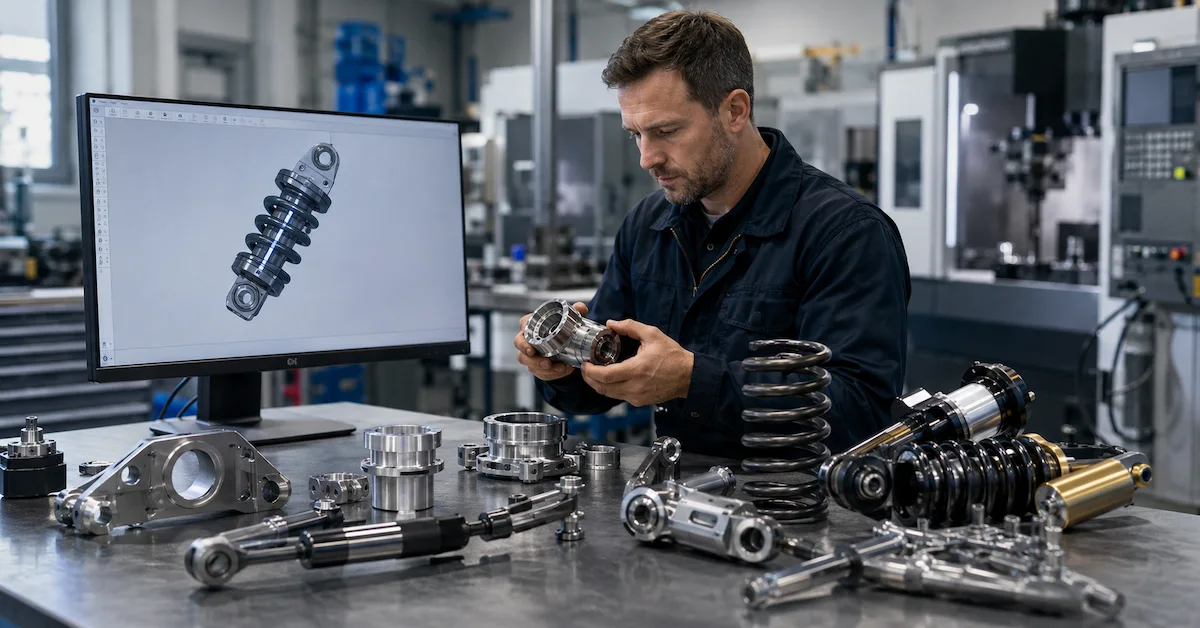
Bedo Auto supports customized shock absorber and suspension development for UTV, ATV, off-road, and specialty vehicle applications.
For projects involving increased passenger weight, cargo, permanently installed accessories, or different operating conditions, buyers can provide vehicle and suspension information for project-specific evaluation.
Depending on the project, development discussions may include:
- Shock absorber dimensions
- Spring configuration
- Damping requirements
- Mounting conditions
- Suspension travel
- Prototype development
- Vehicle-validation feedback
- Engineering revisions
- Small-batch evaluation
- OEM/private-label production preparation
Buyers can review Bedo Auto shock absorber products for relevant product directions.
For custom suspension development or sourcing discussions, contact Bedo Auto.
For a more useful project evaluation, send your UTV model, vehicle weight, passenger and cargo load range, load location, current shock specifications, suspension problem, and expected order quantity.
FAQ
How do I select UTV suspension for passenger and cargo loads?
Start with actual loaded vehicle weight and front/rear load distribution. Then evaluate suspension sag, spring rate, shock travel, damping, and loaded versus unloaded operating conditions.
Do I need stiffer springs when carrying more cargo?
Possibly. A higher spring rate may be appropriate if the current spring produces excessive sag or insufficient load support, but the correct rate depends on vehicle weight, load position, suspension geometry, and intended use.
Can I increase preload instead of changing the spring?
Preload may help restore ride height within an appropriate adjustment range, but it is not always a substitute for the correct spring rate when substantial additional weight is carried continuously.
Does a heavier UTV require different shock damping?
Additional vehicle load or a significantly different spring rate may require damping to be evaluated so compression and rebound remain properly controlled.
How does passenger weight affect UTV suspension?
Passenger weight can change front/rear sag, ride height, available suspension travel, and suspension response depending on seating position and vehicle geometry.
Why does cargo location matter?
Cargo concentrated in the rear bed can place much greater demand on the rear suspension than the same weight distributed closer to the center of the vehicle.
Should UTV suspension be tested fully loaded?
The intended operating load should be included during validation. If the vehicle frequently operates unloaded, that condition should also be evaluated.
Does heavy-duty suspension increase UTV payload capacity?
No. A suspension modification does not automatically increase the vehicle manufacturer's payload rating or GVWR.
What information does a custom UTV suspension supplier need?
Provide vehicle model, weight, passenger and cargo loads, load location, existing shock dimensions, suspension travel, terrain, and the problem you want to solve.
Can UTV shock absorbers be customized for passenger and cargo loads?
Depending on engineering feasibility, a supplier may evaluate different spring, damping, dimensional, and suspension specifications around the intended vehicle application.
Conclusion
Selecting UTV suspension for passenger and cargo loads is not simply a matter of installing the stiffest spring or the largest shock absorber available.
A better selection process starts by understanding:
How much weight the UTV carries, where that weight is located, how frequently it carries that load, and how the existing suspension behaves under real operating conditions.
The most useful engineering path is:
Loaded Vehicle Weight → Front/Rear Distribution → Sag → Spring Rate → Shock Travel → Damping → Vehicle Validation
For UTV manufacturers, distributors, fleet operators, and aftermarket brands, a properly matched suspension should provide sufficient load support while retaining useful suspension travel and acceptable vehicle control across both loaded and unloaded operating conditions.
If your project involves additional passengers, heavier cargo, permanent accessories, or a combination of these factors, provide the actual vehicle and suspension data before selecting a new setup. This gives the supplier a much stronger basis for recommending or developing an appropriate suspension solution.