
How to Choose a Reliable China Shock Absorber Factory for OEM ATV and UTV Projects
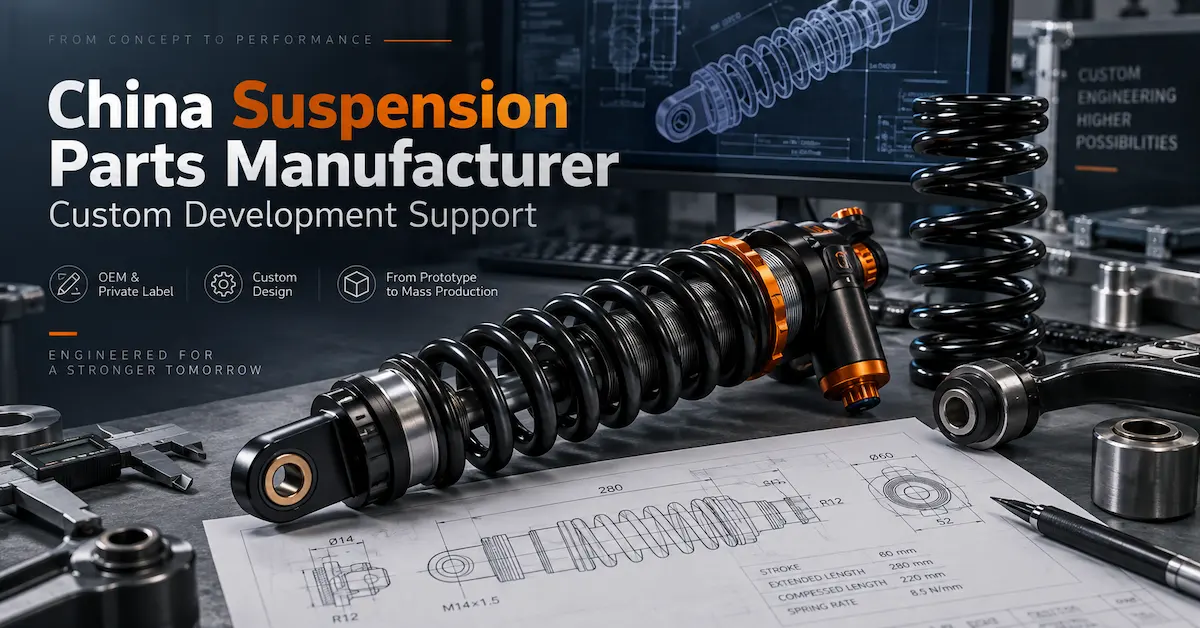
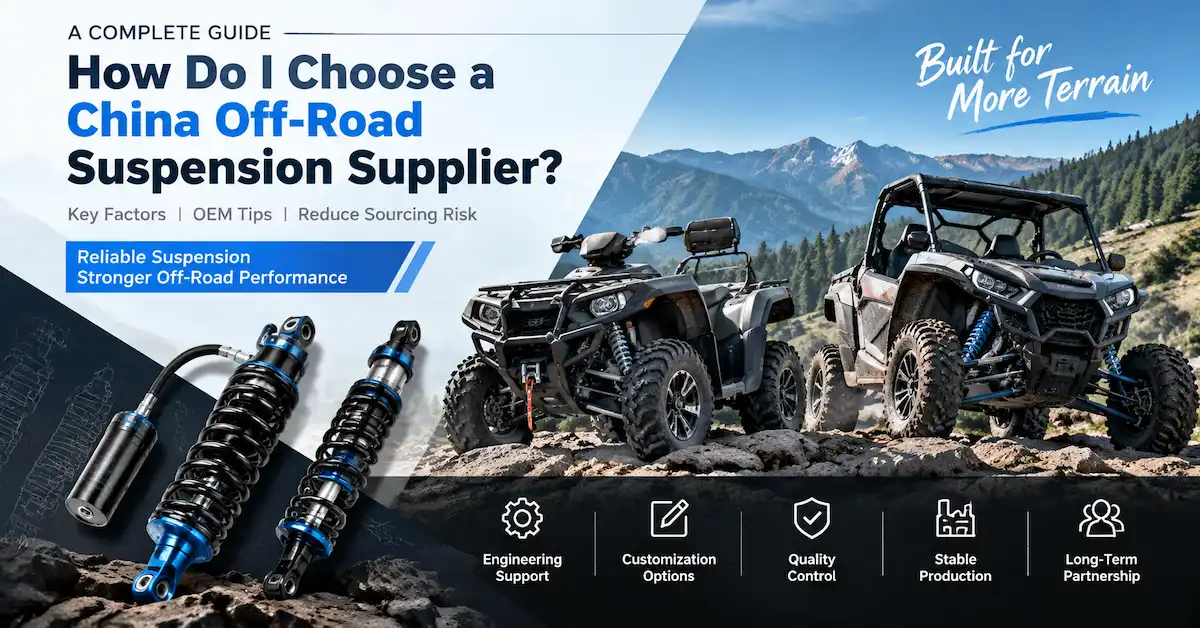
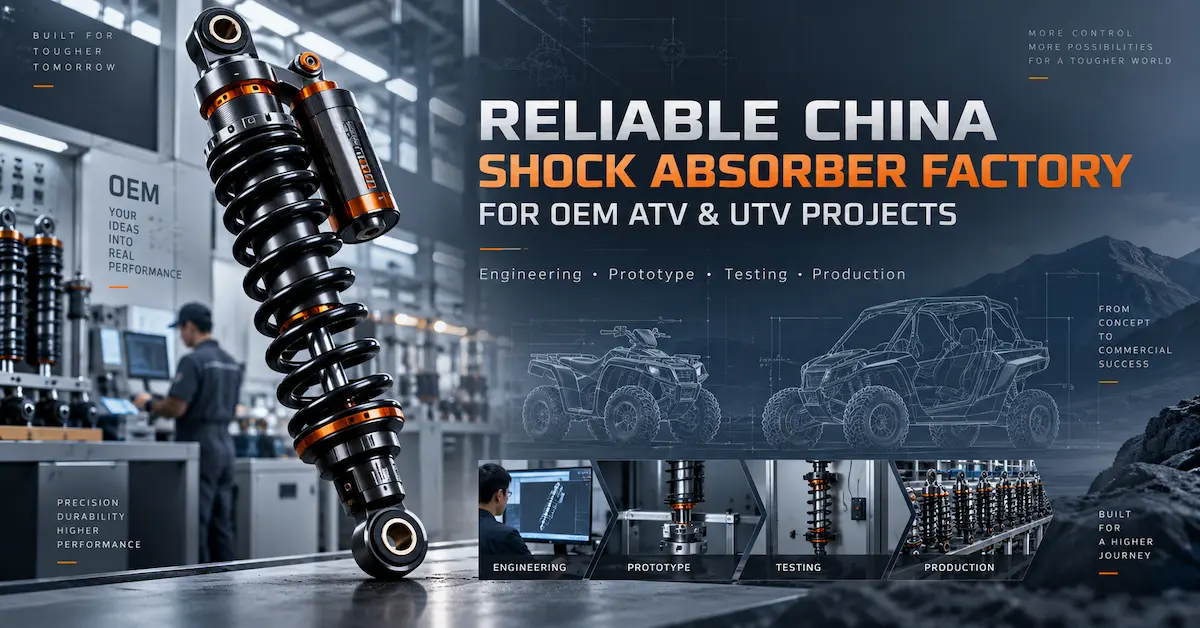
Finding a reliable China shock absorber factory for OEM ATV and UTV projects requires evaluating more than manufacturing price. A suitable supplier should understand vehicle applications, suspension engineering, spring and damping requirements, prototype validation, quality control, and repeat production.
For OEM buyers, the ideal factory is not simply the one that can produce a shock absorber. It is the supplier that can help transform vehicle requirements into a controlled suspension solution.
An OEM suspension project normally involves several stages:
Application Review → Technical Specification → Prototype Development → Testing → Approval → Production
Each stage can influence the final product quality, development cost, and delivery reliability.
BEDO provides ATV and off-road suspension solutions, including shock absorbers and suspension springs for customized applications. Buyers can review the available shock absorber products to understand different suspension configurations.
Why OEM Buyers Need More Than a Shock Absorber Manufacturer
A standard manufacturing supplier may be able to produce components according to drawings. However, OEM ATV and UTV projects often require additional engineering support.
A reliable supplier should help evaluate:
- vehicle application;
- suspension position;
- shock dimensions;
- mounting interfaces;
- vehicle load;
- spring requirements;
- damping requirements;
- terrain conditions;
- production requirements.
This is especially important because ATV and UTV suspension systems operate under changing conditions, including:
- uneven terrain;
- cargo loads;
- accessory modifications;
- repeated impacts;
- different rider weights.
A factory that understands these conditions can provide better recommendations during development.
What Defines a Reliable China Shock Absorber Factory?
A reliable supplier should combine several capabilities.
Engineering Capability
The factory should understand how suspension components work together.
Important knowledge areas include:
- spring rate;
- compression damping;
- rebound damping;
- suspension geometry;
- travel requirements;
- vehicle load distribution.
A supplier that only copies dimensions may not provide enough support for a new OEM project.
BEDO’s custom shock absorber development process explains that suspension customization should begin with vehicle requirements, technical information, and application targets.
Customization Capability
OEM customers may require different levels of customization.
Examples include:
- shock length changes;
- mounting modifications;
- spring-rate adjustment;
- damping customization;
- reservoir configuration;
- private-label branding.
A reliable China shock absorber factory should clearly separate:
Standard Product
Existing validated suspension solution.
Modified Product
Existing platform with selected changes.
Custom Development
New engineering based on application requirements.
This distinction helps buyers understand development scope and cost.
OEM ATV and UTV Suspension Requires Application Knowledge
A suspension component cannot be evaluated only by appearance.
Two shocks may have similar external dimensions but different:
- internal damping;
- spring configuration;
- load capability;
- intended terrain;
- performance targets.
For OEM ATV and UTV projects, suppliers should understand different application requirements.
| Application | Main Suspension Requirement |
|---|---|
| Recreational ATV | Comfort and control balance |
| Utility ATV | Load support and reliability |
| Performance ATV | Response and damping control |
| UTV cargo use | Higher load support |
| Off-road racing | Impact control and suspension recovery |
| Modified vehicles | Geometry and clearance review |
A reliable supplier should ask application questions before recommending a product.
Spring Development Capability Is Important for OEM Projects
The spring is a critical part of suspension performance.
A reliable supplier should understand how spring requirements change with:
- vehicle weight;
- rider/passenger load;
- cargo;
- accessories;
- terrain;
- suspension geometry.
A spring that is too soft may cause:
- excessive sag;
- reduced ground clearance;
- frequent bottoming.
A spring that is too stiff may create:
- harsh ride;
- reduced suspension compliance;
- poor traction.
BEDO’s custom spring rate guide explains why spring development should consider vehicle conditions rather than simply selecting a stronger spring.
Damping Development Separates Professional Suppliers
Shock absorber performance depends not only on spring support but also on damping control.
Compression damping controls suspension movement during compression.
Rebound damping controls suspension recovery after compression.
A professional OEM supplier should understand how damping interacts with:
- spring rate;
- vehicle weight;
- terrain;
- suspension geometry;
- driving conditions.
BEDO’s compression and rebound damping customization guide explains why damping should be developed according to the vehicle application.
A reliable factory should be able to discuss:
- fixed damping;
- adjustable damping;
- compression settings;
- rebound settings;
- prototype testing;
- production consistency.
Prototype Development Capability Is Essential
A reliable China shock absorber factory should support prototype development before mass production.
Prototype samples help verify:
- installation;
- mounting compatibility;
- spring behavior;
- damping performance;
- clearance;
- vehicle response.
A typical OEM development process includes:
Technical Review
Confirm vehicle requirements, drawings, samples, and performance targets.
Prototype Manufacturing
Produce initial suspension samples.
Testing and Evaluation
Check fitment, performance, and required validation items.
Engineering Revision
Modify the design if necessary.
Production Approval
Freeze the approved configuration.
BEDO’s prototype shock absorber development guide explains why prototype validation helps reduce production risks.
Testing Capability Should Be Part of Supplier Evaluation
A reliable suspension factory should have a clear testing approach.
Possible checks include:
- dimensional inspection;
- leakage testing;
- damping evaluation;
- spring inspection;
- prototype validation;
- production inspection.
BEDO’s shock absorber testing guide discusses different suspension validation areas.
When evaluating a factory, ask:
- What tests are performed?
- When are tests performed?
- Are prototype and production checks different?
- How are results recorded?
- How are problems handled?
Testing capability is an important indicator of manufacturing maturity.
Manufacturing Control Determines Long-Term Supply Reliability
A successful prototype does not guarantee stable production.
OEM buyers should evaluate how the factory controls:
- incoming materials;
- component dimensions;
- assembly procedures;
- spring identification;
- damping configuration;
- leakage inspection;
- final inspection;
- product traceability.
The question is not only:
“Can the factory make one good sample?”
The more important question is:
“Can the factory reproduce the approved sample consistently?”
This is especially important for:
- private-label brands;
- aftermarket companies;
- vehicle manufacturers;
- distributors.
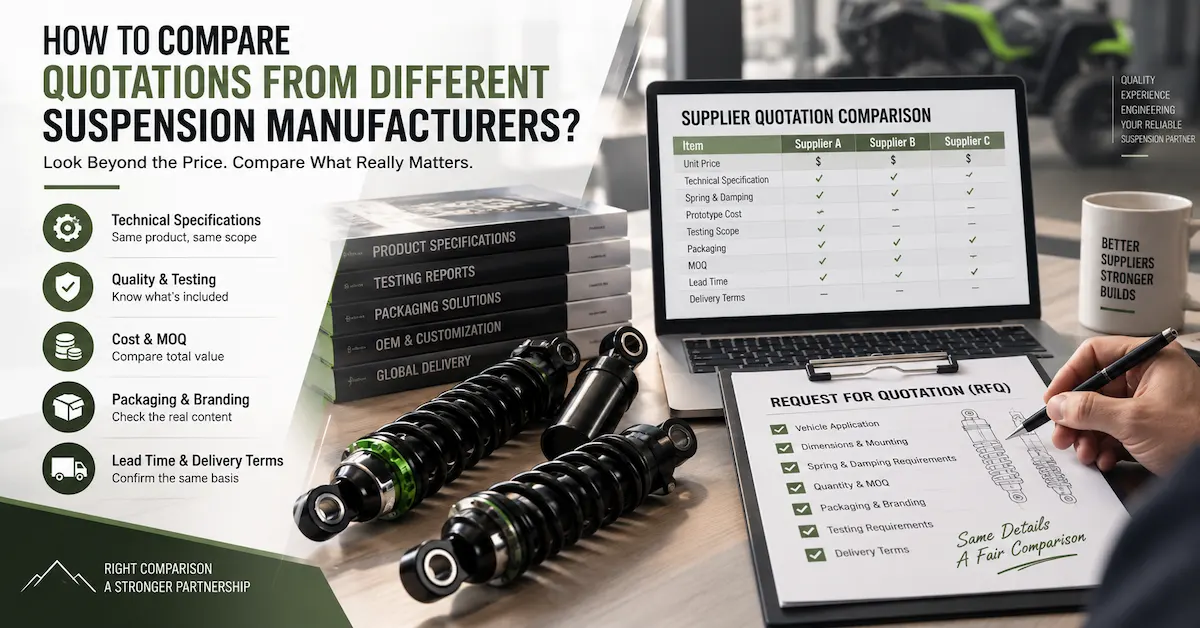
How Should Buyers Compare China Shock Absorber Factories?
Supplier comparison should include more than price.
| Evaluation Factor | Buyer Question |
|---|---|
| Engineering | Can the factory support development? |
| Product range | Does it understand ATV/UTV applications? |
| Customization | Can spring and damping be modified? |
| Prototype | Are development samples supported? |
| Testing | Are validation processes defined? |
| Quality | Are production controls established? |
| Communication | Are technical changes managed clearly? |
| Production | Can repeat orders be maintained? |
A lower quotation does not automatically represent a lower-risk supplier.
OEM Buyers Should Review Factory Experience Carefully
When selecting a China shock absorber factory, buyers should understand the supplier’s actual experience.
Useful questions include:
- What vehicle categories are supported?
- Does the factory produce OEM or aftermarket products?
- Can it support custom development?
- Can it work from drawings or samples?
- Does it support low-volume development?
- How are engineering changes managed?
Avoid evaluating suppliers only through:
- factory photos;
- product catalogs;
- price lists.
Technical communication during the RFQ stage often reveals more about engineering capability.
MOQ and Lead Time Considerations for OEM Suspension Projects
OEM suspension projects usually include multiple stages.
Buyers should separate:
- prototype quantity;
- pilot batch quantity;
- production MOQ;
- repeat order quantity.
BEDO’s custom shock absorber MOQ guide explains why MOQ depends on configuration, components, customization, and production requirements.
Development schedules should also separate:
- engineering review;
- prototype production;
- testing;
- revisions;
- mass production.
BEDO’s custom shock development lead time guide provides related planning considerations.
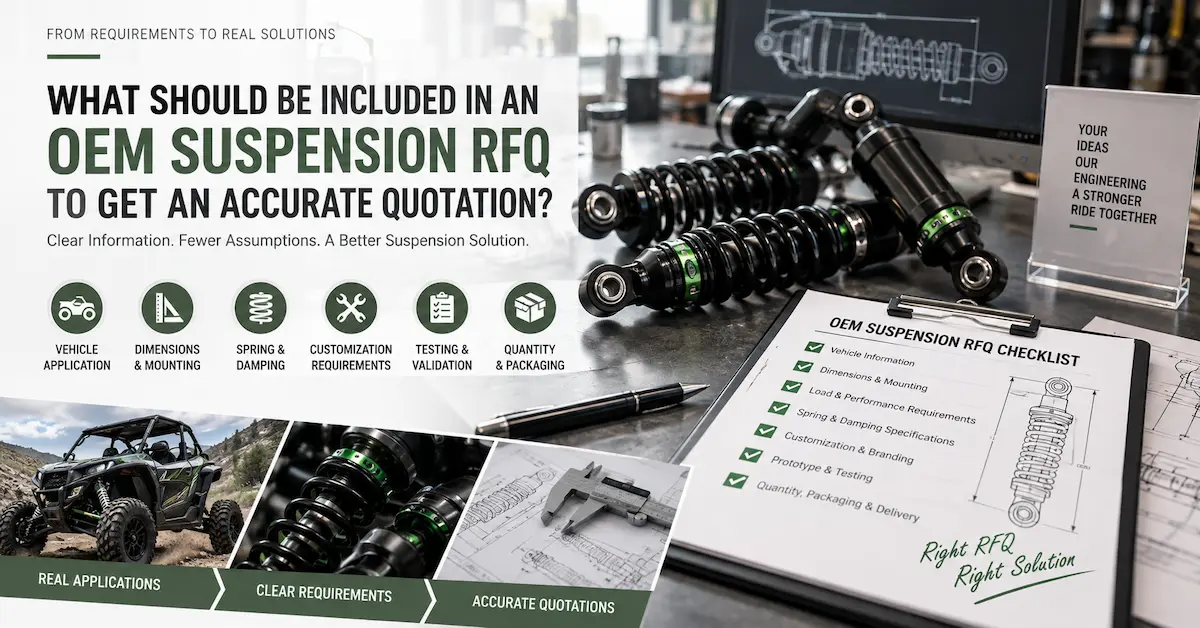
What Information Should OEM Buyers Send a Shock Absorber Factory?
A complete RFQ improves quotation accuracy.
Provide:
| Information | Purpose |
|---|---|
| Vehicle model | Defines application |
| Suspension position | Defines product location |
| Existing shock | Provides reference |
| Dimensions | Defines fitment |
| Load conditions | Supports spring selection |
| Terrain | Defines performance target |
| Spring requirement | Defines support characteristics |
| Damping requirement | Defines tuning direction |
| Drawings/CAD | Supports engineering |
| Prototype quantity | Defines development scope |
| Production forecast | Supports planning |
BEDO’s OEM suspension RFQ guide explains what buyers should prepare before requesting accurate quotations.
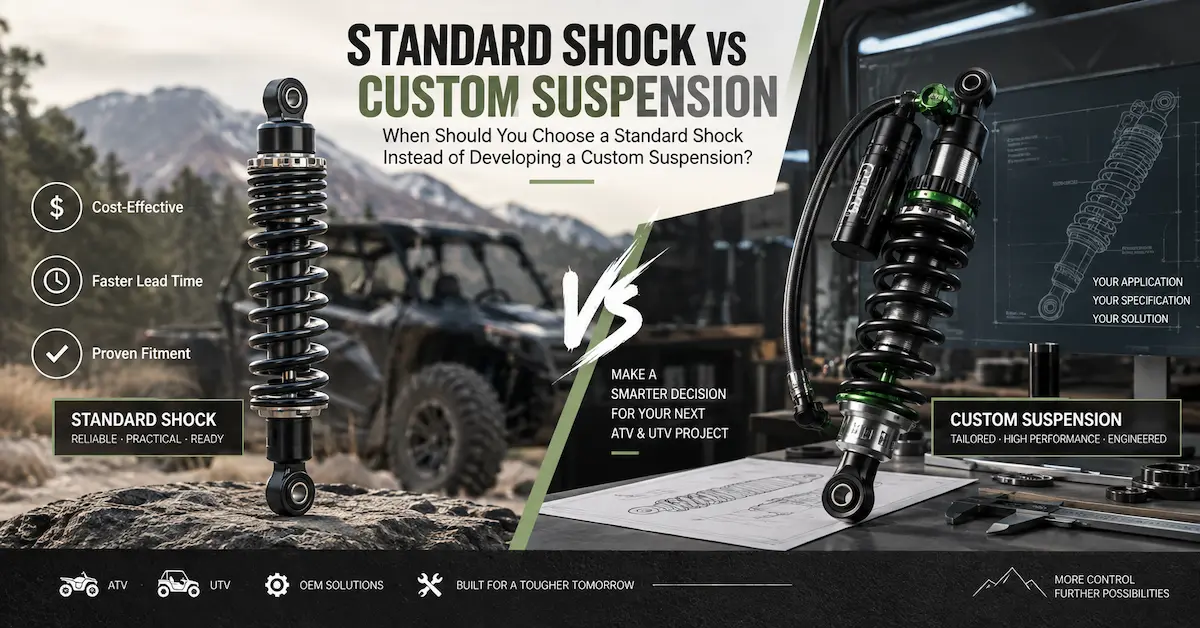
Standard Product or Custom Development: Which Route Is Better?
Not every OEM project requires a completely new shock.
A standard platform may be suitable when:
- dimensions already match;
- vehicle load remains unchanged;
- spring performance is acceptable;
- damping meets the requirement.
Custom development is more suitable when:
- mounting dimensions change;
- vehicle load changes;
- performance targets change;
- new vehicle platforms are developed;
- larger tires or accessories affect suspension behavior.
BEDO’s standard shock vs custom suspension guide explains how buyers can evaluate whether customization creates real value.
Private Label and OEM Branding Support
Many aftermarket brands require more than technical products.
Possible requirements include:
- logo;
- product labels;
- spring color;
- shock-body finish;
- packaging;
- instruction materials.
However, branding customization and engineering customization should be evaluated separately.
A buyer may use an existing validated suspension platform while adding private-label presentation.
How to Reduce Risk When Choosing a China Shock Absorber Factory
OEM buyers can reduce project risk by:
Provide Complete Technical Information
Send drawings, samples, load data, and application details.
Define Performance Goals Clearly
Explain the problem to solve instead of only requesting “better performance.”
Compare Suppliers Using the Same RFQ
Give every factory identical requirements.
Confirm Prototype Scope Before Production
Define testing and approval requirements early.
Control Product Revisions
Ensure the approved sample matches future production.
Evaluate Long-Term Cooperation
A suspension supplier should support future updates, replacements, and production needs.
Frequently Asked Questions
1. What Makes a China Shock Absorber Factory Reliable?
A reliable factory should combine engineering capability, customization support, testing ability, production control, and clear technical communication.
2. Can Chinese Shock Absorber Factories Support OEM ATV Projects?
Yes, suitable suppliers can support OEM projects involving standard products, modified platforms, prototypes, and custom suspension development.
3. Can a Factory Customize Spring Rate and Damping?
Yes, depending on the project requirements and shock design. Spring and damping should be developed according to vehicle application.
4. Should I Choose the Cheapest Shock Absorber Factory?
Not necessarily. Compare technical scope, quality control, testing, development support, and production reliability together with price.
5. Can a Factory Develop Shocks From Samples?
Yes. Physical samples can provide useful references, but vehicle information and performance requirements are still needed.
6. What Documents Should OEM Buyers Provide?
Provide drawings, CAD files where available, vehicle information, dimensions, load conditions, spring requirements, damping targets, and production expectations.
7. How Long Does OEM Shock Development Take?
Timing depends on customization level, prototype requirements, testing, revisions, and production preparation.
8. Do OEM Projects Require Large MOQ?
Not always. Prototype and low-volume development can be part of the process before larger production.
9. How Should I Evaluate Shock Absorber Quality?
Review materials, manufacturing control, testing processes, prototype validation, and production consistency.
10. How Can I Contact BEDO for an OEM Suspension Project?
Prepare your vehicle information, technical requirements, drawings or samples, expected quantity, and target application, then submit the project through BEDO Contact Us.
Conclusion
Choosing a reliable China shock absorber factory for OEM ATV and UTV projects requires evaluating engineering capability, customization experience, prototype support, testing processes, and long-term production reliability rather than focusing only on unit price. A professional suspension partner should help buyers move from vehicle requirements to a validated product through technical review, prototype development, testing, approval, and controlled production. BEDO supports ATV, UTV, and off-road suspension projects with shock absorber and spring customization capabilities. To evaluate your OEM suspension project, contact BEDO with your vehicle information, drawings, samples, load requirements, performance goals, and production plans to determine the appropriate suspension development solution.