
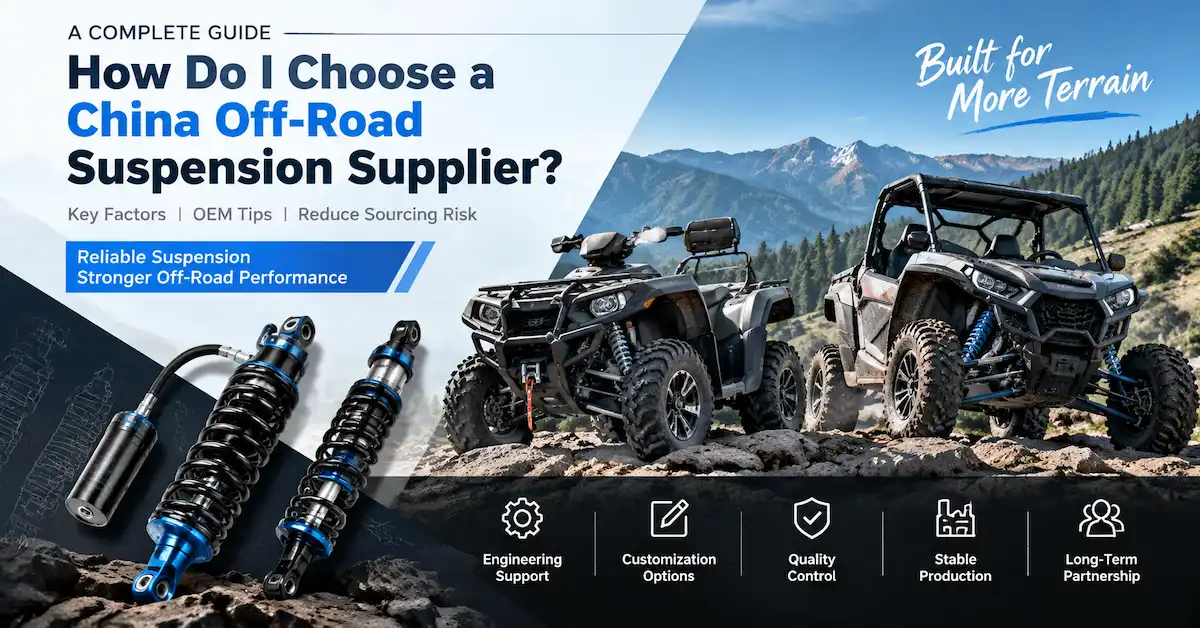
How Do I Choose a China Off-Road Suspension Supplier?
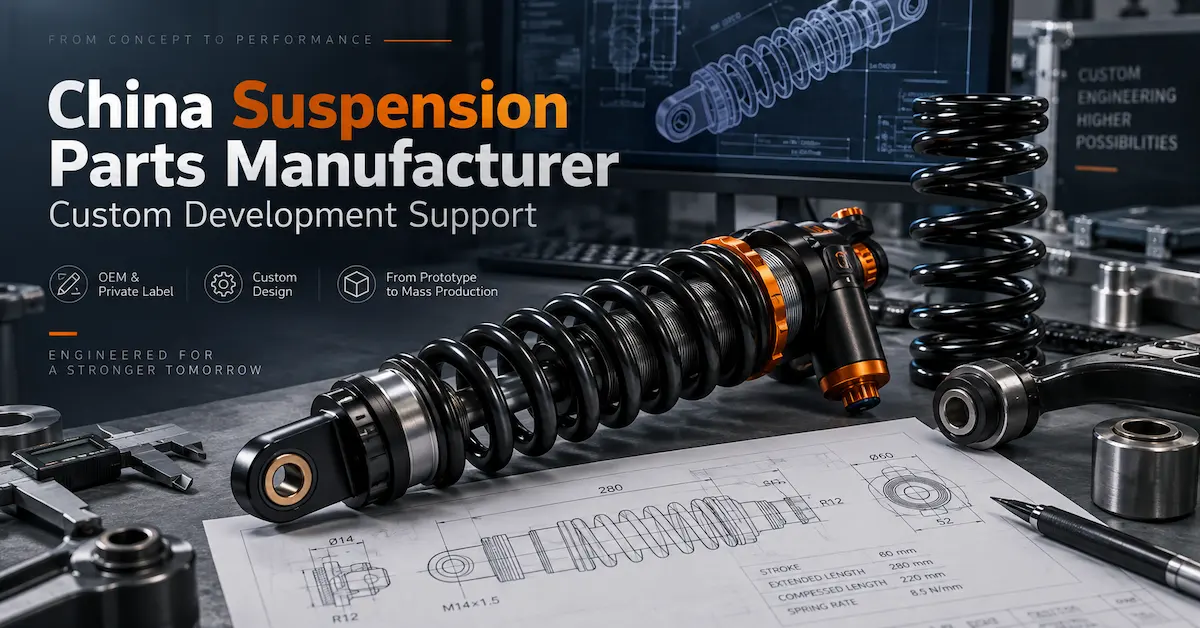
Choosing a reliable China off-road suspension supplier requires more than comparing quotations. For ATV, UTV, and specialty vehicle projects, the supplier must understand how shock absorbers, springs, damping systems, vehicle loads, terrain conditions, and manufacturing processes work together.
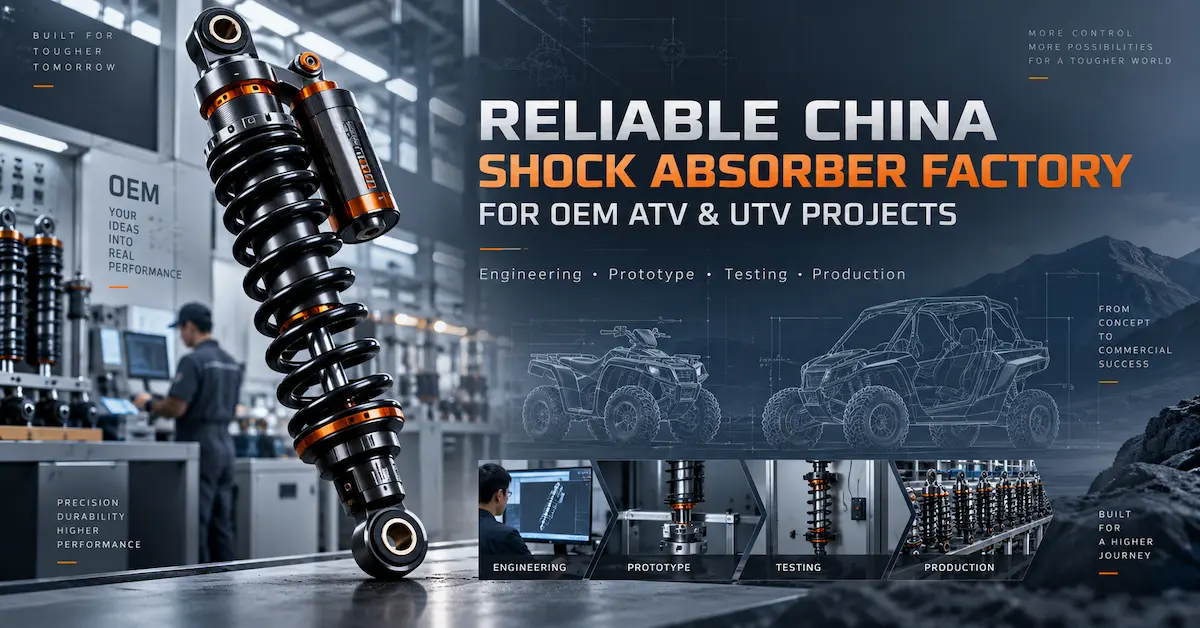
A suitable supplier should be able to support the complete product journey:
Application Analysis → Engineering Review → Prototype Development → Testing → Production Approval → Repeat Manufacturing
Many sourcing problems happen because buyers select a factory based only on:
- unit price;
- product photos;
- catalog availability;
- factory size.
However, off-road suspension products directly affect vehicle performance, reliability, and customer experience. A supplier that understands suspension engineering can help reduce development risks before production begins.
BEDO provides ATV and off-road suspension solutions, including shock absorbers and suspension springs for different applications. Buyers can review the available shock absorber products to understand different suspension configurations.
Why Supplier Selection Matters for Off-Road Suspension Projects
Off-road vehicles operate under more demanding conditions than standard road vehicles.
Suspension components may experience:
- repeated impacts;
- uneven terrain;
- changing vehicle loads;
- heavy accessories;
- long operating periods;
- aggressive riding conditions.
A suitable supplier should understand that durability is not created by one component alone.
It depends on the relationship between:
- shock absorber design;
- spring specification;
- damping characteristics;
- mounting structure;
- manufacturing quality;
- application requirements.
For OEM buyers, selecting the wrong supplier can create problems such as:
- repeated prototype revisions;
- incorrect suspension performance;
- production delays;
- inconsistent quality;
- increased warranty risk.
What Makes a Reliable China Off-Road Suspension Supplier?
A reliable supplier should combine engineering capability, manufacturing ability, and communication efficiency.
Engineering Capability
The supplier should understand:
- suspension geometry;
- shock dimensions;
- spring selection;
- compression damping;
- rebound damping;
- vehicle load;
- terrain requirements.
A factory that only follows drawings may not provide enough support for a new suspension program.
For OEM projects, engineering participation is important because many suspension problems are not visible from external dimensions alone.
BEDO’s custom shock absorber development process explains that suspension customization should begin with vehicle requirements, technical data, and performance targets.
Customization Capability
Different buyers need different levels of customization.
A supplier may support:
- standard shock replacement;
- modified existing platforms;
- full custom suspension development.
Possible customization areas include:
- shock length;
- stroke;
- mounting interface;
- spring rate;
- preload;
- compression damping;
- rebound damping;
- reservoir configuration;
- branding.
A professional supplier should clearly explain whether a project uses an existing platform or requires new engineering.
Evaluate the Supplier’s ATV and UTV Experience
A China off-road suspension supplier should understand different vehicle applications.
ATV and UTV projects may include:
| Application | Main Requirement |
|---|---|
| Recreational ATV | Comfort and control balance |
| Utility ATV | Load support and durability |
| Performance ATV | Damping response |
| Utility UTV | Cargo and working load |
| Off-road UTV | Impact control |
| Modified vehicles | Clearance and geometry review |
A supplier experienced in one application may not automatically be suitable for another.
For example, a cargo-focused UTV suspension system may require different spring and damping decisions compared with a recreational trail vehicle.
Check Whether the Supplier Understands Spring Development
The spring is a critical part of suspension performance.
A reliable supplier should evaluate:
- vehicle weight;
- rider/passenger load;
- cargo;
- accessories;
- suspension position;
- terrain.
A stronger spring is not always a better spring.
An unsuitable spring can cause:
- excessive sag;
- reduced travel;
- harsh ride;
- poor suspension balance.
BEDO’s custom spring rate guide explains why spring selection should be based on actual vehicle requirements.
When evaluating suppliers, ask:
- Can you recommend spring specifications?
- Can you develop different load versions?
- How are spring changes validated?
Review Damping Development Capability
A suspension supplier should understand damping as part of the complete system.
Compression damping controls suspension movement during compression.
Rebound damping controls suspension recovery.
A reliable supplier should be able to discuss:
- fixed damping;
- adjustable damping;
- compression adjustment;
- rebound adjustment;
- testing methods;
- prototype revisions.
BEDO’s compression and rebound damping customization guide explains why damping should be developed according to vehicle application rather than simply increased.
Avoid suppliers that describe performance only through marketing terms without explaining how the suspension behavior is achieved.
Check Prototype Development Capability
A reliable China off-road suspension supplier should support prototype validation.
Prototype development helps verify:
- installation;
- mounting compatibility;
- suspension movement;
- spring behavior;
- damping performance;
- vehicle response.
A typical OEM process includes:
Engineering Review
Confirm drawings, samples, dimensions, and requirements.
Prototype Manufacturing
Create initial samples based on the approved specification.
Testing
Evaluate fitment and performance.
Revision
Adjust the design if required.
Production Approval
Freeze the final specification.
BEDO’s prototype shock absorber development guide explains why prototype validation reduces production risks.
Evaluate Testing and Quality Control Processes
Testing capability is an important supplier-selection factor.
Ask the supplier about:
- dimensional inspection;
- leakage inspection;
- damping verification;
- spring inspection;
- prototype testing;
- production inspection.
BEDO’s shock absorber testing guide explains different validation areas for suspension products.
A reliable supplier should explain:
- what is tested;
- when testing happens;
- which standards apply;
- how problems are handled;
- how production consistency is maintained.
Understand Manufacturing Capability Before Placing Orders
A good prototype does not automatically mean stable mass production.
OEM buyers should evaluate whether the supplier controls:
- incoming materials;
- component dimensions;
- assembly process;
- spring identification;
- damping configuration;
- final inspection;
- product traceability.
The important question is:
“Can this factory repeatedly manufacture the approved suspension specification?”
not only:
“Can this factory produce one good sample?”
For long-term cooperation, production consistency is more important than prototype appearance.
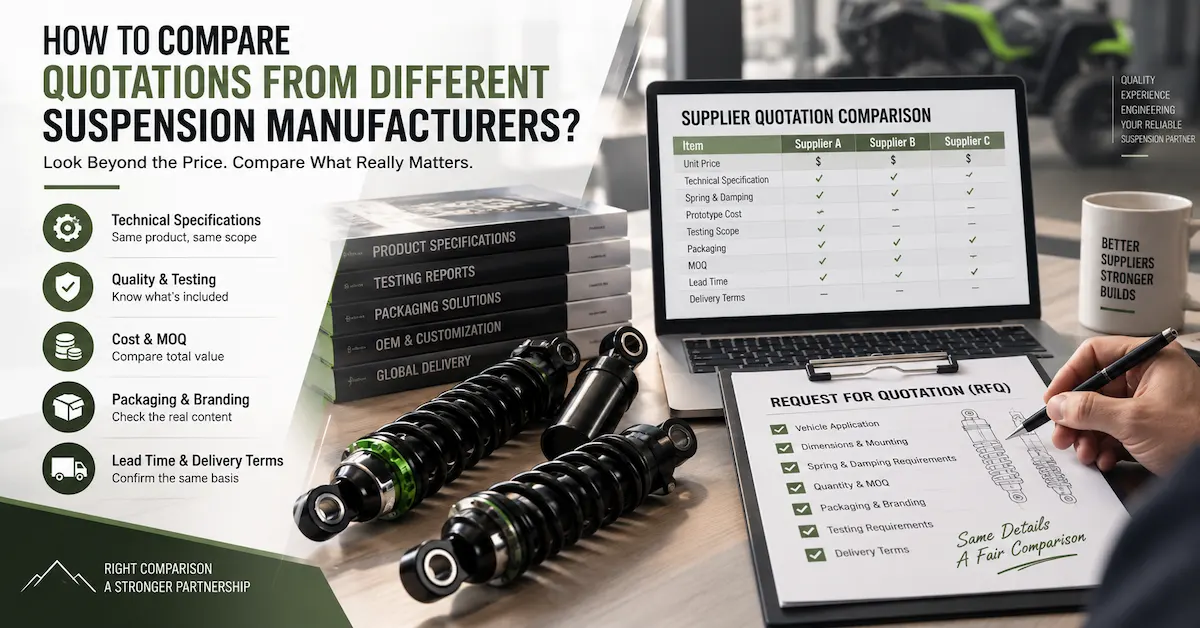
Compare China Off-Road Suspension Suppliers Correctly
Supplier comparison should include more than price.
Use a comparison framework:
| Evaluation Factor | Buyer Question |
|---|---|
| Engineering | Can the supplier support development? |
| Product capability | Does it understand ATV/UTV applications? |
| Customization | Can spring and damping be changed? |
| Prototype | Are samples supported? |
| Testing | Are validation processes available? |
| Quality control | Are production checks defined? |
| Communication | Are technical changes managed? |
| Production | Can repeat orders be supported? |
A lower quotation does not always represent a lower-risk supplier.
Ask the Right Questions Before Selecting a Supplier
Before cooperation, ask:
About Engineering
- Can you review drawings or CAD files?
- Can you recommend suspension solutions?
- Can you analyze load requirements?
About Customization
- Can you customize spring rates?
- Can you adjust compression and rebound damping?
- Can you develop new mounting designs?
About Prototypes
- Do you support prototype samples?
- How many revision rounds are included?
- How is approval managed?
About Production
- How are specifications controlled?
- How are changes managed?
- How is production consistency verified?
These questions reveal whether the supplier is a manufacturing partner or only a production source.
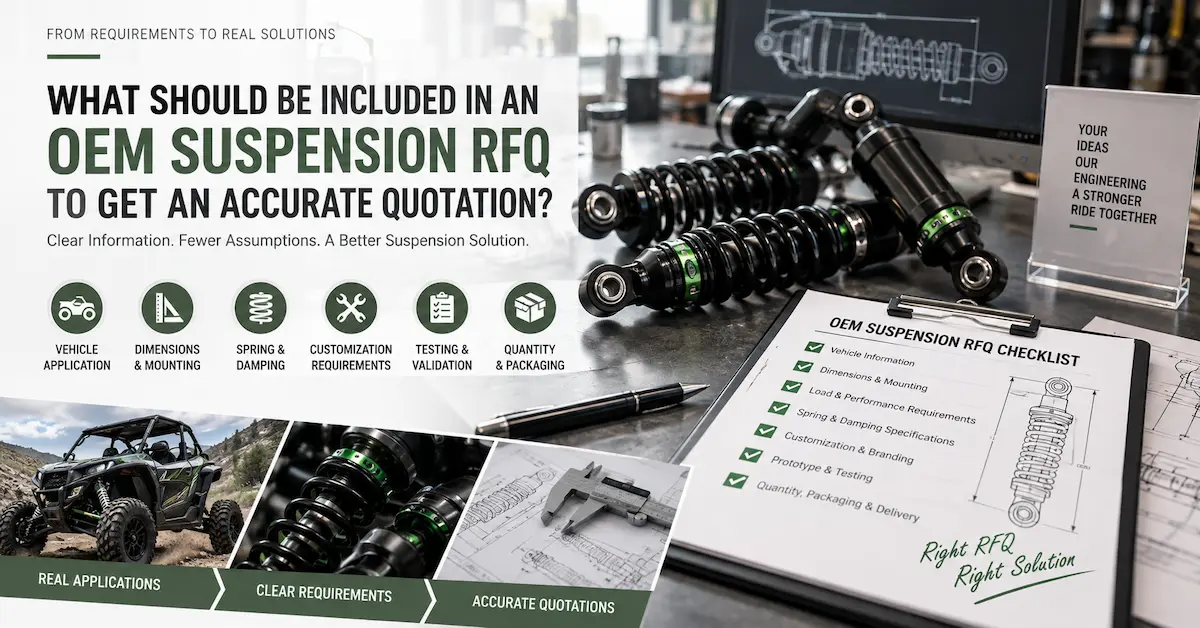
OEM Suspension RFQ Information Suppliers Need
A complete RFQ helps suppliers provide more accurate solutions.
Provide:
| Information | Purpose |
|---|---|
| Vehicle model | Defines application |
| Suspension position | Defines requirements |
| Existing shock sample | Provides reference |
| Dimensions | Defines fitment |
| Vehicle weight | Supports spring selection |
| Rider/cargo load | Defines working condition |
| Terrain | Defines performance target |
| Spring requirement | Supports suspension design |
| Damping requirement | Defines tuning direction |
| Drawings/CAD | Supports engineering |
| Prototype quantity | Defines development scope |
| Production forecast | Supports planning |
BEDO’s OEM suspension RFQ guide explains the information buyers should prepare before requesting quotations.
Standard Supplier or Custom Development Partner?
Not every project requires full customization.
A standard product may be suitable when:
- dimensions match;
- vehicle load is unchanged;
- existing performance is acceptable;
- no major modification exists.
Custom development is more suitable when:
- vehicle platform is new;
- load requirements change;
- larger tires are added;
- suspension geometry changes;
- performance targets are different.
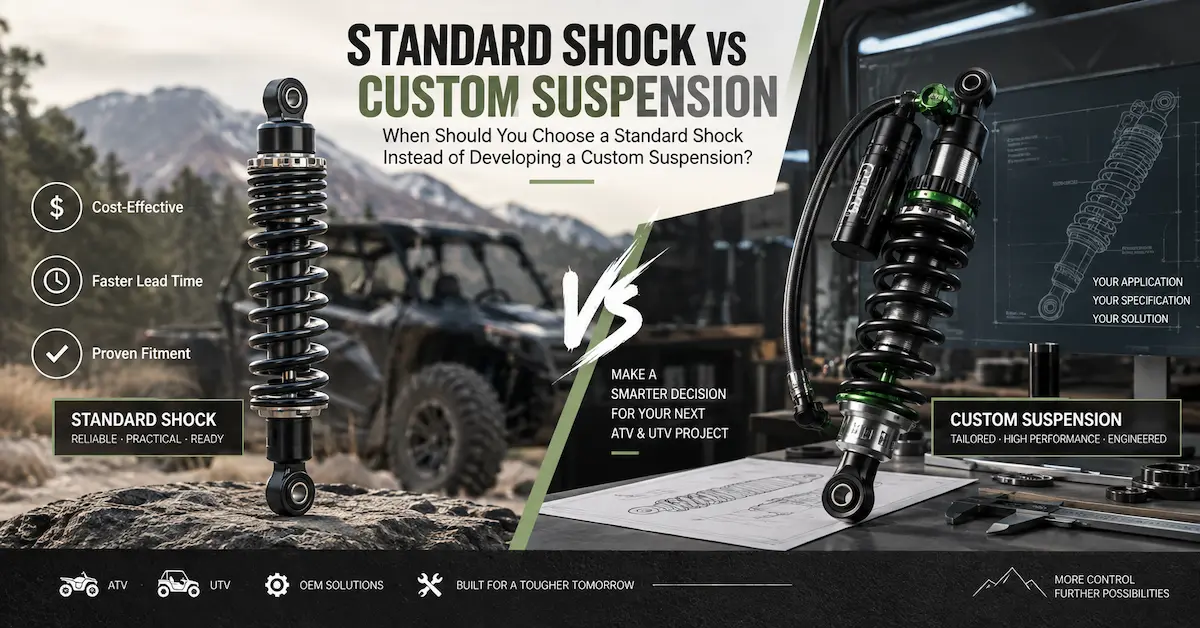
BEDO’s standard shock vs custom suspension guide explains how buyers can decide whether customization creates real value.
MOQ and Lead Time Considerations
OEM suspension projects often include several stages:
- prototype;
- testing;
- revision;
- pilot production;
- mass production.
Buyers should separate:
- sample quantity;
- pilot quantity;
- production MOQ;
- repeat order quantity.
BEDO’s custom shock absorber MOQ guide explains why quantities depend on configuration, customization, and production requirements.
Lead time should also be separated into:
- engineering review;
- prototype production;
- testing;
- revision;
- production preparation.
BEDO’s custom shock development lead time guide provides related planning considerations.
Why Communication Quality Matters
Technical communication is often overlooked when selecting suppliers.
A reliable supplier should:
- ask detailed questions;
- identify missing information;
- explain technical decisions;
- provide clear revisions;
- confirm specifications before production.
Poor communication during development can create:
- incorrect samples;
- delayed approvals;
- repeated changes;
- production misunderstandings.
For OEM projects, communication capability is part of supplier capability.
How to Reduce Risk When Choosing a China Suspension Supplier
OEM buyers can reduce sourcing risk by:
Prepare Complete Requirements
Provide vehicle data, drawings, samples, and performance targets.
Compare Suppliers Using the Same RFQ
Avoid comparing quotations based on different assumptions.
Validate Before Mass Production
Use prototypes to confirm fitment and performance.
Control Approved Specifications
Keep drawings, samples, and revisions organized.
Evaluate Long-Term Capability
Choose suppliers that can support future production and updates.
Frequently Asked Questions
1. What Makes a Good China Off-Road Suspension Supplier?
A good supplier combines engineering capability, customization support, prototype development, testing, quality control, and stable production.
2. Can China Suspension Suppliers Support OEM ATV Projects?
Yes. Suitable suppliers can support standard products, modified platforms, prototypes, and custom suspension development.
3. How Do I Check Suspension Factory Quality?
Review manufacturing processes, testing methods, prototype validation, inspection procedures, and production consistency.
4. Should I Choose the Cheapest Suspension Supplier?
Not necessarily. Compare technical capability, quality control, development support, and long-term reliability together with price.
5. Can a Supplier Customize Shock Absorber Damping?
Yes, depending on the shock design and project requirements.
6. Can Suppliers Develop Custom Springs?
Yes. Spring development can be based on vehicle load, suspension geometry, and performance targets.
7. What Information Should I Send Before Requesting a Quote?
Provide vehicle information, shock dimensions, load conditions, spring requirements, damping targets, drawings, samples, and expected quantity.
8. Do OEM Suspension Projects Need Prototypes?
For customized products, prototypes are usually valuable for validating fitment and performance before production.
9. How Long Does Custom Suspension Development Take?
Timing depends on customization scope, prototype requirements, testing, revisions, and production preparation.
10. How Can I Contact BEDO for an OEM Suspension Project?
Prepare your vehicle details, technical requirements, drawings or samples, and production expectations, then submit the project through BEDO Contact Us.
Conclusion
Choosing the right China off-road suspension supplier requires evaluating engineering capability, customization experience, prototype support, testing processes, manufacturing control, and communication quality—not only comparing factory prices. A reliable suspension partner should help buyers move from vehicle requirements to a validated product through technical review, prototype development, testing, approval, and repeat production. BEDO supports ATV, UTV, and off-road suspension projects with shock absorber and spring customization capabilities. To evaluate your suspension requirements, contact BEDO with your vehicle information, drawings, samples, load conditions, performance targets, and production plans to select the appropriate suspension development solution.