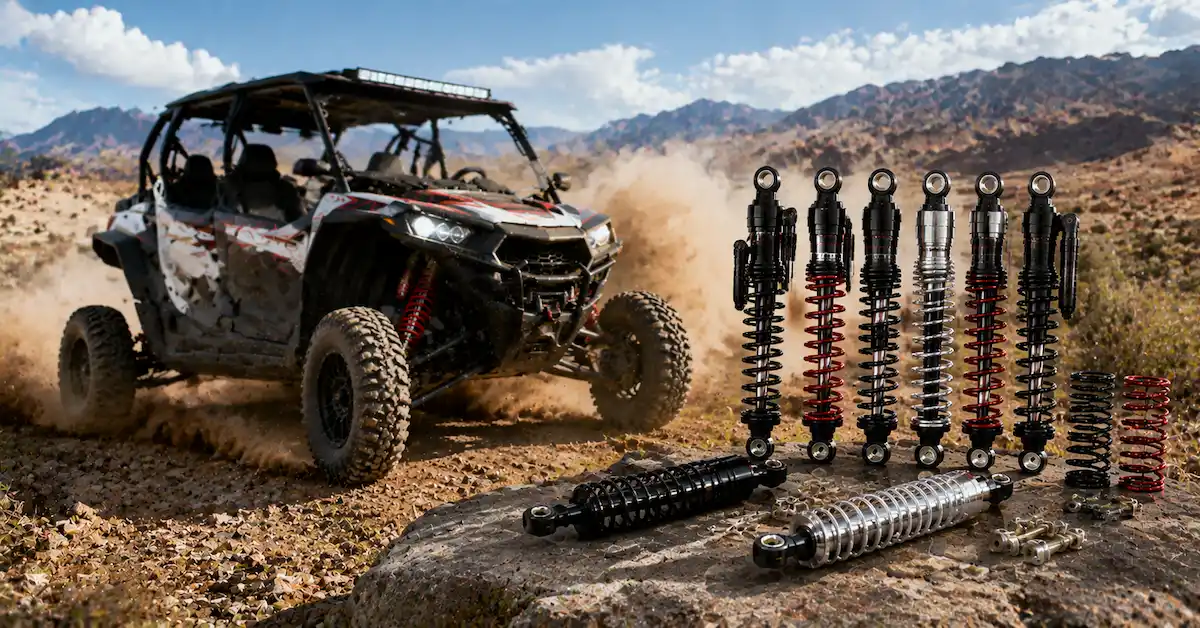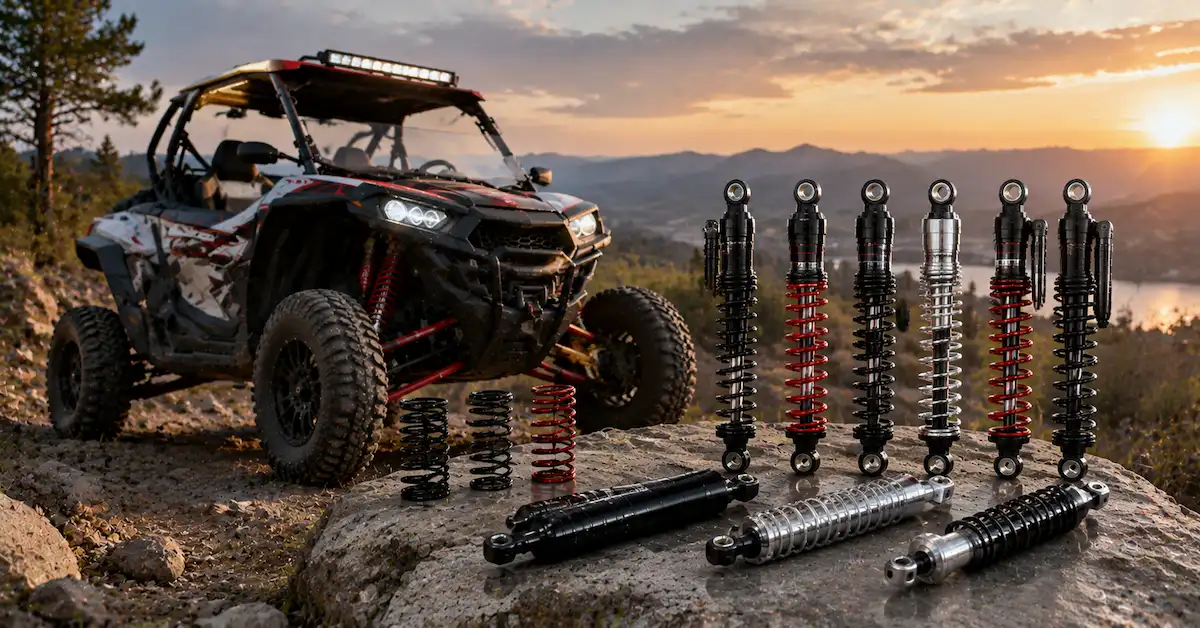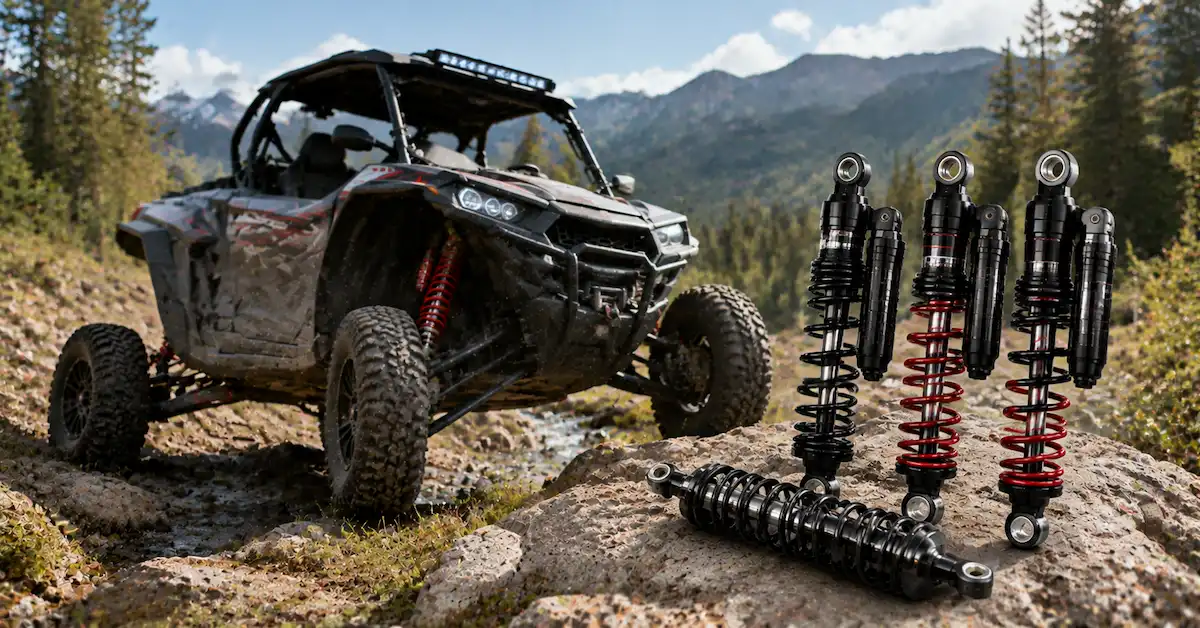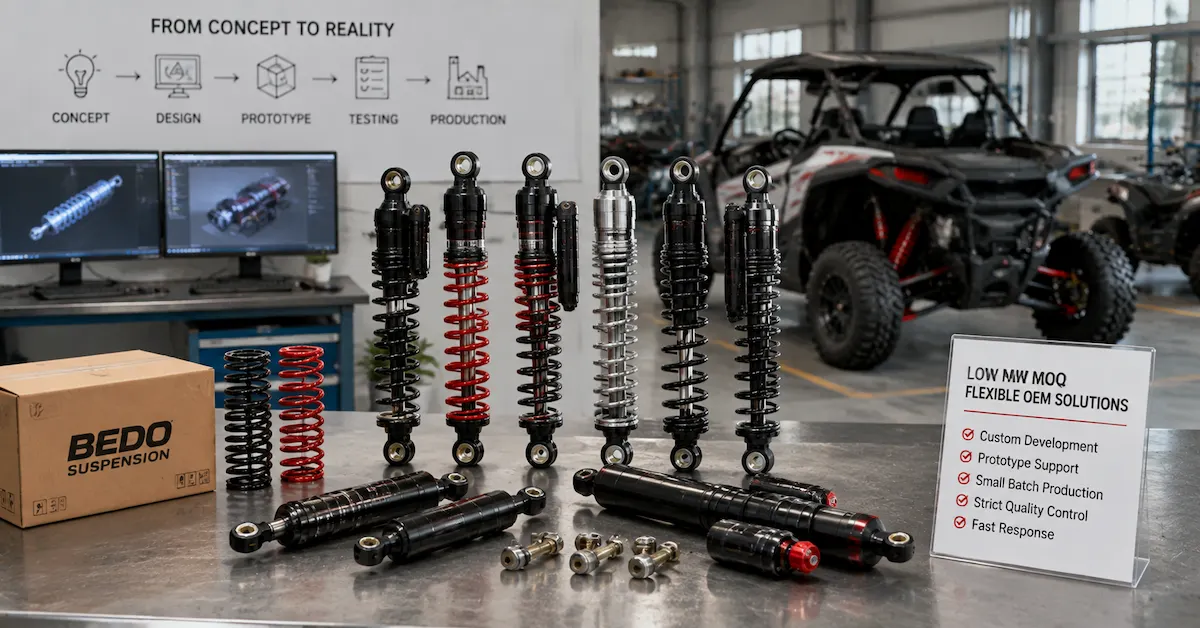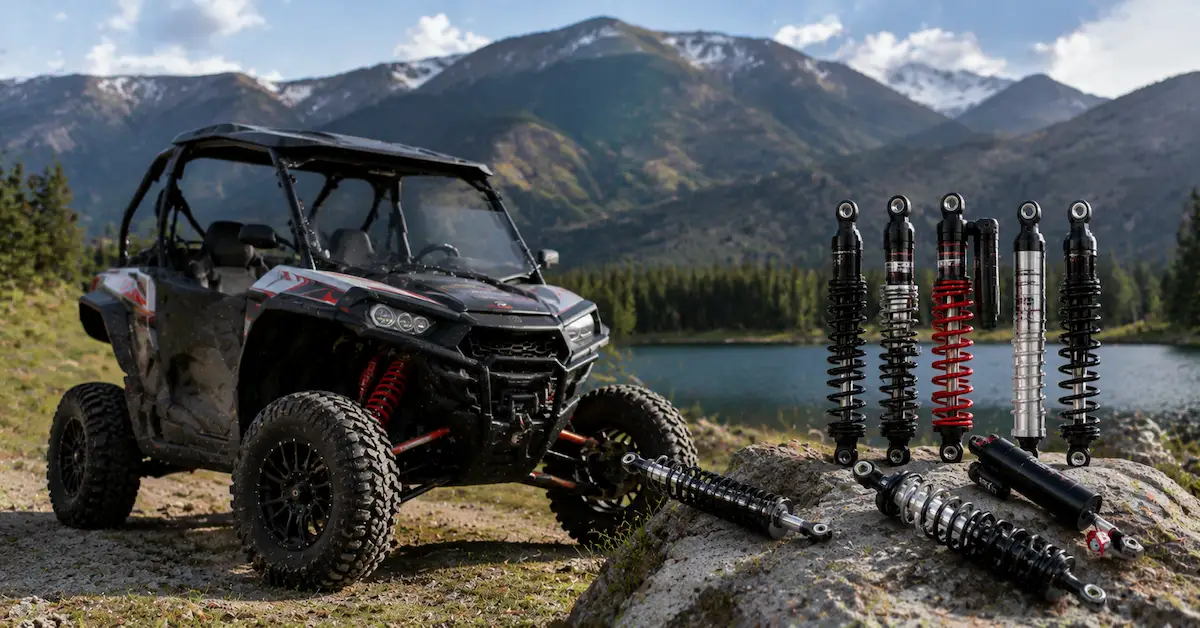

A reliable shock absorber testing service is an essential part of suspension product development, quality control, and OEM manufacturing.
Shock absorbers directly affect:
- Vehicle stability
- Ride comfort
- Handling performance
- Tire contact
- Suspension durability
- Driving safety
For manufacturers and aftermarket brands, producing a shock absorber with correct dimensions is not enough.
A suspension component must also deliver consistent:
- Compression performance
- Rebound performance
- Load support
- Heat resistance
- Sealing reliability
- Long-term durability
Professional testing helps identify problems before mass production and ensures that suspension products meet application requirements.
Bedo Auto supports customized shock absorber development, prototype validation, and testing processes for ATV, UTV, motorcycles, golf carts, utility vehicles, electric vehicles, and specialty vehicles.
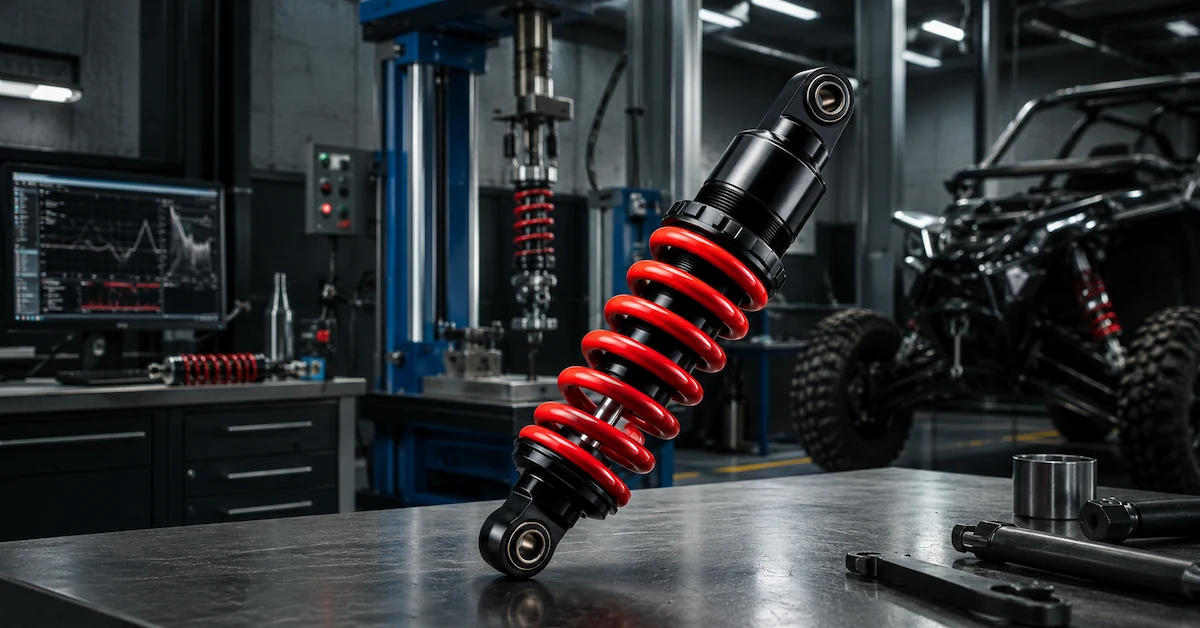
Why Shock Absorber Testing Is Important
Shock absorbers operate under repeated mechanical stress.
During real vehicle operation, they experience:
- Continuous compression cycles
- High impact loads
- Temperature changes
- Vibration
- Environmental contamination
- Variable vehicle loads
Without proper testing, problems may appear after products reach the market.
Common issues include:
- Incorrect damping force
- Oil leakage
- Poor rebound control
- Excessive heat generation
- Structural failure
- Inconsistent performance between units
A professional shock absorber testing service helps manufacturers verify product reliability before large-scale production.
What Does Shock Absorber Testing Service Include?
A complete testing program may include:
| Testing Service | Purpose |
|---|---|
| Dimensional inspection | Confirm manufacturing accuracy |
| Damping force testing | Evaluate compression and rebound performance |
| Leakage testing | Verify sealing reliability |
| Load testing | Confirm structural strength |
| Durability testing | Evaluate long-term operation |
| Temperature testing | Check heat resistance |
| Adjustment testing | Verify adjustable functions |
| Vehicle testing | Confirm real application performance |
Different projects require different testing methods.
A racing shock absorber may require advanced damping analysis.
A utility vehicle shock absorber may require heavy-load durability testing.
A commercial vehicle application may prioritize long service life and consistency.
Shock Absorber Testing Methods
Dimensional Testing
Dimensional inspection is the first step in validation.
Engineers verify:
- Extended length
- Compressed length
- Stroke
- Mounting width
- Mounting-hole diameter
- Shock-body diameter
- Piston-rod diameter
Accurate dimensions ensure proper vehicle installation.
Incorrect dimensions may cause:
- Installation failure
- Suspension interference
- Reduced travel
- Excessive stress
Damping Force Testing
Damping testing is one of the most important parts of shock absorber validation.
It evaluates:
- Compression force
- Rebound force
- Force-speed relationship
- Adjustment range
Testing helps engineers understand how the shock absorber responds under different operating conditions.
Proper damping improves:
- Vehicle control
- Tire contact
- Ride comfort
- Suspension stability
Shock Dyno Testing
A shock dyno is commonly used for professional suspension testing.
It measures:
- Compression damping
- Rebound damping
- Force curves
- Velocity response
- Adjustment changes
Shock dyno testing helps engineers:
- Compare prototypes
- Optimize valve designs
- Tune damping performance
- Verify production consistency
For OEM projects, dyno data provides objective performance information instead of relying only on driving feedback.
Leakage Testing
Sealing performance is critical for shock absorber reliability.
Testing verifies:
- Oil sealing
- Gas pressure retention
- Connection reliability
- Seal performance
Leakage problems may cause:
- Reduced damping
- Performance loss
- Shorter service life
- Customer complaints
A reliable testing process helps identify sealing issues before shipment.
Load Testing
Load testing evaluates whether the shock absorber can handle expected forces.
Testing may include:
- Compression loads
- Static loads
- Repeated loading
- Maximum force conditions
This is especially important for:
- ATV
- UTV
- Utility vehicles
- Heavy-duty applications
Durability Testing
Durability testing evaluates long-term performance.
It may simulate:
- Repeated suspension cycles
- High-frequency movement
- Heavy loads
- Harsh operating conditions
The purpose is to confirm:
- Component strength
- Seal durability
- Damping stability
- Structural reliability
Temperature and Heat Testing
Shock absorbers generate heat during operation.
Heat can affect:
- Oil viscosity
- Damping consistency
- Seal performance
- Internal components
Testing helps evaluate:
- Thermal stability
- Heat resistance
- Performance changes during operation
This is especially important for:
- Racing vehicles
- Off-road vehicles
- Commercial vehicles
Testing for Adjustable Shock Absorbers
Adjustable shock absorbers require additional validation.
Testing may include:
- Rebound adjustment testing
- Compression adjustment testing
- Preload adjustment testing
- Repeatability testing
A quality adjustable shock should provide:
- Predictable changes
- Stable performance
- Consistent adjustment response
More adjustment settings do not automatically mean better performance. The adjustment range must be useful and repeatable.
Testing During Suspension Prototype Development
During prototype stages, testing helps engineers optimize:
- Spring rate
- Damping force
- Valve structure
- Shock dimensions
- Mounting design
The prototype process may include:
- Initial design
- Prototype production
- Laboratory testing
- Vehicle testing
- Performance improvement
- Final validation
Testing reduces development risks before mass production.
Vehicle Testing and Real-World Validation
Laboratory testing provides important data, but vehicle testing confirms real performance.
Vehicle testing evaluates:
- Ride comfort
- Handling
- Suspension response
- Traction
- Noise
- Stability
Applications may include:
ATV Testing
Focus:
- Off-road impacts
- Suspension travel
- Rider control
UTV Testing
Focus:
- Cargo loads
- Passenger comfort
- Durability
Motorcycle Testing
Focus:
- Handling
- Rider feedback
- Suspension response
Utility Vehicle Testing
Focus:
- Long-term operation
- Load capacity
- Reliability
Quality Control Through Testing
Testing is a key part of manufacturing quality control.
A professional quality system includes:
Incoming Inspection
Verify:
- Materials
- Components
- Springs
- Seals
- Machined parts
Production Inspection
Check:
- Assembly accuracy
- Torque control
- Component alignment
- Oil filling
Final Testing
Verify:
- Dimensions
- Performance
- Leakage
- Appearance
- Packaging
Testing ensures every production batch meets approved specifications.
Why OEM Buyers Need Testing Support
For OEM buyers, testing provides several benefits:
Reduce Development Risk
Testing identifies problems before mass production.
Improve Product Reliability
Validation ensures components perform under actual conditions.
Support Customer Requirements
Testing data helps demonstrate product quality.
Improve Production Consistency
Testing verifies repeatability between production batches.
How to Choose a Shock Absorber Testing Service Provider
Buyers should evaluate:
Testing Capability
Confirm whether the supplier can perform:
- Damping testing
- Leakage testing
- Durability testing
- Load testing
- Vehicle validation
Engineering Capability
The supplier should understand:
- Suspension systems
- Vehicle applications
- Shock absorber design
- Performance optimization
Equipment Capability
Evaluate availability of:
- Shock dyno equipment
- Measurement tools
- Load testing equipment
- Inspection systems
Production Integration
A strong supplier should connect testing with:
- Prototype development
- Manufacturing
- Quality control
- Mass production
How Bedo Auto Supports Shock Testing Projects
As a professional shock absorber testing service partner, Bedo Auto supports customers through suspension development, prototype validation, and production quality control.
Testing support includes:
- Dimensional verification
- Shock performance evaluation
- Leakage inspection
- Prototype validation
- Suspension optimization
- Production quality checks
Applications include:
- Motorcycle
- ATV
- UTV
- Golf cart
- Utility vehicle
- Electric vehicle
- Specialty vehicle
Buyers can review suspension solutions through the Bedo Auto Products page.
For testing and engineering cooperation, samples, drawings, and project requirements can be submitted through the Contact Us page.
FAQ
What is a shock absorber testing service?
It is a professional validation process that evaluates shock absorber dimensions, damping, durability, sealing, and performance before production or delivery.
Why is damping testing important?
Damping testing verifies whether the shock absorber provides correct compression and rebound performance for the vehicle application.
What equipment is used for shock absorber testing?
Professional testing may use shock dyno equipment, load testing systems, measurement tools, and inspection equipment.
Can prototypes be tested before mass production?
Yes. Prototype testing helps optimize design, performance, and reliability before large-scale manufacturing.
Do all shock absorbers require the same testing?
No. Testing requirements depend on vehicle type, operating conditions, performance targets, and customer requirements.
Can Bedo Auto support OEM shock absorber testing?
Yes. Bedo Auto supports prototype validation, performance testing, quality inspection, and OEM production preparation.
Conclusion
A professional shock absorber testing service helps manufacturers and suspension brands create safer, more reliable, and higher-performance suspension products.
Testing validates critical factors including damping performance, structural strength, sealing reliability, durability, and production consistency.
Through engineering analysis, prototype testing, quality control, and OEM manufacturing support, Bedo Auto helps global customers develop reliable shock absorber solutions for different vehicle applications.