
For startups, specialty vehicle manufacturers, aftermarket brands, and engineering companies, finding a reliable low volume shock absorber OEM partner can significantly reduce product development risks.
Unlike large automotive programs that require thousands of units, many suspension projects begin with smaller quantities.
Typical low-volume requirements include:
- Prototype vehicles
- New product launches
- Limited production models
- Racing projects
- Aftermarket suspension upgrades
- Custom vehicle applications
A flexible OEM partner allows companies to develop customized shock absorbers while maintaining control over:
- Investment costs
- Product testing
- Design improvement
- Inventory management
A professional low-volume shock absorber manufacturer provides engineering support from concept development to prototype validation and production.
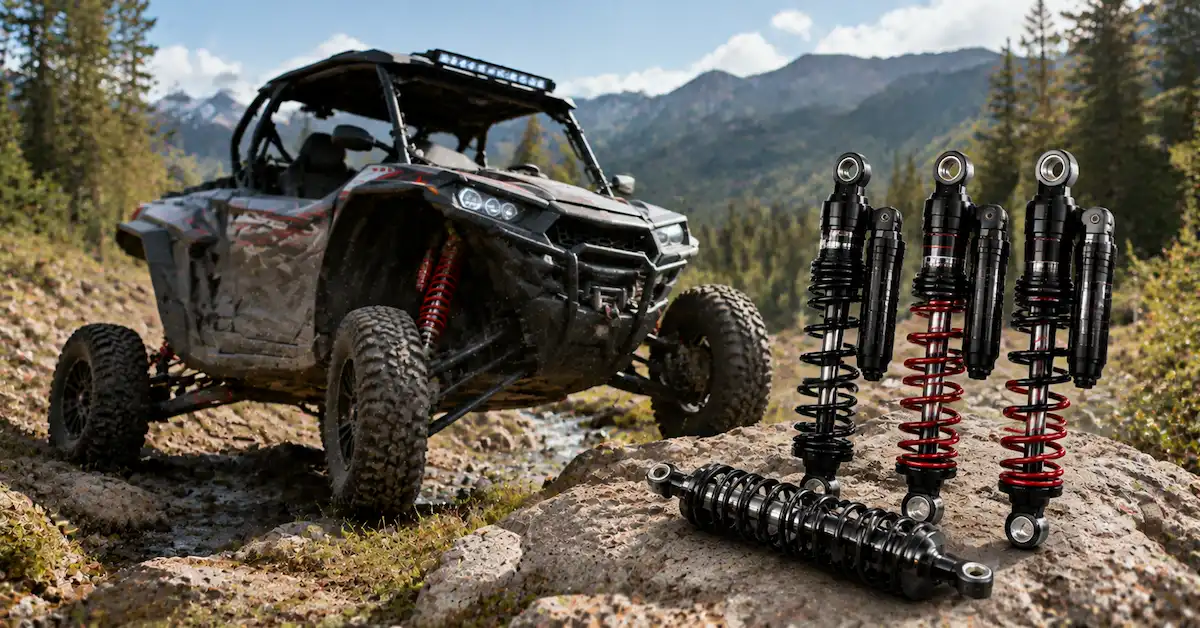
Bedo Auto supports customized shock absorber solutions for ATV, UTV, motorcycles, golf carts, utility vehicles, electric vehicles, and specialty vehicle applications.
What Is Low Volume Shock Absorber OEM?
A low volume shock absorber OEM project refers to the customized development and production of shock absorbers with smaller order quantities compared with traditional automotive manufacturing.
These projects usually require:
- Custom specifications
- Engineering support
- Prototype samples
- Small batch production
- Quality validation
Low-volume OEM manufacturing is especially suitable when customers need to verify:
- Product performance
- Vehicle compatibility
- Market demand
- Customer feedback
before investing in larger production volumes.
Why Companies Need Low Volume OEM Shock Absorbers
Many suspension projects cannot start with mass production.
Companies may need small quantities because:
- The vehicle platform is still under development
- Market demand is uncertain
- Product specifications require testing
- Custom applications require validation
Low-volume OEM production provides several benefits.
Reduce Initial Investment
Companies can avoid:
- Large inventory costs
- Excess stock
- High upfront manufacturing expenses
Support Product Development
Small batches allow engineers to evaluate:
- Fitment
- Suspension performance
- Driving feedback
- Product improvements
Enable Custom Applications
Special vehicles often require unique:
- Shock dimensions
- Damping settings
- Spring specifications
- Mounting structures
Applications for Low Volume Shock Absorber OEM
A professional OEM partner can support many applications.
Specialty Vehicle Development
Examples include:
- Custom off-road vehicles
- Electric vehicles
- Utility vehicles
- Adventure vehicles
These projects often require flexible production.
Racing and Performance Projects
Motorsport customers may require:
- Limited production shocks
- Custom damping
- Performance tuning
ATV and UTV Applications
Off-road manufacturers may need:
- Custom suspension setups
- Pilot production
- Small batch supply
Motorcycle Suspension Projects
Motorcycle brands may require:
- Specific shock dimensions
- Rider-focused tuning
- Limited production quantities
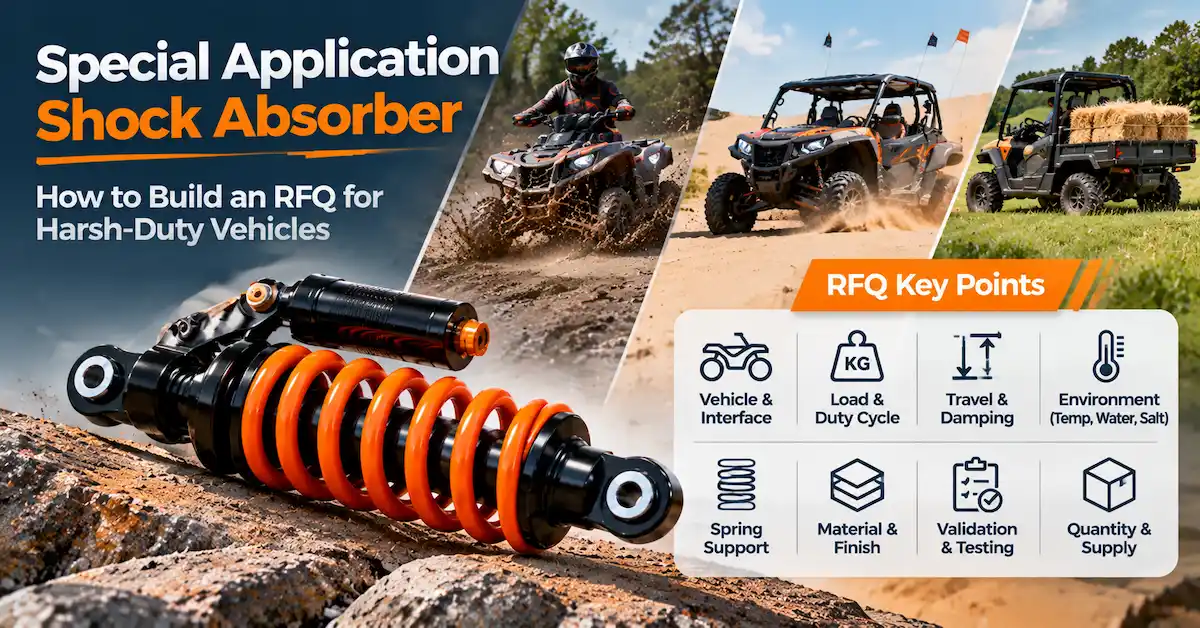
Key Information Required for Low Volume OEM Projects
Before development begins, buyers should provide:
| Information | Purpose |
|---|---|
| Vehicle type | Defines suspension application |
| Vehicle weight | Determines shock requirements |
| Payload | Defines load support |
| Shock dimensions | Confirms installation |
| Suspension position | Determines front/rear design |
| Terrain | Guides damping selection |
| Performance goals | Defines tuning targets |
| Existing sample | Supports analysis |
| Technical drawings | Defines specifications |
| Quantity requirement | Plans production |
Clear project information helps suppliers create accurate solutions.
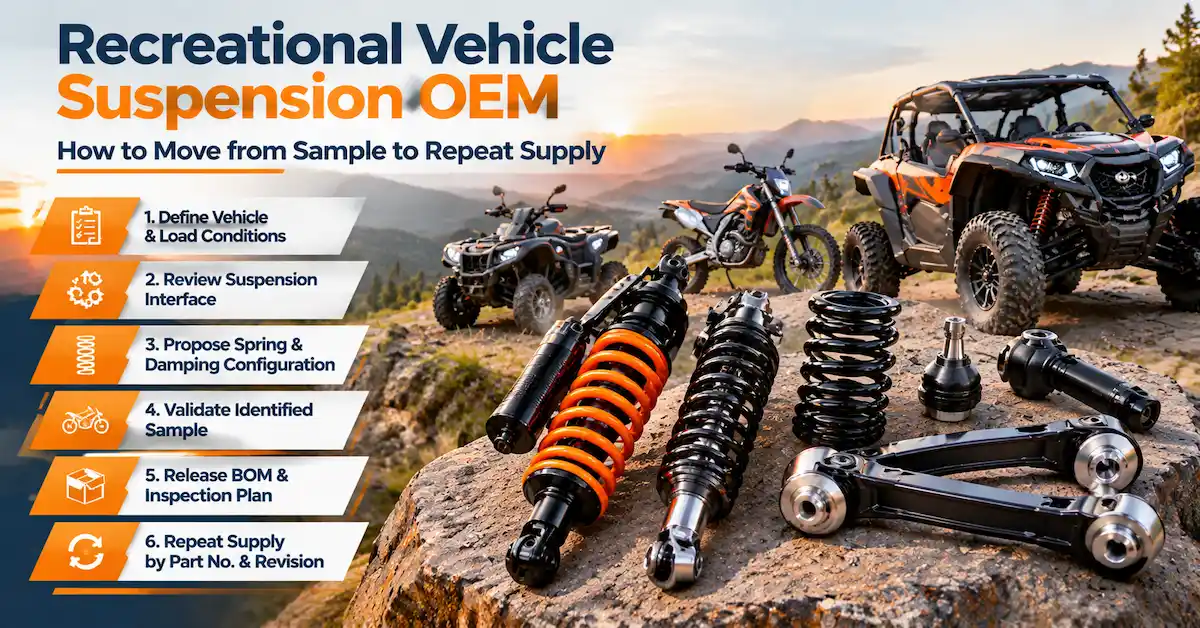
Low Volume Shock Absorber Development Process
A professional OEM process includes several stages.
Step 1: Requirement Analysis
Engineers evaluate:
- Vehicle application
- Load conditions
- Operating environment
- Performance expectations
Step 2: Technical Review
The supplier analyzes:
- Existing shocks
- Drawings
- CAD models
- Mounting requirements
Step 3: Prototype Development
Prototype units are produced for:
- Installation testing
- Performance evaluation
- Customer approval
Step 4: Testing and Optimization
Engineers verify:
- Damping performance
- Leakage resistance
- Structural reliability
Step 5: Small Batch Production
Approved products move into controlled low-volume manufacturing.
Customization Options for Low Volume Shocks
Even small production runs can include customization.
Shock Dimensions
Options include:
- Extended length
- Compressed length
- Stroke
- Mounting style
Damping Settings
Customization includes:
- Compression damping
- Rebound damping
- Adjustable damping
Spring Configuration
Options include:
- Spring rate
- Wire diameter
- Coil length
- Color
Structural Design
Includes:
- Reservoir configuration
- Mounting brackets
- Bushings
Branding
Includes:
- Logo
- Labels
- Packaging
Prototype vs Low Volume Production
| Stage | Purpose |
|---|---|
| Prototype | Verify design |
| Low volume production | Validate manufacturing |
| Mass production | Scale supply |
Low-volume OEM acts as a bridge between development and full production.
Quality Control for Low Volume Shock Absorber OEM
Small orders still require strict quality management.
Dimensional Inspection
Verify:
- Shock length
- Stroke
- Mounting dimensions
- Tolerances
Performance Testing
Evaluate:
- Compression response
- Rebound response
- Adjustment function
Leakage Testing
Check:
- Seal performance
- Oil retention
- Pressure stability
Final Inspection
Confirm:
- Product appearance
- Assembly quality
- Packaging
A professional supplier applies consistent standards regardless of order size.
Engineering Support for Low Volume OEM Projects
A capable supplier should provide:
Suspension Analysis
Including:
- Vehicle requirements
- Load evaluation
- Performance targets
Shock Development
Including:
- Damping design
- Spring matching
- Structural optimization
Prototype Support
Including:
- Sample production
- Testing
- Improvement
Production Transition
Including:
- Small batch manufacturing
- Process control
- Scale-up support
How to Choose a Low Volume Shock Absorber OEM Partner
Buyers should evaluate:
Engineering Capability
The supplier should support:
- Custom design
- Prototype development
- Performance optimization
Production Flexibility
Evaluate:
- MOQ requirements
- Small batch capability
- Custom manufacturing ability
Testing Capability
Confirm:
- Shock testing
- Leakage testing
- Validation support
OEM Experience
A reliable partner should understand:
- Vehicle applications
- Suspension requirements
- Long-term supply needs
How Bedo Auto Supports Low Volume Shock Absorber OEM Projects
As an experienced low volume shock absorber OEM partner, Bedo Auto provides flexible suspension development solutions for global customers.
Support includes:
- Shock absorber customization
- Sample analysis
- Prototype production
- Damping optimization
- Small batch manufacturing
- Performance testing
- OEM production support
Applications include:
- ATV
- UTV
- Motorcycle
- Golf cart
- Utility vehicle
- Electric vehicle
- Specialty vehicles
Buyers can review suspension solutions through the Bedo Auto Products page.
For low-volume OEM projects, samples, drawings, and technical requirements can be submitted through the Contact Us page.
FAQ
What is low volume shock absorber OEM?
It is a customized shock absorber development and production service designed for smaller production quantities.
Can low volume OEM shocks be customized?
Yes. Dimensions, damping settings, springs, mounting structures, and branding can be customized.
Is low volume production suitable for startups?
Yes. It allows startups to test products while reducing inventory and investment risks.
Can prototypes become mass production?
Yes. Many OEM projects begin with prototypes and low-volume batches before scaling.
What vehicles use low volume OEM shocks?
Applications include ATV, UTV, motorcycles, utility vehicles, electric vehicles, and specialty vehicles.
Can Bedo Auto support low volume OEM projects?
Yes. Bedo Auto supports engineering development, prototypes, testing, small batches, and OEM manufacturing.
Conclusion
A professional low volume shock absorber OEM partner helps companies develop customized suspension products with lower risk and greater flexibility.
For startups, specialty vehicle manufacturers, aftermarket brands, and engineering teams, low-volume production provides an efficient way to validate products before large-scale investment.
Through engineering support, prototype development, quality testing, and flexible OEM manufacturing, Bedo Auto helps global customers create reliable shock absorber solutions for different vehicle applications.