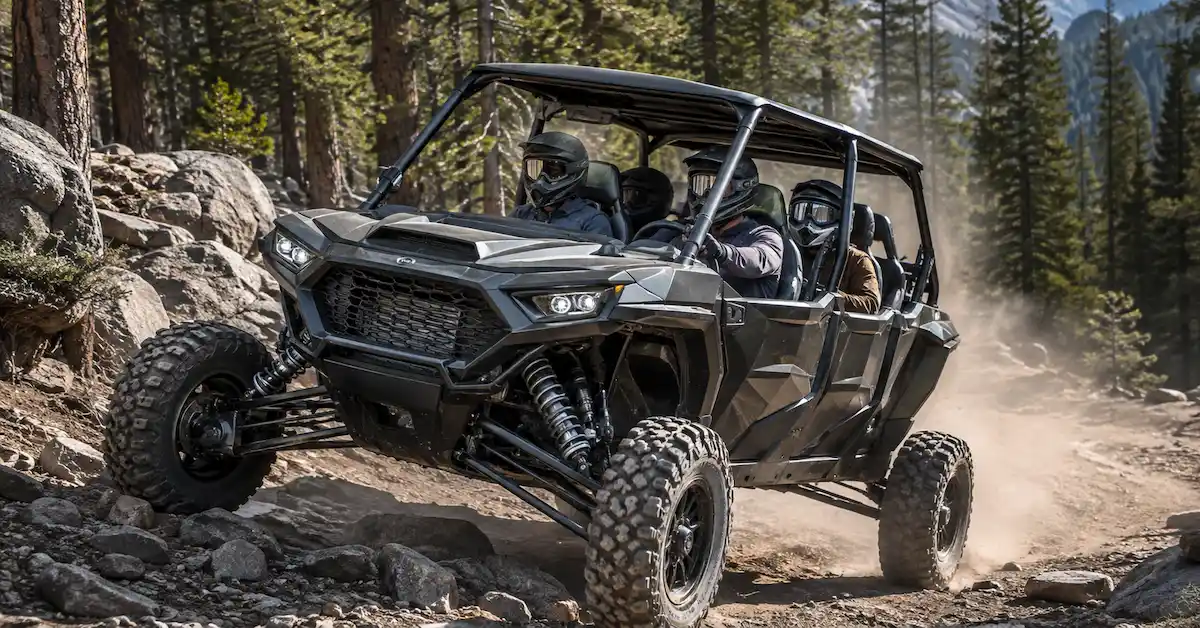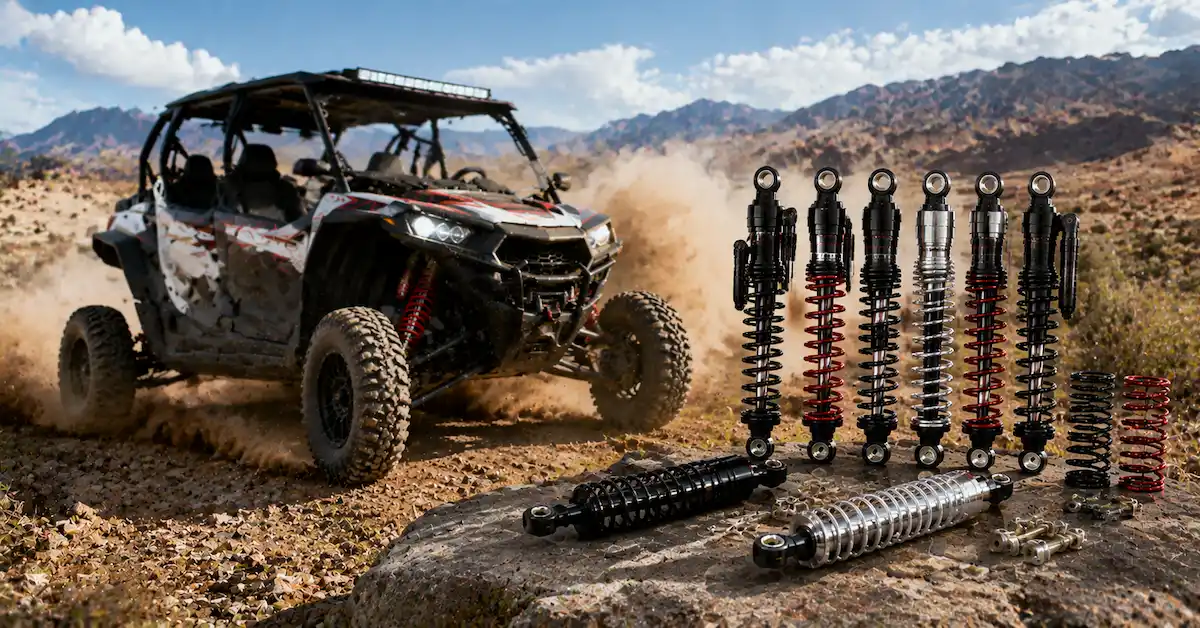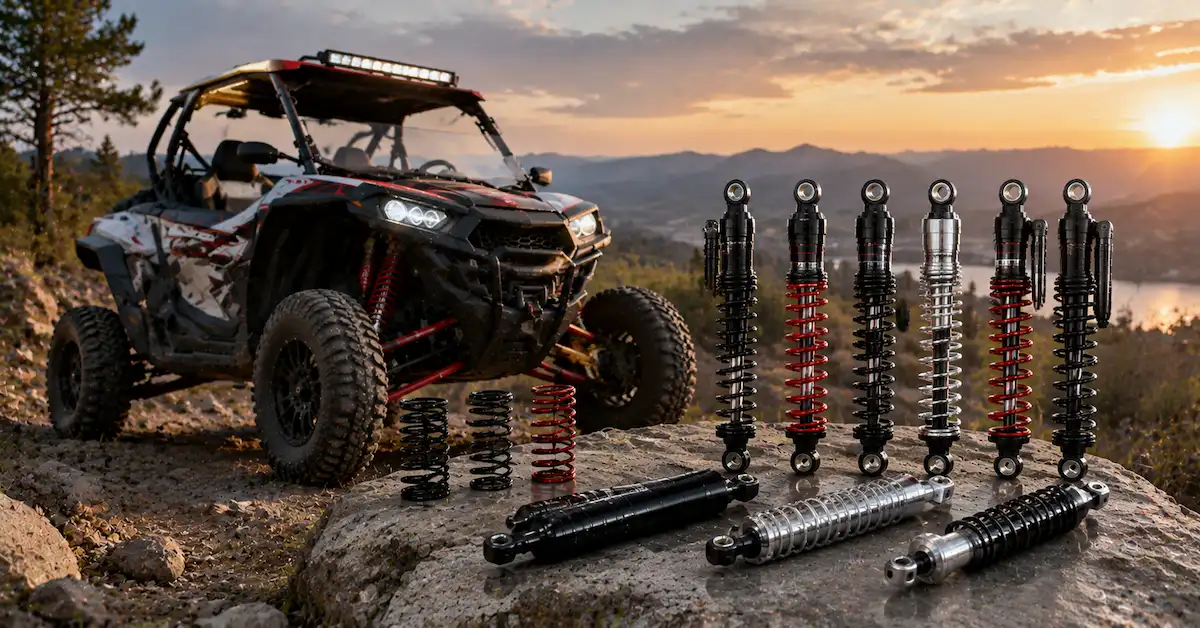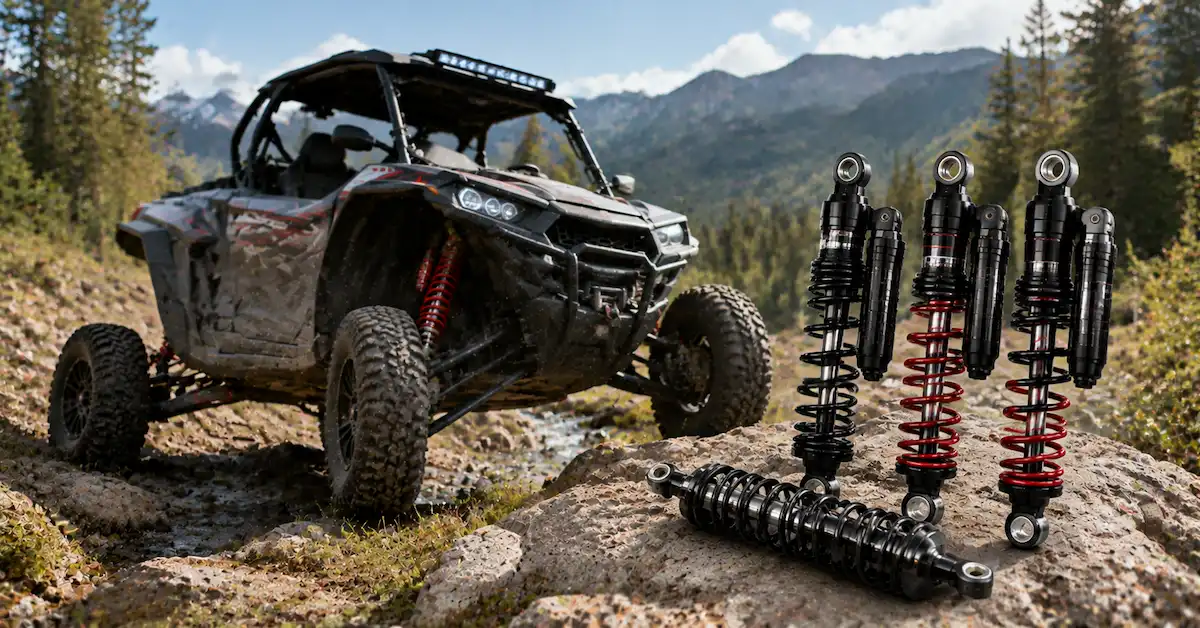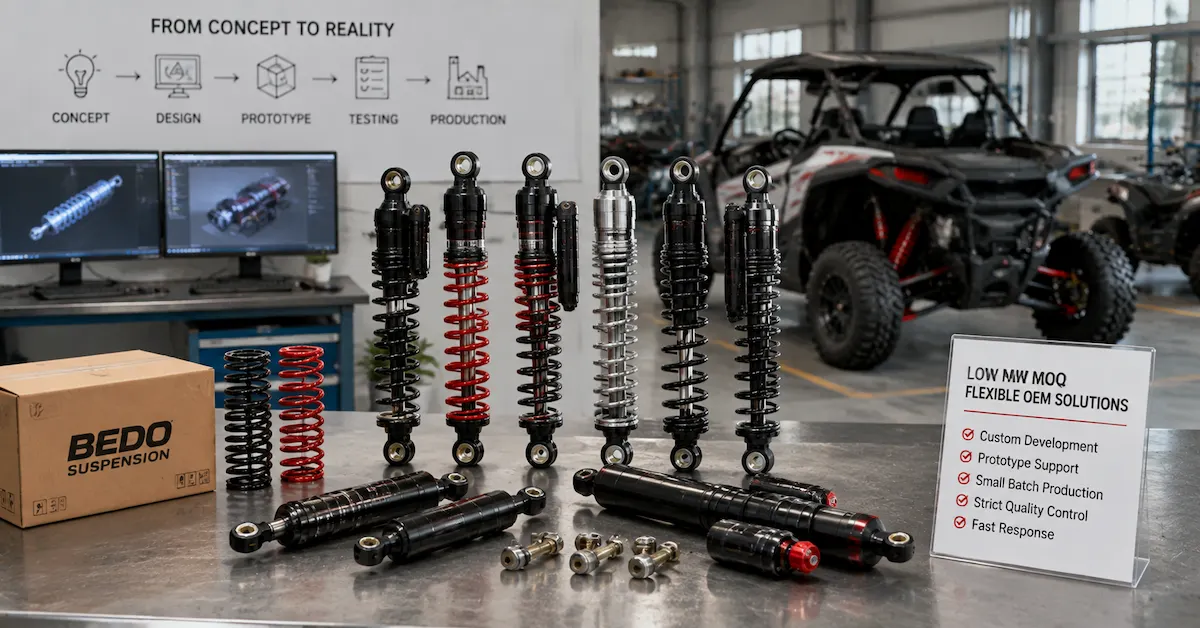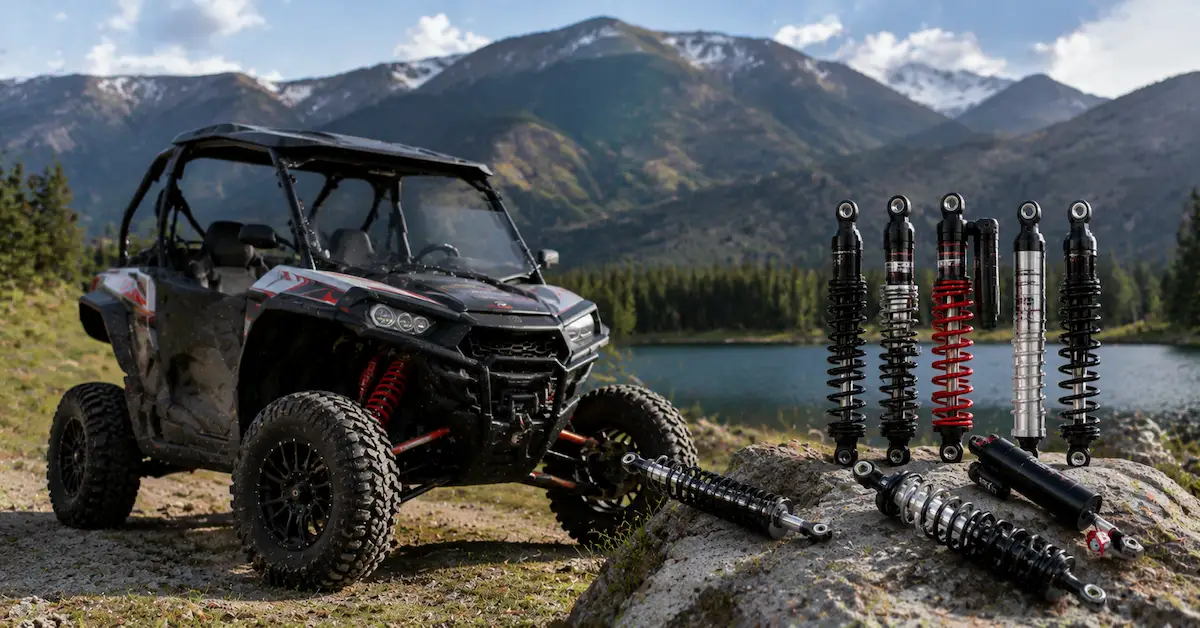

A professional vehicle spring customization service helps vehicle manufacturers, suspension brands, distributors, and aftermarket companies develop springs that match specific load conditions, vehicle structures, and performance requirements.
Although coil springs appear simple, they are one of the most important components in a suspension system.
The spring directly influences:
- Vehicle height
- Suspension sag
- Load capacity
- Ride comfort
- Ground clearance
- Handling stability
- Suspension travel
- Bottoming resistance
A standard spring may fit physically but still fail to provide the expected performance if the spring rate, wire diameter, material, or coil design does not match the vehicle application.
For OEM projects, spring development should consider the entire suspension system, including:
- Shock absorber characteristics
- Vehicle weight
- Payload requirements
- Suspension geometry
- Operating environment
- Expected service life
Bedo Auto provides customized suspension spring and shock absorber solutions for ATV, UTV, motorcycles, golf carts, utility vehicles, electric vehicles, and specialty vehicles.
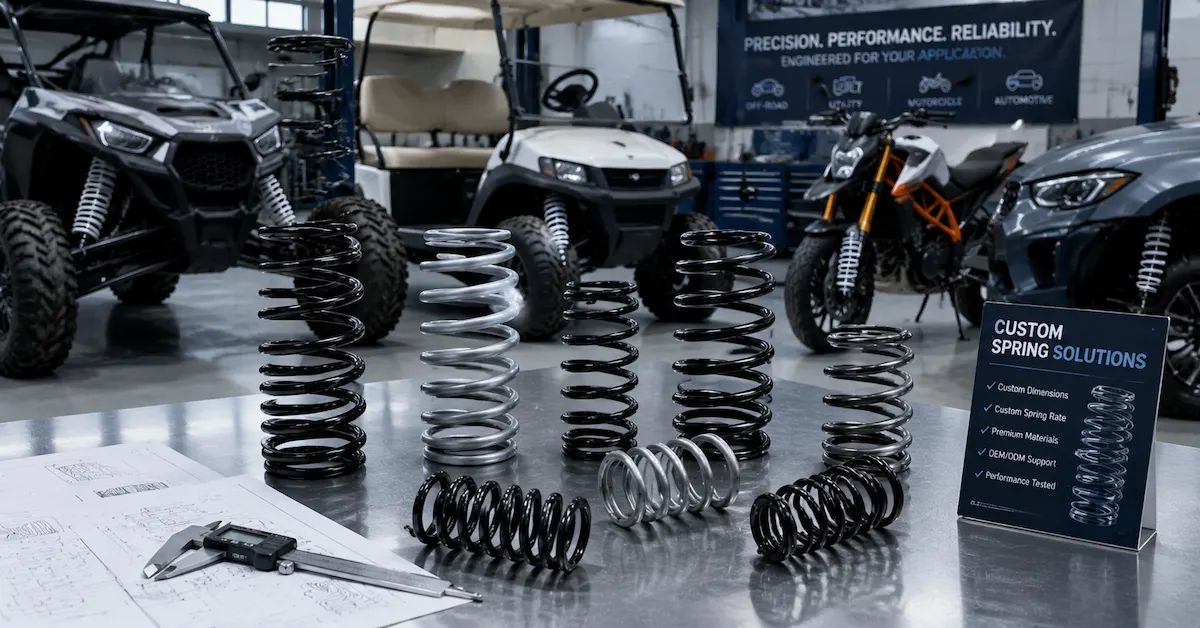
What Is Vehicle Spring Customization Service?
A vehicle spring customization service provides engineering and manufacturing support for developing springs based on customer requirements.
Unlike standard replacement springs, customized springs are designed according to:
- Vehicle specifications
- Load requirements
- Installation space
- Suspension performance targets
- Application environment
A complete customization process may include:
| Service | Purpose |
|---|---|
| Sample analysis | Understand existing spring structure |
| Drawing review | Confirm technical requirements |
| Spring design | Develop suitable geometry |
| Spring rate tuning | Match vehicle load |
| Material selection | Improve durability |
| Prototype production | Verify performance |
| Testing | Confirm specifications |
| OEM production | Support long-term supply |
The goal is not simply producing a spring with the correct size, but creating a spring that delivers the required suspension performance.
Why Vehicles Need Customized Springs
Different vehicles operate under different conditions.
A passenger vehicle may prioritize comfort.
A utility vehicle may require higher load capacity.
An off-road vehicle may need stronger impact resistance.
A golf cart may need improved passenger comfort and battery-load support.
A custom spring solution may be required when vehicles have:
- Additional cargo
- Larger batteries
- Different wheel sizes
- Modified suspension systems
- Heavy accessories
- Increased passenger capacity
- Commercial operation requirements
Incorrect spring selection may cause:
- Excessive sag
- Poor handling
- Reduced ground clearance
- Frequent bottoming
- Uneven vehicle height
- Increased shock absorber stress
Applications of Custom Vehicle Springs
A professional supplier should support different vehicle applications.
Automotive Suspension
Requirements:
- Comfort
- Stability
- Load balance
- Long service life
ATV and UTV Suspension
Requirements:
- Heavy-duty support
- Off-road durability
- Impact resistance
- Variable payload handling
Motorcycle Suspension
Requirements:
- Rider weight matching
- Handling improvement
- Comfort optimization
- Performance tuning
Golf Cart Suspension
Requirements:
- Passenger comfort
- Battery weight support
- Utility applications
- Smooth operation
Electric Vehicles
Electric vehicles often require customized springs because:
- Battery systems increase weight
- Weight distribution changes
- Commercial loads vary
Key Information Required for Spring Customization
Before starting a project, buyers should provide detailed information.
| Information | Why It Matters |
|---|---|
| Vehicle model | Defines application |
| Vehicle weight | Determines spring requirement |
| Maximum load | Defines support capacity |
| Suspension position | Front or rear requirements |
| Battery weight | Important for electric vehicles |
| Passenger capacity | Influences load conditions |
| Cargo requirements | Affects spring rate |
| Existing spring sample | Supports analysis |
| Free length | Defines installation |
| Outer diameter | Confirms clearance |
| Wire diameter | Influences strength |
| Coil count | Influences spring behavior |
| Target spring rate | Defines performance |
| Operating environment | Determines durability |
A professional supplier should understand both the technical requirements and the intended vehicle usage.
Spring Rate Development
Spring rate is one of the most important parameters in customization.
It determines how much force is required to compress the spring.
Spring rate affects:
- Ride height
- Suspension movement
- Load support
- Comfort
- Handling
Softer Spring Rate
Advantages:
- Better small-bump comfort
- Smoother ride
- More suspension movement
Potential disadvantages:
- Excessive sag
- Reduced ground clearance
- Increased bottoming risk
Higher Spring Rate
Advantages:
- Better load support
- Reduced compression under heavy loads
- Improved resistance to bottoming
Potential disadvantages:
- Harsh ride
- Reduced comfort
- Higher vibration
The correct spring rate depends on:
- Vehicle weight
- Payload
- Suspension geometry
- Shock absorber characteristics
- Operating environment
Coil Spring Design Parameters
A customized spring is developed according to several parameters.
Wire Diameter
Wire diameter affects:
- Spring strength
- Load capacity
- Stiffness
- Durability
Outer Diameter
Outer diameter determines:
- Installation clearance
- Shock compatibility
- Vehicle packaging
Free Length
Free length influences:
- Ride height
- Preload
- Suspension travel
Coil Count
Coil count affects:
- Compression behavior
- Spring flexibility
- Available travel
End Design
Spring ends influence:
- Installation position
- Seat compatibility
- Vehicle fitment
Common designs include:
- Closed ends
- Ground ends
- Custom-shaped ends
Material Selection for Vehicle Springs
Spring material directly affects durability and performance.
Important considerations include:
- Tensile strength
- Fatigue resistance
- Elastic recovery
- Corrosion resistance
- Temperature stability
Manufacturing processes may include:
- Heat treatment
- Shot peening
- Surface coating
- Protective finishing
A reliable spring manufacturer should control material properties throughout production.
Linear vs Progressive Springs
Different applications require different spring characteristics.
Linear Coil Springs
Linear springs provide a consistent spring rate.
Advantages:
- Predictable response
- Easier tuning
- Stable performance
Applications:
- Standard vehicles
- Racing applications
- Controlled-load vehicles
Progressive Coil Springs
Progressive springs change resistance during compression.
Advantages:
- Softer initial movement
- Increased support under heavy loads
- Better adaptability
Applications:
- Utility vehicles
- Off-road vehicles
- Vehicles with changing payloads
The correct design depends on the vehicle purpose.
Sample-Based Spring Development
Many customization projects begin with an existing spring.
A supplier can analyze:
- Free length
- Outer diameter
- Wire diameter
- Coil count
- End shape
- Surface treatment
However, dimensions alone do not reveal:
- Actual spring rate
- Fatigue performance
- Material properties
- Heat treatment quality
For accurate development, buyers should provide:
- Vehicle information
- Load requirements
- Performance goals
- Current problems
Examples:
- Increase load capacity
- Improve ride comfort
- Reduce sag
- Support vehicle modifications
- Extend service life
Drawing-Based OEM Spring Manufacturing
Technical drawings provide clear production requirements.
Important information includes:
- Spring dimensions
- Material specification
- Wire diameter
- Coil diameter
- Coil count
- End design
- Tolerance requirements
- Surface treatment
Before production, engineers should review:
- Installation space
- Compression range
- Shock compatibility
- Manufacturing feasibility
Quality Control for Customized Springs
A professional supplier should control every production stage.
Material Inspection
Check:
- Steel wire quality
- Material specifications
- Surface condition
Dimensional Inspection
Verify:
- Free length
- Outer diameter
- Wire diameter
- Coil count
- End shape
Spring Performance Testing
Testing may include:
- Spring rate testing
- Load testing
- Compression testing
- Fatigue testing
Surface Inspection
Check:
- Coating quality
- Corrosion protection
- Surface defects
Final Inspection
Verify:
- Dimensions
- Appearance
- Packaging
- Quantity
Prototype and Small-Batch Validation
Before mass production, prototype testing helps confirm:
- Vehicle installation
- Ride height
- Suspension behavior
- Load support
- Shock compatibility
Small-batch validation helps identify:
- Production variation
- Spring-rate differences
- Surface issues
- Fitment problems
This reduces development risks before large orders.
How to Choose a Vehicle Spring Customization Supplier
Buyers should evaluate:
Engineering Capability
Can the supplier:
- Analyze samples?
- Develop spring specifications?
- Recommend improvements?
- Produce prototypes?
Manufacturing Capability
Evaluate:
- Spring production equipment
- Material control
- Heat treatment process
- Surface treatment capability
- Production capacity
Testing Capability
Confirm whether the supplier can verify:
- Spring rate
- Load performance
- Dimensions
- Fatigue resistance
Communication Capability
A professional supplier should understand:
- Vehicle application
- Load requirements
- Performance goals
- Production expectations
How Bedo Auto Supports Vehicle Spring Customization
As a professional vehicle spring customization service provider, Bedo Auto supports customized suspension spring solutions for:
- ATV
- UTV
- Motorcycle
- Golf cart
- Utility vehicles
- Electric vehicles
- Specialty vehicles
Support includes:
- Spring design
- Sample analysis
- Drawing review
- Spring rate customization
- Prototype production
- Testing validation
- OEM manufacturing
- Private-label support
- Customized packaging
Buyers can review suspension solutions through the Bedo Auto Products page.
For custom spring projects, samples, drawings, and technical requirements can be submitted through the Contact Us page.
FAQ
What is vehicle spring customization service?
It is an OEM development service that designs and manufactures springs according to vehicle requirements, load conditions, dimensions, and performance targets.
Can springs be customized from existing samples?
Yes. Existing springs can be analyzed and improved according to vehicle applications.
Can spring rates be adjusted?
Yes. Spring rates can be customized according to vehicle weight, payload, suspension geometry, and intended use.
Are progressive springs better than linear springs?
Neither is always better. The correct choice depends on vehicle requirements and performance goals.
What information is needed for custom spring development?
Vehicle model, weight, load requirements, spring dimensions, sample or drawing, operating environment, and target performance are usually required.
Can Bedo Auto support small-batch spring projects?
Yes. Bedo Auto supports prototype development and small-batch validation for customized suspension applications.
Conclusion
A professional vehicle spring customization service helps manufacturers and aftermarket brands develop suspension springs that match real-world vehicle requirements.
Successful spring development requires more than copying dimensions. Material selection, spring rate, geometry, vehicle weight, suspension design, and operating conditions must all be considered.
Through engineering support, sample analysis, prototype development, testing, and OEM/ODM manufacturing, Bedo Auto helps global buyers create reliable customized spring solutions for different vehicle applications.