
Choosing a UTV suspension supplier is not only a product sourcing decision.
For aftermarket brands, distributors, and OEM buyers, the bigger challenge is finding a supplier that can produce the same approved suspension specification repeatedly after the first order.
Many suppliers can develop one acceptable prototype.
Fewer suppliers can maintain consistency across:
- The second production batch
- The tenth production batch
- Different production months
- Different operators
- Different raw material deliveries
- Growing order quantities
This difference directly affects:
- Customer satisfaction
- Warranty rates
- Dealer confidence
- Inventory planning
- Brand reputation
A reliable supplier should not only answer:
“Can you make this shock absorber?”
They should be able to answer:
“How will you make the same shock absorber every time after approval?”
That is the real question behind repeat production.
Why Is Repeat Production More Important Than the First Sample?
The first prototype is usually produced with extra engineering attention.
The supplier team may personally review:
- Dimensions
- Assembly
- Testing
- Adjustments
- Customer feedback
But commercial production has different challenges.
A production environment must control:
- Incoming materials
- Component suppliers
- Assembly procedures
- Testing standards
- Worker operations
- Inspection records
- Product identification
A suspension product can perform well in the first sample and still create problems later if the supplier does not have a repeatable manufacturing system.
For distributors, inconsistent production creates difficult situations:
- A dealer receives different-feeling products from the same SKU.
- Installation expectations change between batches.
- Customers compare different production units.
- Warranty investigations become complicated.
Repeatability is therefore part of product quality.
What Makes a UTV Suspension Supplier Reliable?
A reliable supplier normally has several capabilities working together.
Stable Engineering Process
The supplier should have a clear process from prototype approval to mass production.
A professional workflow may include:
Customer Requirement → Engineering Review → Prototype → Vehicle Testing → Specification Approval → Pilot Production → Mass Production → Quality Monitoring
The important point is that the approved prototype must become a controlled production reference.
The supplier should not rely only on memory or previous communication.
Does the Supplier Have a Production Specification System?
One of the first questions to ask is:
“After we approve the sample, how do you ensure future orders match it?”
A mature supplier should have documented product information.
Depending on the project, this may include:
- Engineering drawings
- Part numbers
- Revision numbers
- Shock dimensions
- Spring specifications
- Mounting details
- Damping specifications
- Adjustment settings
- Material requirements
- Packaging requirements
Without a controlled specification, repeat orders can gradually drift.
Small changes may appear harmless individually but create noticeable differences after several production cycles.
Why Should Buyers Check Production Records?
A supplier's ability to maintain repeat production depends heavily on traceability.
Ask whether the factory can track:
- Production batches
- Raw materials
- Component suppliers
- Inspection results
- Assembly records
- Product revisions
Traceability becomes especially important when a customer reports:
- Different ride feel
- Leakage
- Hardware issue
- Installation problem
- Unexpected performance difference
A supplier that can trace production history can investigate.
A supplier without records can only guess.
How Does Quality Control Affect UTV Suspension Consistency?
Suspension products contain many components that influence performance.
Consistency depends on controlling details such as:
- Shock body dimensions
- Shaft quality
- Seal installation
- Oil filling process
- Nitrogen charging
- Spring specification
- Valve components
- Mounting hardware
A small variation may not be obvious visually.
However, suspension performance depends on how these components work together.
A quality-focused supplier should have inspection points throughout production rather than checking only the finished appearance.
What Quality Checks Should a UTV Shock Supplier Perform?
The exact QC system depends on the product design, but buyers should understand what is being controlled.
Possible checkpoints include:
| Production Stage | Quality Focus |
|---|---|
| Incoming materials | Verify component consistency |
| Machining | Check critical dimensions |
| Surface treatment | Confirm finish quality |
| Assembly | Follow controlled procedures |
| Oil filling | Maintain process accuracy |
| Pressure charging | Confirm required specification |
| Final inspection | Verify finished product |
| Packaging | Prevent shipping damage |
The purpose is not to create unnecessary inspection.
The purpose is to prevent problems from reaching customers.
How Should I Evaluate a Supplier's Production Capability?
Do not only ask:
“Do you have a factory?”
Ask:
“What part of your process protects consistency?”
Useful questions include:
- How do you control production revisions?
- How do you manage repeat orders?
- How are critical dimensions inspected?
- How are springs matched to production orders?
- How do you record inspection results?
- How do you handle customer complaints?
- How do you prevent unauthorized changes?
- Can you provide production samples before large orders?
- How do you compare production units with approved samples?
- What happens if a component supplier changes?
The quality of the answers reveals more than a factory tour alone.
Why Are Production Samples Important Before Large Orders?
A production sample is different from an engineering prototype.
The prototype proves:
“Can this product be developed?”
The production sample proves:
“Can this product be manufactured according to the approved design?”
Before a large order, buyers should confirm:
- Correct dimensions
- Correct appearance
- Correct packaging
- Correct hardware
- Correct labeling
- Correct performance expectations
This reduces the risk of discovering problems after inventory has already been produced.
How Does Supplier Experience Affect Repeat Production?
Experience matters, but not only because the supplier has been operating for many years.
The more important question is:
“Has the supplier managed similar products and similar customers before?”
Relevant experience may include:
- Aftermarket suspension products
- OEM projects
- Private-label programs
- Distributor supply
- Multiple vehicle platforms
- Small-batch and large-batch production
A supplier familiar with aftermarket UTV suspension understands that the product is not only a component.
It is part of a customer's vehicle modification experience.
Should I Choose a Factory or Trading Company?
Both models can work, depending on your requirements.
However, for custom suspension development and repeat production, buyers often need direct communication with the manufacturing side.
A factory relationship can provide clearer access to:
- Engineering discussion
- Production changes
- Quality feedback
- Process information
- Customization decisions
The key question is not simply:
“Factory or trader?”
The better question is:
“Who controls the engineering and production decisions?”
For customized UTV suspension programs, that control can significantly affect long-term consistency.
How Does Supplier Communication Affect Repeat Orders?
Repeat production is not only a manufacturing issue.
Communication is equally important.
A reliable supplier should clearly manage:
- New drawings
- Revision changes
- Production schedules
- Material changes
- Quality issues
- Customer feedback
Poor communication creates hidden risks.
For example:
A buyer updates a spring specification.
The sales team receives the change.
But the production department continues using the previous version.
Without a controlled communication process, the problem becomes a production problem.
What Documents Should a Reliable Supplier Provide?
Depending on the project, useful documents may include:
- Product drawings
- Specification sheets
- Inspection reports
- Packing lists
- Revision records
- Sample approval records
- Production information
For OEM and private-label projects, documentation becomes increasingly important as order volume grows.
The larger the supply relationship becomes, the less practical verbal communication is.
How Do You Verify Production Consistency Between Orders?
Do not compare only appearance.
Compare the approved production criteria.
Useful comparison points include:
| Area | Check |
|---|---|
| Dimensions | Match approved drawing |
| Hardware | Same specification |
| Spring | Same rating/specification |
| Labeling | Same SKU/version |
| Packaging | Same approved format |
| Performance | Matches intended application |
| Documentation | Same revision |
A repeat order should not feel like a new development project every time.
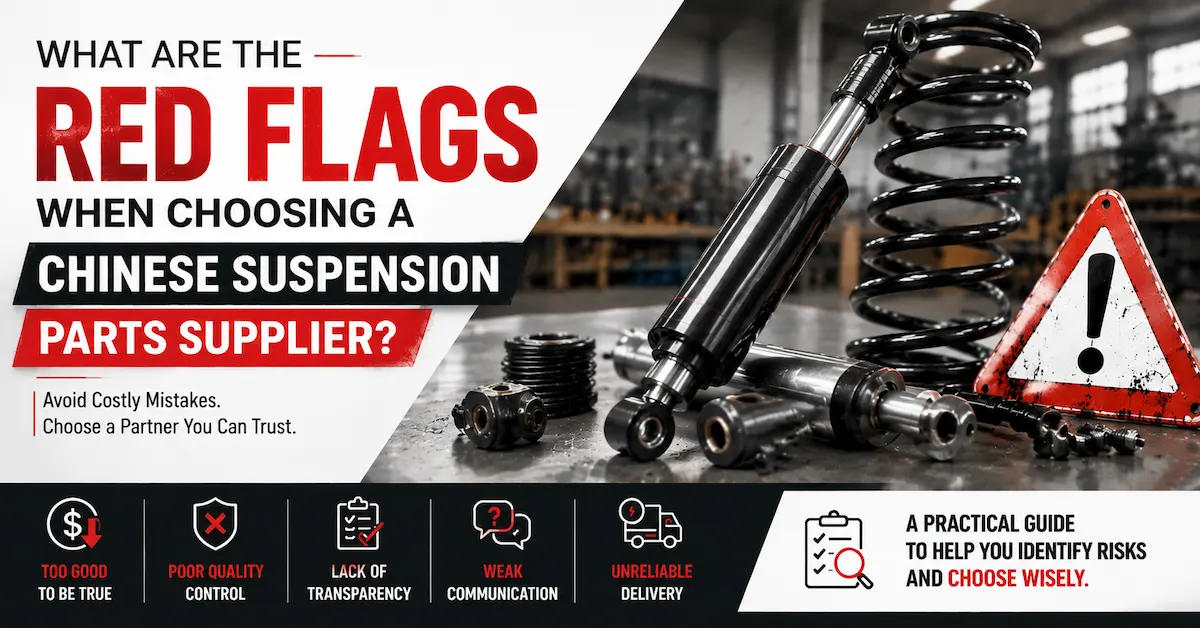
What Are Warning Signs of an Unreliable Supplier?
Some warning signs include:
No Clear Revision Control
If the supplier cannot explain how they manage changes, future production consistency may be difficult.
Price Is the Only Discussion
A supplier focused only on unit price may not be considering engineering and quality requirements.
Cannot Explain Testing
A supplier should understand how the product is validated.
No Sample Approval Process
Production should be based on an approved reference.
Frequent Unexplained Changes
Material, components, or appearance should not change without communication.
Cannot Explain Quality Problems
A supplier should have a process for investigation and correction.
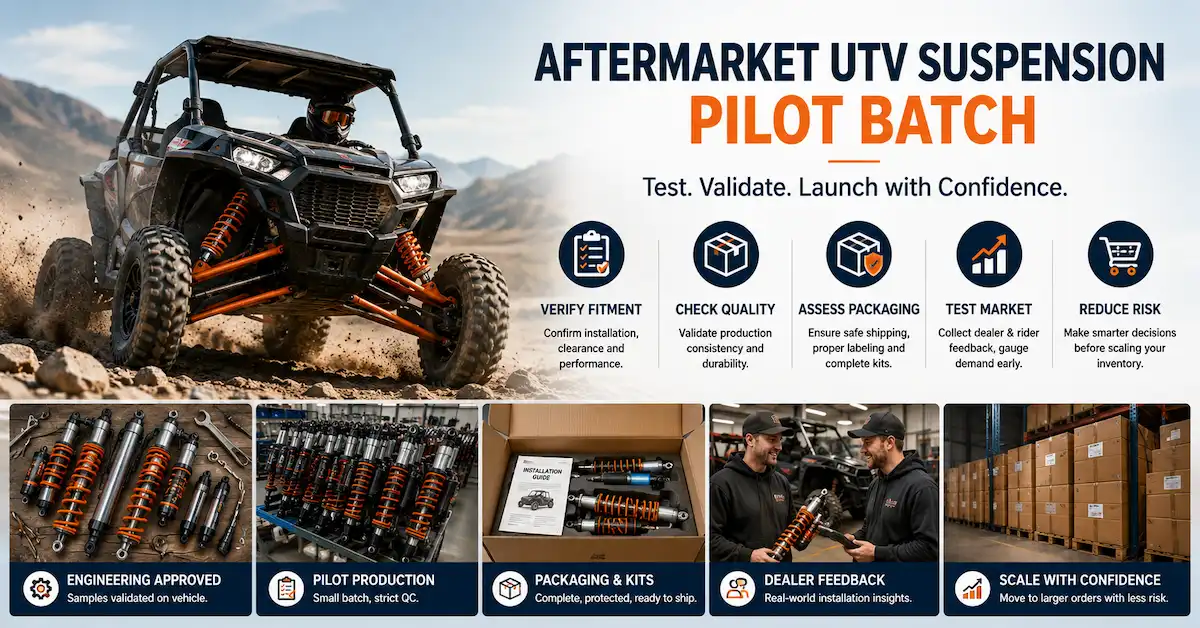
How Does a Pilot Batch Help Confirm Repeat Production?
Before committing to a large order, many buyers use a pilot batch.
A pilot batch can verify:
- Production consistency
- Packaging
- Documentation
- Dealer feedback
- Installation experience
- Supplier communication
It creates a smaller commercial test before larger inventory investment.
For more details, see:
Should I Order a Pilot Batch Before Launching Aftermarket UTV Suspension?
What Information Should I Provide When Searching for a Supplier?
A better supplier evaluation starts with a clear buyer requirement.
Provide:
- Vehicle application
- Target market
- Product type
- Current suspension specification
- Expected customization
- Estimated order quantity
- Production forecast
- Quality requirements
- Packaging requirements
- Branding requirements
The supplier can then explain whether they are suitable for the project.
A vague inquiry often creates vague answers.
How Should Distributors Evaluate a Long-Term Suspension Partner?
Distributors should think beyond the first purchase order.
Evaluate:
Product Capability
Can the supplier develop the required suspension products?
Production Stability
Can they repeat the same specification?
Communication
Can issues be solved quickly?
Commercial Support
Can they support growing orders?
Quality Management
Can they prevent repeated problems?
A supplier relationship becomes valuable when both sides can grow together.
How Can Bedo Auto Support Long-Term UTV Suspension Supply?
For distributors, aftermarket brands, and OEM customers, Bedo Auto can support discussions around UTV shock absorber development, customization, production requirements, and repeat supply planning.
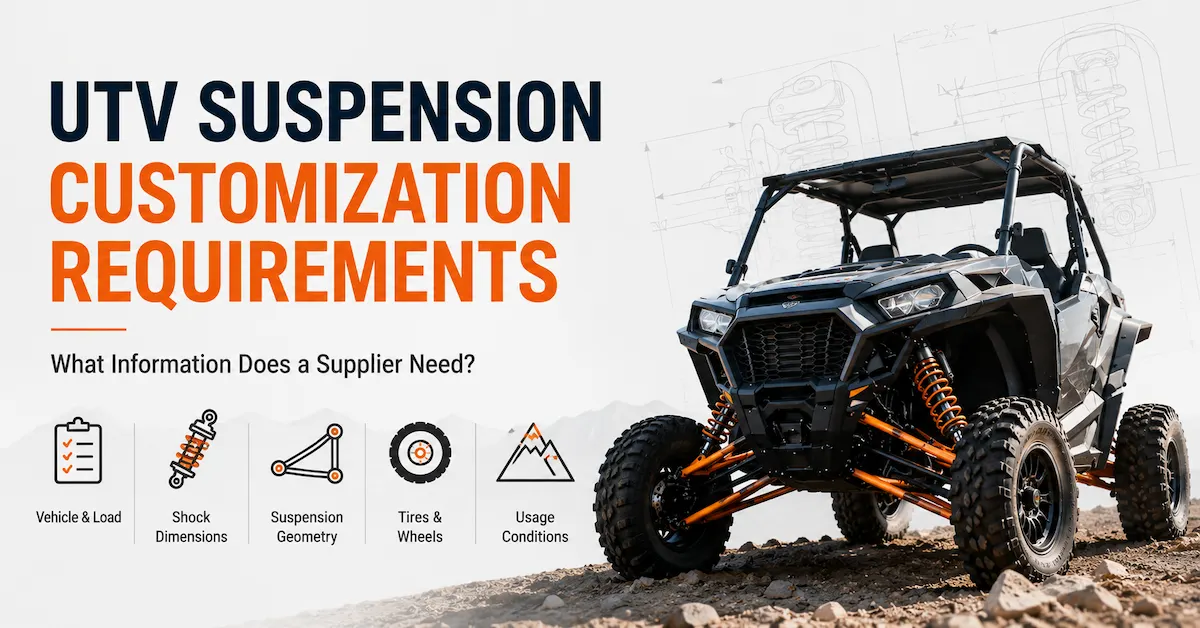
Before starting a project, buyers can review:
UTV suspension customization requirements
to prepare vehicle information, technical specifications, load conditions, and production expectations.
For buyers moving from prototype to commercial supply, the previous guide on:
UTV suspension prototype testing
explains how validation should be completed before production approval.
To discuss an OEM, aftermarket, or distributor program, contact Bedo Auto through:
A strong supplier discussion should include:
- Target vehicle
- Suspension requirements
- Current product situation
- Expected quantity
- Quality expectations
- Long-term supply goals
That allows both sides to evaluate whether the partnership is suitable.
FAQ
How do I find a reliable UTV suspension supplier?
Look for suppliers with clear engineering processes, documented production control, quality inspection systems, revision management, prototype validation, and experience supporting repeat orders.
Why is repeat production important for UTV suspension?
Because the first sample does not represent every future production batch. Consistent repeat production protects product performance, customer satisfaction, and brand reputation.
What should I ask a UTV suspension supplier before ordering?
Ask about engineering control, production process, quality inspection, sample approval, revision management, testing methods, and how they maintain consistency between batches.
Should I request a pilot batch before large production?
For new products or new suppliers, a pilot batch can reduce risk by validating production consistency, packaging, installation experience, and market response.
How can I verify a supplier's quality control?
Review their inspection process, production records, sample approval system, traceability, and how they handle quality issues.
Is the cheapest UTV suspension supplier the best choice?
Not necessarily. A lower initial price may create higher costs if inconsistent production leads to returns, replacements, or customer complaints.
How do OEM buyers maintain suspension consistency?
OEM buyers should maintain approved drawings, specifications, revision records, testing requirements, and clear communication with the supplier.
Can a supplier customize UTV suspension and maintain repeat quality?
Yes, if the supplier has controlled engineering changes, documented specifications, stable production processes, and effective quality management.
What causes repeat orders to become inconsistent?
Common causes include uncontrolled design changes, unclear specifications, supplier changes, poor communication, and insufficient production inspection.
When should I change UTV suspension suppliers?
Consider changing when the supplier repeatedly cannot maintain approved specifications, resolve quality problems, communicate changes, or support your business growth.
Conclusion
Finding a UTV suspension supplier is not only about selecting a manufacturer that can produce one successful sample.
The real challenge is finding a partner that can maintain the same quality after repeated production cycles.
A reliable supplier should provide:
- Stable engineering control
- Clear product specifications
- Repeatable manufacturing processes
- Quality inspection
- Traceability
- Communication
- Long-term support
For aftermarket brands, distributors, and OEM buyers, repeat production capability directly affects customer experience and business growth.
The best supplier is not simply the one that can make your first order.
It is the one that can make your tenth order with the same confidence.