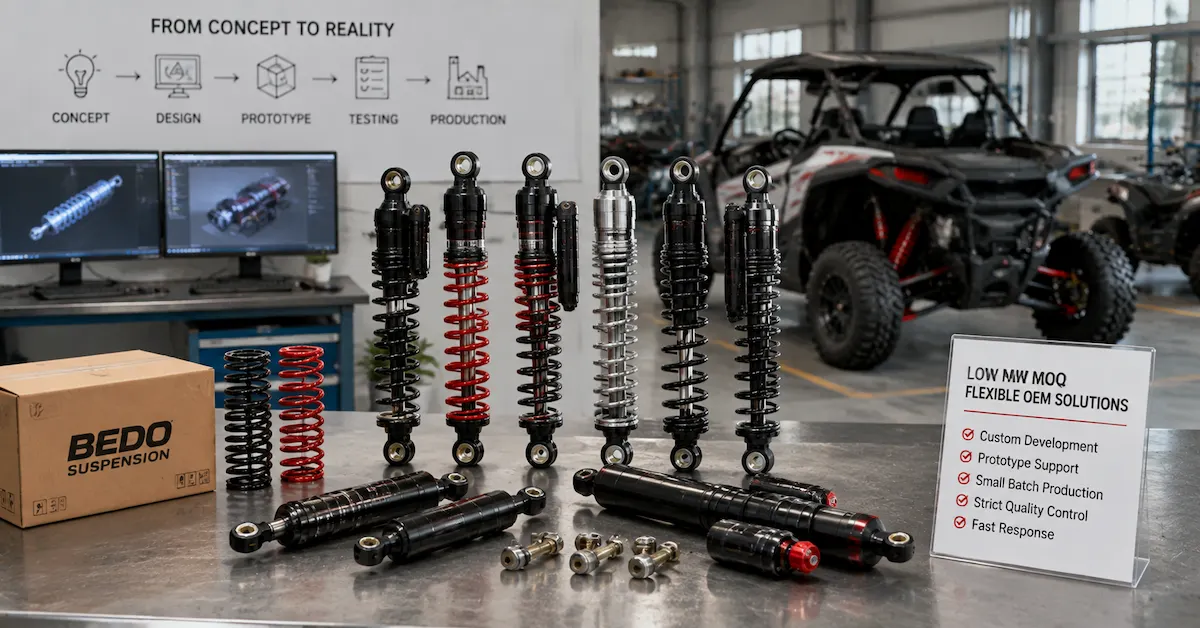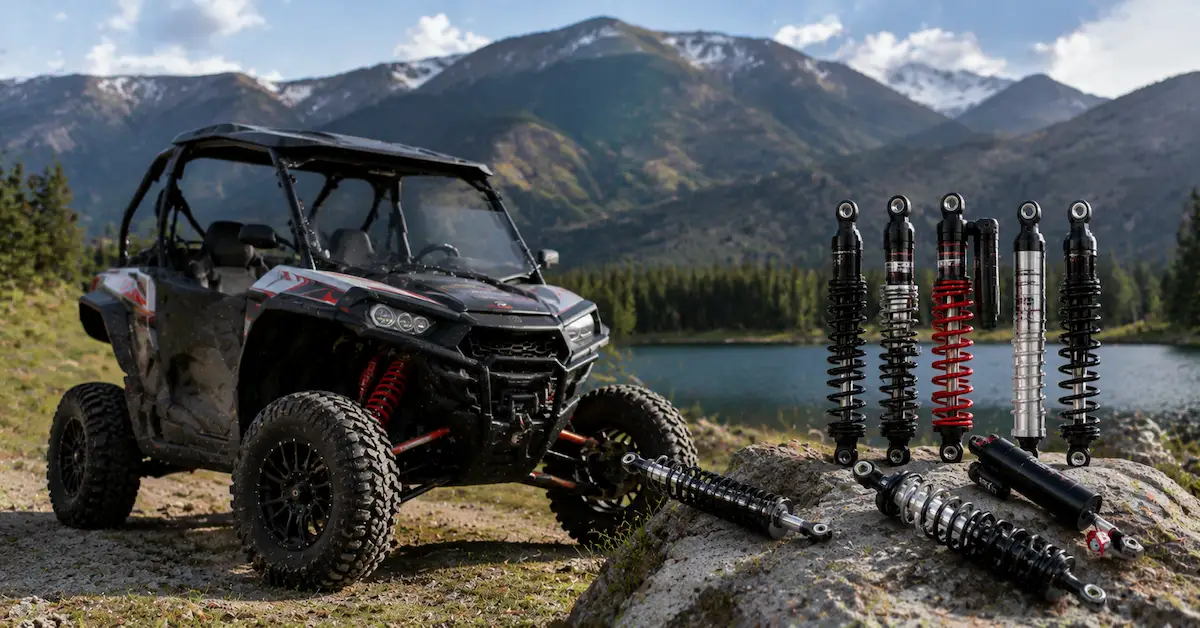

A reliable suspension validation service is a critical stage in developing safe, durable, and high-performance suspension systems.
For vehicle manufacturers, aftermarket brands, and engineering companies, suspension development does not end after designing components.
Before mass production, engineers must verify whether the suspension system performs correctly under real operating conditions.
Validation helps confirm:
- Shock absorber performance
- Spring behavior
- Suspension movement
- Vehicle stability
- Load support
- Durability
- Safety
- Manufacturing consistency
Without proper validation, suspension problems may only appear after products enter the market, resulting in:
- Customer complaints
- Product returns
- Development delays
- Additional modification costs
- Reduced brand reputation
A professional validation process helps companies identify problems early and improve suspension reliability.
Bedo Auto supports suspension development, prototype validation, testing, and OEM manufacturing for ATV, UTV, motorcycles, golf carts, utility vehicles, electric vehicles, and specialty vehicle applications.
What Is Suspension Validation Service?
A suspension validation service evaluates whether a suspension system meets engineering requirements and real-world performance expectations.
The process typically includes:
| Validation Service | Purpose |
|---|---|
| Design verification | Confirm engineering requirements |
| Prototype evaluation | Validate physical samples |
| Shock absorber testing | Check damping performance |
| Spring testing | Verify load support |
| Durability testing | Evaluate service life |
| Vehicle testing | Confirm real application performance |
| Production validation | Ensure manufacturing consistency |
The purpose is to ensure that suspension components work together as a complete system.
A suspension system is not only about individual components. Shock absorbers, springs, mounting structures, and vehicle geometry must operate together.
Why Suspension Validation Is Important
Suspension systems directly influence vehicle performance.
A poorly validated suspension may create:
- Unstable handling
- Excessive vibration
- Poor comfort
- Reduced traction
- Suspension failure
- Increased component wear
Validation helps engineers confirm:
Performance
Does the suspension provide the expected:
- Ride comfort?
- Stability?
- Control?
- Load support?
Durability
Can the system withstand:
- Repeated impacts?
- Heavy loads?
- Long operating hours?
- Harsh environments?
Compatibility
Does the suspension fit correctly with:
- Vehicle structure?
- Mounting points?
- Wheel movement?
- Other components?
Applications Requiring Suspension Validation
Professional validation services support different vehicle applications.
ATV Suspension Validation
ATV systems require verification of:
- Off-road impact resistance
- Suspension travel
- Rider control
- Shock durability
Testing may include:
- Rocky terrain testing
- Load testing
- Repeated impact testing
UTV Suspension Validation
UTVs often carry:
- Passengers
- Cargo
- Equipment
Validation focuses on:
- Load capacity
- Stability
- Long-term durability
- Shock performance
Motorcycle Suspension Validation
Motorcycle suspension requires accurate evaluation of:
- Handling
- Rider comfort
- Rebound behavior
- Cornering stability
Golf Cart Suspension Validation
Testing focuses on:
- Passenger comfort
- Battery weight support
- Commercial operation
- Ride stability
Electric Vehicle Suspension Validation
EV applications require additional verification because of:
- Battery weight
- Changed center of gravity
- Increased vehicle mass
Key Information Required for Validation
Before beginning validation, engineers should collect detailed information.
| Information | Importance |
|---|---|
| Vehicle model | Defines application |
| Vehicle weight | Determines load conditions |
| Payload | Defines support requirements |
| Suspension position | Front/rear requirements |
| Shock specifications | Defines testing parameters |
| Spring specifications | Determines load behavior |
| Operating environment | Defines durability requirements |
| Performance targets | Guides validation criteria |
| Prototype samples | Enables testing |
| Technical drawings | Confirm specifications |
The validation plan should match the intended application.
A racing vehicle and a commercial utility vehicle require different validation standards.
Suspension Validation Process
Step 1: Requirement Review
Engineers analyze:
- Vehicle requirements
- Performance goals
- Operating conditions
- Customer expectations
This establishes validation criteria.
Step 2: Prototype Inspection
The prototype is checked for:
- Dimensions
- Mounting accuracy
- Component quality
- Assembly condition
Inspection confirms whether the product matches design requirements.
Step 3: Laboratory Testing
Laboratory testing evaluates:
- Shock absorber performance
- Spring characteristics
- Structural strength
- Component reliability
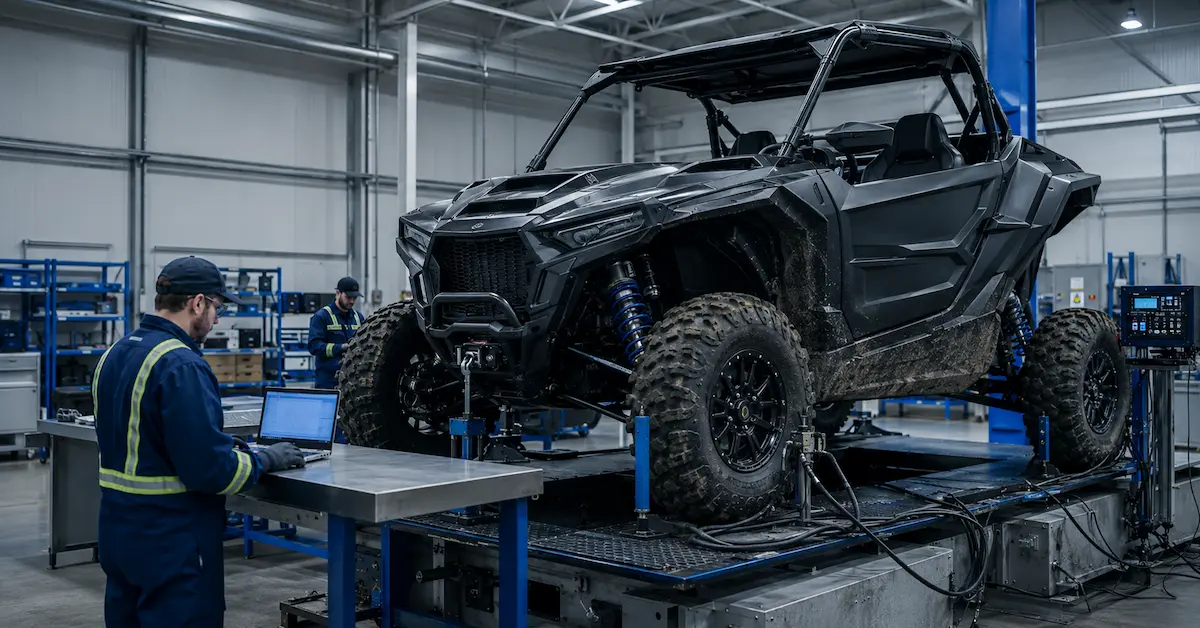
Step 4: Vehicle Testing
The suspension system is installed on the target vehicle.
Engineers evaluate:
- Ride quality
- Handling
- Suspension response
- Stability
Step 5: Performance Optimization
Based on test results, engineers may adjust:
- Damping settings
- Spring rate
- Component design
- Mounting structure
Shock Absorber Validation Testing
Shock absorbers are key components in suspension systems.
Validation may include:
Damping Performance Testing
Evaluates:
- Compression force
- Rebound force
- Force curve
- Adjustment range
This confirms whether the shock absorber provides correct control.
Leakage Testing
Checks:
- Oil sealing
- Gas retention
- Connection reliability
Leakage problems may reduce:
- Performance
- Service life
- Customer satisfaction
Durability Testing
Evaluates:
- Repeated compression cycles
- Long-term operation
- Structural reliability
Temperature Testing
Checks performance under:
- Heat generation
- Extended operation
- Temperature changes
Spring Validation Testing
Coil springs require separate verification.
Testing may include:
Spring Rate Testing
Confirms:
- Load response
- Compression behavior
- Design accuracy
Load Testing
Evaluates:
- Support capacity
- Structural strength
Fatigue Testing
Checks:
- Long-term durability
- Resistance to repeated stress
Spring and shock absorber validation should be performed together because they work as one suspension system.
Vehicle-Level Suspension Validation
Component testing is important, but complete vehicle testing provides the most realistic results.
Vehicle validation evaluates:
Ride Comfort
Including:
- Vibration
- Impact response
- Road feedback
Handling Performance
Including:
- Cornering stability
- Steering response
- Vehicle control
Load Performance
Including:
- Cargo operation
- Passenger conditions
- Heavy-duty use
Off-Road Performance
Including:
- Uneven terrain
- Rocks
- Mud
- Slopes
Durability Validation for Suspension Systems
Suspension components experience repeated stress during operation.
Durability testing helps evaluate:
- Fatigue resistance
- Structural reliability
- Seal performance
- Component lifespan
Testing may simulate:
- Long-distance driving
- Repeated impacts
- Heavy loads
- Harsh environments
This helps predict real-world service performance.
Production Validation Before Mass Manufacturing
Before large-scale production, manufacturers should verify:
- Production consistency
- Component quality
- Assembly accuracy
- Performance stability
Production validation helps ensure that every batch meets approved specifications.
Important checks include:
- Dimensions
- Materials
- Assembly procedures
- Testing results
- Packaging standards
Why OEM Buyers Need Suspension Validation
For OEM buyers, validation provides several advantages.
Reduce Development Risk
Testing identifies problems before production.
Improve Product Reliability
Validation confirms suspension performance.
Support Customer Requirements
Testing data helps demonstrate product quality.
Improve Production Stability
Validation ensures consistent manufacturing.
How to Choose a Suspension Validation Partner
Buyers should evaluate:
Engineering Capability
The partner should understand:
- Suspension systems
- Vehicle applications
- Shock absorber design
- Spring development
Testing Capability
Confirm support for:
- Laboratory testing
- Vehicle testing
- Durability testing
- Performance verification
Prototype Capability
Evaluate whether the supplier can:
- Develop samples
- Modify designs
- Improve performance
Manufacturing Capability
A strong partner should support:
- Prototype
- Pilot production
- Mass manufacturing
How Bedo Auto Supports Suspension Validation Service
As a professional suspension validation service partner, Bedo Auto supports customers through suspension development, prototype verification, and OEM production preparation.
Support includes:
- Suspension performance evaluation
- Shock absorber testing
- Spring validation
- Prototype testing
- Vehicle application verification
- Engineering optimization
- Production quality control
Applications include:
- ATV
- UTV
- Motorcycle
- Golf cart
- Utility vehicle
- Electric vehicle
- Specialty vehicle
Buyers can review suspension solutions through the Bedo Auto Products page.
For validation projects, samples, drawings, and technical requirements can be submitted through the Contact Us page.
FAQ
What is a suspension validation service?
It is a testing and verification process used to confirm suspension performance, durability, compatibility, and production reliability.
Why is suspension validation required before mass production?
Validation helps identify design problems and reduces risks related to performance, quality, and customer complaints.
What components are tested during suspension validation?
Testing may include shock absorbers, coil springs, mounting components, and complete vehicle suspension systems.
Can prototypes be validated before production?
Yes. Prototype validation is a key step before pilot production and mass manufacturing.
What testing methods are used for suspension validation?
Methods include dimensional inspection, damping testing, leakage testing, durability testing, and vehicle testing.
Can Bedo Auto support OEM suspension validation?
Yes. Bedo Auto supports prototype validation, testing, engineering optimization, and OEM production preparation.
Conclusion
A professional suspension validation service helps manufacturers and suspension brands develop safer, more reliable, and higher-performance suspension systems.
Validation confirms that shock absorbers, springs, and suspension components meet real-world requirements before mass production.
Through engineering analysis, prototype testing, vehicle validation, quality control, and OEM manufacturing support, Bedo Auto helps global customers develop suspension solutions with consistent performance and long-term reliability.