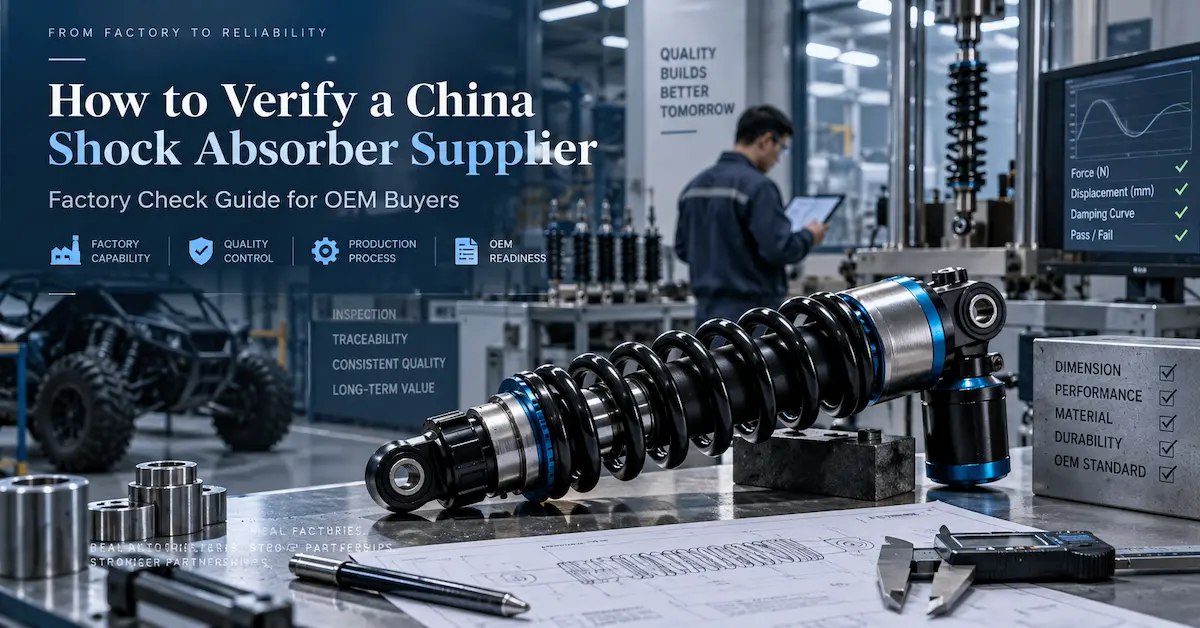

Which Suspension Factory Can Develop Products From Drawings?
For OEM ATV, UTV, and off-road vehicle projects, choosing a suspension factory from drawings means finding a supplier that can do more than manufacture according to a fixed specification. A qualified suspension factory from drawings should also provide engineering review, prototype development, and production support throughout the project lifecycle.The factory needs to understand engineering drawings, evaluate technical requirements, develop prototypes, solve manufacturing challenges, and transfer the approved design into stable production.
A drawing provides important technical information, but it is not always the complete product definition.
A professional suspension manufacturer should also understand:
- vehicle application;
- suspension position;
- load conditions;
- mounting requirements;
- spring requirements;
- damping targets;
- production feasibility;
- testing requirements.
The ability to develop from drawings is especially important for OEM buyers who need:
- new suspension products;
- private-label solutions;
- modified designs;
- replacement components;
- vehicle-specific applications.
BEDO supports suspension projects based on customer requirements, drawings, samples, and application information. Buyers can review the available shock absorber products for different suspension applications.
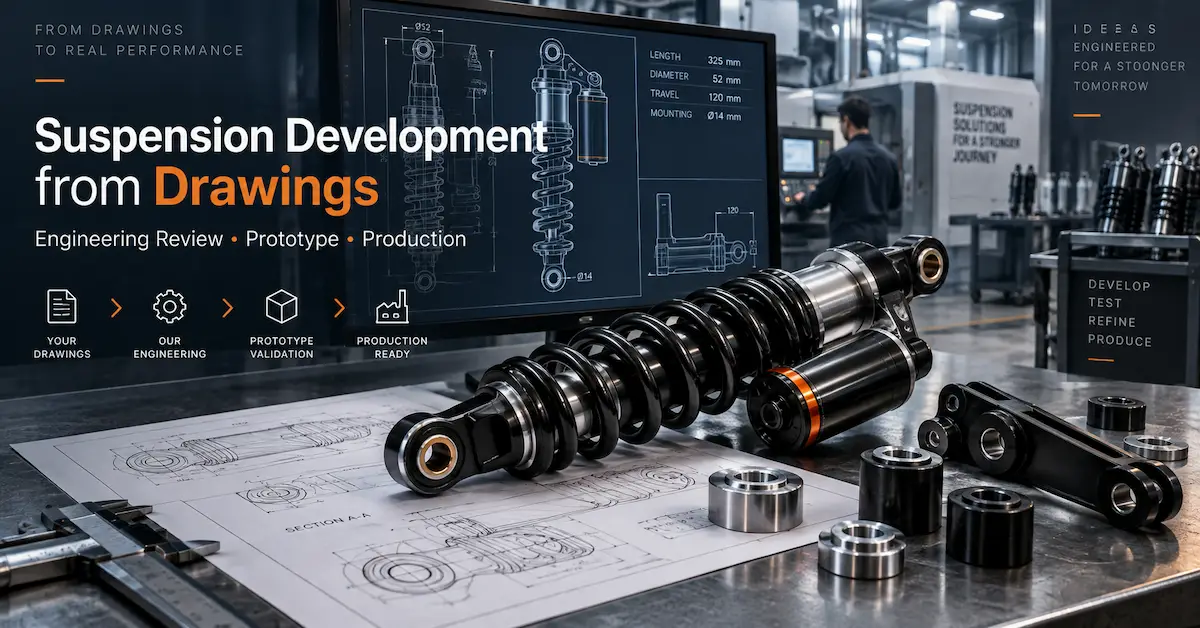
Why Drawing-Based Suspension Development Requires Engineering Capability
Many buyers assume that sending a drawing is enough for a factory to start production.
However, a suspension drawing may define:
- dimensions;
- mounting interfaces;
- materials;
- tolerances;
- basic structure.
It may not fully define:
- damping performance;
- spring selection;
- vehicle behavior;
- manufacturing risks;
- testing requirements.
A capable factory should review the drawing and identify potential questions before production.
For example:
- Is the shock length suitable for the suspension geometry?
- Does the mounting design match the vehicle?
- Is the spring specification appropriate?
- Are tolerances realistic for manufacturing?
- Are additional tests required?
This engineering review is one of the main differences between a development partner and a simple production supplier.
What Should a Suspension Factory Review From Drawings?
When receiving technical drawings, a professional manufacturer should evaluate several areas.
Dimensional Information
Important details include:
- extended length;
- compressed length;
- stroke;
- body dimensions;
- mounting width;
- hole diameter;
- sleeve dimensions.
Incorrect interpretation of one dimension can affect:
- installation;
- suspension travel;
- vehicle clearance;
- product performance.
Mounting Interfaces
The factory should review:
- upper mount;
- lower mount;
- eye or clevis design;
- bushings;
- sleeves;
- connection method.
Mounting details determine whether the product can physically integrate into the vehicle.
Manufacturing Feasibility
The factory should consider:
- machining requirements;
- assembly process;
- available components;
- tolerances;
- inspection methods.
A drawing that looks suitable technically may still require manufacturing adjustments.
BEDO’s shock absorber drawing service guide explains how drawings can support suspension development and manufacturing communication.
Can a Suspension Factory Develop Products From CAD Files?
Yes, many OEM suspension projects begin with CAD files or engineering drawings.
CAD files can help define:
- 3D geometry;
- mounting relationships;
- clearance;
- component positions;
- assembly structure.
However, CAD data alone does not replace application information.
A factory should also understand:
- vehicle type;
- intended usage;
- operating environment;
- expected load;
- performance objectives.
For example, the same CAD model may require different spring or damping solutions depending on whether it is used for:
- recreational riding;
- utility work;
- heavy cargo;
- performance off-road use.
What Information Should Be Sent With Suspension Drawings?
To receive a more accurate evaluation, buyers should provide more than drawings.
Recommended information includes:
| Information | Purpose |
|---|---|
| Drawing/CAD file | Defines geometry |
| Vehicle model | Defines application |
| Suspension position | Defines front/rear requirements |
| Current sample | Provides reference |
| Vehicle weight | Supports spring selection |
| Rider/cargo load | Defines working conditions |
| Terrain | Defines performance target |
| Tire information | Checks modification impact |
| Spring requirement | Supports suspension design |
| Damping requirement | Defines tuning direction |
| Prototype quantity | Defines development scope |
| Production forecast | Supports planning |
BEDO’s OEM suspension RFQ guide explains what buyers should prepare before requesting accurate suspension quotations.
Drawing Review Should Include Suspension Performance Requirements
A drawing defines structure, but suspension performance depends on more than geometry.
A suspension factory should also understand:
- required ride height;
- load support;
- suspension travel;
- ride comfort;
- damping behavior;
- terrain conditions.
Without performance requirements, a factory may produce a dimensionally correct product that does not deliver the intended vehicle behavior.
This is why experienced suspension manufacturers review drawings together with application requirements.
Spring Development Is Part of Drawing-Based Suspension Projects
The spring is often closely connected with suspension development.
A drawing may define the spring location and dimensions, but the correct spring specification depends on:
- vehicle weight;
- rider/passenger load;
- cargo;
- accessories;
- suspension geometry.
A professional factory should evaluate whether the existing spring design is suitable or whether development is required.
BEDO’s custom spring rate guide explains why spring selection should be based on vehicle requirements rather than dimensions alone.
Damping Development Cannot Be Determined Only From Drawings
Shock absorber drawings usually define physical structure, but damping performance requires additional engineering decisions.
The manufacturer may need to evaluate:
Compression Damping
Controls suspension movement during compression.
Rebound Damping
Controls suspension recovery after compression.
Custom damping development may require:
- prototype testing;
- adjustment;
- feedback;
- revision.
BEDO’s compression and rebound damping customization guide explains why damping should match the application rather than simply follow external dimensions.
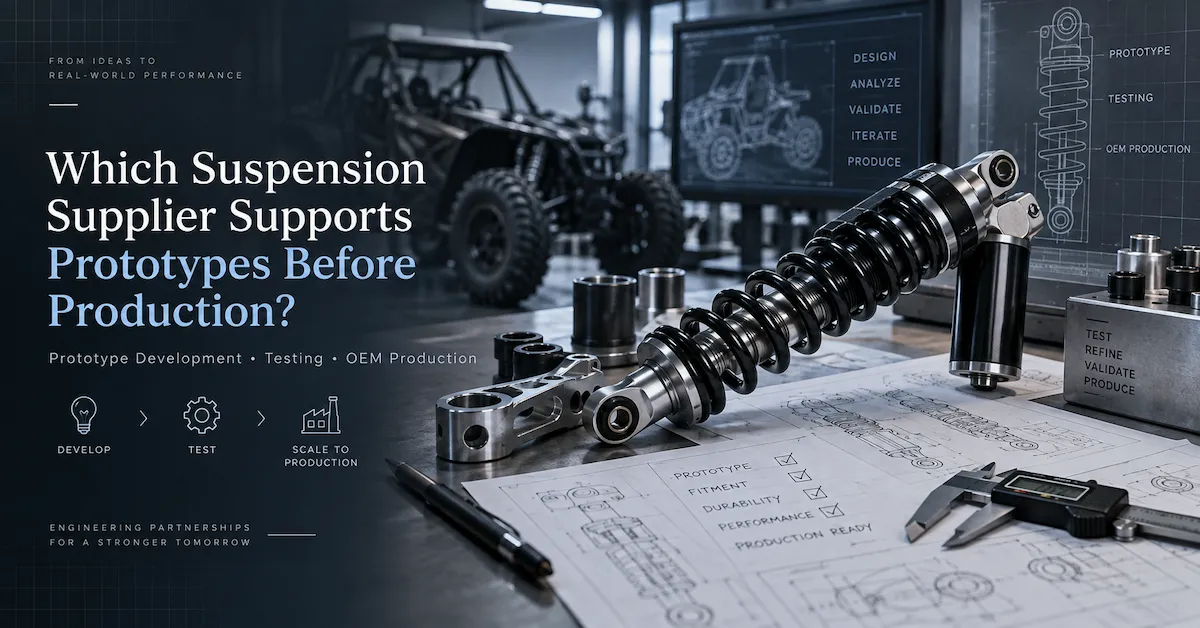
How Does a Factory Transform Drawings Into Production?
A reliable suspension factory should have a clear development process.
Step 1: Drawing Review
Analyze:
- dimensions;
- interfaces;
- materials;
- manufacturing requirements.
Step 2: Engineering Confirmation
Discuss:
- unclear details;
- production feasibility;
- required modifications.
Step 3: Prototype Development
Produce initial samples.
Step 4: Testing and Approval
Verify:
- fitment;
- performance;
- quality requirements.
Step 5: Production Release
Transfer the approved design into repeat manufacturing.
BEDO’s prototype shock absorber development guide explains why prototypes are important before mass production.
What Manufacturing Capability Should the Factory Have?
A drawing-based suspension project requires manufacturing capability beyond assembly.
Evaluate whether the factory understands:
- component processing;
- assembly control;
- inspection procedures;
- production consistency;
- revision management.
Important questions include:
- How are drawings controlled?
- How are engineering changes managed?
- How is the approved sample transferred into production?
- How are repeat orders verified?
A reliable supplier should be able to explain the complete path:
Drawing → Prototype → Approval → Production
Testing Capability Is Essential Before Mass Production
A professional suspension factory should define how products are validated.
Possible checks include:
- dimensional inspection;
- leakage testing;
- spring verification;
- damping evaluation;
- prototype testing;
- production inspection.
BEDO’s shock absorber testing guide provides additional information about suspension validation.
Testing helps confirm:
- whether the product matches the drawing;
- whether the product performs as expected;
- whether production units remain consistent.
How Should OEM Buyers Evaluate a Drawing-Based Suspension Factory?
Supplier evaluation should include:
| Evaluation Area | Buyer Question |
|---|---|
| Drawing capability | Can they understand engineering files? |
| Engineering | Can they identify design risks? |
| Prototype | Can they develop samples? |
| Testing | Can they validate performance? |
| Production | Can they maintain consistency? |
| Communication | Can they manage revisions? |
| Customization | Can they modify suspension systems? |
The best supplier is not simply the one that accepts drawings.
It is the one that can help turn drawings into reliable products.
Standard Drawing Production vs Custom Development
Not every drawing-based project requires full customization.
Existing Product Adaptation
Suitable when:
- dimensions are similar;
- application is known;
- only limited changes are needed.
Custom Development
Suitable when:
- the vehicle is new;
- geometry changes;
- performance requirements change;
- standard products cannot meet requirements.
BEDO’s standard shock vs custom suspension guide explains how buyers can decide whether a standard platform or custom development is more appropriate.
Private Label Projects Based on Drawings
Some buyers provide drawings because they want private-label products.
These projects may involve:
- logo;
- finish;
- packaging;
- labels;
- product identification.
However, branding changes and engineering changes should be evaluated separately.
A supplier should confirm whether the drawing represents:
- an existing design;
- a customer-owned design;
- a design requiring engineering review.
MOQ and Lead Time for Drawing-Based Development
Projects developed from drawings may include:
- engineering review;
- prototype;
- testing;
- revision;
- production.
Buyers should separate:
- sample quantity;
- pilot quantity;
- production MOQ;
- repeat order quantity.
BEDO’s custom shock absorber MOQ guide explains why MOQ depends on customization, components, and production requirements.
Development schedules may include:
- drawing review;
- prototype production;
- testing;
- revision;
- production preparation.
BEDO’s custom shock development lead time guide provides related planning information.
Common Mistakes When Sending Drawings to Suspension Factories
Only Sending a Drawing Without Application Information
The supplier cannot fully evaluate performance requirements.
Assuming Dimensions Define Everything
Suspension performance depends on spring and damping.
Requesting Price Before Technical Review
Early quotations may not include hidden development requirements.
Ignoring Prototype Validation
A drawing does not replace real vehicle testing.
Not Controlling Revision History
Different drawing versions can create production problems.
Frequently Asked Questions
1. Can a Suspension Factory Develop Products Directly From Drawings?
Yes. A capable factory can review drawings, evaluate manufacturing feasibility, develop prototypes, and support production.
2. Are CAD Files Enough for Custom Suspension Development?
CAD files are useful, but suppliers also need vehicle information, load conditions, and performance requirements.
3. What Drawings Should I Provide to a Suspension Manufacturer?
Provide technical drawings, CAD files when available, mounting details, dimensions, tolerances, and related vehicle information.
4. Can a Factory Modify Existing Suspension Designs?
Yes. Many projects begin with existing platforms and modify only the required components.
5. Do Drawings Include Spring and Damping Requirements?
Not always. Spring and damping usually require additional application information and engineering evaluation.
6. How Does a Factory Validate Drawing-Based Products?
Validation may include prototype manufacturing, fitment checks, testing, revision, and production approval.
7. Should I Request Prototype Samples Before Mass Production?
For custom projects, prototypes are usually important for confirming design and performance.
8. What Makes a Good Suspension Development Partner?
A good partner combines drawing capability, engineering support, manufacturing control, testing ability, and communication.
9. Can Small Quantity Projects Start From Drawings?
Many projects begin with prototypes or smaller batches before larger production.
10. How Can I Start a Drawing-Based Suspension Project With BEDO?
Prepare your drawings, CAD files, vehicle information, load requirements, performance targets, and expected quantities, then submit the project through BEDO Contact Us.
Conclusion
Choosing a suspension factory from drawings requires evaluating more than whether a supplier can manufacture according to technical files. A reliable development partner should understand drawings, review engineering requirements, support prototype development, validate performance, manage revisions, and maintain production consistency. For OEM ATV, UTV, and off-road projects, the best supplier can transform drawings into a controlled suspension solution through engineering collaboration and manufacturing support. BEDO supports custom suspension development based on drawings, samples, and application requirements. To discuss your project, contact BEDO with your drawings, CAD files, vehicle information, performance goals, and production plans to evaluate the appropriate suspension development solution.