
Choosing a shock absorber factory for an OEM project requires more than comparing prices and product catalogs.
A factory may be able to manufacture standard shock absorbers, but that does not always mean it can support:
- Custom suspension development
- Vehicle-specific engineering
- Prototype improvement
- Technical problem solving
- Production optimization
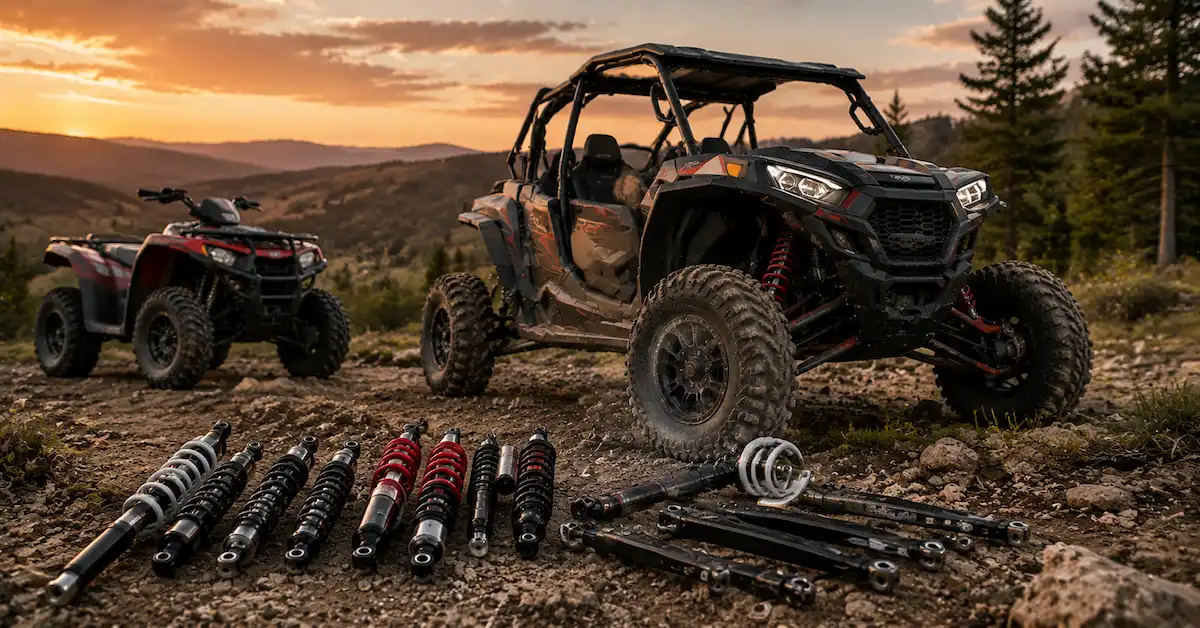
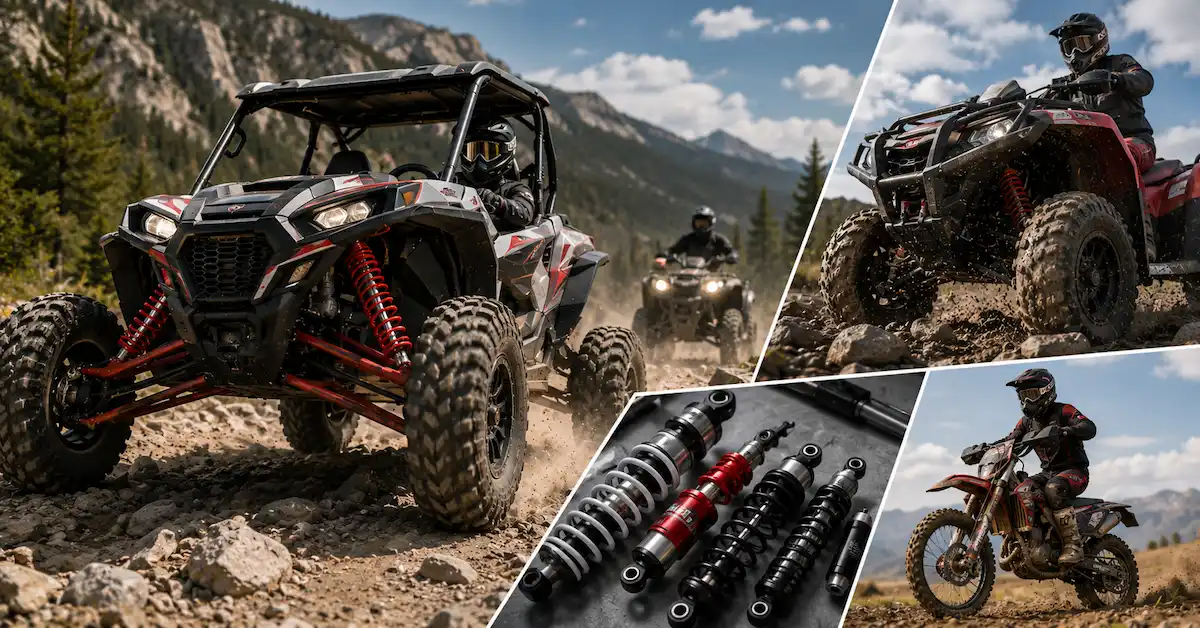
For ATV, UTV, off-road, and specialty vehicle projects, engineering capability directly affects product performance, development efficiency, and long-term production reliability.
A capable suspension partner should be able to connect:
Vehicle Requirements → Engineering Analysis → Prototype Development → Testing Feedback → Production Control
The key question is not only:
Can this factory make a shock absorber?
It is:
Can this factory help develop the right shock absorber for my application?
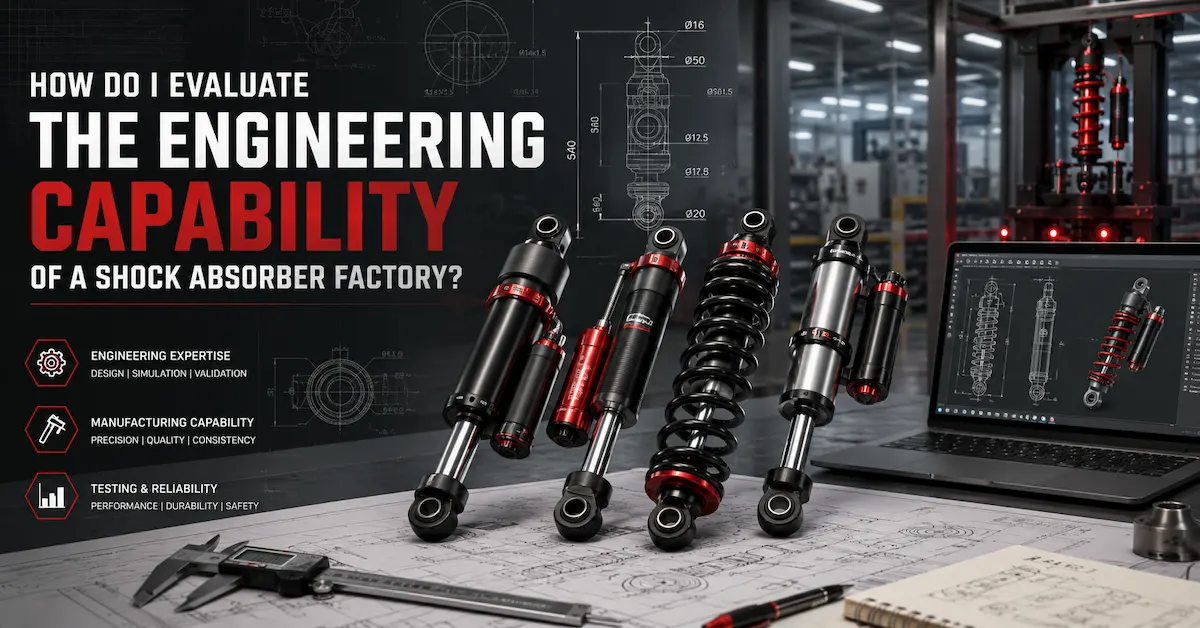
Why Engineering Capability Matters When Choosing a Shock Absorber Factory
Suspension products directly affect vehicle performance.
A shock absorber must work together with:
- Vehicle weight
- Payload
- Suspension geometry
- Spring specification
- Driving environment
- Performance requirements
A factory without sufficient engineering understanding may produce a product that looks correct but does not perform as expected.
Potential risks include:
- Incorrect fitment
- Poor ride comfort
- Excessive suspension sag
- Insufficient impact control
- Repeated design modifications
- Production inconsistency
For private-label brands and OEM vehicle projects, engineering capability reduces development risks before products reach customers.
What Engineering Skills Should a Professional Shock Absorber Factory Have?
A professional factory should understand both manufacturing and suspension application requirements.
Vehicle Application Knowledge
The manufacturer should understand how different vehicles create different suspension requirements.
Important information includes:
- Vehicle type
- Vehicle weight
- Front or rear suspension position
- Passenger capacity
- Cargo load
- Terrain conditions
- Intended usage
For example, an ATV designed for recreational trail riding may require different suspension characteristics from a UTV designed for heavy utility work.
A capable engineering team should ask about the application before recommending a product.
Shock Absorber Technical Knowledge
The factory should understand important suspension parameters.
Shock Dimensions
Including:
- Extended length
- Compressed length
- Stroke
- Mounting dimensions
- Installation space
Spring Parameters
Including:
- Spring rate
- Free length
- Wire diameter
- Load capacity
- Preload requirements
Damping Parameters
Including:
- Compression damping
- Rebound damping
- Suspension response
Engineering discussions should focus on matching the complete suspension system rather than changing one parameter independently.
Can the Factory Support CAD and Drawing-Based Development?
CAD and drawing capability is one of the clearest indicators of engineering support.
A capable shock absorber factory should be able to review:
- 2D drawings
- 3D CAD files
- Existing product drawings
- Technical specifications
However, reviewing files is only the first step.
A stronger engineering partner should also provide feedback about:
- Manufacturing feasibility
- Material selection
- Dimensional risks
- Mounting issues
- Design improvements
The process should be:
Drawing/CAD Review → Engineering Feedback → Prototype Development → Validation
For CAD-based projects, buyers can review CAD Based Suspension Development.
How Does a Factory Handle Custom Shock Absorber Development?
Custom development capability separates engineering manufacturers from simple product suppliers.
A professional development process usually includes:
Step 1: Requirement Analysis
The factory evaluates:
- Vehicle application
- Performance goals
- Existing suspension condition
- Production requirements
Step 2: Engineering Review
Engineers analyze:
- Product structure
- Dimensions
- Spring requirements
- Mounting design
- Manufacturing feasibility
Step 3: Prototype Development
The factory produces samples for evaluation.
Prototype development may involve:
- Custom shock absorbers
- Modified springs
- New mounting structures
- Product adjustments
Step 4: Testing and Improvement
Testing feedback may lead to changes in:
- Spring specifications
- Shock dimensions
- Damping settings
- Product structure
Step 5: Production Preparation
After approval, the factory establishes:
- Final specifications
- Quality standards
- Production procedures
How Can You Evaluate a Factory’s Prototype Capability?
Prototype capability is a practical test of engineering ability.
Ask:
- Can you manufacture samples from drawings?
- Can you develop from existing samples?
- Can prototypes be revised after testing?
- How many development rounds are supported?
- How are design changes managed?
A professional development cycle is usually:
Prototype V1 → Testing → Engineering Revision → Prototype V2 → Approval
A factory that can only manufacture the first sample but cannot support improvements may not be suitable for complex OEM projects.
For sample-based development, see Suspension Sample Development.
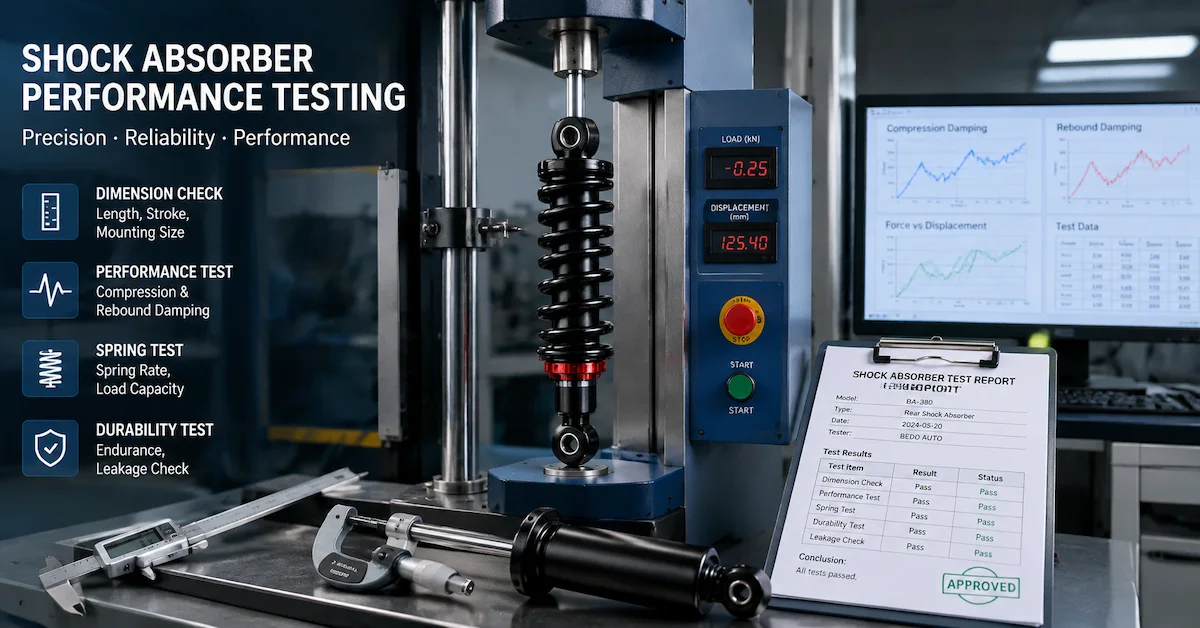
What Testing Capability Should a Shock Absorber Factory Have?
Testing capability should match the project requirements.
Instead of asking only:
Do you test your products?
Ask:
What exactly do you test?
Dimensional Inspection
May include:
- Shock length
- Stroke
- Mounting dimensions
- Spring dimensions
Functional Checks
May include:
- Leakage inspection
- Assembly verification
- Movement checks
Performance Evaluation
Depending on the project:
- Damping behavior
- Spring performance
- Load response
Vehicle-Level Validation
Some performance requirements need actual vehicle testing.
This may evaluate:
- Fitment
- Ride height
- Suspension travel
- Load support
- Off-road response
A professional factory should clearly explain which tests it performs internally and which require customer-side validation.
How Does Engineering Capability Transfer Into Production?
One of the biggest challenges in OEM suspension projects is moving from prototype to mass production.
A successful prototype does not automatically guarantee successful production.
The factory should control:
| Control Item | Purpose |
|---|---|
| Final drawing | Controls product design |
| Revision number | Prevents outdated specifications |
| Spring specification | Maintains load performance |
| Damping configuration | Maintains suspension behavior |
| Material requirements | Ensures consistency |
| QC standards | Controls production quality |
| Approved sample | Provides production reference |
The goal is:
Approved Prototype → Controlled Production → Consistent Repeat Orders
What Questions Should You Ask Before Choosing a Shock Absorber Factory?
Before cooperation, OEM buyers should ask:
| Question | Why It Matters |
|---|---|
| Can you review CAD files? | Shows engineering ability |
| Can you develop prototypes? | Confirms development capability |
| Can you modify samples after testing? | Shows flexibility |
| How do you select spring specifications? | Shows technical knowledge |
| Can you adjust damping? | Shows customization ability |
| What testing do you perform? | Shows validation process |
| How do you control revisions? | Shows production management |
| Can you support small batches? | Shows OEM flexibility |
| How do you maintain repeat quality? | Shows long-term capability |
A supplier's answers often reveal more than its product catalog.
Shock Absorber Factory vs Simple Parts Supplier
| Factor | Engineering Factory | Parts Supplier |
|---|---|---|
| Custom development | Strong | Limited |
| CAD support | Available | Limited |
| Prototype development | Supported | Rare |
| Testing feedback | Available | Limited |
| Engineering communication | Direct | Less technical |
| OEM projects | Suitable | Less suitable |
For standard replacement products, a parts supplier may be enough.
For new suspension development, an engineering-focused factory provides greater value.
How to Verify a Shock Absorber Factory Before Cooperation?
Before placing an order, evaluate:
Engineering Team
Check whether engineers can discuss:
- Suspension requirements
- Vehicle applications
- Product parameters
- Development challenges
Development Process
Ask for details about:
- Prototype workflow
- Testing procedure
- Revision management
Manufacturing Capability
Review:
- Production equipment
- Assembly process
- Quality inspection
Communication Ability
Technical communication is critical during development.
A factory should be able to clearly explain:
- What can be customized
- What information is needed
- What limitations exist
- How improvements are handled
Why Choose Bedo Auto as an Engineering-Based Suspension Partner?
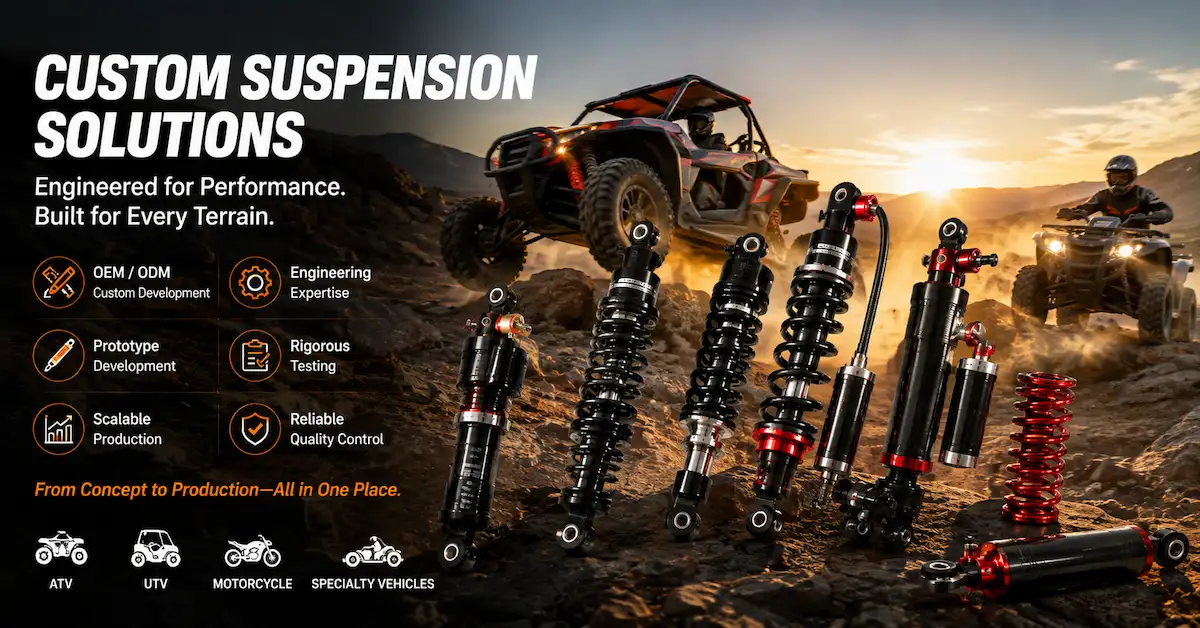
Bedo Auto supports OEM suspension development for:
- ATV
- UTV
- Off-road vehicles
- Specialty vehicles
The company supports projects involving:
- Shock absorber customization
- Suspension engineering
- CAD and drawing review
- Prototype development
- Spring development
- Testing support
- Small-batch validation
- Production preparation
For OEM buyers, the development process can begin from:
- Product concepts
- Existing samples
- Drawings
- CAD files
- Vehicle requirements
Related resources:
- Shock Absorber Products
- CAD Based Suspension Development
- Suspension Sample Development
- Contact Bedo Auto
FAQ
How do I evaluate the engineering capability of a shock absorber factory?
Evaluate CAD support, suspension knowledge, prototype capability, testing processes, engineering communication, and production control.
What makes a shock absorber factory different from a parts supplier?
An engineering-focused factory supports product development, customization, testing feedback, and production improvement instead of only supplying existing products.
Can a shock absorber factory develop products from CAD files?
Yes. A capable factory can review CAD files, evaluate feasibility, and support prototype development.
What technical knowledge should shock absorber engineers have?
Engineers should understand shock dimensions, springs, damping, vehicle load, suspension geometry, and application requirements.
How do I know if a factory can handle custom suspension projects?
Ask about previous OEM experience, prototype processes, engineering resources, and revision capability.
Why are prototypes important in shock absorber development?
Prototypes help verify fitment, performance, and manufacturing feasibility before production.
What testing should a shock absorber factory provide?
Testing may include dimensional inspection, leakage checks, functional verification, and project-specific performance validation.
Can a factory adjust spring rate and damping?
A capable engineering partner can customize these parameters according to vehicle requirements and project goals.
How can I verify a factory before cooperation?
Review engineering communication, request technical feedback, understand development processes, and evaluate production control.
Why choose an engineering partner instead of a low-cost supplier?
An engineering partner helps reduce development risks and improves long-term product reliability.
Conclusion
Evaluating the engineering capability of a shock absorber factory requires looking beyond price and production capacity.
A reliable OEM suspension partner should demonstrate:
Suspension Knowledge + Engineering Support + Prototype Capability + Testing Ability + Production Control
The best factory is not only able to manufacture a shock absorber but also able to help solve suspension development challenges.
For ATV, UTV, off-road, and specialty vehicle projects, choosing an engineering-focused manufacturer can improve development efficiency, reduce production risks, and create a stronger long-term supply partnership.