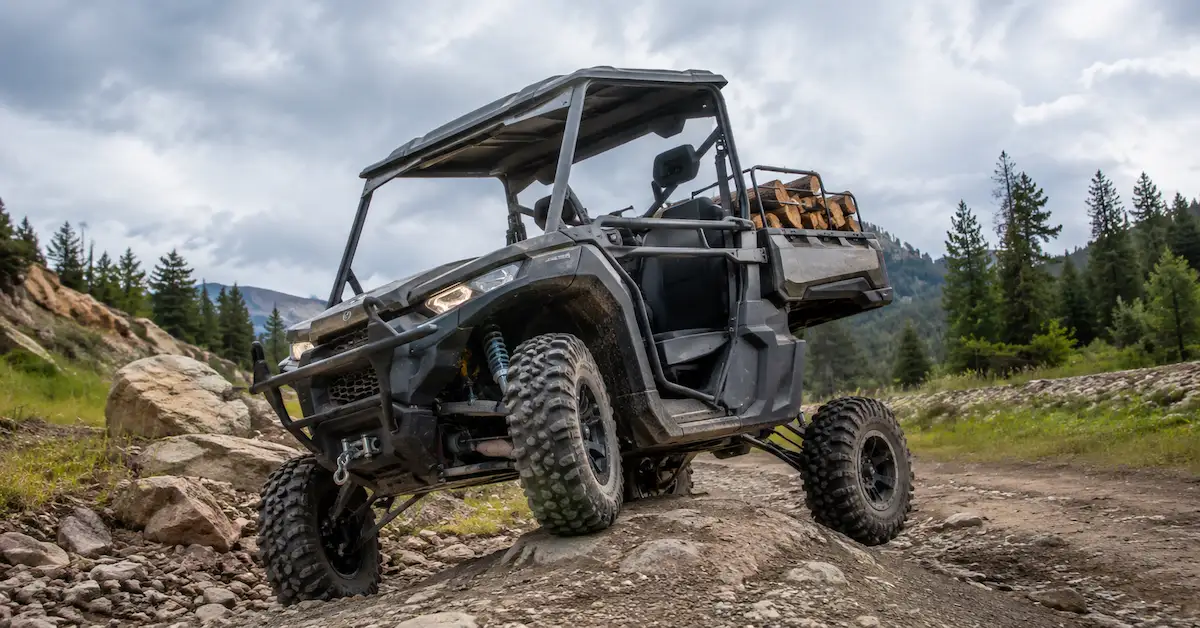

What Capabilities Should a Professional Off-Road Suspension Manufacturer Have?
Choosing a professional off-road suspension manufacturer requires more than checking product prices or production capacity.
For OEM vehicle projects, buyers need a manufacturing partner that can support the complete suspension development process, including:
- Engineering design
- Custom suspension development
- Prototype production
- Performance testing
- Quality control
- Mass production
Off-road vehicles operate in demanding environments where suspension systems experience:
- Heavy impacts
- Uneven terrain
- High loads
- Long-term vibration
- Extreme driving conditions
A qualified suspension manufacturer must understand how shock absorbers, springs, and suspension components work together to achieve:
- Vehicle stability
- Ride comfort
- Load support
- Off-road performance
- Long-term durability
Bedo Auto provides customized suspension solutions for ATV, UTV, and specialty vehicle applications, supporting customers from engineering development to production preparation.
Explore the Shock Absorber Products for available suspension solutions.
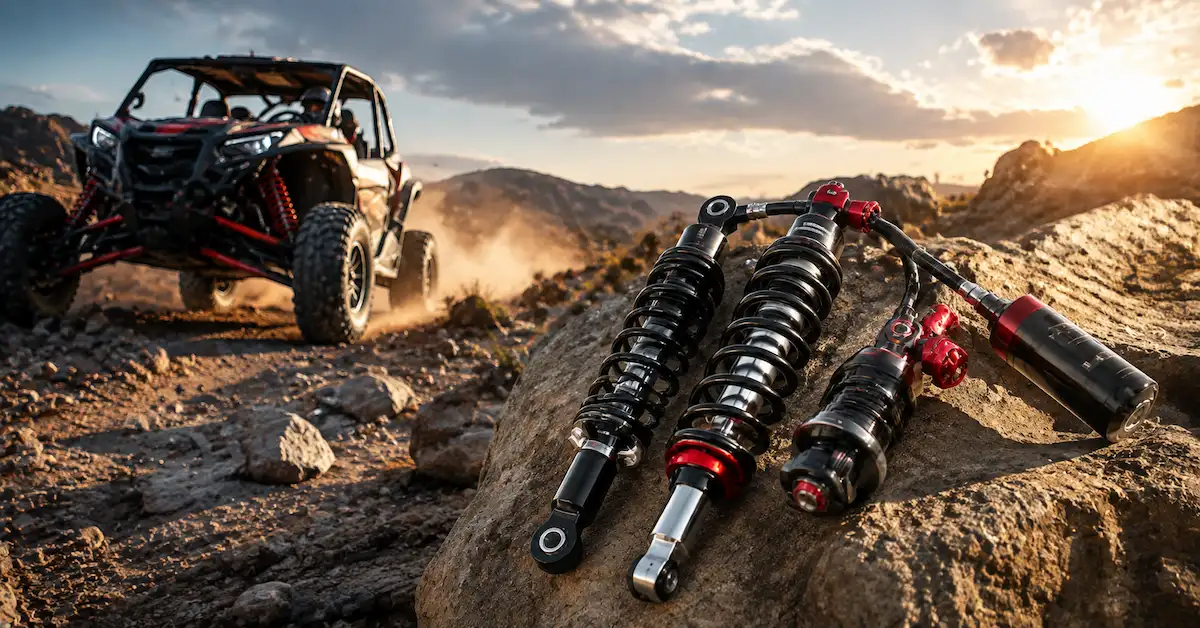
Why Professional Capabilities Matter for Off-Road Suspension Manufacturing
A suspension manufacturer is not only responsible for producing components.
For OEM projects, the supplier should participate in:
- Product evaluation
- Design improvement
- Prototype validation
- Production optimization
Choosing a supplier without sufficient capability may lead to:
- Incorrect suspension performance
- Prototype failures
- Production delays
- Higher development costs
- Quality inconsistency
The ideal partner should provide:
Engineering Support + Manufacturing Capability + Development Experience
Suspension Engineering Capability Is the First Requirement
Engineering capability is one of the most important factors when selecting an off-road suspension manufacturer.
A professional supplier should understand suspension systems rather than only manufacture individual parts.
Product Design Support
The manufacturer should support:
- Technical drawing review
- CAD analysis
- Product structure evaluation
- Manufacturing feasibility assessment
Engineers should evaluate:
- Dimensions
- Mounting positions
- Suspension space
- Component compatibility
Suspension Matching Ability
Suspension performance depends on the entire vehicle system.
A professional manufacturer should consider:
- Vehicle weight
- Payload requirements
- Suspension geometry
- Driving environment
- Performance goals
Performance Adjustment Capability
A qualified supplier should understand:
- Spring rate selection
- Damping adjustment
- Shock stroke optimization
- Suspension response
This ensures the final product matches the vehicle application.
Custom Development Capability for OEM Projects
OEM buyers often require products different from standard suspension models.
A professional custom suspension manufacturer should support customized development.
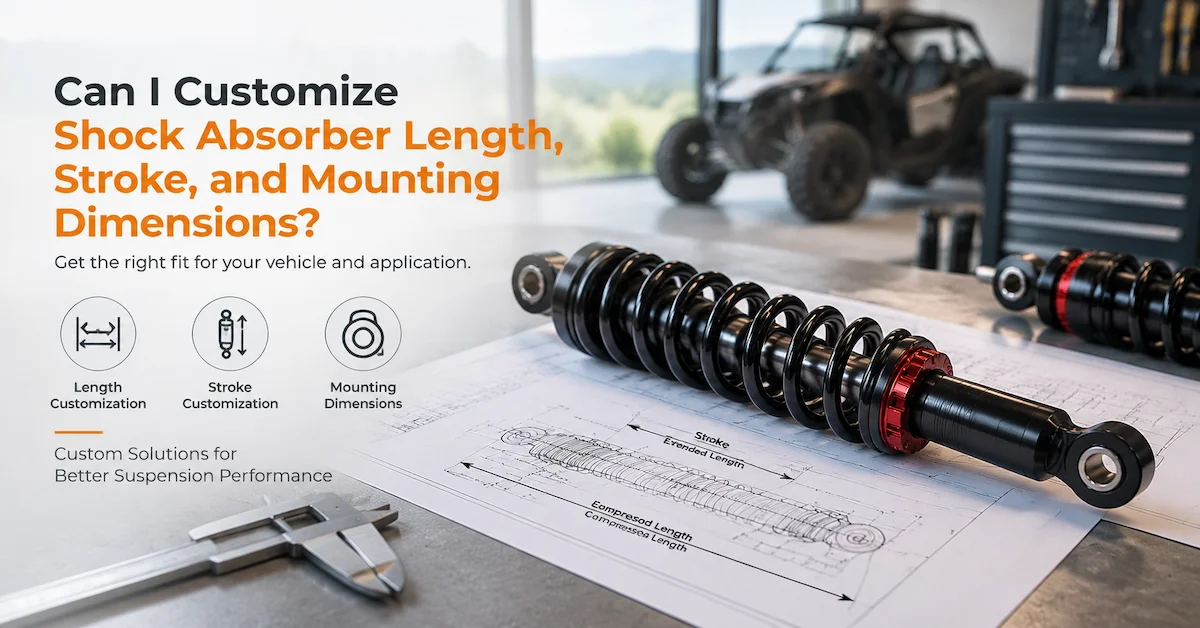
Shock Absorber Customization
Customization may include:
- Shock length
- Stroke
- Mounting dimensions
- Shock body design
- Reservoir options
- Damping characteristics
Suspension Spring Development
A capable manufacturer should support:
- Spring rate customization
- Load adjustment
- Ride height requirements
- Vehicle-specific tuning
Spring development should consider:
- Vehicle weight
- Payload
- Suspension layout
- Application conditions
Product Modification Support
During development, engineers may need to adjust:
- Product structure
- Materials
- Performance settings
- Manufacturing methods
A supplier with modification capability can help improve the final solution.
Prototype Development Capability Before Mass Production
Prototype development is an essential capability for OEM suspension projects.
A professional supplier should support:
Requirement → Design → Prototype → Testing → Approval → Production
Prototype development helps verify:
- Product dimensions
- Vehicle compatibility
- Suspension performance
- Manufacturing feasibility
Without prototype validation, buyers may face:
- Incorrect specifications
- Poor fitment
- Performance problems
- Production risks
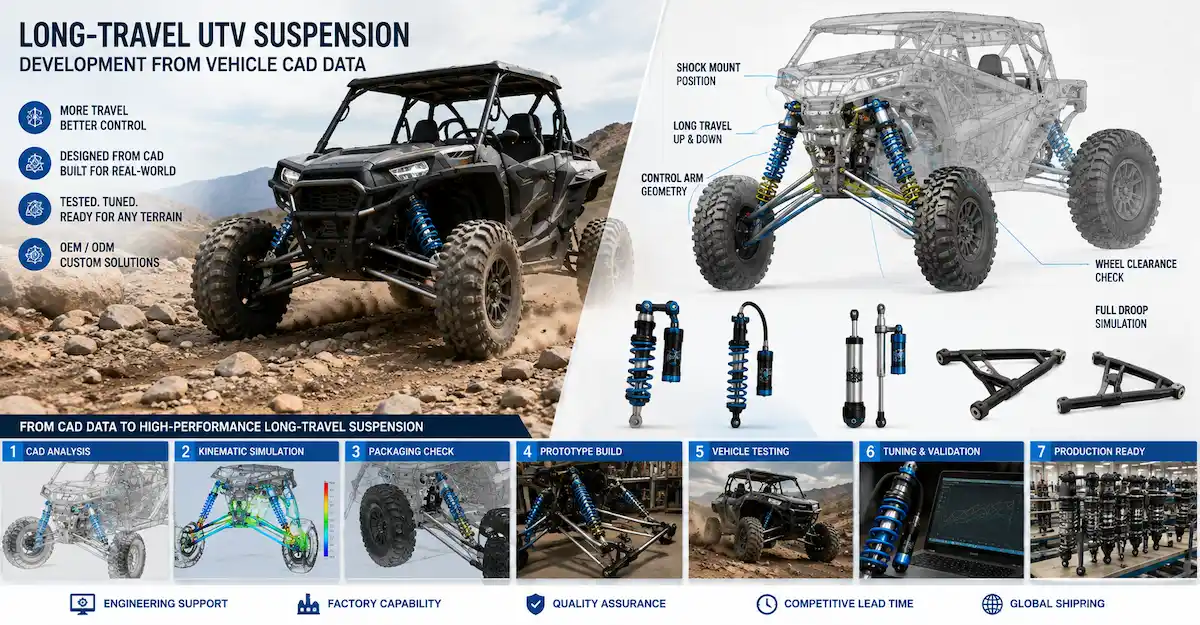
How Does Suspension Prototype Development Work?
Step 1: Requirement Analysis
The supplier reviews:
- Vehicle application
- Technical requirements
- Load conditions
- Performance targets
Customers may provide:
- Drawings
- CAD files
- Existing samples
- Vehicle information
Step 2: Engineering Review
Engineers evaluate:
- Product structure
- Materials
- Manufacturing process
- Installation requirements
Step 3: Prototype Manufacturing
The factory develops:
- Shock absorber samples
- Suspension springs
- Related components
Step 4: Testing and Adjustment
The prototype is evaluated for:
- Fitment
- Performance
- Durability
Engineers may adjust:
- Spring specifications
- Damping settings
- Structural details
Step 5: Production Preparation
After approval:
- Drawings are finalized
- Specifications are confirmed
- Quality standards are established
Manufacturing Capability for Off-Road Suspension Products
A professional off-road suspension factory should have stable manufacturing capability.
Production Equipment
Evaluate whether the manufacturer has:
- Machining equipment
- Assembly equipment
- Testing equipment
- Inspection tools
Manufacturing Process
A complete process may include:
- Component processing
- Surface treatment
- Assembly
- Inspection
- Final testing
Production Capacity
The supplier should support:
- Prototype orders
- Small-batch production
- Mass production
Reliable production capacity ensures long-term supply stability.
Testing Capability for Suspension Performance
Testing capability helps confirm suspension reliability.
Fitment Testing
Verify:
- Installation
- Mounting dimensions
- Component clearance
Performance Testing
Evaluate:
- Damping behavior
- Load support
- Ride response
Durability Testing
Confirm:
- Long-term reliability
- Environmental resistance
- Product consistency
A supplier that supports testing can reduce product risks before mass production.
Quality Control Capability
Quality control is essential for off-road suspension products.
A professional manufacturer should manage quality throughout production.
Material Inspection
Check:
- Steel materials
- Springs
- Seals
- Components
Production Inspection
Monitor:
- Machining accuracy
- Assembly quality
- Process consistency
Final Inspection
Including:
- Dimension inspection
- Leakage testing
- Functional testing
- Appearance inspection
Strong quality systems help ensure every production batch meets approved specifications.
OEM Experience With ATV and UTV Applications
A professional suspension manufacturer should understand different vehicle requirements.
ATV Suspension Applications
Including:
- Recreational riding
- Trail riding
- Utility applications
- Off-road modification
Requirements may include:
- Compact design
- Durability
- Terrain adaptability
UTV Suspension Applications
Including:
- Agriculture
- Cargo transportation
- Adventure vehicles
- Work applications
Requirements may include:
- Higher load support
- Long-term durability
- Stable handling
Specialty Vehicle Applications
Including:
- Electric vehicles
- Golf carts
- Custom platforms
Each application requires different suspension solutions.
Communication and Project Management Capability
Technical capability alone is not enough.
OEM projects require efficient communication.
A professional supplier should provide:
- Fast technical responses
- Clear project updates
- Problem-solving support
- Production coordination
Good communication helps prevent:
- Misunderstandings
- Development delays
- Incorrect specifications
How to Evaluate an Off-Road Suspension Manufacturer?
OEM buyers can evaluate suppliers through a capability checklist.
| Capability | Check |
|---|---|
| Engineering team | ✓ |
| CAD support | ✓ |
| Prototype ability | ✓ |
| Testing capability | ✓ |
| Production capacity | ✓ |
| Quality system | ✓ |
| OEM experience | ✓ |
The best supplier should demonstrate both technical ability and manufacturing reliability.
Why Choose Bedo Auto as Your Off-Road Suspension Partner?
Bedo Auto supports OEM customers with complete suspension development solutions.
Capabilities include:
- Off-road suspension development
- Shock absorber customization
- Suspension spring solutions
- CAD and drawing review
- Prototype manufacturing
- Engineering support
- Testing assistance
- OEM production
Applications include:
- ATV
- UTV
- Off-road vehicles
- Specialty vehicles
The development process includes:
Requirement Analysis → Engineering Review → Prototype → Testing → Production
Explore:
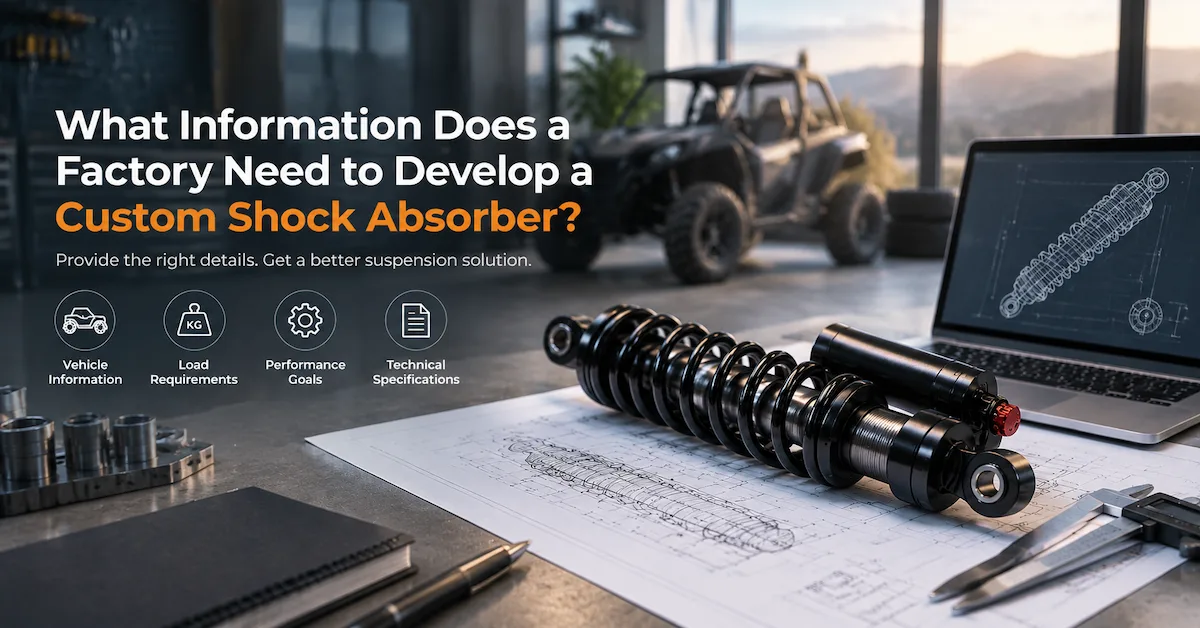
What Should OEM Buyers Prepare Before Contacting a Suspension Manufacturer?
Prepare:
- Vehicle application
- Vehicle model
- Suspension requirements
- Technical drawings
- CAD files
- Existing samples
- Load requirements
- Performance targets
- Prototype requirements
- Production quantity
Providing complete information helps the manufacturer create a more accurate development plan.
FAQ
What capabilities should a professional off-road suspension manufacturer have?
A professional manufacturer should have suspension engineering, custom development, prototype support, testing capability, quality control, and mass production ability.
Why is engineering capability important for off-road suspension?
Engineering determines suspension performance, including stability, comfort, load support, and durability.
Can off-road suspension manufacturers customize shock absorbers?
Yes. Professional manufacturers can customize shock dimensions, springs, damping, and mounting structures.
Should an off-road suspension supplier provide prototypes?
Yes. Prototype development helps verify product design and performance before mass production.
What testing should suspension manufacturers provide?
Testing may include fitment checks, damping evaluation, load testing, and durability verification.
What vehicles require professional off-road suspension?
Common applications include ATV, UTV, off-road vehicles, and specialty vehicles.
How do I evaluate an off-road suspension factory?
Check engineering ability, production capability, testing process, quality control, and OEM experience.
Can suspension manufacturers develop products from CAD files?
Yes. Professional manufacturers can support CAD-based suspension development.
What is the difference between a suspension supplier and manufacturer?
A manufacturer controls production and engineering, while a supplier may only distribute products.
Why choose an OEM suspension manufacturer?
OEM manufacturers provide better customization, technical support, and long-term production stability.
Conclusion
A professional off-road suspension manufacturer should provide more than manufacturing capacity.
The ideal partner should have:
Engineering Capability + Custom Development + Prototype Support + Testing + Manufacturing Control
The supplier selection process should include:
Capability Evaluation → Engineering Review → Prototype Development → Testing → Mass Production
For ATV, UTV, and specialty vehicle projects, working with an experienced suspension manufacturer helps improve product performance, reduce development risks, and achieve reliable long-term production.
Bedo Auto supports customized suspension projects through engineering development, shock absorber customization, prototype manufacturing, testing support, and OEM production preparation.