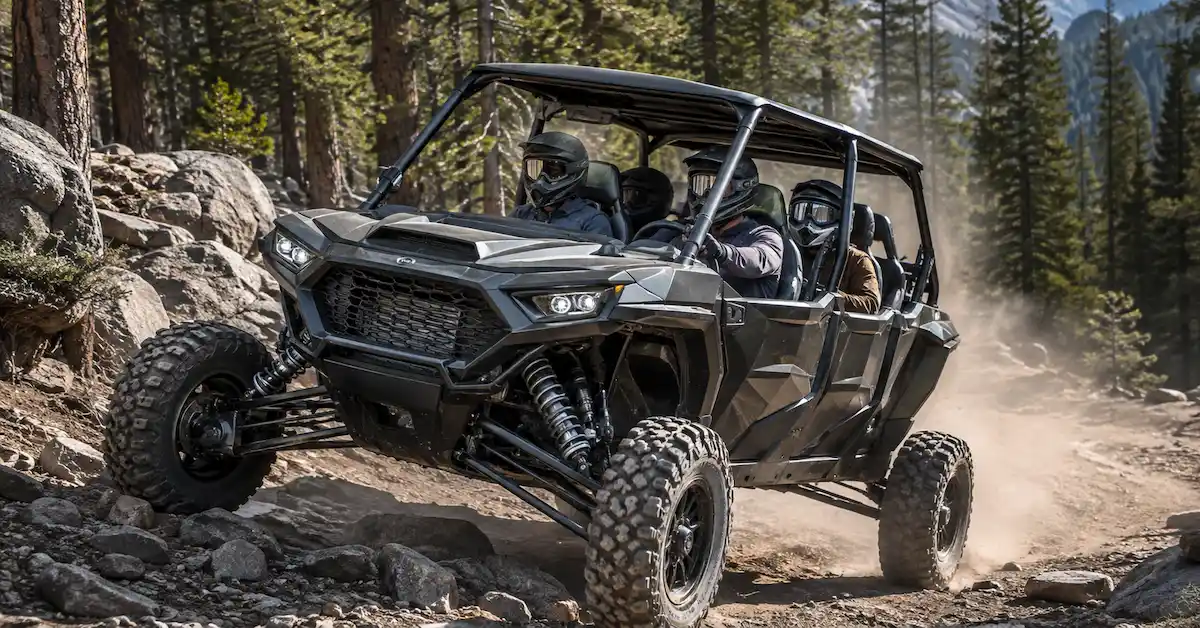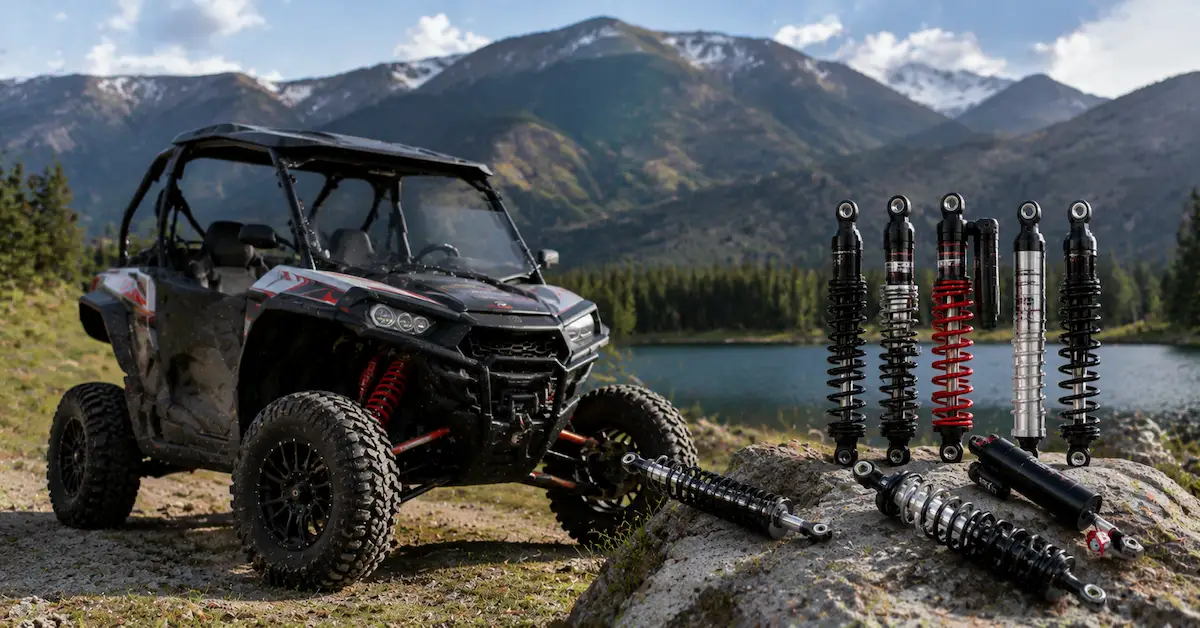

Off-road vehicles operate in environments where standard suspension systems often cannot deliver sufficient performance.
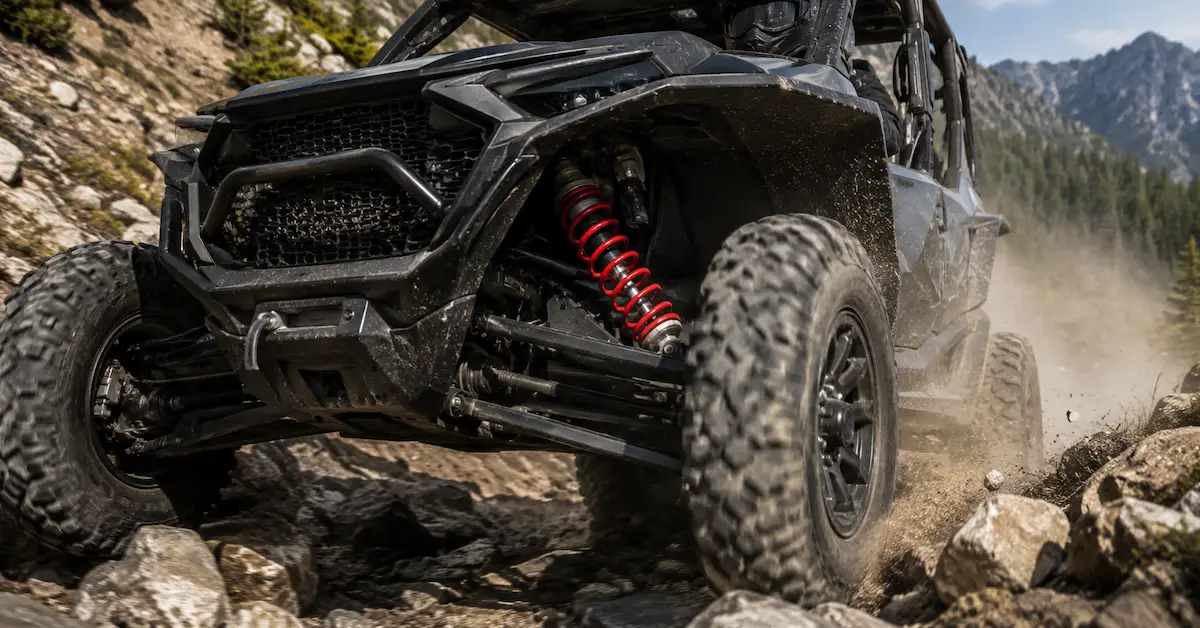
Rocky trails, mud, sand, steep slopes, and uneven terrain create extreme demands on suspension components. A reliable suspension system must absorb impacts, maintain tire contact, support vehicle loads, and provide stable handling in unpredictable conditions.
Professional off-road suspension engineering focuses on developing suspension systems that balance:
- Performance
- Durability
- Comfort
- Load capacity
- Safety
- Manufacturing feasibility
For ATV, UTV, motorcycles, utility vehicles, and specialty off-road platforms, suspension development requires more than selecting stronger components. Engineers must evaluate the complete vehicle system, including weight distribution, suspension geometry, shock absorber characteristics, spring rate, and operating environment.
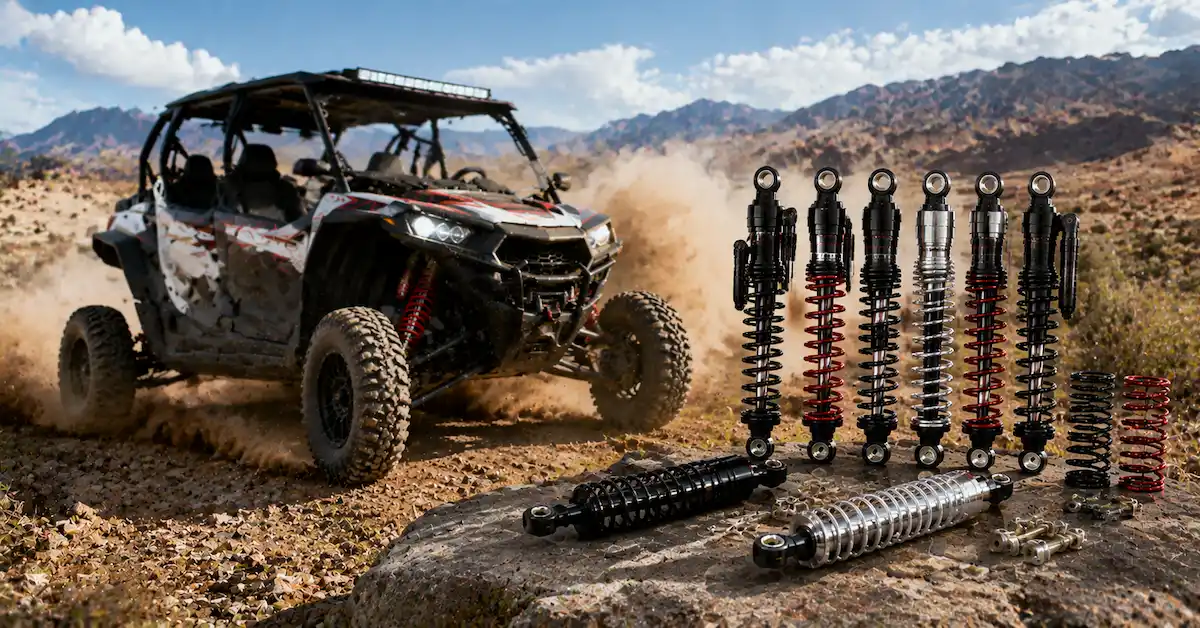
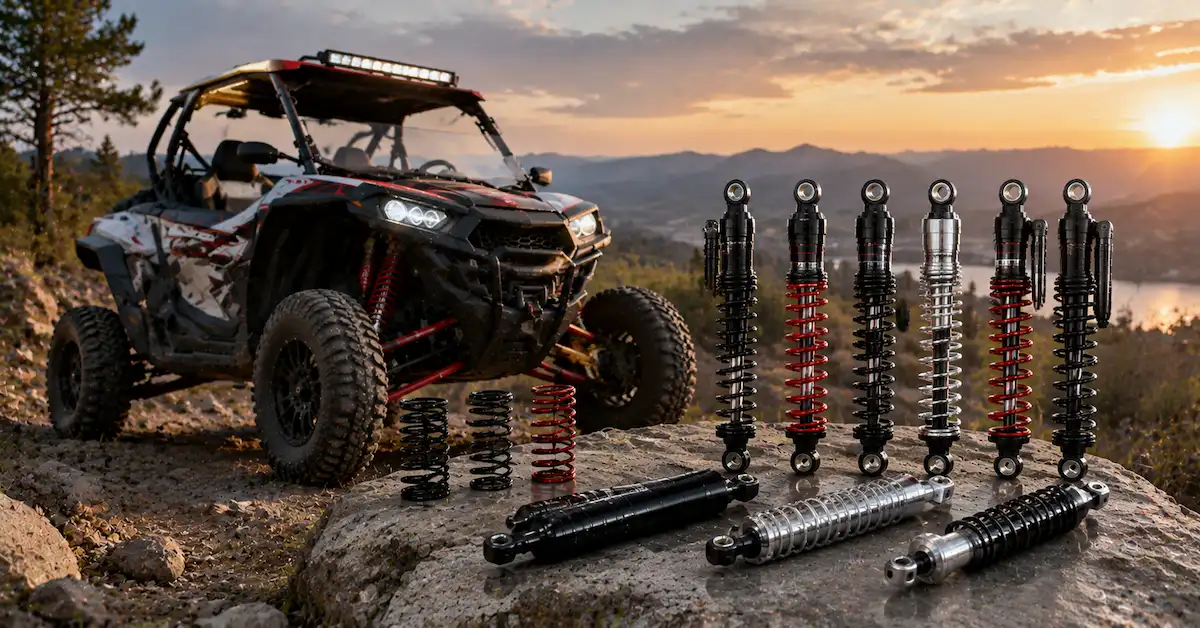
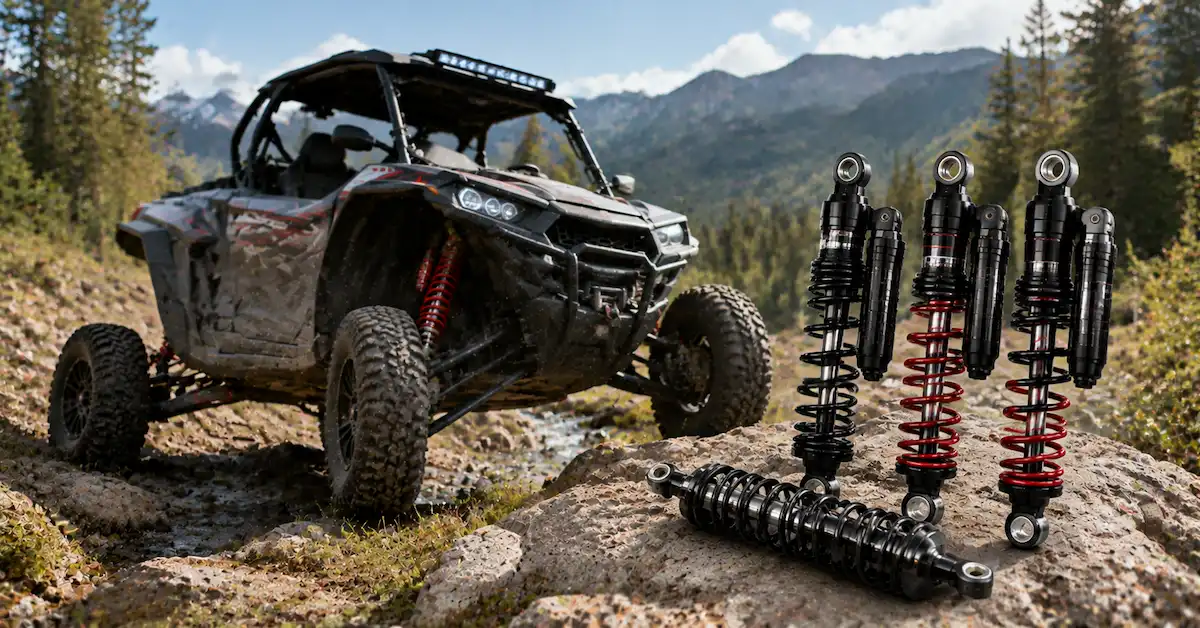
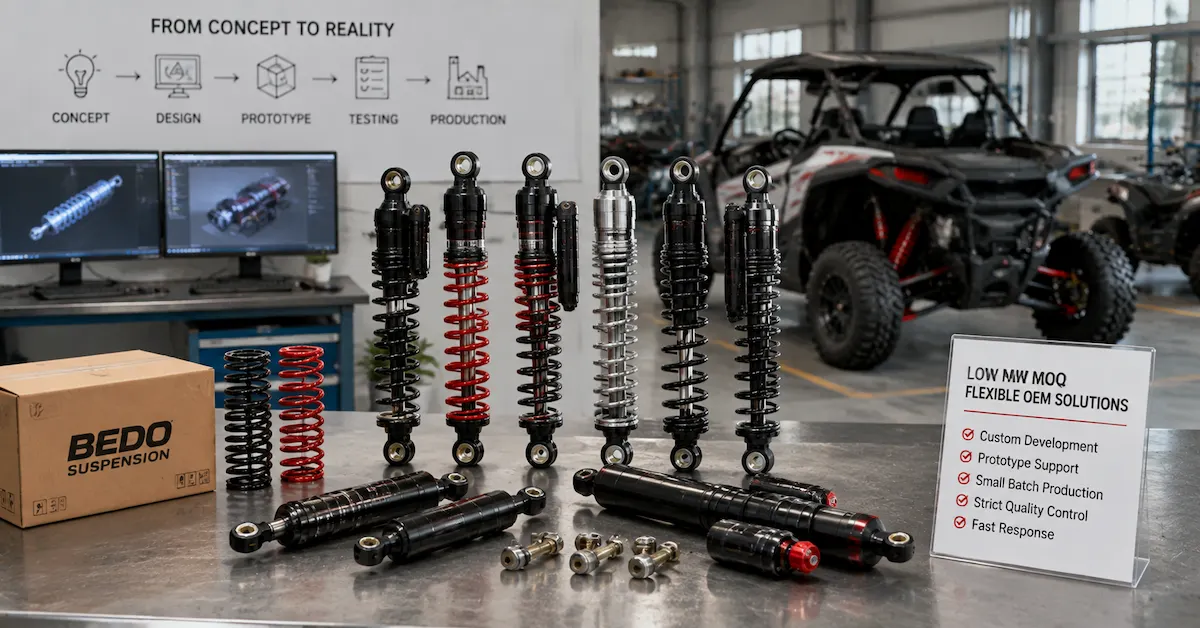
Bedo Auto provides customized suspension solutions including shock absorbers, coil springs, and related suspension components for off-road vehicle applications.
What Is Off-Road Suspension Engineering?
Off-road suspension engineering is the process of designing, optimizing, and validating suspension systems for vehicles operating under demanding terrain and load conditions.
Unlike standard road vehicles, off-road platforms require suspension systems capable of handling:
- Large suspension travel
- High-impact forces
- Rapid compression cycles
- Heavy payloads
- Variable terrain
- Dust and water exposure
Engineering decisions influence:
- Vehicle stability
- Wheel traction
- Rider comfort
- Component lifespan
- Overall driving performance
A properly engineered suspension system allows the wheels to follow uneven terrain while keeping the vehicle controlled and stable.
Why Off-Road Vehicles Need Specialized Suspension Design
Off-road vehicles experience forces that are significantly different from normal vehicles.
Common challenges include:
| Challenge | Suspension Requirement |
|---|---|
| Rocky terrain | Strong impact absorption |
| Mud and water | Reliable sealing protection |
| Heavy cargo | Higher load support |
| Jump impacts | Better bottoming resistance |
| Long-distance riding | Heat and fatigue control |
| Uneven surfaces | Improved wheel contact |
A suspension system designed only for smooth roads may experience:
- Excessive bottoming
- Poor traction
- Fast component wear
- Unstable handling
- Shock absorber overheating
This is why specialized engineering is necessary for off-road applications.
Main Components in Off-Road Suspension Engineering
A complete suspension system includes several components working together.
| Component | Function |
|---|---|
| Shock absorber | Controls suspension movement |
| Coil spring | Supports vehicle weight |
| Mounting structure | Transfers suspension forces |
| Bushings | Reduce vibration and friction |
| Suspension arms | Control wheel movement |
| Reservoir system | Improves heat management |
Each component affects overall performance.
For example, increasing spring stiffness without adjusting damping may create poor ride quality. A larger shock absorber may provide better durability but may not fit the vehicle structure.
Engineering requires balancing all components.
Shock Absorber Engineering for Off-Road Vehicles
Shock absorbers are one of the most important parts of an off-road suspension system.
They control:
- Compression movement
- Rebound recovery
- Vehicle stability
- Impact response
Important shock absorber factors include:
Shock Stroke
Longer stroke can provide:
- Increased wheel movement
- Better terrain adaptation
- Improved obstacle clearance
However, excessive stroke without correct geometry may create installation problems.
Compression Damping
Compression damping controls how the shock responds when compressed.
Proper compression tuning helps:
- Reduce bottoming
- Improve landing control
- Maintain vehicle stability
Rebound Damping
Rebound damping controls how quickly the suspension returns after compression.
Correct rebound performance improves:
- Tire contact
- Traction
- Vehicle control
Too much rebound damping may cause slow recovery, while insufficient rebound damping may create bouncing.
Coil Spring Optimization
Spring design is another critical part of off-road suspension engineering.
The spring supports:
- Vehicle weight
- Rider weight
- Passenger load
- Cargo
- Accessories
Spring rate affects:
- Ride height
- Suspension sag
- Ground clearance
- Comfort
- Bottoming resistance
A spring that is too soft may cause:
- Excessive sag
- Reduced clearance
- Frequent bottoming
A spring that is too stiff may cause:
- Harsh riding
- Reduced traction
- Poor comfort
Engineers select spring specifications based on:
- Vehicle weight
- Payload
- Terrain
- Suspension geometry
- Intended usage
Suspension Geometry and Wheel Travel Analysis
Suspension geometry determines how the wheels move during operation.
Important factors include:
- Shock mounting position
- Suspension arm length
- Linkage design
- Shock angle
- Wheel travel
Incorrect geometry can create:
- Uneven suspension movement
- Increased component stress
- Reduced handling performance
Professional engineering evaluates how suspension movement translates into actual wheel behavior.
Material Selection for Off-Road Durability
Off-road components face repeated stress and environmental exposure.
Material selection must consider:
- Strength
- Fatigue resistance
- Corrosion protection
- Weight
- Heat resistance
Important components include:
Shock Body
Requires:
- Structural strength
- Heat dissipation
- Machining accuracy
Piston Rod
Requires:
- Wear resistance
- Surface hardness
- Corrosion protection
Coil Spring
Requires:
- Stable spring rate
- Fatigue resistance
- Long service life
High-quality materials improve reliability during long-term operation.
Heat Management in Off-Road Suspension Systems
Off-road driving creates repeated suspension movement, which generates heat inside shock absorbers.
Heat buildup can affect:
- Oil performance
- Damping consistency
- Component lifespan
Engineering solutions may include:
- Larger oil capacity
- Reservoir shock absorbers
- Improved valve design
- Better heat dissipation
Reservoir systems are commonly used for demanding applications such as:
- Racing
- Long-distance trail riding
- Heavy-duty utility vehicles
Testing Methods for Off-Road Suspension Engineering
Testing is essential before mass production.
Dimensional Testing
Engineers verify:
- Shock length
- Stroke
- Mounting dimensions
- Component tolerance
Damping Testing
Testing evaluates:
- Compression force
- Rebound force
- Adjustment response
Load Testing
Load testing verifies:
- Structural strength
- Spring support
- Suspension performance
Durability Testing
Long-term testing evaluates:
- Fatigue resistance
- Seal performance
- Component reliability
Vehicle Testing
Real-world testing confirms:
- Ride quality
- Handling
- Traction
- Off-road performance
OEM Off-Road Suspension Development Process
A professional development process usually includes:
Requirement Analysis
Engineers collect:
- Vehicle information
- Load requirements
- Terrain conditions
- Performance targets
Design Development
The team evaluates:
- Shock absorber design
- Spring specifications
- Mounting structure
- Materials
Prototype Manufacturing
Prototype units are produced for validation.
Testing and Improvement
Performance data is collected and used for optimization.
Production Preparation
After approval, manufacturing standards are established for repeat production.
How to Choose an Off-Road Suspension Engineering Partner
A qualified engineering partner should provide:
Engineering Experience
The supplier should understand:
- Suspension systems
- Vehicle applications
- Shock tuning
- Spring development
Prototype Capability
The supplier should support:
- Sample development
- Testing
- Design improvement
Manufacturing Capability
Evaluate:
- Production equipment
- Quality systems
- Manufacturing capacity
Testing Capability
Confirm support for:
- Performance testing
- Durability validation
- Quality inspection
How Bedo Auto Supports Off-Road Suspension Engineering
As an experienced suspension engineering partner, Bedo Auto provides customized suspension solutions for global vehicle manufacturers and aftermarket brands.
Support includes:
- Vehicle application analysis
- Shock absorber development
- Coil spring customization
- Prototype manufacturing
- Performance testing
- OEM production support
Applications include:
- ATV
- UTV
- Dirt bike
- Golf cart
- Utility vehicle
- Electric vehicle
- Specialty off-road vehicles
Buyers can review suspension solutions through the Bedo Auto Products page.
For engineering cooperation, samples, drawings, and technical requirements can be submitted through the Contact Us page.
FAQ
What is off-road suspension engineering?
It is the process of designing and optimizing suspension systems for vehicles operating in extreme terrain and demanding conditions.
Why do off-road vehicles need custom suspension?
Because vehicle weight, terrain, payload, and performance requirements vary significantly between applications.
Can shock absorbers and springs be developed together?
Yes. Professional suspension engineering evaluates springs and shock absorbers as a complete system.
What information is needed for off-road suspension development?
Vehicle weight, payload, dimensions, terrain, samples, drawings, and performance targets are usually required.
Can prototypes be tested before production?
Yes. Prototype testing helps verify fitment, performance, durability, and manufacturing feasibility.
Can Bedo Auto support OEM off-road suspension projects?
Yes. Bedo Auto supports engineering development, prototypes, testing, and OEM manufacturing.
Conclusion
Professional off-road suspension engineering helps vehicle manufacturers and aftermarket brands create suspension systems that perform reliably under extreme conditions.
Successful off-road suspension development requires coordination between shock absorbers, springs, geometry, materials, testing, and manufacturing processes.
Through engineering analysis, prototype validation, and OEM production support, Bedo Auto helps global customers develop durable suspension solutions for demanding off-road applications.