
Finding a reliable low MOQ suspension manufacturer is important for companies that need customized suspension products but do not require high-volume production.
Many suspension buyers are not large automotive brands. They may include:
- New aftermarket brands
- Startup vehicle companies
- Specialty vehicle manufacturers
- Racing teams
- Engineering companies
- Custom vehicle builders
These companies often need smaller production quantities for:
- Prototype validation
- Market testing
- Limited vehicle production
- Product development
- Private-label launches
A flexible suspension manufacturer allows businesses to develop products without the pressure of large minimum order quantities.
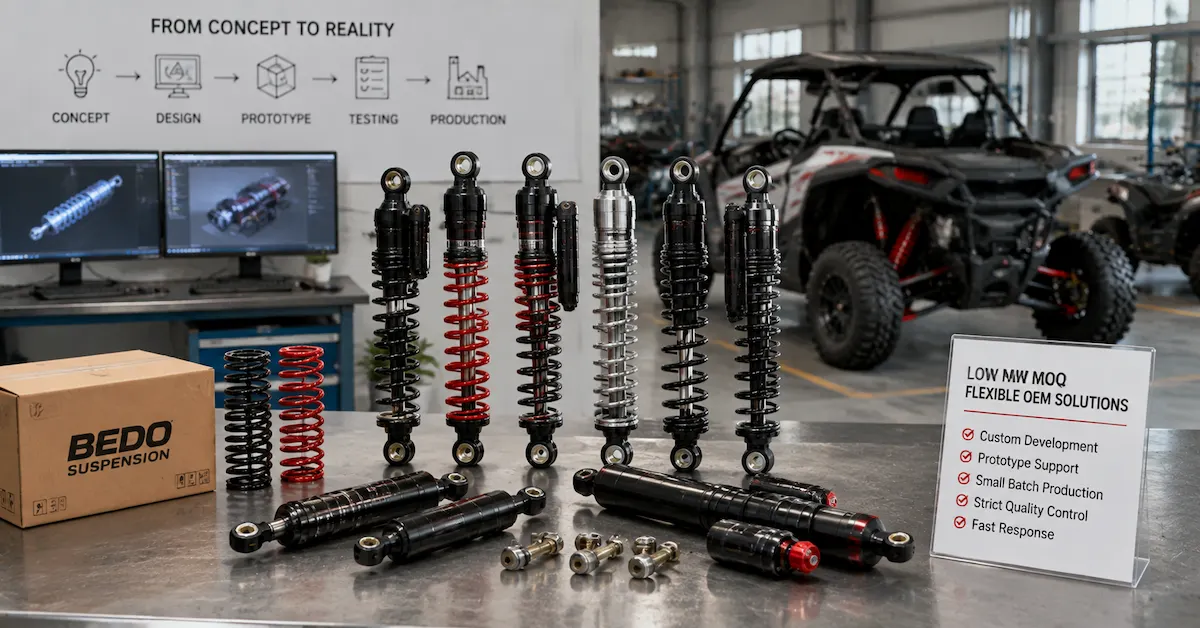
A professional low MOQ supplier provides:
- Engineering support
- Custom suspension development
- Prototype production
- Small batch manufacturing
- Quality testing
- OEM production support
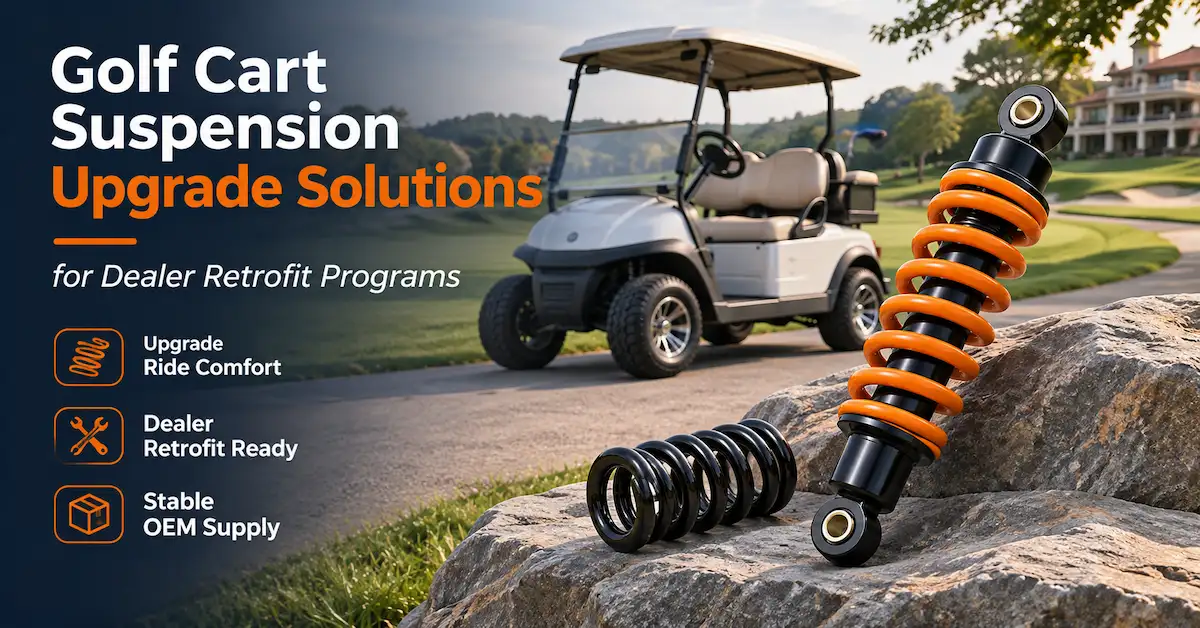
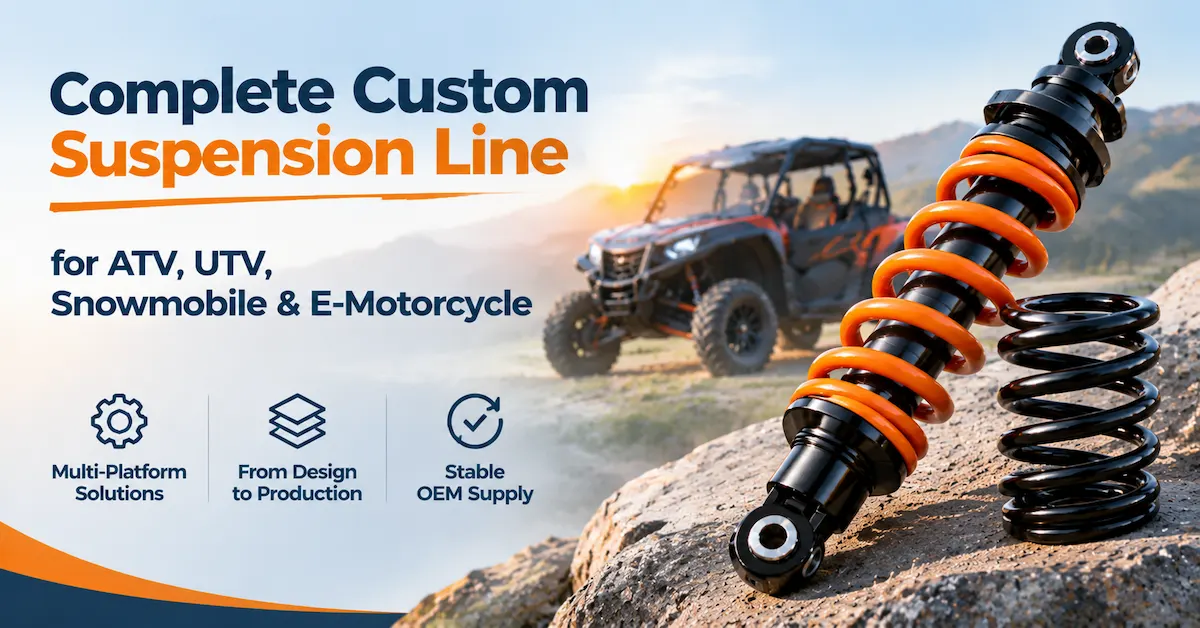
Bedo Auto supports customized shock absorbers, coil springs, and suspension components for ATV, UTV, motorcycles, golf carts, utility vehicles, electric vehicles, and specialty applications.
What Is a Low MOQ Suspension Manufacturer?
A low MOQ suspension manufacturer is a supplier that supports customized suspension production with flexible order quantities.
Unlike traditional high-volume automotive suppliers, low MOQ manufacturers can support:
- Prototype quantities
- Trial orders
- Small production batches
- Customized suspension projects
This approach helps companies reduce:
- Initial investment
- Inventory risk
- Product development costs
Low MOQ manufacturing is especially valuable when developing new suspension products where market demand has not yet been confirmed.
Why Low MOQ Suspension Production Matters
Large minimum order quantities can create challenges for growing brands.
Common problems include:
- Excess inventory
- High upfront costs
- Storage pressure
- Limited product testing opportunities
Low MOQ production allows companies to:
Validate Products
Small batches allow buyers to test:
- Installation
- Performance
- Customer feedback
- Market acceptance
Reduce Financial Risk
Companies can invest gradually instead of purchasing large quantities immediately.
Improve Products
Feedback from early production can help optimize:
- Shock settings
- Spring specifications
- Product design
Support Special Projects
Low-volume production is suitable for:
- Custom vehicles
- Racing projects
- Limited editions
- Engineering prototypes
Applications Requiring Low MOQ Suspension Manufacturing
A professional low MOQ suspension manufacturer can support different applications.
Aftermarket Suspension Brands
New suspension brands often need:
- Custom products
- Small production runs
- Private labeling
- Market testing
Specialty Vehicle Manufacturers
Applications include:
- Custom utility vehicles
- Electric vehicles
- Adventure vehicles
- Specialty mobility platforms
Requirements include:
- Flexible production
- Engineering cooperation
- Product customization
Racing and Performance Projects
Motorsport projects may require:
- Limited production shocks
- Custom damping
- Special spring rates
Prototype Vehicle Development
Engineering companies often need:
- Prototype suspension systems
- Testing samples
- Small batch production
Benefits of Working With a Low MOQ Manufacturer
A flexible supplier provides several advantages.
Lower Development Risk
Small orders allow companies to verify products before scaling production.
Faster Product Launch
Low MOQ production can shorten the path from:
- Concept
- Prototype
- Testing
- Market launch
Greater Customization Flexibility
Small production allows more options for:
- Dimensions
- Damping settings
- Spring rates
- Mounting structures
Better Communication
Low-volume projects usually involve closer cooperation between engineers and manufacturers.
Suspension Products Available With Low MOQ Production
A professional supplier may provide:
| Product | Customization Options |
|---|---|
| Shock absorbers | Length, damping, mounting |
| Coil springs | Spring rate, size, color |
| Reservoir shocks | Capacity, configuration |
| Suspension components | Dimensions, materials |
| Complete suspension systems | Vehicle-specific solutions |
OEM Customization Process for Low MOQ Projects
A professional process includes:
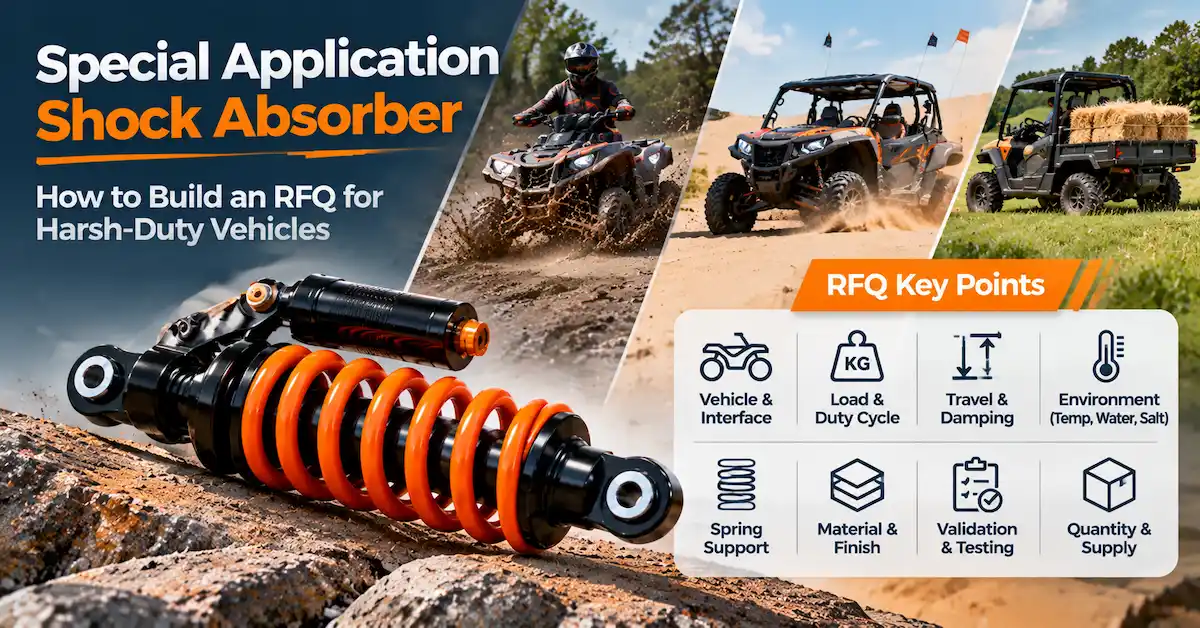
Step 1: Project Requirement Analysis
Engineers review:
- Vehicle type
- Application
- Load requirements
- Performance goals
- Production quantity
Step 2: Technical Evaluation
The supplier analyzes:
- Existing samples
- Drawings
- CAD files
- Installation requirements
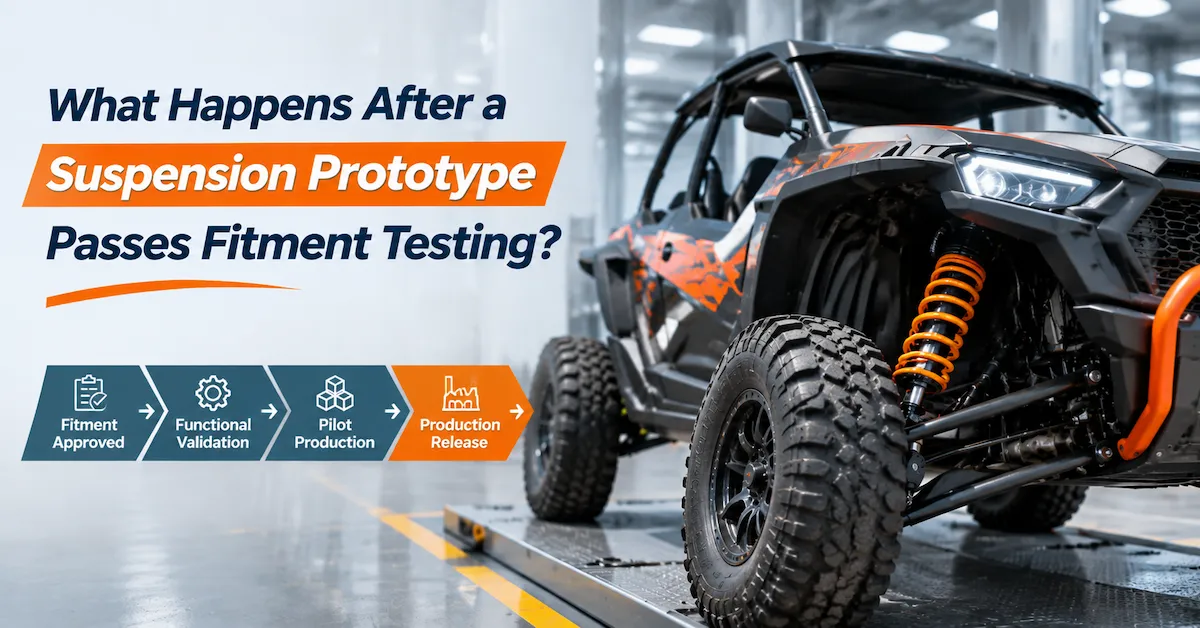
Step 3: Prototype Development
Samples are produced for:
- Fitment testing
- Performance evaluation
- Design improvement
Step 4: Small Batch Production
After approval, production begins with controlled quantities.
Step 5: Scale-Up Support
When demand increases, the supplier supports:
- Larger production
- Process optimization
- Supply stability
Custom Shock Absorber Development for Low MOQ Orders
Shock absorbers can often be customized according to:
- Vehicle weight
- Suspension position
- Terrain
- Performance requirements
Customization options include:
Dimensions
Including:
- Extended length
- Compressed length
- Stroke
- Mounting dimensions
Damping Settings
Including:
- Compression damping
- Rebound damping
- Adjustable settings
Spring Configuration
Including:
- Spring rate
- Wire diameter
- Coil design
Appearance
Including:
- Surface finish
- Color
- Branding
Quality Control for Low MOQ Suspension Manufacturing
Small orders still require professional quality control.
Important inspections include:
Dimensional Inspection
Verify:
- Product dimensions
- Mounting accuracy
- Component tolerances
Performance Testing
Evaluate:
- Damping response
- Suspension movement
- Functional performance
Leakage Testing
Check:
- Oil sealing
- Pressure stability
Final Inspection
Confirm:
- Appearance
- Assembly quality
- Packaging
A reliable low MOQ manufacturer maintains the same quality standards for small and large orders.
Prototype vs Low MOQ Production
| Stage | Purpose |
|---|---|
| Prototype | Verify design |
| Low MOQ batch | Validate production |
| Mass production | Scale supply |
Low MOQ manufacturing provides a bridge between development and large-scale production.
How to Choose a Low MOQ Suspension Manufacturer
Buyers should evaluate:
Engineering Capability
The supplier should support:
- Product analysis
- Custom design
- Prototype development
- Performance optimization
Manufacturing Flexibility
Evaluate:
- Minimum order quantity
- Small batch capability
- Custom production support
Testing Capability
Confirm:
- Performance testing
- Quality inspection
- Validation support
OEM Experience
A qualified supplier should understand:
- Vehicle applications
- Suspension requirements
- Long-term production needs
How Bedo Auto Supports Low MOQ Suspension Projects
As an experienced low MOQ suspension manufacturer, Bedo Auto provides flexible suspension development solutions for global customers.
Support includes:
- Shock absorber customization
- Coil spring development
- Sample analysis
- Prototype production
- Small batch manufacturing
- Performance testing
- OEM production support
Applications include:
- ATV
- UTV
- Motorcycle
- Golf cart
- Utility vehicle
- Electric vehicle
- Specialty vehicles
Buyers can review suspension solutions through the Bedo Auto Products page.
For low MOQ suspension projects, samples, drawings, and technical requirements can be submitted through the Contact Us page.
FAQ
What is a low MOQ suspension manufacturer?
A low MOQ suspension manufacturer provides customized suspension products with flexible minimum order quantities.
Can low MOQ suspension products be customized?
Yes. Shock dimensions, damping settings, spring rates, materials, and branding can be customized.
Are low MOQ orders suitable for new brands?
Yes. Small batches help new brands test products and reduce inventory risks.
Can prototype orders become mass production?
Yes. Many OEM suspension projects start with prototypes and low-volume production before scaling.
What suspension products support low MOQ manufacturing?
Products may include shock absorbers, springs, reservoir shocks, and customized suspension components.
Can Bedo Auto support low MOQ OEM projects?
Yes. Bedo Auto supports prototype development, small batch production, testing, and OEM manufacturing.
Conclusion
Choosing a reliable low MOQ suspension manufacturer helps companies develop customized suspension products with greater flexibility and lower risk.
For startups, aftermarket brands, specialty vehicle companies, and engineering teams, low-volume production provides an effective way to validate products before large investment.
Through engineering support, prototype development, quality testing, and flexible OEM manufacturing, Bedo Auto helps global customers create reliable suspension solutions for different vehicle applications.