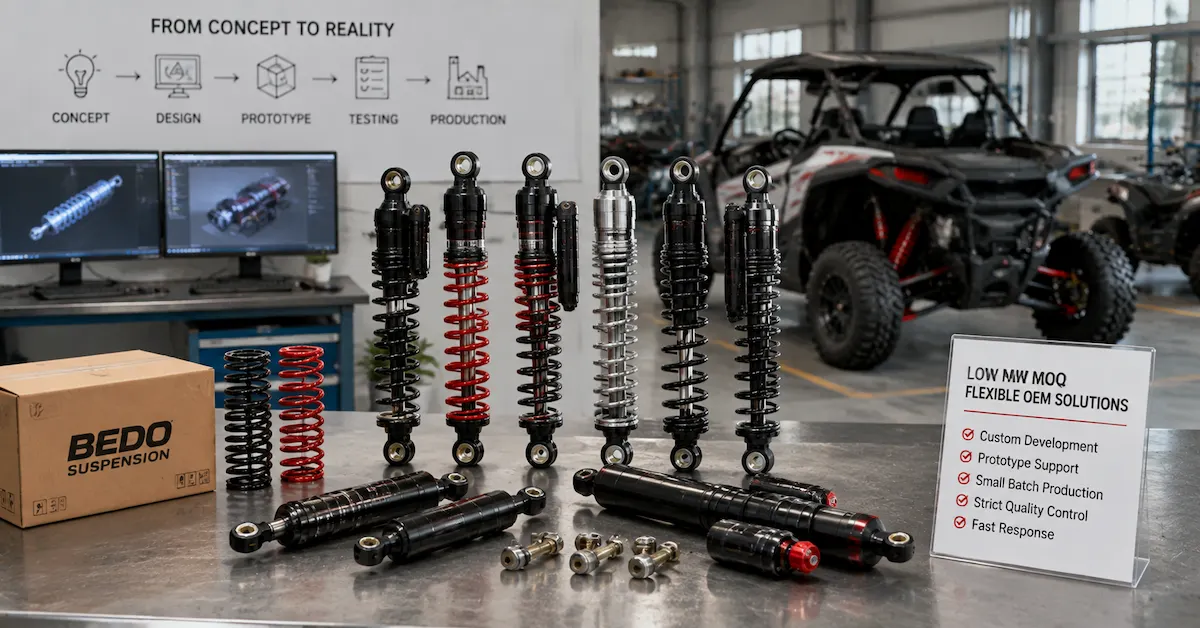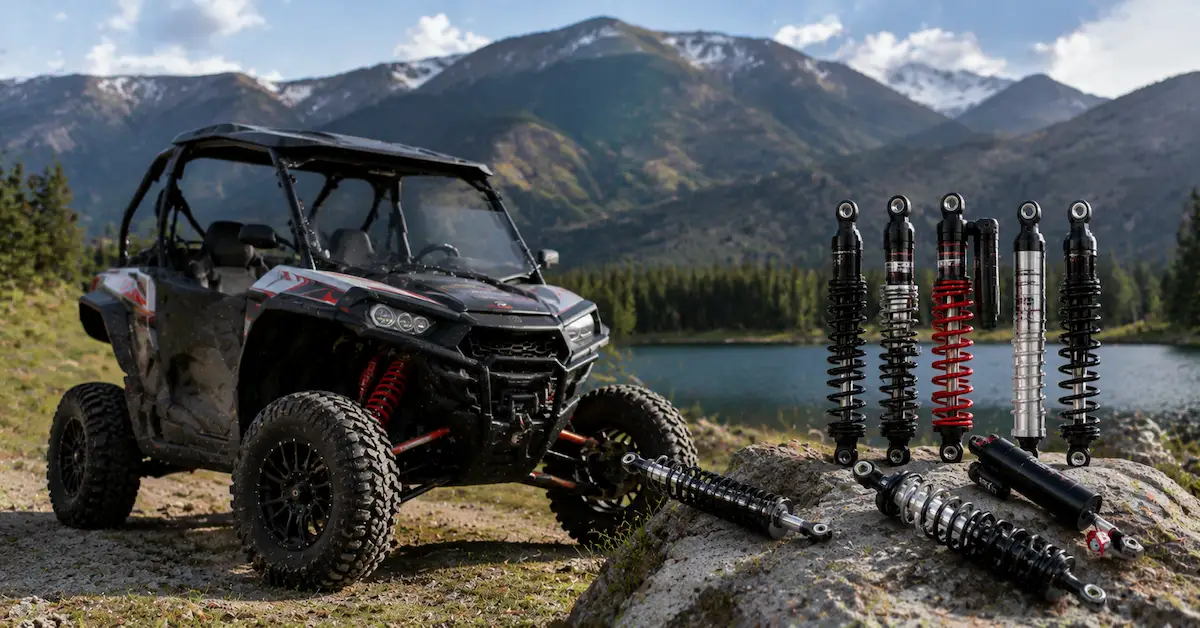

Choosing the right golf cart shock absorber OEM partner is important for golf cart manufacturers, electric vehicle brands, distributors, resort vehicle suppliers, fleet operators, and aftermarket companies.
Modern golf carts are increasingly used beyond traditional golf courses. They now serve:
- Resorts
- Hotels
- Residential communities
- Theme parks
- Airports
- Industrial facilities
- Security patrol
- Maintenance operations
- Utility transportation
These applications create different suspension requirements.
A passenger cart requires comfort and smooth operation.
A utility cart carrying tools or equipment requires stronger load support.
An electric golf cart with a large battery pack requires suspension components designed around increased vehicle weight.
A professional OEM supplier should therefore develop shock absorbers according to the actual vehicle application rather than offering a single standard specification.
Bedo Auto supports customized shock absorbers, suspension springs, and related components for golf carts, utility vehicles, electric vehicles, ATV, UTV, motorcycles, and specialty vehicles.
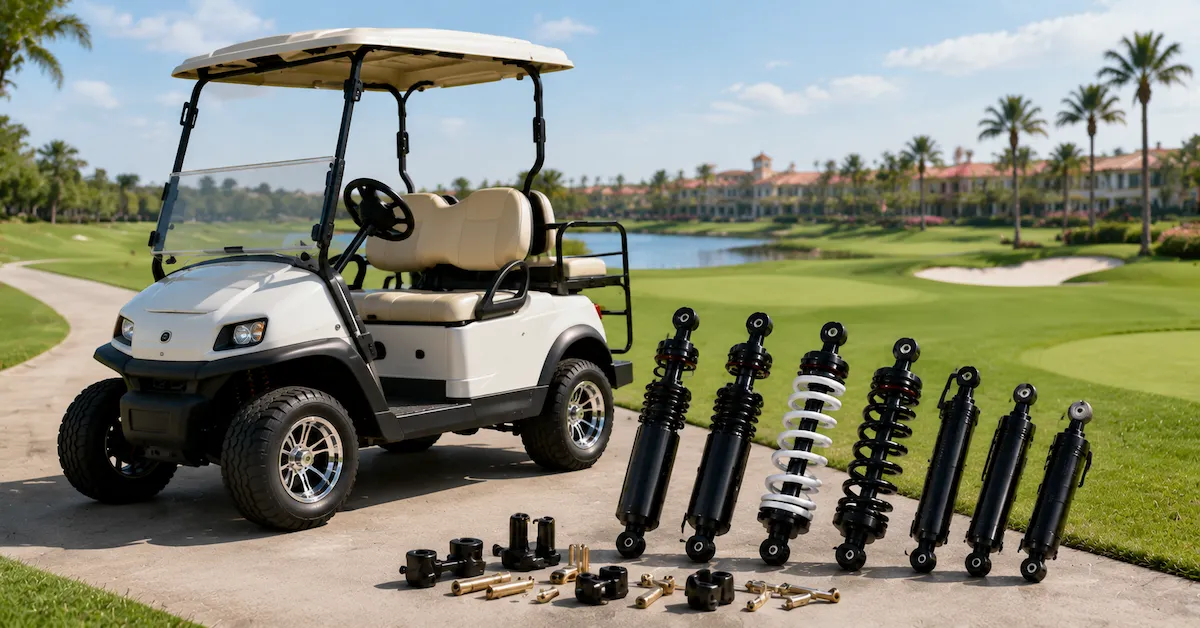
Why Golf Cart Shock Absorbers Need OEM Development
Golf carts operate at lower speeds than many vehicles, but their suspension systems still face unique challenges.
Important factors include:
- Vehicle weight
- Battery weight
- Passenger capacity
- Cargo requirements
- Road conditions
- Operating frequency
- Vehicle modifications
- Suspension geometry
Incorrect shock absorber selection may cause:
- Excessive bouncing
- Poor passenger comfort
- Rear suspension sag
- Reduced ground clearance
- Suspension noise
- Uneven tire contact
- Faster component wear
- Poor stability under load
For example:
A resort cart transporting passengers all day requires different damping characteristics from a maintenance cart carrying heavy equipment.
A utility golf cart may need stronger springs and more durable shock absorbers.
A customized OEM solution allows the suspension system to match the actual usage environment.
What Does a Golf Cart Shock Absorber OEM Supplier Provide?
A professional OEM supplier can support the complete development process.
Typical services include:
| Service | Purpose |
|---|---|
| Sample analysis | Develop replacement or improved products |
| Drawing review | Confirm dimensions and feasibility |
| Shock absorber customization | Match vehicle requirements |
| Spring development | Support load requirements |
| Damping adjustment | Improve ride and control |
| Prototype production | Verify design before mass production |
| Small-batch testing | Reduce development risks |
| OEM manufacturing | Provide long-term supply |
| Private labeling | Support customer brands |
A complete project may include:
- Front shock absorbers
- Rear shock absorbers
- Coil springs
- Bushings
- Mounting components
- Suspension kits
Applications for OEM Golf Cart Shock Absorbers
A golf cart shock absorber OEM solution can support multiple applications.
Golf Course Vehicles
Requirements:
- Passenger comfort
- Smooth operation
- Low maintenance
- Long service life
Resort and Hotel Transportation
Requirements:
- Frequent daily use
- Stable ride quality
- Passenger safety
- Quiet operation
Utility Golf Carts
Applications:
- Maintenance carts
- Campus vehicles
- Warehouse transport
- Industrial vehicles
Requirements:
- Higher payload capacity
- Stronger suspension support
- Durable components
Electric Golf Carts
Electric vehicles require special attention because of:
- Battery weight
- Different weight distribution
- Higher vehicle mass
- Commercial operating cycles
Key Information Required for OEM Development
Before starting a project, buyers should provide detailed vehicle information.
| Information | Why It Matters |
|---|---|
| Golf cart model | Confirms application |
| Vehicle weight | Determines suspension load |
| Battery type and weight | Important for electric carts |
| Passenger capacity | Defines operating conditions |
| Cargo requirements | Influences spring selection |
| Front/rear position | Determines suspension function |
| Shock dimensions | Confirms fitment |
| Mounting structure | Ensures installation accuracy |
| Wheel size | Affects suspension geometry |
| Terrain conditions | Defines durability requirements |
| Operating hours | Influences service life |
| Existing sample | Supports development |
| Technical drawing | Defines production standards |
| Target quantity | Supports manufacturing planning |
Buyers should also explain the goal:
- Improve comfort
- Increase load capacity
- Replace discontinued parts
- Reduce maintenance
- Improve durability
- Develop a new vehicle model
Shock Absorber Specification Development
A customized golf cart shock absorber should consider:
- Extended length
- Compressed length
- Stroke
- Mounting width
- Mounting-hole diameter
- Shock-body diameter
- Piston-rod diameter
- Spring rate
- Compression damping
- Rebound damping
The correct specification depends on the complete vehicle system.
A shock absorber that fits physically may still perform poorly if:
- Spring support is incorrect
- Damping is unsuitable
- Stroke is insufficient
- Mounting geometry is wrong
Spring Development for Golf Cart Applications
The spring supports:
- Vehicle structure
- Battery system
- Passengers
- Cargo
- Accessories
Spring rate affects:
- Ride height
- Comfort
- Suspension travel
- Load capacity
- Bottoming resistance
A spring that is too soft may cause:
- Excessive sag
- Poor handling
- Reduced clearance
- Frequent bottoming
A spring that is too stiff may cause:
- Harsh riding
- Poor comfort
- Increased vibration
OEM development should consider:
- Vehicle weight
- Passenger load
- Battery configuration
- Cargo requirements
- Operating environment
Compression and Rebound Damping
The spring carries the load, while damping controls suspension movement.
Compression Damping
Compression damping affects:
- Road impact response
- Load transfer
- Suspension support
- Vehicle stability
Too little compression damping may cause:
- Excessive movement
- Bottoming
- Poor control
Too much compression damping may cause:
- Harsh impacts
- Reduced comfort
- Increased stress
Rebound Damping
Rebound damping controls suspension recovery.
Incorrect rebound settings may cause:
- Bouncing
- Slow recovery
- Reduced tire contact
- Poor ride quality
A professional supplier should match damping with spring characteristics.
Sample-Based OEM Development
Many golf cart suspension projects begin with an existing sample.
The supplier can evaluate:
- Overall dimensions
- Mounting points
- Spring structure
- Shock body
- Rod diameter
- Bushings
- Surface treatment
However, samples do not reveal:
- Internal damping
- Valve design
- Oil specification
- Material quality
- Long-term durability
For accurate development, buyers should also provide:
- Vehicle information
- Load conditions
- Performance requirements
- Operating environment
Drawing-Based Production
Technical drawings help establish accurate manufacturing requirements.
Important details include:
- Product dimensions
- Mounting locations
- Material specifications
- Tolerances
- Surface treatments
- Assembly requirements
Before production, engineers should review:
- Installation clearance
- Structural strength
- Component compatibility
- Manufacturing feasibility
This reduces prototype changes and production risks.
Heavy-Duty Golf Cart Shock Absorber Solutions
Some applications require stronger suspension systems.
Examples:
- Utility carts
- Cargo carts
- Industrial vehicles
- Security carts
- Maintenance vehicles
Heavy-duty solutions may include:
- Higher spring capacity
- Stronger mounting components
- Improved shock absorbers
- Better corrosion protection
- Longer service life design
The objective is not simply making components stronger, but matching them to the actual application.
Quality Control for OEM Golf Cart Shocks
A reliable supplier should control every production stage.
Material Inspection
Check:
- Steel components
- Springs
- Seals
- Bushings
- Machined parts
Dimensional Inspection
Verify:
- Shock length
- Stroke
- Mounting width
- Hole diameter
- Spring dimensions
Assembly Control
Control:
- Component cleanliness
- Seal installation
- Oil filling
- Fastening torque
- Spring installation
Performance Testing
Testing may include:
- Leakage testing
- Movement testing
- Load testing
- Functional verification
Final Inspection
Check:
- Appearance
- Dimensions
- Labels
- Packaging
- Quantity
Prototype and Small-Batch Validation
Before mass production, prototype testing confirms:
- Vehicle fitment
- Suspension movement
- Ride comfort
- Load support
- Component durability
Small-batch validation helps identify:
- Manufacturing variation
- Installation issues
- Performance problems
- Quality risks
This allows buyers to optimize products before large-scale production.
How to Choose a Golf Cart Shock Absorber OEM Supplier
Buyers should evaluate:
Engineering Capability
Can the supplier:
- Review samples?
- Analyze drawings?
- Develop prototypes?
- Customize suspension parameters?
Manufacturing Capability
Evaluate:
- Production processes
- Material control
- Quality systems
- Production capacity
- Repeat-order consistency
Testing Capability
Confirm whether the supplier can verify:
- Dimensions
- Strength
- Leakage
- Suspension performance
Communication Capability
A professional supplier should understand:
- Vehicle purpose
- Load conditions
- Operating environment
- Performance goals
- Production requirements
How Bedo Auto Supports Golf Cart Shock Absorber OEM Projects
As a professional golf cart shock absorber OEM supplier, Bedo Auto provides customized suspension solutions for:
- Golf carts
- Electric vehicles
- Utility vehicles
- ATV
- UTV
- Motorcycles
- Specialty vehicles
Support includes:
- Shock absorber customization
- Spring development
- Sample analysis
- Drawing review
- Prototype production
- Small-batch validation
- OEM manufacturing
- Private-label support
- Customized packaging
Buyers can review suspension solutions through the Bedo Auto Products page.
For OEM projects, samples, drawings, and technical requirements can be submitted through the Contact Us page.
FAQ
What information is needed for golf cart shock absorber OEM development?
Vehicle model, weight, battery information, payload, dimensions, mounting details, samples, drawings, and performance requirements are typically needed.
Can golf cart shock absorbers be customized?
Yes. Dimensions, spring rates, damping settings, mounting structures, materials, and branding can be customized.
Do electric golf carts need customized shocks?
Yes. Battery weight and different weight distribution often require suspension adjustments.
Can OEM shocks be developed from samples?
Yes. Samples provide structural references, but vehicle data and application requirements should also be provided.
What is the benefit of OEM golf cart suspension development?
OEM development provides better fitment, performance control, product differentiation, and long-term supply stability.
Can Bedo Auto support small-volume OEM projects?
Yes. Bedo Auto supports prototype development and small-batch validation for specialized suspension applications.
Conclusion
Choosing the right golf cart shock absorber OEM partner helps manufacturers and distributors develop suspension systems with improved comfort, reliability, load support, and service life.
Golf cart applications vary widely, from passenger transportation to industrial utility use. Standard shock absorbers may not always provide the correct performance for customized vehicles.
Through engineering analysis, sample development, prototype testing, quality control, and OEM/ODM manufacturing, Bedo Auto supports global buyers developing reliable golf cart suspension solutions.