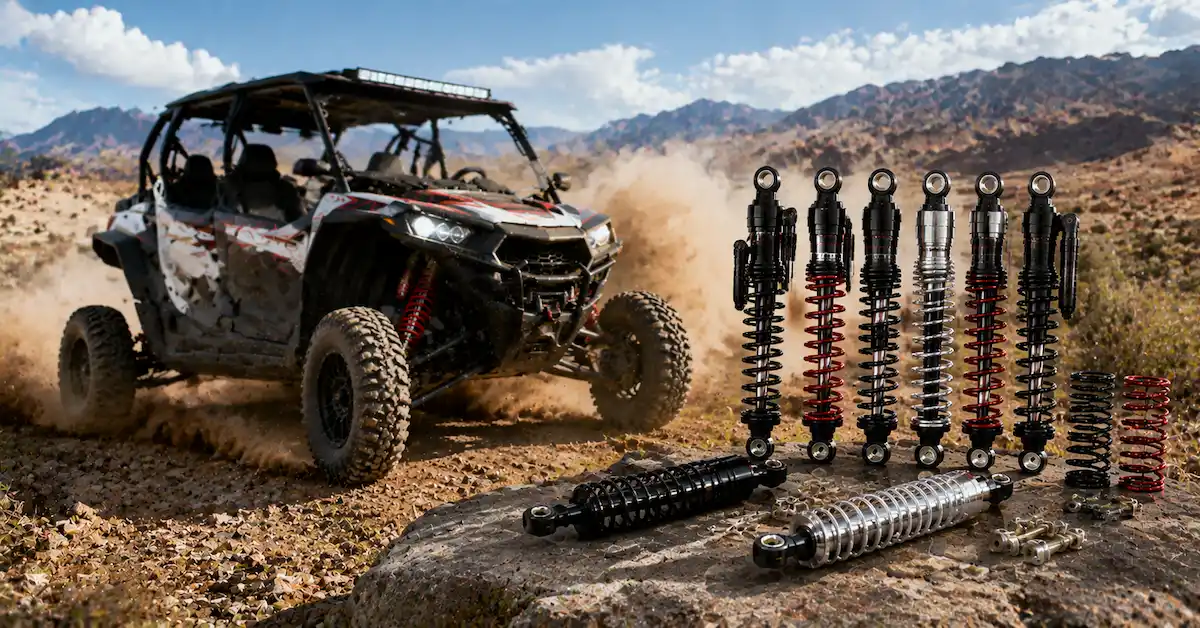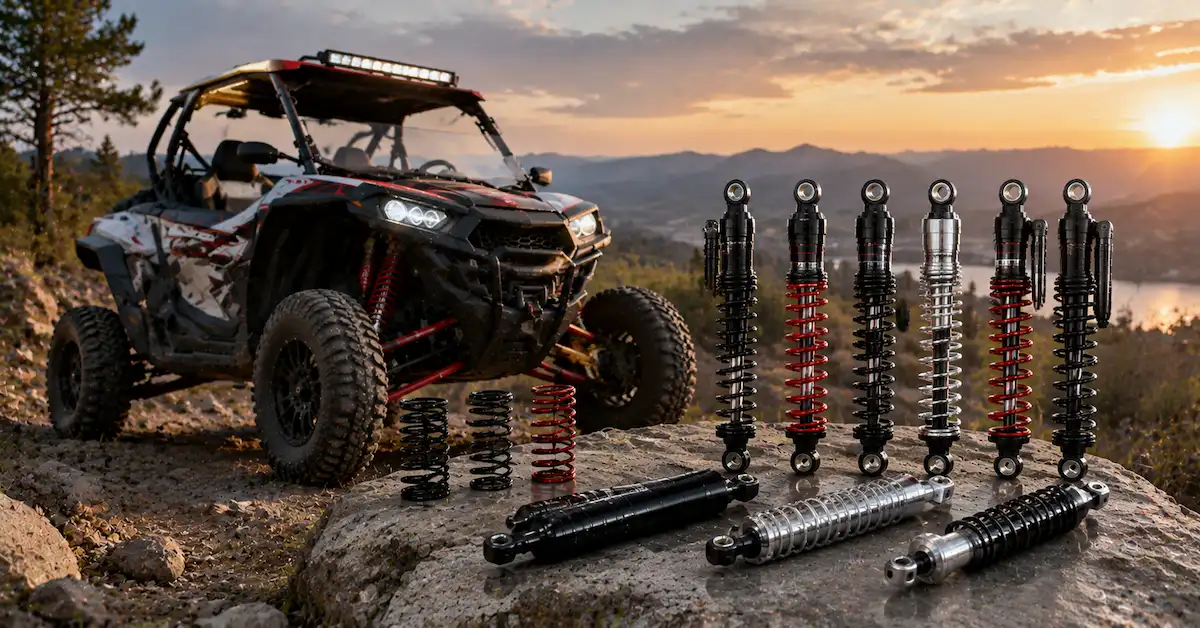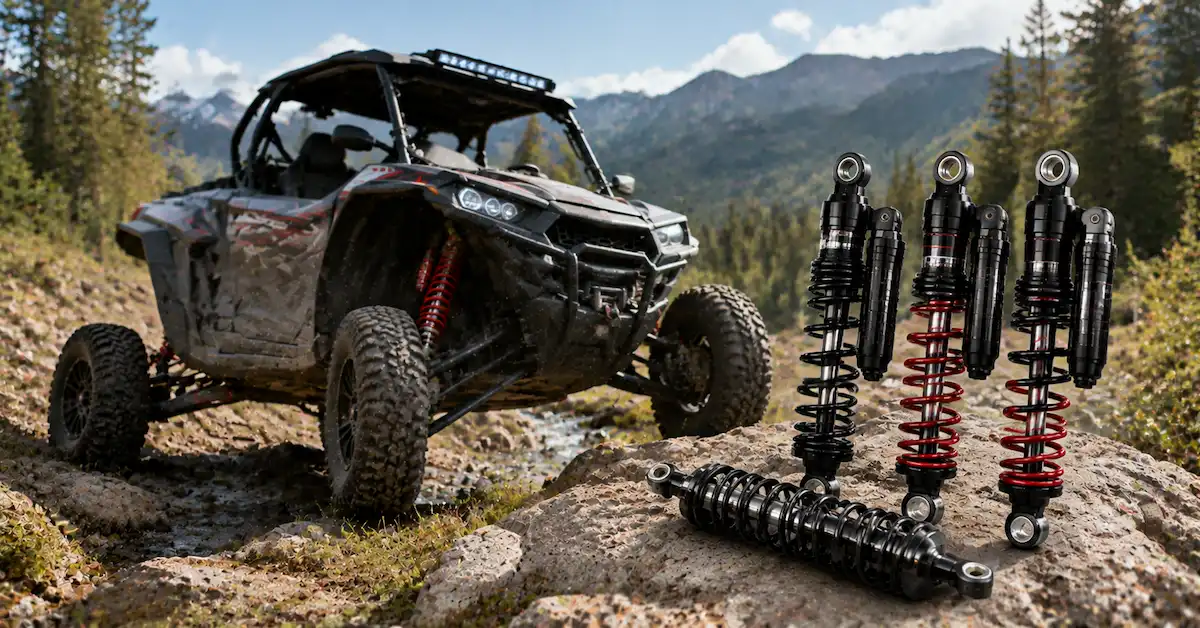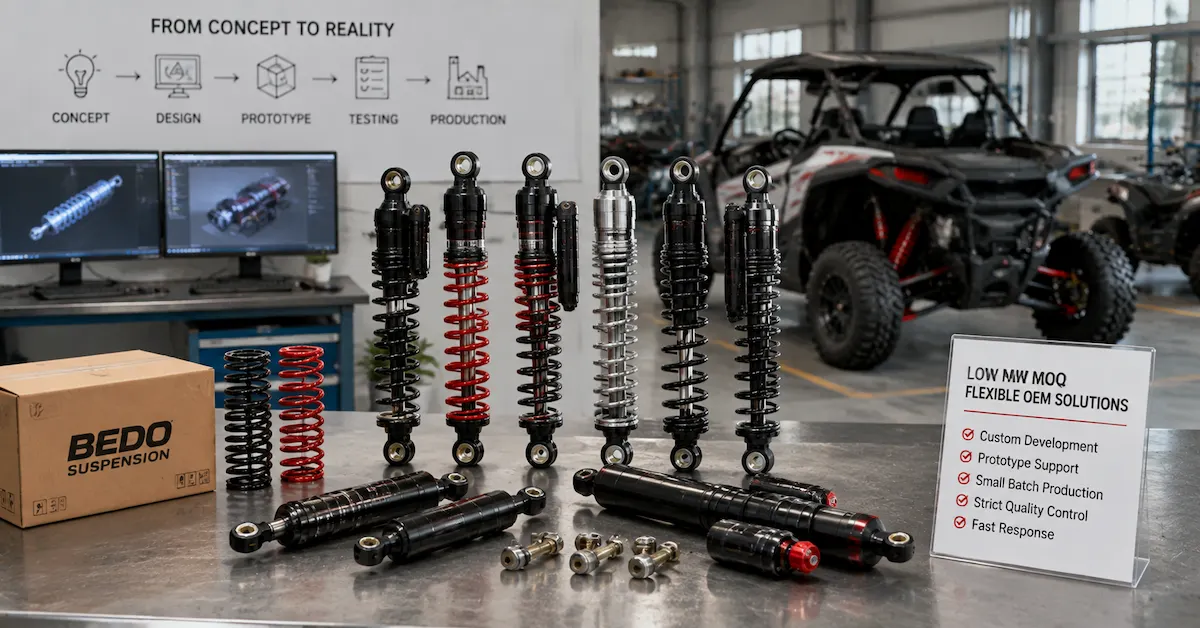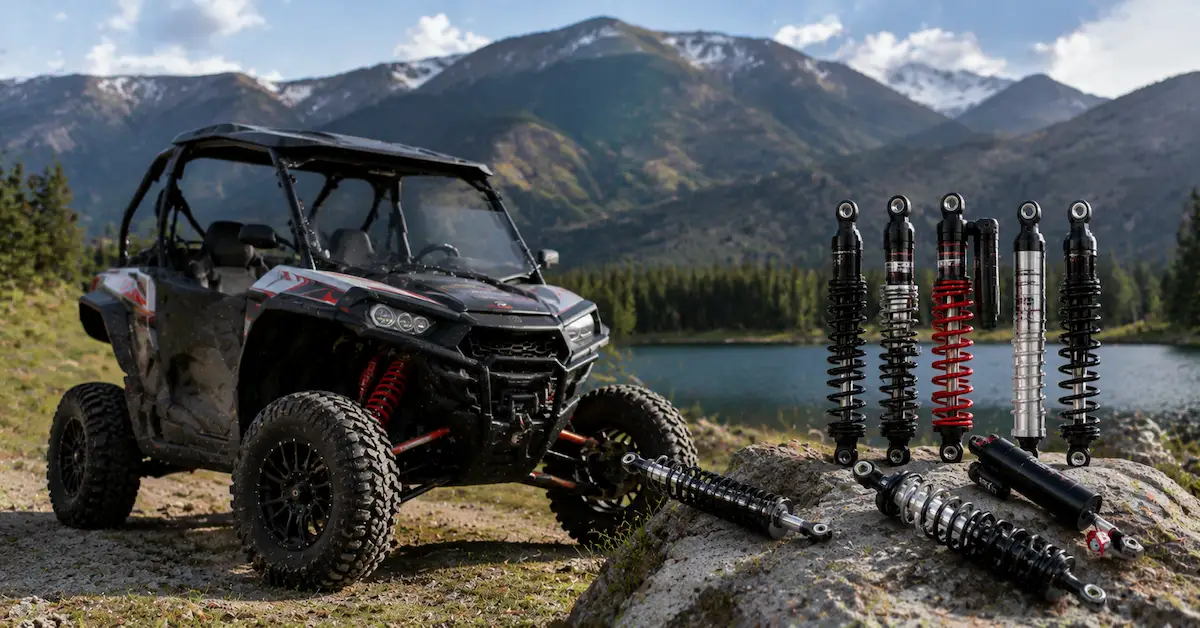

A custom damping shock absorber is designed to provide suspension performance that matches specific vehicle requirements, operating conditions, and performance goals.
Unlike standard shock absorbers with fixed settings, custom damping solutions allow engineers to optimize suspension behavior according to:
- Vehicle weight
- Payload requirements
- Terrain conditions
- Driving style
- Suspension geometry
- Spring characteristics
- Performance targets
For vehicle manufacturers, aftermarket brands, and engineering companies, damping customization is an important part of developing reliable suspension systems.
A properly tuned shock absorber can improve:
- Vehicle stability
- Ride comfort
- Tire contact
- Handling response
- Impact control
- Suspension durability
Bedo Auto provides customized shock absorber engineering solutions for ATV, UTV, motorcycles, golf carts, utility vehicles, electric vehicles, and specialty vehicle applications.
What Is a Custom Damping Shock Absorber?
A custom damping shock absorber is a suspension component developed with customized damping characteristics rather than using standard factory settings.
Damping controls how quickly a suspension system compresses and rebounds after movement.
It determines how the vehicle reacts to:
- Road impacts
- Jumps
- Uneven terrain
- Braking forces
- Acceleration
- Heavy loads
By adjusting damping characteristics, engineers can optimize the balance between:
- Comfort
- Control
- Stability
- Load support
- Performance
A custom damping shock absorber is not simply a stronger shock. It is a shock absorber tuned for a specific application.
Why Custom Damping Is Important
Different vehicles require different suspension behavior.
A racing vehicle may require:
- Fast response
- Strong impact control
- Precise handling
A utility vehicle may require:
- Heavy load support
- Long service life
- Stable operation
A golf cart may require:
- Passenger comfort
- Smooth movement
- Low maintenance
Using the same damping setup for different applications may result in poor performance.
Incorrect damping can cause:
- Excessive bouncing
- Harsh ride quality
- Poor tire contact
- Suspension bottoming
- Slow recovery
- Increased component stress
Custom damping helps match suspension behavior to real operating conditions.
How Damping Works in a Shock Absorber
A shock absorber controls suspension movement by forcing oil through internal valves.
During compression:
- The shock shortens
- Oil flow creates resistance
- Vehicle movement is controlled
During rebound:
- The shock extends
- Internal valves regulate oil movement
- Suspension recovery is controlled
The amount of resistance determines damping performance.
Key factors include:
- Valve design
- Oil viscosity
- Piston structure
- Shim stack configuration
- Gas pressure
- Shock design
Compression Damping Customization
Compression damping controls how the shock absorber responds when compressed.
It affects:
- Impact absorption
- Vehicle support
- Bottoming resistance
- Load control
Insufficient compression damping may cause:
- Excessive suspension movement
- Frequent bottoming
- Poor vehicle stability
Excessive compression damping may cause:
- Harsh impacts
- Reduced comfort
- Poor traction
- Increased stress on suspension components
Engineers tune compression damping according to:
- Vehicle weight
- Terrain
- Suspension travel
- Intended usage
Rebound Damping Customization
Rebound damping controls how quickly the suspension returns after compression.
It affects:
- Tire contact
- Recovery speed
- Vehicle stability
Insufficient rebound damping may cause:
- Bouncing
- Uncontrolled suspension movement
- Reduced stability
Excessive rebound damping may cause:
- Slow suspension recovery
- Suspension packing
- Reduced performance on repeated bumps
Proper rebound tuning helps maintain consistent tire contact with the ground.
High-Speed and Low-Speed Damping Adjustment
Advanced custom shock absorbers may include separate damping adjustments.
Low-Speed Compression Damping
Controls slower suspension movements caused by:
- Braking
- Acceleration
- Weight transfer
- Smooth terrain changes
High-Speed Compression Damping
Controls rapid suspension movements caused by:
- Rocks
- Large impacts
- Jump landings
- Sharp obstacles
Separate adjustment allows engineers to create more precise suspension behavior.
Applications of Custom Damping Shock Absorbers
Custom damping solutions are widely used in different vehicles.
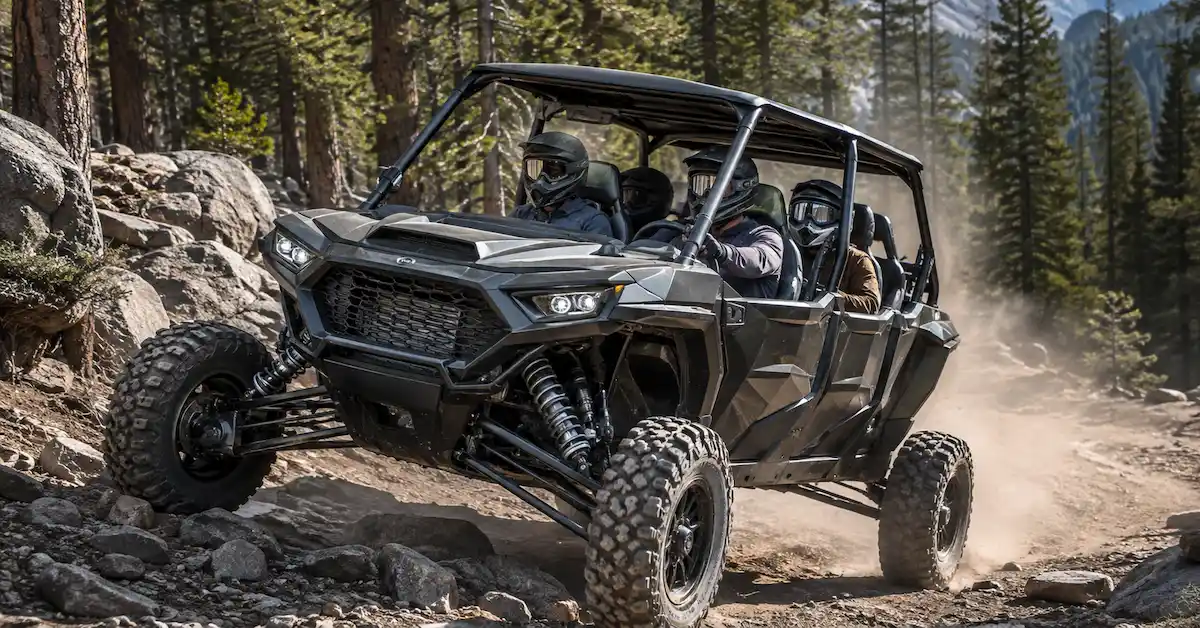
ATV and UTV Suspension
Off-road vehicles require damping solutions for:
- Rocks
- Mud
- Uneven terrain
- Heavy loads
- Long riding sessions
Customization helps improve:
- Impact control
- Traction
- Stability
- Durability
Motorcycle Suspension
Motorcycle applications require precise damping adjustment for:
- Rider weight
- Riding style
- Road conditions
- Performance requirements
Golf Cart Suspension
Golf carts may require customized damping for:
- Passenger comfort
- Battery weight
- Utility operation
- Resort transportation
Utility Vehicle Suspension
Utility vehicles often require:
- Strong load support
- Stable movement
- Long operating life
Electric Vehicle Suspension
Electric vehicles require damping optimization because of:
- Increased battery weight
- Different weight distribution
- Higher vehicle mass
Key Information Required for Damping Customization
Before developing a custom damping shock absorber, buyers should provide:
| Information | Importance |
|---|---|
| Vehicle model | Defines application |
| Vehicle weight | Determines damping requirement |
| Payload | Influences suspension support |
| Suspension position | Front/rear requirements |
| Spring specification | Matches damping behavior |
| Shock dimensions | Confirms fitment |
| Terrain | Defines performance needs |
| Driving style | Guides tuning |
| Existing sample | Supports analysis |
| Performance goals | Defines target settings |
Typical goals include:
- Improve comfort
- Reduce bottoming
- Increase stability
- Support heavier loads
- Improve off-road control
- Create performance upgrades
Custom Damping Development Process
Step 1: Application Analysis
Engineers evaluate:
- Vehicle characteristics
- Load conditions
- Suspension geometry
- Usage environment
Step 2: Suspension Parameter Development
Engineers define:
- Spring requirements
- Compression settings
- Rebound settings
- Shock structure
Step 3: Prototype Manufacturing
Prototype shocks are produced for testing.
Step 4: Damping Testing
Engineers evaluate:
- Force curves
- Compression response
- Rebound response
- Adjustment range
Step 5: Vehicle Validation
The suspension is tested under real operating conditions.
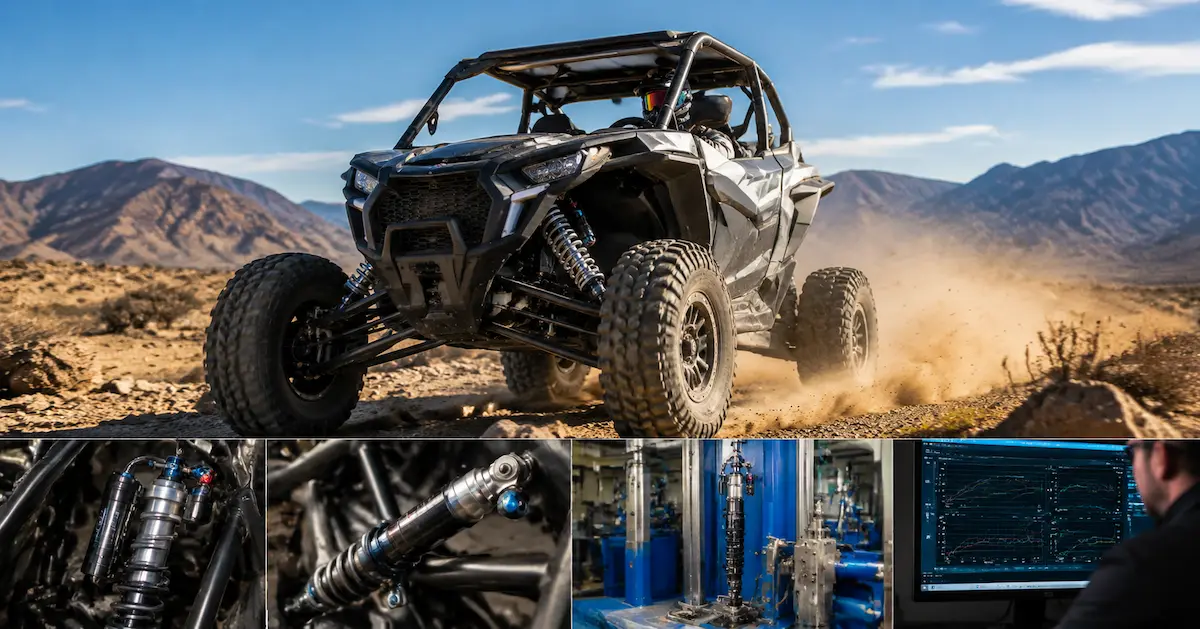
Shock Dyno Testing for Damping Validation
Shock dyno testing provides objective performance data.
Testing can measure:
- Compression force
- Rebound force
- Velocity response
- Adjustment changes
Benefits include:
- Accurate tuning
- Prototype comparison
- Production consistency verification
For OEM projects, dyno data helps engineers make decisions based on measurable performance.
Spring and Damping Matching
A shock absorber cannot be tuned independently from the spring.
The spring controls:
- Vehicle support
- Ride height
- Load capacity
The shock controls:
- Movement speed
- Stability
- Recovery
Incorrect matching may cause:
- Poor comfort
- Reduced traction
- Excessive movement
Professional suspension engineering evaluates both components together.
Material and Structural Considerations
Custom damping shock absorbers must balance:
- Strength
- Weight
- Durability
- Heat resistance
Important components include:
Shock Body
Requires:
- Structural strength
- Heat management
- Precision machining
Piston Rod
Requires:
- Wear resistance
- Surface hardness
- Corrosion protection
Internal Valves
Require:
- Accurate manufacturing
- Stable performance
- Consistent response
Quality Control for Custom Damping Shocks
A professional manufacturing process includes:
Dimensional Inspection
Verify:
- Length
- Stroke
- Mounting dimensions
Damping Testing
Check:
- Compression force
- Rebound force
- Adjustment response
Leakage Testing
Verify:
- Oil sealing
- Pressure stability
Durability Testing
Evaluate:
- Long-term performance
- Structural reliability
Final Inspection
Check:
- Appearance
- Assembly quality
- Packaging
How to Choose a Custom Damping Shock Absorber Supplier
Buyers should evaluate:
Engineering Capability
The supplier should support:
- Suspension analysis
- Damping tuning
- Prototype development
- Testing
Manufacturing Capability
Evaluate:
- Production processes
- Quality control
- Manufacturing capacity
Testing Capability
Confirm:
- Shock dyno testing
- Leakage testing
- Performance validation
OEM Support
A suitable supplier should support:
- Prototype
- Small batch
- Mass production
How Bedo Auto Supports Custom Damping Projects
As an experienced custom damping shock absorber partner, Bedo Auto provides suspension engineering and OEM development support.
Services include:
- Suspension analysis
- Shock absorber customization
- Spring matching
- Damping tuning
- Prototype production
- Performance testing
- OEM manufacturing
Applications include:
- ATV
- UTV
- Motorcycle
- Golf cart
- Utility vehicle
- Electric vehicle
- Specialty vehicle
Buyers can review suspension solutions through the Bedo Auto Products page.
For custom damping projects, samples, drawings, and technical requirements can be submitted through the Contact Us page.
FAQ
What is a custom damping shock absorber?
It is a shock absorber developed with customized compression and rebound characteristics for a specific vehicle application.
Why customize shock absorber damping?
Customization helps improve comfort, stability, traction, load support, and overall suspension performance.
Can compression and rebound damping be adjusted separately?
Yes. Advanced shock absorbers may provide independent adjustment options.
Do springs and damping need to be developed together?
Yes. Spring rate and damping characteristics must work together for proper suspension performance.
Can custom damping shocks be developed from samples?
Yes. Existing samples can be analyzed and optimized according to vehicle requirements.
Can Bedo Auto support OEM damping development?
Yes. Bedo Auto supports engineering analysis, prototype development, testing, and OEM production.
Conclusion
A professional custom damping shock absorber solution allows vehicle manufacturers and aftermarket brands to achieve better suspension performance through precise engineering and validation.
Damping customization requires careful evaluation of vehicle weight, spring characteristics, terrain, suspension geometry, and performance goals.
Through engineering development, prototype testing, damping optimization, and OEM manufacturing support, Bedo Auto helps global customers create reliable suspension solutions for different vehicle applications.