
What Does a China Suspension Parts Manufacturer Actually Provide?
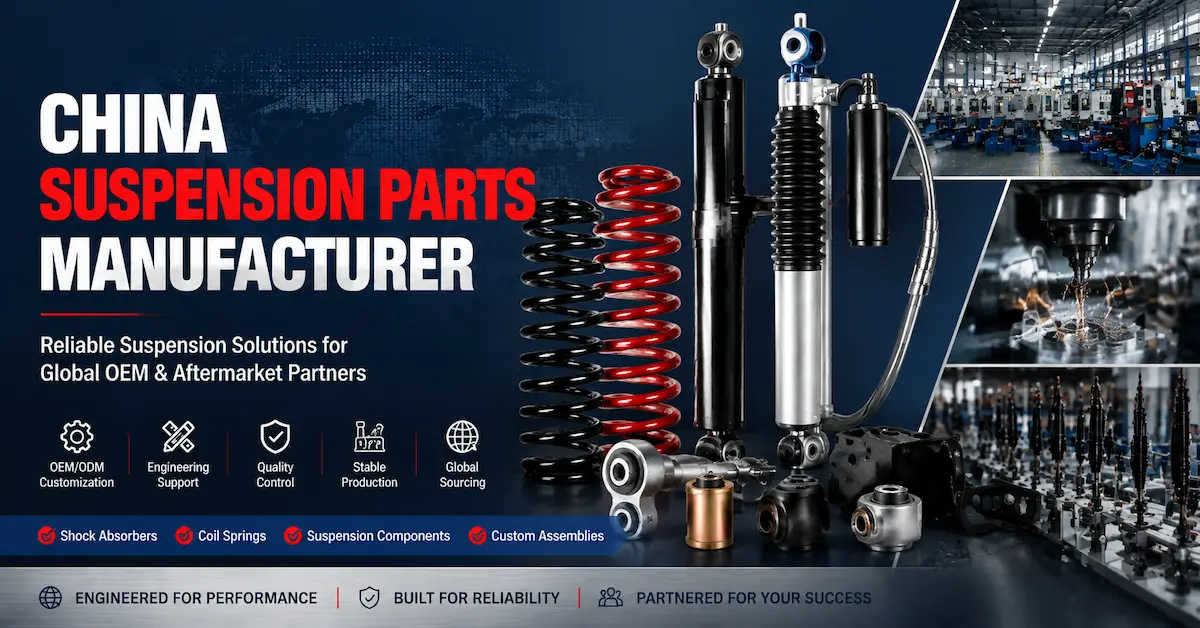
A China suspension parts manufacturer develops and produces suspension components for vehicle brands, aftermarket companies, distributors, and OEM buyers who require reliable supply, customization capability, and production support.
For suspension-related sourcing, the term “parts manufacturer” can include different levels of capability.
Some suppliers focus mainly on standard replacement products, while others support complete OEM development involving:
- Shock absorber customization
- Suspension spring development
- Mounting component production
- Drawing-based manufacturing
- Sample reproduction
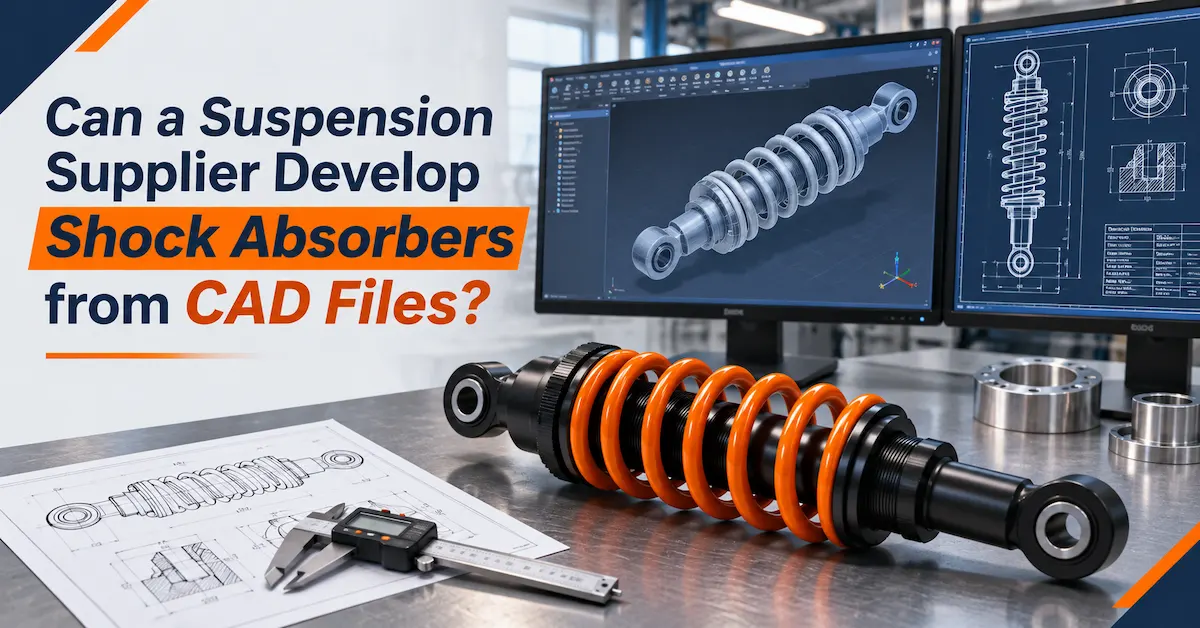
- CAD-based engineering
- Prototype development
- Performance adjustment
- Small-batch production
- OEM/ODM branding
For international buyers, selecting a manufacturer is not only about finding a factory with machines.
The more important question is:
Can this manufacturer understand the vehicle application, control technical requirements, and consistently reproduce the approved suspension design?
For projects requiring custom suspension solutions, Bedo Auto supports shock absorber and suspension component development from sample analysis, drawing review, prototype production, testing, and OEM production preparation.
Buyers can review Bedo Auto's shock absorber products to understand existing suspension configurations before deciding whether customization is required.
Why OEM Buyers Source Suspension Parts From China
China has become an important sourcing location for automotive and off-road suspension components because manufacturers can combine:
- Manufacturing experience
- Supply chain availability
- Engineering resources
- Flexible production capability
- Competitive production costs
- OEM customization support
However, not every factory provides the same level of service.
A buyer looking for a long-term suspension partner usually needs more than a production quotation.
They need a supplier capable of supporting:
- Product development
- Engineering communication
- Prototype validation
- Quality control
- Production consistency
- Export coordination
For example, an ATV brand developing a new model may need different support compared with a distributor purchasing replacement shocks.
The first company may require:
- Suspension geometry review
- Spring development
- Damping adjustment
- Prototype testing
The second may only require:
- Existing specification
- Packaging customization
- Stable production
The right manufacturer depends on the project stage.
What Suspension Parts Can a China Manufacturer Supply?
A professional suspension manufacturer may support multiple product categories.
Shock Absorbers
Shock absorbers are often the core product for off-road suspension projects.
Customization may include:
- Extended length
- Compressed length
- Stroke
- Mounting structure
- Spring specification
- Compression damping
- Rebound damping
- Reservoir configuration
- Adjustment system
- Surface finish
- Branding
Applications may include:
- ATV
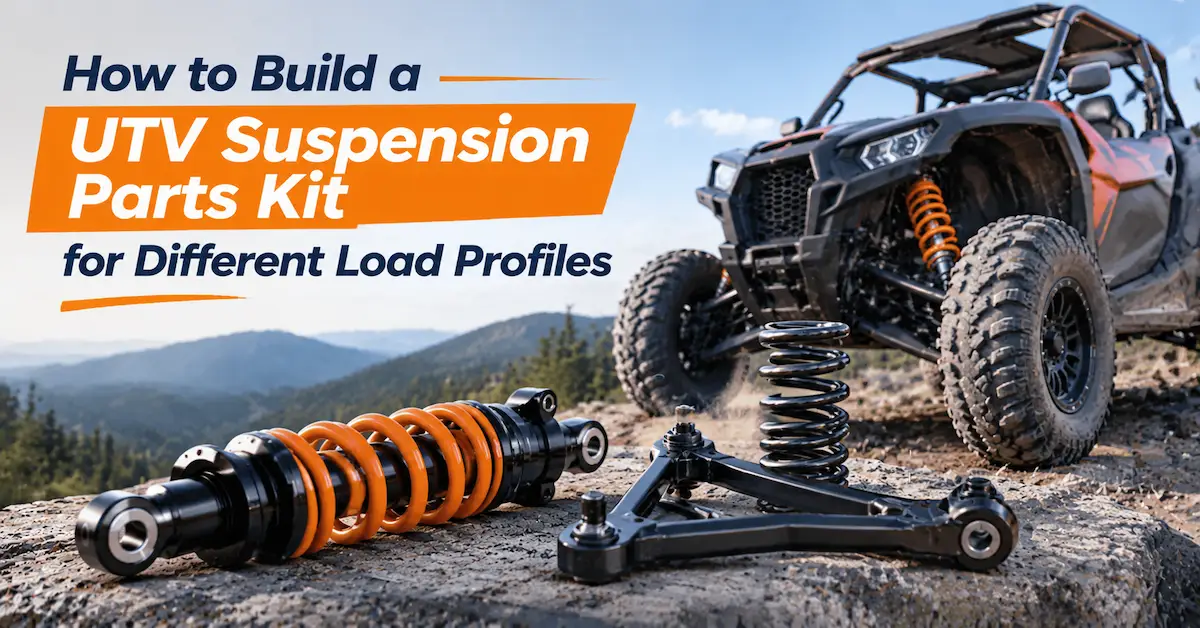
- UTV
- Motorcycle
- Electric motorcycle
- Golf cart
- Utility vehicle
- Specialty vehicle
For buyers developing custom shock absorbers, see Bedo Auto's Shock Absorber Customization Company Guide.
Suspension Springs
Suspension springs directly influence:
- Vehicle load support
- Ride height
- Suspension response
- Available travel
A capable manufacturer should understand how spring specifications relate to:
- Vehicle weight
- Payload
- Suspension geometry
- Shock absorber design
- Intended terrain
Possible customization includes:
- Spring rate
- Wire diameter
- Free length
- Outer diameter
- Coating
- Color
Suspension Mounting Components
Suspension systems often require supporting components such as:
- Mounting eyes
- Bushings
- Sleeves
- Spring seats
- Brackets
- Hardware components
These components may appear simple, but dimensional accuracy directly affects installation.
Custom Suspension Assemblies
Some OEM projects require a complete suspension solution rather than individual parts.
This may involve:
- Shock absorber
- Spring
- Mounting components
- Reservoir system
- Adjustment components
A supplier capable of coordinating these elements can reduce communication between multiple vendors.
Standard Suspension Parts vs OEM Custom Suspension Parts
Before selecting a supplier, buyers should understand the difference between standard supply and OEM development.
| Item | Standard Suspension Parts | OEM Custom Suspension Parts |
|---|---|---|
| Product design | Existing specification | Customer-specific development |
| Dimensions | Fixed | Adjustable |
| Spring | Standard option | Application-specific |
| Damping | Predefined | Tunable |
| Drawing support | Limited | Required |
| Prototype | Usually unnecessary | Recommended |
| Testing | Product-level | Vehicle/application-level |
| Branding | Limited | OEM/private label |
| Best for | Replacement market | Vehicle brands and new projects |
A manufacturer suitable for replacement parts may not have the engineering capability required for OEM development.
How to Evaluate a China Suspension Parts Manufacturer?
Choosing the right supplier requires evaluating both manufacturing and engineering capability.
1. Product Experience
First confirm whether the manufacturer actually produces the suspension components you need.
Questions to ask:
- Does the factory manufacture shock absorbers?
- Can it produce springs?
- Can it customize mounting structures?
- Does it support OEM projects?
- Which vehicle applications does it serve?
A supplier specializing in suspension components usually understands suspension requirements better than a general automotive parts trader.
2. Engineering Capability
For custom suspension projects, evaluate whether the supplier can work with:
- Technical drawings
- CAD files
- Physical samples
- Vehicle specifications
- Installation requirements
Engineering capability affects the entire development process.
A supplier that only follows customer drawings may not be able to identify application risks.
3. Prototype Development Capability
Prototype capability is an important indicator for OEM suppliers.
A professional workflow usually includes:
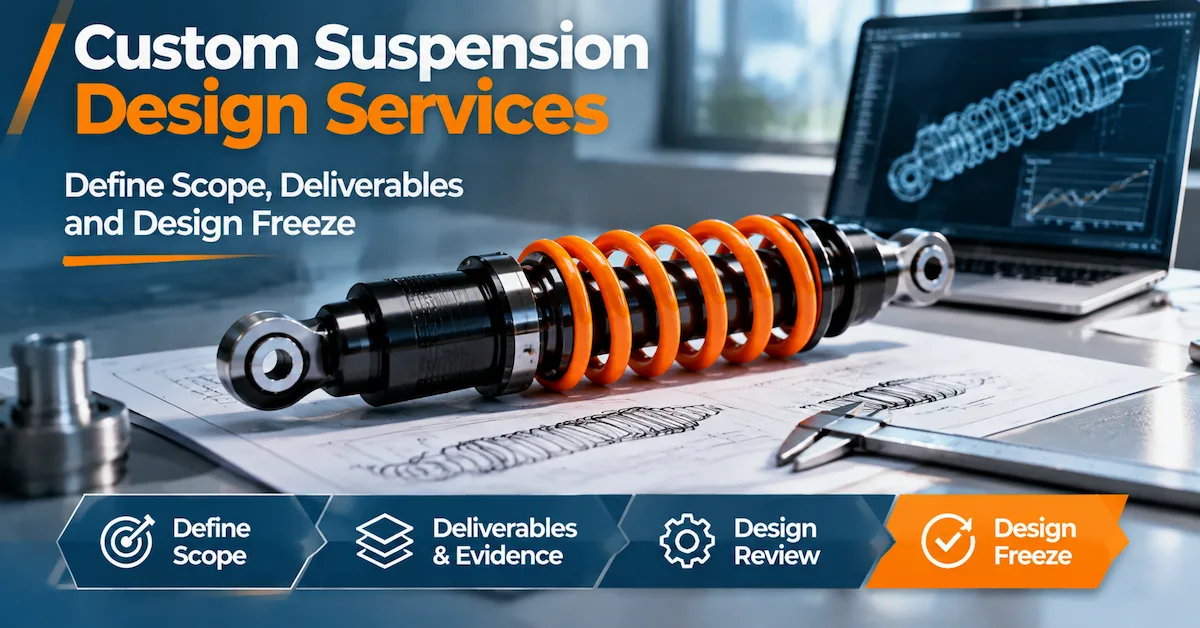
Requirement Review → Drawing Confirmation → Prototype → Testing → Revision → Production
Skipping prototype validation can create problems such as:
- Incorrect fitment
- Wrong spring rate
- Poor ride performance
- Manufacturing difficulties
Bedo Auto's Prototype Shock Absorber Factory Guide explains the importance of prototype verification before production.
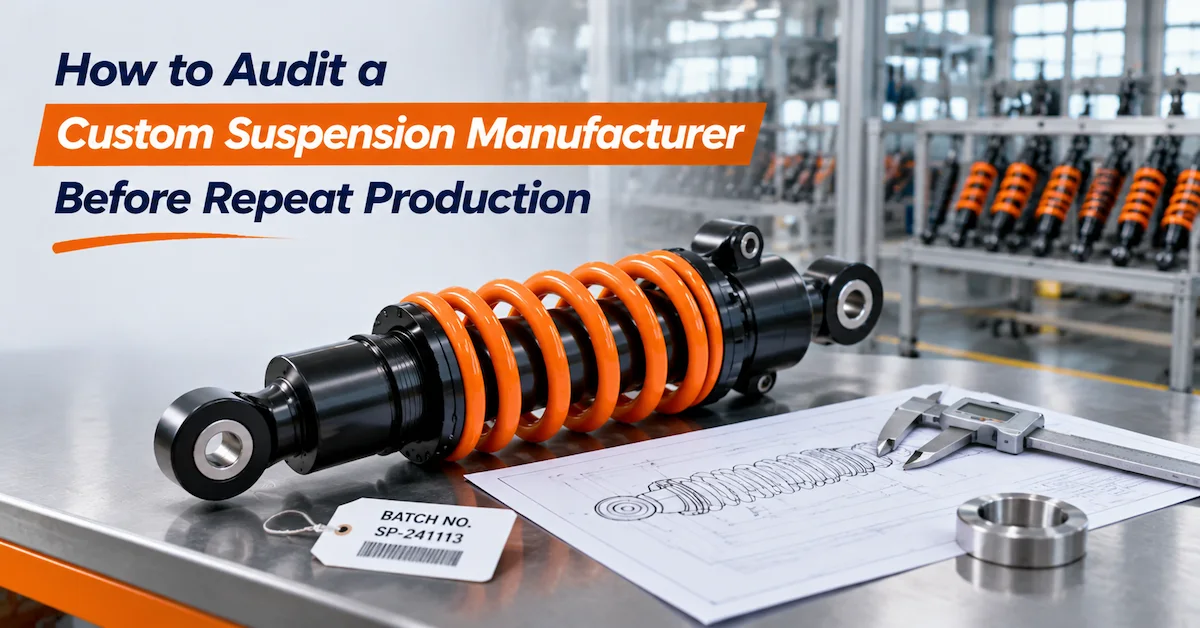
4. Quality Control System
Quality control should cover the whole manufacturing process.
Important areas include:
Incoming Material Inspection
Verify:
- Steel quality
- Components
- Coatings
- Purchased parts
Process Control
Monitor:
- Machining
- Welding
- Assembly
- Surface treatment
- Component consistency
Final Inspection
Depending on product requirements, inspection may include:
- Dimensions
- Appearance
- Function
- Leakage checks
- Performance verification
A professional supplier should explain what is inspected rather than only stating:
“100% inspection.”
What Information Should You Provide to a Suspension Parts Manufacturer?
A better technical package helps suppliers provide better solutions.
Useful information includes:
| Information | Example |
|---|---|
| Vehicle type | ATV, UTV, motorcycle, EV |
| Suspension position | Front or rear |
| Vehicle weight | Empty and loaded |
| Payload | Passenger or cargo |
| Existing shock size | Length and stroke |
| Mounting dimensions | Eye, fork, bush size |
| Spring information | Rate and dimensions |
| Drawings | 2D technical drawing |
| CAD | 3D vehicle/component data |
| Sample | Existing shock absorber |
| Performance target | Comfort, load, control |
| Terrain | Road, trail, off-road |
| Production plan | Prototype or mass production |
The more complete the information, the lower the risk of incorrect assumptions.
Can a China Suspension Manufacturer Develop Parts From Samples?
Yes.
Many OEM buyers start projects with existing samples.
Sample-based development can help identify:
- Product dimensions
- Structure
- Mounting interfaces
- Spring configuration
- Surface treatment
- Assembly method
However, copying a sample does not always create the correct final product.
If the application changes, the manufacturer should review:
- Vehicle weight
- Suspension geometry
- Load condition
- Terrain
- Performance requirement
For sample-based projects, see:
Sample-Based Shock Absorber Customization
How Does OEM Suspension Development Work With a China Factory?
A reliable OEM process usually follows several stages.
Requirement Analysis
The supplier reviews:
- Vehicle application
- Technical requirements
- Production goals
- Target market
Engineering Review
The team evaluates:
- Dimensions
- Mounting
- Spring requirement
- Damping requirement
- Packaging
Prototype Manufacturing
The first sample verifies:
- Fitment
- Manufacturing feasibility
- Basic performance
Testing and Adjustment
Testing may lead to changes in:
- Spring rate
- Damping
- Stroke
- Mounting details
Production Approval
After validation:
- Drawings are finalized
- Specifications are controlled
- Production begins
This process reduces the risk of receiving a large quantity of parts that do not meet vehicle requirements.
Why Drawing and Revision Control Matter
International OEM projects often involve multiple teams:
- Engineering department
- Purchasing department
- Factory team
- Quality department
- Logistics team
Without revision control, production mistakes can occur.
A proper document system should include:
- Drawing number
- Revision number
- Approval date
- Product specification
- Prototype version
- Production version
For buyers sourcing parts based on technical documents, see Bedo Auto's Suspension Parts From Drawings.
How to Control Quality When Importing Suspension Parts From China?
International buyers should evaluate quality before mass production.
Recommended steps:
Supplier Qualification
Review:
- Factory capability
- Equipment
- Engineering team
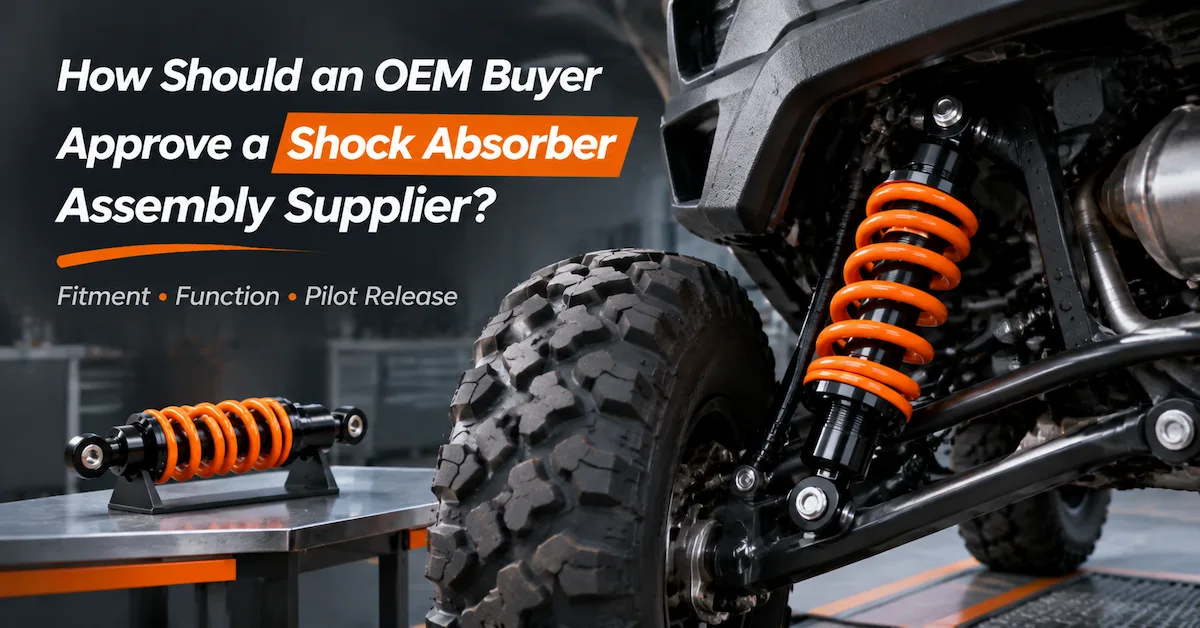
- Previous applications
Prototype Approval
Confirm:
- Fitment
- Dimensions
- Function
Pilot Production
Verify:
- Production consistency
- Packaging
- Inspection process
Continuous Quality Management
Maintain:
- Approved drawings
- Inspection standards
- Change records
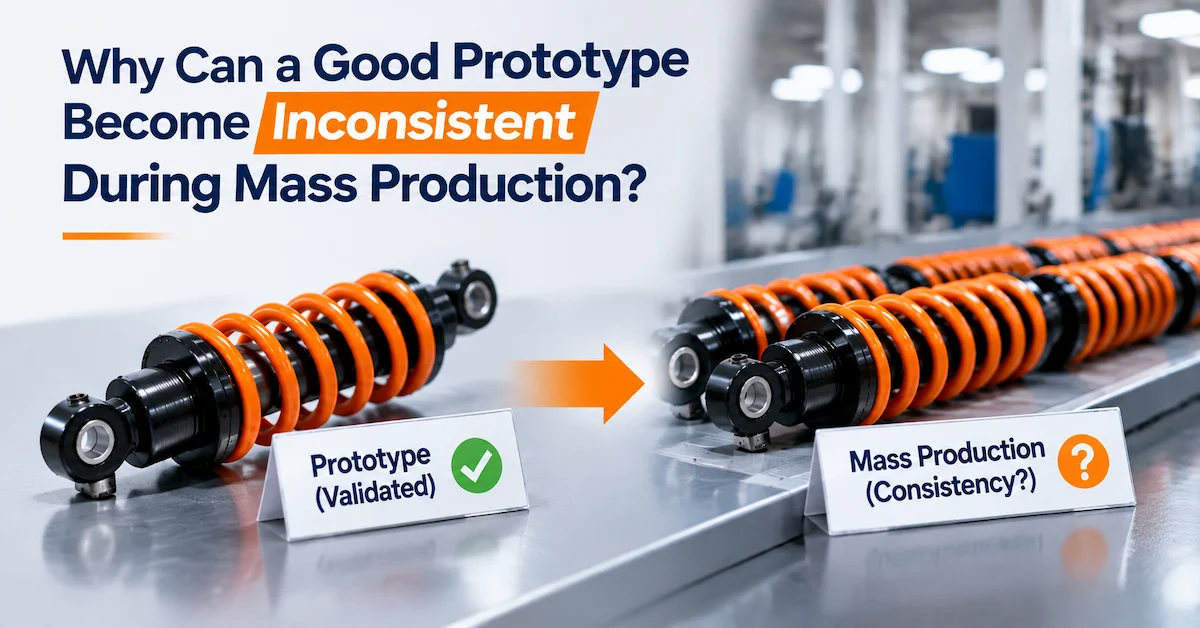
The goal is not only producing one good sample.
The goal is producing the same approved product repeatedly.
What Determines Suspension Parts Cost?
Suspension pricing depends on many factors.
Important cost drivers include:
- Product complexity
- Material selection
- Custom dimensions
- Spring development
- Damping development
- Prototype quantity
- Testing requirements
- Surface treatment
- Branding
- Production volume
A lower quotation may exclude engineering support or validation.
OEM buyers should compare total project value rather than only unit price.
What Determines MOQ for Suspension Parts?
MOQ depends on:
- Existing product availability
- Custom components
- Material purchasing
- Production process
- Surface treatment
- Packaging requirements
Prototype and small-batch production can be useful for:
- New vehicle launches
- Private-label products
- Market testing
- Engineering validation
Bedo Auto supports prototype and small-batch development before larger production projects depending on customization requirements.
Common Mistakes When Choosing a China Suspension Parts Manufacturer
Choosing Only Based on Price
Low prices may exclude:
- Engineering support
- Testing
- Prototype development
Working With a Trader Without Factory Understanding
A trader may coordinate orders but may not control technical development.
Providing Incomplete Requirements
Missing vehicle information can lead to incorrect suspension specifications.
Skipping Prototype Validation
Problems discovered after mass production are expensive.
Ignoring Production Revision Control
Old specifications can accidentally be used for repeat orders.
Why Choose a Suspension-Focused Manufacturer?
Suspension systems require application knowledge.
A suspension-focused manufacturer understands:
- Shock absorber behavior
- Spring characteristics
- Vehicle load
- Suspension travel
- Mounting interfaces
- Damping adjustment
This knowledge helps transform a component order into a vehicle-compatible solution.
Bedo Auto focuses on suspension products including:
- Shock absorbers
- Suspension springs
- Related suspension components
The company supports projects involving:
- ATV
- UTV
- Motorcycle
- Electric motorcycle
- Golf cart
- Utility vehicles
- Specialty vehicles
How Bedo Auto Supports OEM Suspension Projects
Bedo Auto supports suspension development through:
- Technical consultation
- Sample analysis
- Drawing review
- CAD evaluation
- Shock absorber customization
- Spring development
- Prototype manufacturing
- Testing support
- Engineering revision
- Small-batch production
- OEM manufacturing preparation
For buyers looking for a China suspension parts manufacturer focused on custom suspension solutions, Bedo Auto provides support from initial concept review through production preparation.
You can submit project details through the Bedo Auto Contact Page.
What Should You Include in an RFQ?
Prepare:
- Vehicle type
- Suspension application
- Product requirements
- Drawings
- CAD files
- Existing samples
- Dimensions
- Vehicle weight
- Load requirements
- Spring specifications
- Performance targets
- Prototype quantity
- Production volume
- Branding requirements
- Packaging requirements
A complete RFQ helps suppliers provide more accurate technical recommendations and quotations.
FAQ
What is a China suspension parts manufacturer?
A China suspension parts manufacturer produces suspension components such as shock absorbers, springs, mounting parts, and related assemblies for OEM, aftermarket, and replacement applications.
What suspension parts can Chinese manufacturers customize?
Customization may include shock absorber dimensions, springs, mounts, damping settings, reservoirs, finishes, branding, and packaging depending on supplier capability.
How do I choose a reliable suspension manufacturer in China?
Evaluate product experience, engineering capability, prototype support, quality control, revision management, and production consistency rather than only price.
Can a suspension manufacturer develop parts from drawings?
Yes. Many OEM projects start from customer drawings, CAD files, or technical specifications.
Can a factory customize suspension parts from samples?
Yes. Existing samples can provide useful references, but vehicle application data should also be reviewed before final development.
Do suspension parts require prototypes before production?
For new designs or modified specifications, prototype validation is recommended to confirm fitment and performance.
What vehicles use customized suspension parts?
Common applications include ATV, UTV, motorcycles, electric vehicles, golf carts, utility vehicles, and specialty vehicles.
What is the difference between OEM and aftermarket suspension manufacturing?
OEM manufacturing focuses on customer-specific requirements, controlled specifications, and repeat production. Aftermarket supply often uses existing product specifications.
Can China suspension manufacturers support private-label products?
Many OEM suppliers can support logos, colors, labels, packaging, and product identification.
How do I start a suspension parts project with Bedo Auto?
Prepare your vehicle information, drawings, samples, dimensions, requirements, and production plan, then contact Bedo Auto for engineering review.
Conclusion
Selecting a China suspension parts manufacturer is not simply a sourcing decision.
For OEM buyers, the ideal partner should combine:
Engineering Capability + Manufacturing Experience + Prototype Support + Quality Control + Production Reliability
The right supplier can help transform a suspension idea into a validated product through:
Requirement Review → Design → Prototype → Testing → Revision → Production
For ATV, UTV, motorcycle, EV, golf cart, and specialty vehicle projects, working with a suspension-focused manufacturer can reduce communication risks and improve development efficiency.
Bedo Auto supports customized suspension projects from sample analysis and drawing review to prototype development, validation, and OEM production preparation.
If you are sourcing custom suspension parts from China, prepare your technical requirements and contact Bedo Auto for project evaluation.