
Why Do OEM Buyers Need Low-Volume Custom Suspension Production?
When developing new vehicles or specialized applications, OEM buyers may not immediately require large production quantities.
Instead, they often need a China suspension factory that can support:
- Prototype development
- Small-batch production
- Custom suspension solutions
- Engineering adjustments
- Future production expansion
Low-volume custom projects are common in industries such as:
- ATV manufacturing
- UTV development
- Off-road vehicles
- Electric vehicles
- Specialty vehicle applications
At this stage, the most important factor is not only production capacity but also whether the supplier can provide flexible engineering support.
A professional suspension factory should help customers move from:
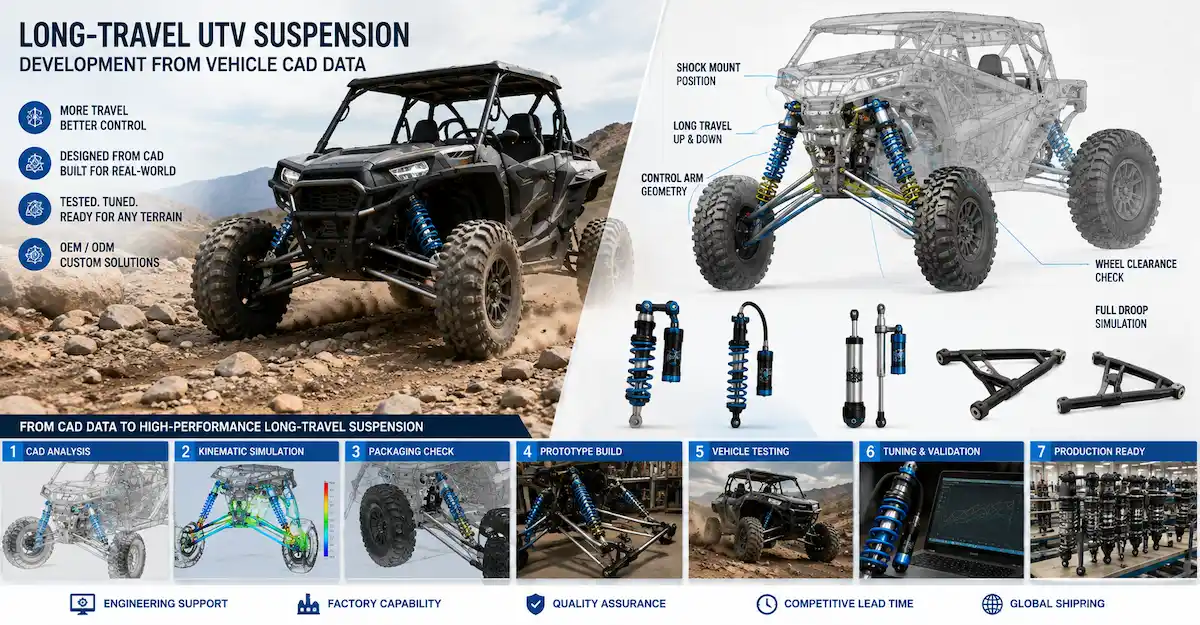
Concept → Prototype → Testing → Small Batch → Mass Production
This approach reduces development risks and allows OEM buyers to validate products before larger investments.
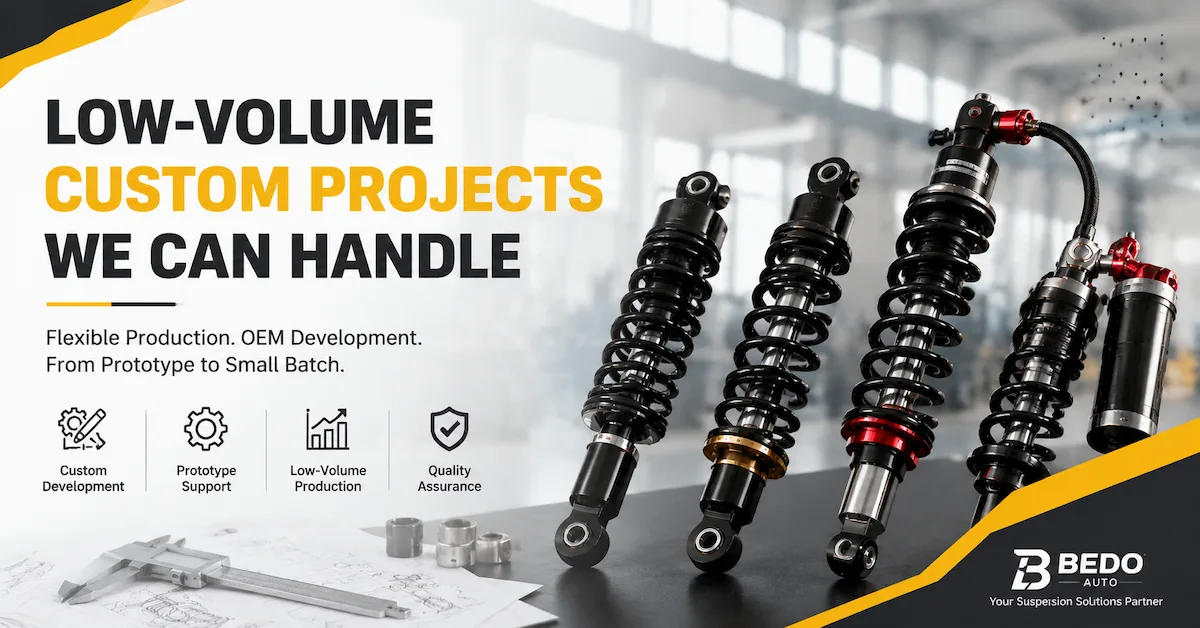
Bedo Auto provides customized suspension solutions including shock absorbers, suspension springs, prototype development, and OEM production support.
Explore the Shock Absorber Products for available suspension solutions.
What Makes a Suspension Factory Suitable for Small-Batch Custom Projects?
Not every suspension manufacturer can handle low-volume customized projects.
A suitable supplier should have several key capabilities.
Flexible Manufacturing Capability
Small-batch projects often require more flexibility than standard mass production.
A capable factory should support:
- Small quantity orders
- Product adjustments
- Flexible production scheduling
- Different customization requirements
This is especially important for:
- New product testing
- Market validation
- Special vehicle development
Engineering Support Capability
Low-volume projects usually involve more communication between buyers and manufacturers.
The factory should support:
- Technical drawing review
- CAD file analysis
- Design suggestions
- Manufacturing feasibility evaluation
Engineering support helps transform product ideas into manufacturable solutions.
Prototype Development Capability
Before production, OEM buyers often need samples for testing.
A qualified supplier should provide:
- Prototype manufacturing
- Sample evaluation
- Product modification
- Testing support
Prototype capability is one of the biggest differences between a standard supplier and an OEM development partner.
Can China Suspension Factories Accept Low MOQ Custom Orders?
Yes, many OEM-focused suspension manufacturers can support low-volume projects.
However, MOQ depends on several factors:
- Product complexity
- Material requirements
- Manufacturing process
- Tooling requirements
- Customization level
For example:
A customized shock absorber project may require:
- Special dimensions
- Unique spring specifications
- Customized damping settings
A suspension spring project may require:
- Specific spring rate
- Load requirements
- Vehicle matching
Therefore, buyers should discuss project requirements with manufacturers rather than only asking for quantity.
How Does a Low-Volume Suspension Project Work?
A professional development process usually includes several stages.
Step 1: Requirement Discussion
The manufacturer reviews:
- Vehicle application
- Product requirements
- Performance targets
- Production expectations
Customers may provide:
- Drawings
- CAD files
- Existing samples
- Vehicle information
Step 2: Engineering Review
Engineers analyze:
- Product structure
- Manufacturing feasibility
- Materials
- Installation requirements
The purpose is to identify possible issues before prototype production.
Step 3: Prototype Production
The factory develops initial samples.
Prototype products may include:
- Shock absorbers
- Suspension springs
- Custom suspension components
Step 4: Testing and Improvement
The prototype is evaluated for:
- Fitment
- Performance
- Durability
Engineers may adjust:
- Spring specifications
- Damping settings
- Product structure
Step 5: Small-Batch Production
After prototype approval:
- Trial production begins
- Product consistency is verified
- Customer feedback is collected
Step 6: Mass Production Expansion
A capable supplier can support the transition from:
Prototype → Small Batch → Mass Production
This reduces the risk of changing suppliers later.
What Information Should Buyers Provide for Low-Volume Custom Projects?
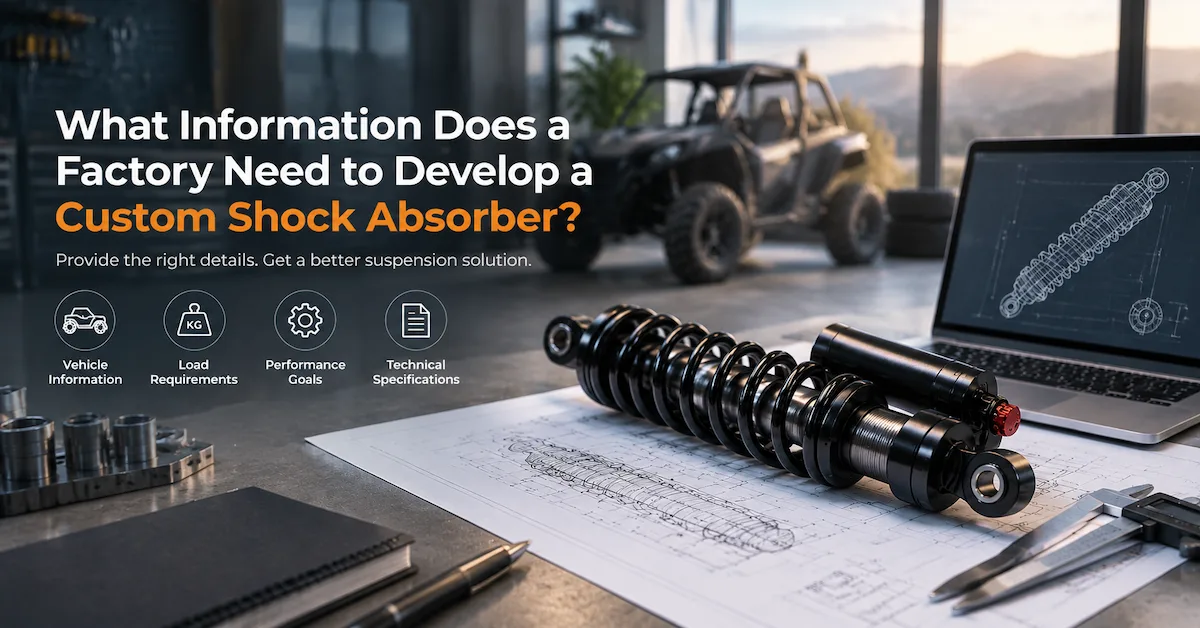
A detailed project brief helps manufacturers provide better solutions.
| Information | Purpose |
|---|---|
| Vehicle type | Application requirements |
| Vehicle model | Compatibility |
| Technical drawings | Manufacturing reference |
| CAD files | Engineering analysis |
| Existing sample | Product comparison |
| Quantity requirement | Production planning |
| Performance target | Suspension tuning |
| Load requirement | Spring selection |
| Timeline | Project management |
The more information provided, the easier it is for the supplier to evaluate feasibility.
Why Prototype Capability Matters for Low-Volume Projects
Prototype development is especially important for small custom projects.
Unlike standard products, customized suspension components may require multiple adjustments.
Prototype validation helps confirm:
- Correct dimensions
- Vehicle fitment
- Suspension performance
- Manufacturing feasibility
Without prototypes, buyers may face:
- Design problems
- Performance issues
- Additional production costs
The recommended process is:
Prototype → Testing → Improvement → Small Batch → Production
How Can a Factory Support Future Mass Production?
A strong low-volume supplier should also have the ability to scale.
The ideal development path is:
Stage 1: Prototype Development
Purpose:
- Verify design
- Test performance
Stage 2: Small-Batch Production
Purpose:
- Market testing
- Customer validation
Stage 3: Mass Production
Purpose:
- Stable supply
- Cost optimization
Working with the same manufacturer throughout the process provides advantages:
- Better product consistency
- Lower transition risk
- Faster production expansion
What Suspension Products Are Suitable for Low-Volume Custom Projects?
Professional suspension factories can support different applications.
Custom Shock Absorbers
Possible customization includes:
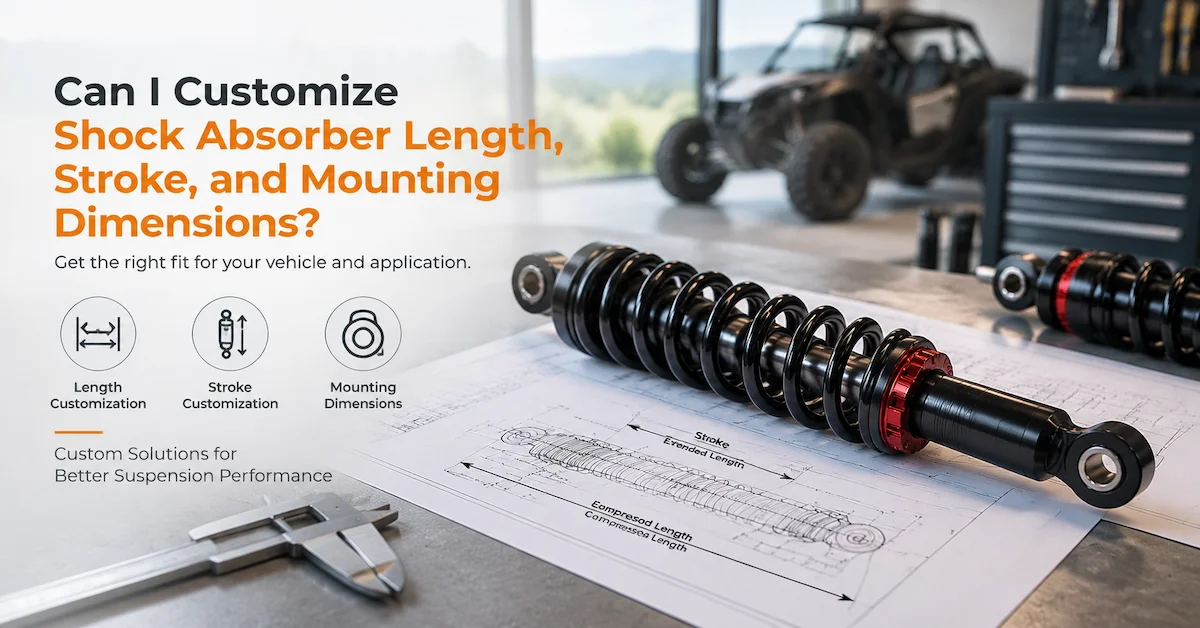
- Shock length
- Stroke
- Mounting design
- Damping adjustment
Applications:
- ATV
- UTV
- Off-road vehicles
Custom Suspension Springs
Development may include:
- Spring rate adjustment
- Load capacity matching
- Vehicle-specific tuning
Other Suspension Components
Including:
- Mounting brackets
- Related suspension parts
- Custom components
How to Evaluate a China Suspension Factory for Low MOQ Projects?
Before cooperation, evaluate several areas.
Engineering Capability
Check:
- CAD support
- Drawing review
- Technical communication
- Product development experience
Manufacturing Flexibility
Evaluate:
- Small-batch capability
- Production adjustment ability
- Manufacturing resources
Quality Control
Review:
- Material inspection
- Production inspection
- Final testing
Future Scaling Ability
Confirm whether the supplier can support:
- Prototype
- Small batch
- Mass production
Why Choose Bedo Auto for Low-Volume Custom Suspension Projects?
Bedo Auto supports customers requiring customized suspension development from prototype to production.
Capabilities include:
- Low-volume custom suspension projects
- Shock absorber customization
- Suspension spring development
- CAD and drawing review
- Prototype manufacturing
- Engineering optimization
- Small-batch production
- Mass production preparation
Applications include:
- ATV
- UTV
- Off-road vehicles
- Specialty vehicles
The development process includes:
Requirement Analysis → Engineering Review → Prototype → Testing → Small Batch → Production
Explore:
What Should You Prepare Before Starting a Custom Suspension Project?
Before contacting a suspension factory, prepare:
- Vehicle application
- Product requirements
- Technical drawings
- CAD files
- Existing samples
- Performance targets
- Load requirements
- Prototype quantity
- Production expectations
- Future volume forecast
This information helps manufacturers provide more accurate development suggestions.
FAQ
Which China suspension factory can handle low-volume custom projects?
A suitable factory should support small-batch production, custom development, prototype manufacturing, and engineering communication.
Can suspension factories accept small MOQ orders?
Yes. Many OEM-focused manufacturers support prototype and low-volume projects depending on product requirements.
Why are low-volume suspension projects important?
They allow companies to test new products, validate designs, and reduce investment risks before mass production.
Can small-batch suspension projects include custom shock absorbers?
Yes. Manufacturers can customize shock dimensions, springs, damping, and mounting structures.
Do low-volume projects require prototypes?
Yes. Prototypes help verify design, fitment, and performance before production.
How do I choose a factory for small custom suspension projects?
Evaluate engineering capability, flexibility, prototype support, quality control, and future scaling ability.
Can a small-batch supplier support mass production later?
Yes. A capable factory can support the transition from prototypes to larger production volumes.
What information should I provide for a low-volume project?
Provide drawings, CAD files, samples, vehicle information, performance requirements, and quantity expectations.
What vehicles use low-volume custom suspension?
Common applications include ATV, UTV, motorcycles, electric vehicles, and specialty vehicles.
Why choose a factory instead of a trading company for custom projects?
A factory provides better engineering communication, manufacturing control, and production flexibility.
Conclusion
Choosing the right China suspension factory for low-volume custom projects requires evaluating more than production price.
The ideal partner should provide:
Flexible Manufacturing + Engineering Support + Prototype Capability + Quality Control
A successful development process follows:
Requirement → Prototype → Testing → Small Batch → Mass Production
For OEM ATV, UTV, and specialty vehicle projects, working with a flexible suspension manufacturer helps reduce development risks and creates a smoother path from concept to commercial production.
Bedo Auto supports customized suspension projects through engineering development, shock absorber customization, prototype manufacturing, small-batch production, and long-term OEM manufacturing support.