
Can a China Suspension Factory Develop Products From Drawings or CAD Files?
For OEM vehicle projects, finding a China suspension factory that can develop products from drawings or CAD files is often more valuable than simply choosing a standard parts supplier.
Modern suspension development requires more than manufacturing capability. A qualified factory should be able to understand engineering requirements, review technical documents, optimize designs, produce prototypes, and support final production.
For ATV, UTV, motorcycle, electric vehicle, and specialty vehicle manufacturers, suspension components must match:
- Vehicle weight
- Load requirements
- Suspension structure
- Driving environment
- Performance targets
A professional suspension manufacturer can transform customer inputs such as:
- 2D drawings
- 3D CAD files
- Existing samples
- Technical specifications
into production-ready suspension products.
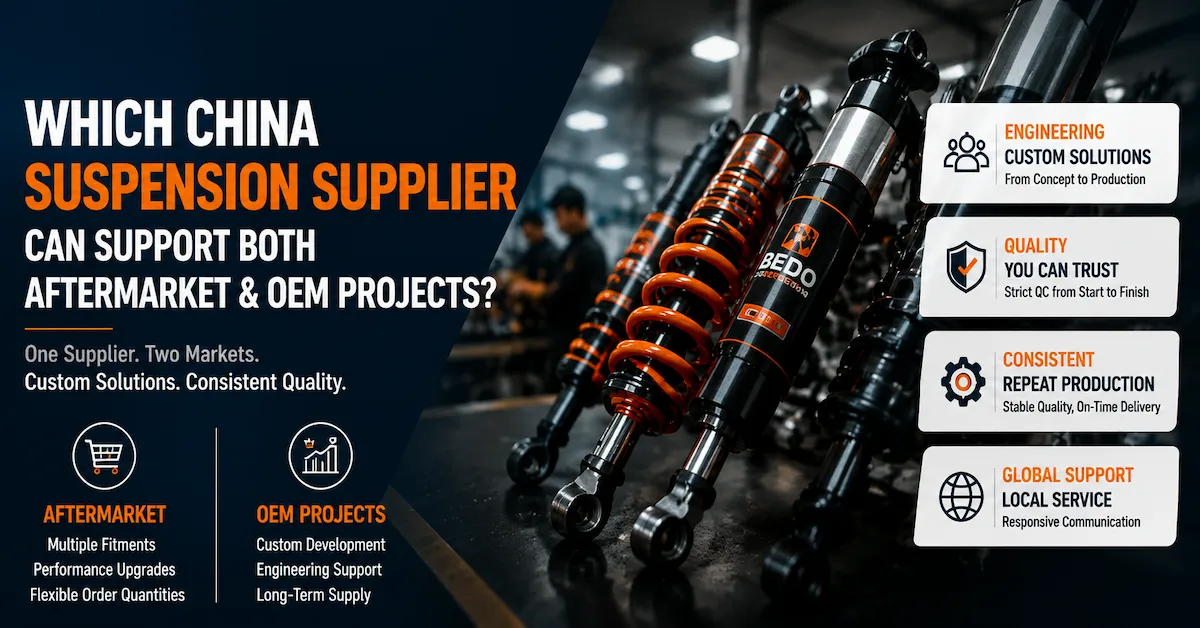
Bedo Auto provides customized suspension solutions including shock absorbers and suspension springs for off-road and specialty vehicle applications.
Explore the Shock Absorber Products for available suspension solutions.
Why CAD-Based Suspension Development Matters for OEM Projects
CAD-based development allows manufacturers and customers to communicate product requirements more accurately.
Compared with simple product copying, CAD-based development provides better control over:
- Dimensions
- Structure
- Mounting position
- Component compatibility
- Manufacturing feasibility
Confirm Product Dimensions
Through CAD files and drawings, engineers can review:
- Overall dimensions
- Mounting points
- Suspension travel space
- Component clearance
- Tolerance requirements
This helps prevent fitment problems during prototype testing.
Evaluate Manufacturing Feasibility
Before production, engineers can analyze:
- Material selection
- Machining requirements
- Assembly methods
- Manufacturing difficulty
Potential issues can be identified before investment in tooling and mass production.
Reduce Development Risks
A structured CAD review process helps reduce:
- Incorrect dimensions
- Production modifications
- Prototype failures
- Delayed vehicle development
What Files Should You Send to a China Suspension Factory?
Providing complete technical information helps the factory provide more accurate recommendations.
| Information | Purpose |
|---|---|
| 2D drawing | Manufacturing reference |
| 3D CAD file | Product structure analysis |
| Material requirements | Component selection |
| Surface treatment | Appearance and protection |
| Tolerance requirements | Quality control |
| Vehicle application | Performance matching |
| Quantity requirements | Production planning |
| Existing sample | Product comparison |
Common CAD and technical information may include:
- Shock absorber dimensions
- Spring specifications
- Mounting details
- Installation requirements
- Vehicle performance targets
If complete drawings are unavailable, experienced manufacturers may still support development based on samples or application requirements.
How Does a Factory Review Suspension Drawings?
A professional suspension factory usually follows a structured engineering review process.
Step 1: Drawing Analysis
Engineers review:
- Dimensions
- Tolerances
- Structure
- Assembly relationship
The purpose is to understand the product requirements.
Step 2: Manufacturing Feasibility Review
The factory evaluates:
- Production processes
- Required equipment
- Material availability
- Assembly methods
This determines whether the design can be manufactured efficiently.
Step 3: Engineering Feedback
Based on the review, engineers may suggest:
- Structural improvements
- Material adjustments
- Manufacturing optimization
- Cost improvements
A strong supplier does not only manufacture drawings but helps improve the final product.
Can a Suspension Factory Improve Existing Designs?
Yes.
Many OEM buyers already have:
- Existing products
- Early prototypes
- Engineering concepts
A capable suspension manufacturer can provide improvement suggestions related to:
Product Performance
Including:
- Spring rate adjustment
- Damping optimization
- Suspension response
Manufacturing Efficiency
Including:
- Component simplification
- Process improvement
- Assembly optimization
Product Reliability
Including:
- Material selection
- Structural improvement
- Quality control points
The goal is to create a suspension product that performs well and can be produced consistently.
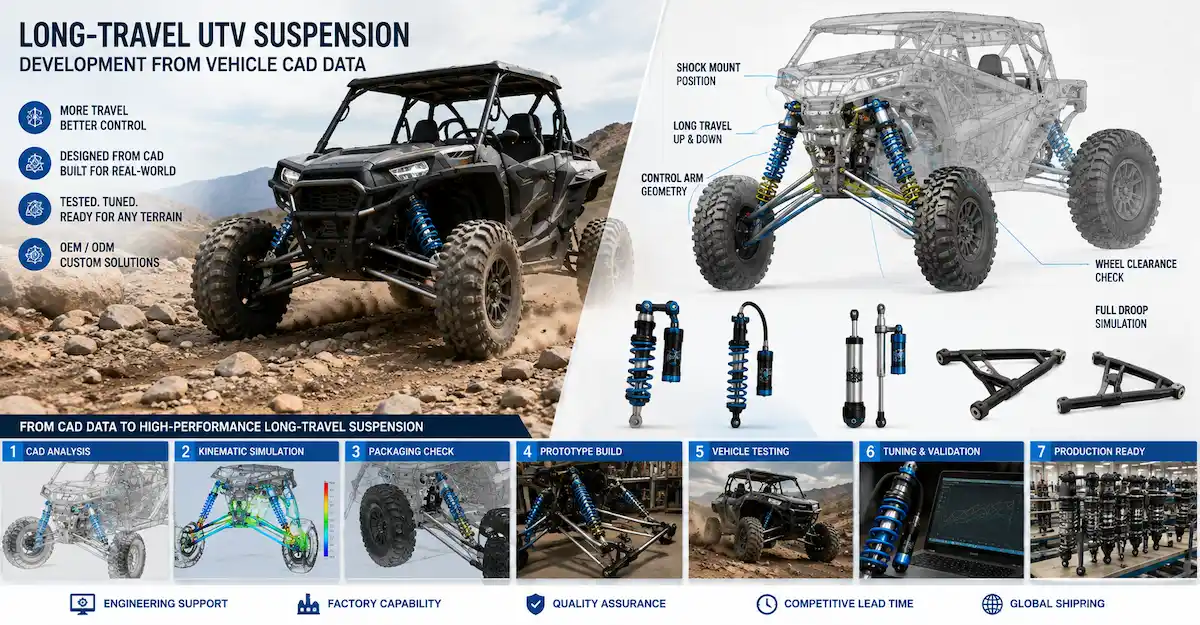
How Does CAD-Based Suspension Development Work?
A typical development process includes several stages.
Step 1: Customer Provides Drawings or CAD Files
The customer provides:
- CAD model
- Technical drawing
- Product requirements
- Application information
Step 2: Engineering Evaluation
The factory reviews:
- Product structure
- Manufacturing feasibility
- Material requirements
- Performance targets
Step 3: Prototype Development
The factory produces samples for evaluation.
Prototype development may include:
- Shock absorber samples
- Suspension springs
- Related components
Step 4: Testing and Modification
The prototype is evaluated for:
- Installation
- Dimensions
- Performance
- Durability
Engineers may adjust:
- Spring specifications
- Damping settings
- Structural details
Step 5: Mass Production
After approval:
- Drawings are finalized
- Specifications are confirmed
- Quality standards are established
- Production begins
What Suspension Products Can Be Developed From CAD Files?
A professional China suspension factory may support the development of various suspension products.
Custom Shock Absorbers
Including:
- Coilover shocks
- Gas shocks
- Reservoir shocks
- Adjustable shock absorbers
Customization may include:
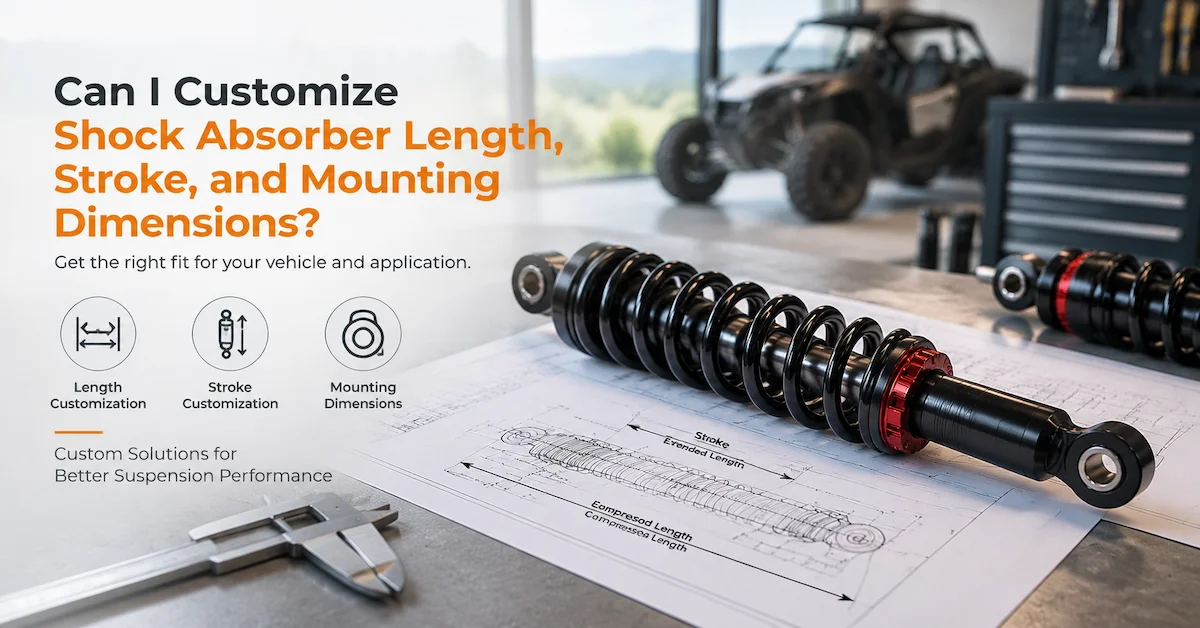
- Length
- Stroke
- Mounting design
- Spring configuration
- Damping performance
Custom Suspension Springs
Including:
- Coil springs
- Different spring rates
- Load-specific designs
Spring development considers:
- Vehicle weight
- Payload
- Ride height
- Application requirements
Related Suspension Components
Including:
- Mounting parts
- Brackets
- Supporting components
Which Industries Need Drawing-Based Suspension Development?
Different industries require customized suspension solutions.
ATV Manufacturers
Applications include:
- Recreation
- Trail riding
- Utility vehicles
- Off-road modification
UTV Manufacturers
Applications include:
- Agriculture
- Cargo transportation
- Adventure vehicles
- Work applications
Electric Vehicle Companies
Requirements may include:
- Lightweight designs
- Custom vehicle platforms
- Special suspension layouts
Specialty Vehicle Brands
Including:
- Golf carts
- Utility vehicles
- Custom platforms
How to Choose a China Suspension Factory for CAD Projects?
Before selecting a supplier, OEM buyers should evaluate several factors.
Engineering Capability
Check whether the factory supports:
- CAD review
- Drawing analysis
- Technical communication
- Product development
Manufacturing Capability
Evaluate:
- Production equipment
- Manufacturing processes
- Assembly capability
- Inspection systems
Prototype Capability
Confirm whether the factory can support:
- Sample production
- Design changes
- Testing feedback
OEM Experience
Ask about:
- Previous vehicle applications
- Custom projects
- Long-term production experience
Why Choose Bedo Auto for CAD-Based Suspension Development?
Bedo Auto supports customers who need suspension products developed from drawings, CAD files, samples, or vehicle requirements.
Capabilities include:
- Drawing review
- CAD evaluation
- Shock absorber customization
- Suspension spring development
- Prototype manufacturing
- Engineering optimization
- OEM production support
The development process includes:
CAD/Drawing Review → Engineering Development → Prototype → Testing → Production
For ATV, UTV, and specialty vehicle projects, Bedo Auto helps customers move from initial concepts to production-ready suspension solutions.
Explore:
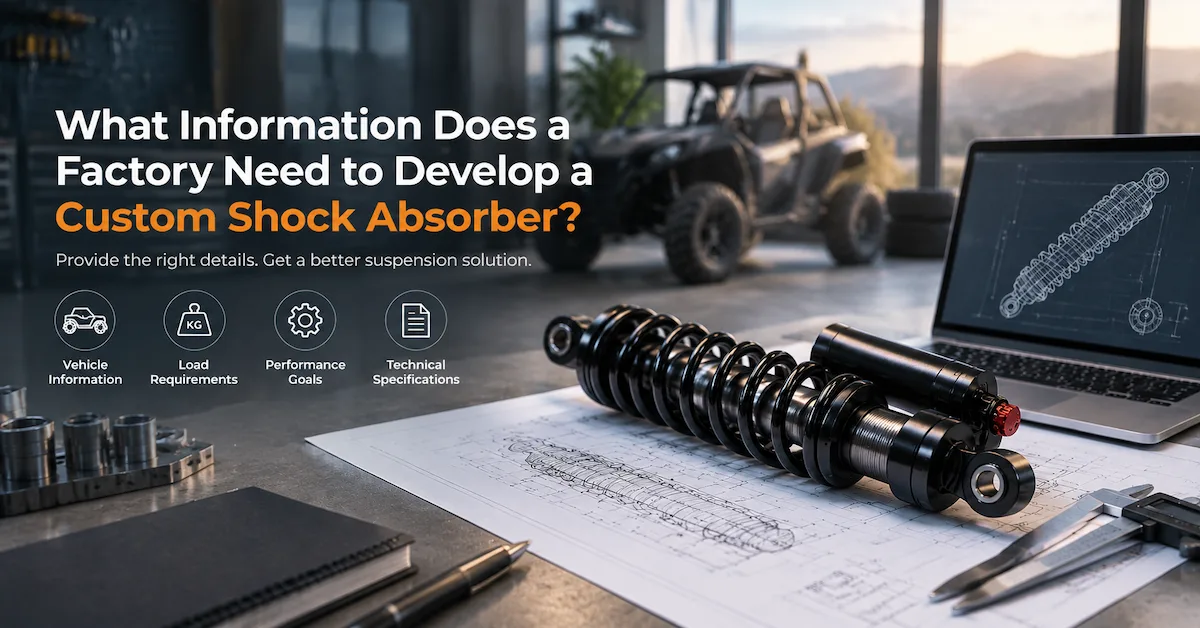
What Should Be Included in a Suspension Development Request?
Before contacting a factory, prepare:
- Product drawings
- CAD files
- Vehicle application
- Suspension position
- Existing samples
- Material requirements
- Performance targets
- Load requirements
- Quantity expectations
- Prototype requirements
- Production timeline
- Branding requirements
A complete project brief allows the manufacturer to provide better technical solutions.
FAQ
Which China suspension factory can develop products from drawings or CAD files?
A suitable factory should have engineering capability, CAD review experience, prototype development ability, and production capability.
Can suspension parts be manufactured from drawings?
Yes. Professional suspension factories can analyze drawings and develop products according to technical requirements.
What CAD files can suspension manufacturers use?
Manufacturers commonly work with 3D CAD files and technical drawings depending on their engineering systems.
Can a suspension factory improve my existing design?
Yes. Engineering teams can suggest improvements for performance, manufacturing efficiency, and reliability.
Do I need complete drawings before contacting a suspension factory?
Not always. Some factories can support development from samples, concepts, or basic vehicle requirements.
Can CAD files be used for custom shock absorber development?
Yes. CAD files help engineers review dimensions, structure, mounting positions, and manufacturing feasibility.
How long does CAD-based suspension development take?
It depends on product complexity, prototype requirements, testing cycles, and engineering modifications.
Can China suspension factories support prototype production?
Yes. OEM-focused factories often support prototypes before mass production.
What information should I provide with my drawings?
Provide application details, materials, performance requirements, quantity, and technical specifications.
Why choose a factory instead of a trading company?
A factory with engineering capability can communicate directly about design changes and manufacturing improvements.
Conclusion
Choosing a China suspension factory that can develop products from drawings or CAD files means finding more than a manufacturer.
The ideal partner should provide:
CAD Engineering + Prototype Development + Manufacturing Capability + OEM Support
A successful suspension development process follows:
Drawing/CAD → Engineering Review → Prototype → Testing → Production
For companies developing ATV, UTV, and specialty vehicle suspension systems, working with an experienced suspension factory can reduce development risks and improve product reliability.
Bedo Auto supports custom suspension projects through engineering review, shock absorber development, spring customization, prototype manufacturing, and OEM production preparation.