
Choosing the right manufacturing model is one of the most critical decisions for buyers sourcing suspension components.
For distributors, brand owners, and OEM clients, understanding the difference between OEM and ODM directly affects product positioning, cost structure, and long-term supply stability.
A clear comparison of shock absorber OEM vs ODM helps buyers avoid misalignment and make better sourcing decisions.
The Challenge: Choosing the Wrong Manufacturing Model
Many buyers focus only on price and overlook manufacturing structure.
Choosing the wrong model can lead to:
- Limited customization capability
- Higher development cost
- Longer time to market
- Weak product differentiation
For growing brands and distributors, this mistake can significantly impact competitiveness.
What OEM and ODM Mean in Shock Absorber Manufacturing
Understanding the basic difference is essential.
OEM (Original Equipment Manufacturer):
- Buyer provides design, specifications, and branding
- Supplier manufactures based on requirements
- High level of customization
ODM (Original Design Manufacturer):
- Supplier provides existing designs
- Buyer customizes branding or minor features
- Faster and lower-cost solution
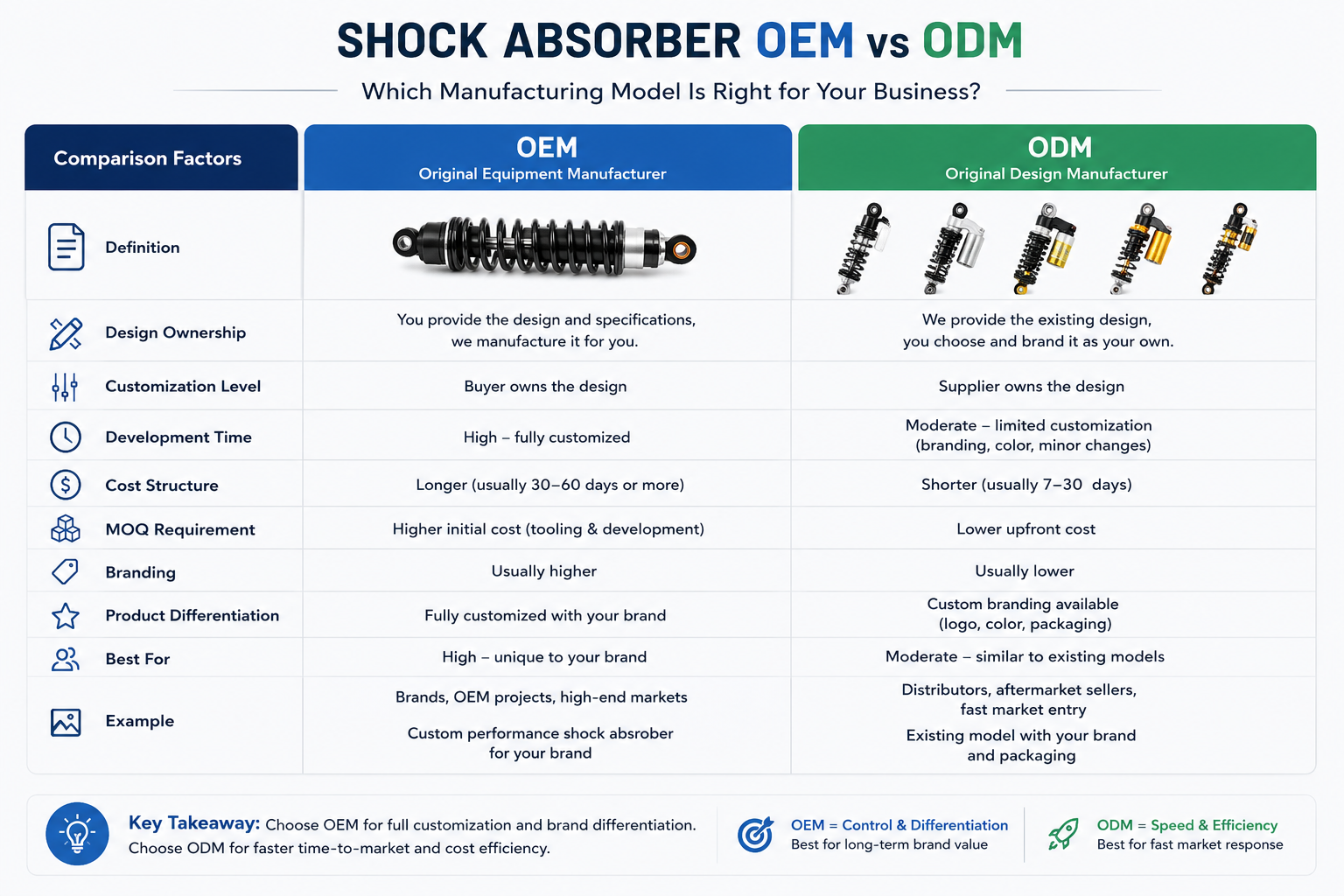
In the context of shock absorber OEM vs ODM, the choice depends on your business model and product strategy.
OEM vs ODM: Key Differences for Buyers
| Factor | OEM Manufacturing | ODM Manufacturing |
|---|---|---|
| Product Design | Fully customized | Pre-designed |
| Development Time | Longer | Faster |
| Cost Structure | Higher initial cost | Lower upfront cost |
| Branding | Unique product | Limited differentiation |
| Flexibility | High | Moderate |
| MOQ | Usually higher | Often lower |
OEM offers control and differentiation, while ODM provides speed and efficiency.
Solution: Matching the Right Model to Your Business
Instead of choosing based on cost alone, buyers should align the model with their goals.
Choose OEM if:
- You need unique product design
- You are building a brand
- You require specific performance features
Choose ODM if:
- You need faster market entry
- You want lower development cost
- You are testing new markets
Explore available suspension solutions:
https://www.bedoauto.com/products
Cost and Risk Considerations
One common mistake buyers make is focusing only on initial pricing.
In practice:
- OEM has higher upfront cost but stronger long-term brand value
- ODM reduces development cost but limits differentiation
Choosing the wrong model may result in:
- Product overlap with competitors
- Reduced pricing power
- Lower brand recognition
Understanding shock absorber OEM vs ODM helps minimize these risks.
Why the Right Choice Improves Business Performance
Better Product Strategy
OEM supports long-term brand growth and product positioning.
Faster Market Response
ODM allows rapid entry into new markets.
Improved Cost Control
Each model offers different cost advantages depending on scale.
Stronger Supply Stability
Working with the right supplier ensures consistent production and delivery.
For bulk buyers and distributors, selecting the right model improves both profitability and operational efficiency.
Real Application Scenarios
Brand Owners: Prefer OEM for differentiation
Distributors: Often choose ODM for faster inventory turnover
OEM Clients: Require strict specification control
Aftermarket Sellers: Balance between OEM and ODM depending on market
In each case, understanding shock absorber OEM vs ODM helps align sourcing strategy with business goals.
Selection Advice for Buyers
When choosing between OEM and ODM, consider:
- Your branding and market positioning
- Budget for development and tooling
- Required customization level
- Time-to-market expectations
- Supplier engineering capability
Learn more about manufacturing capability:
https://www.bedoauto.com/about-us
FAQ
Q1: Which is better, OEM or ODM for shock absorbers?
It depends on your business goals. OEM is better for branding and customization, while ODM is ideal for speed and cost efficiency.
Q2: Does OEM require higher MOQ?
Yes, OEM projects usually require higher MOQ due to tooling and customization requirements.
Q3: Can ODM products be customized?
Yes, but customization is usually limited to branding, color, or minor adjustments.
Make the Right Choice for Long-Term Success
Choosing between OEM and ODM is not just a technical decision—it’s a business strategy.
A clear understanding of shock absorber OEM vs ODM helps buyers reduce risk, control cost, and build a more competitive product line.
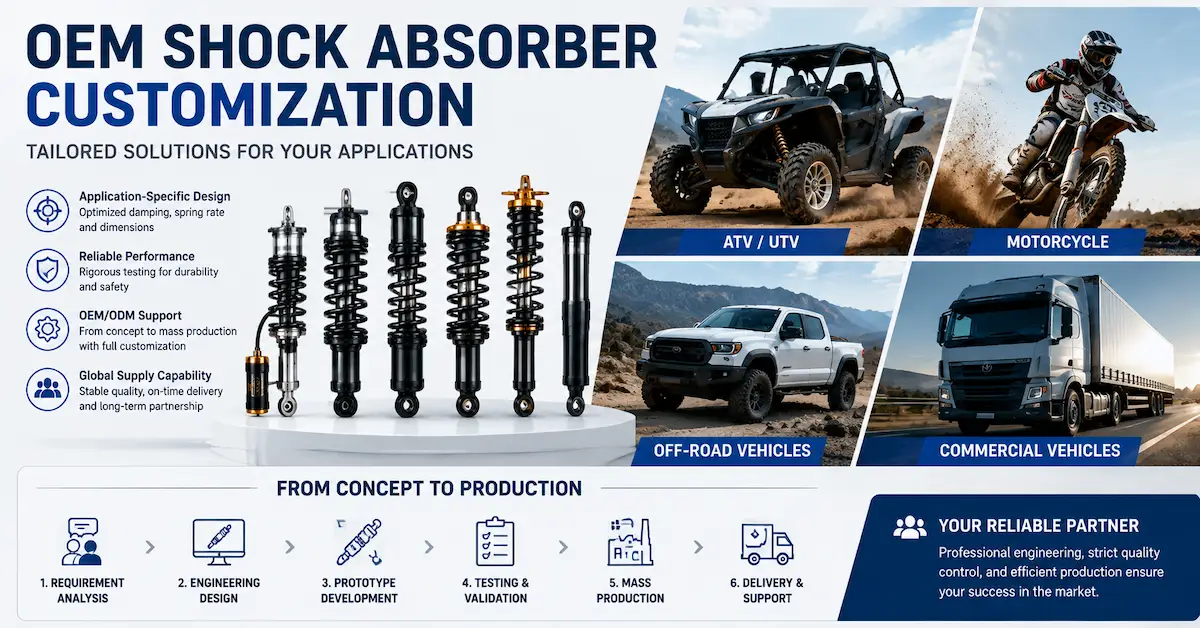
At Bedo, we support both OEM and ODM manufacturing, helping global clients achieve flexible production and reliable supply.
For project consultation or sourcing support:
https://bedoauto.com
https://www.bedoauto.com/contact-us