
Many buyers already have a successful suspension product in the market but face a common challenge: they own a physical sample without original drawings, technical specifications, or manufacturing data.
For aftermarket brands, distributors, and OEM buyers, finding a supplier that can transform an existing product into a production-ready solution is often more practical than starting development from zero.
Shock absorber customization from sample allows manufacturers to analyze an existing component, rebuild technical information, optimize performance, and develop a reliable production process based on the customer’s requirements.
A professional suspension manufacturer can help turn an existing sample into a customized product suitable for repeat manufacturing and long-term supply.
The Challenge: Turning an Existing Sample into a Production Product
Many companies have existing shock absorbers from:
- Previous suppliers
- Competitor products
- Older vehicle models
- Market-tested suspension systems
However, they often lack:
- Original CAD drawings
- Material specifications
- Internal structure details
- Manufacturing parameters
Without complete technical information, reproducing a product accurately becomes difficult.
For buyers looking for a new manufacturing partner, the challenge is not only copying the appearance of a sample, but also understanding its structure, performance requirements, and production feasibility.
How Manufacturers Analyze an Existing Shock Absorber Sample
A professional supplier follows a structured evaluation process before starting production. Through shock absorber customization from sample, engineers can evaluate the existing design, identify technical requirements, and prepare the foundation for production development.
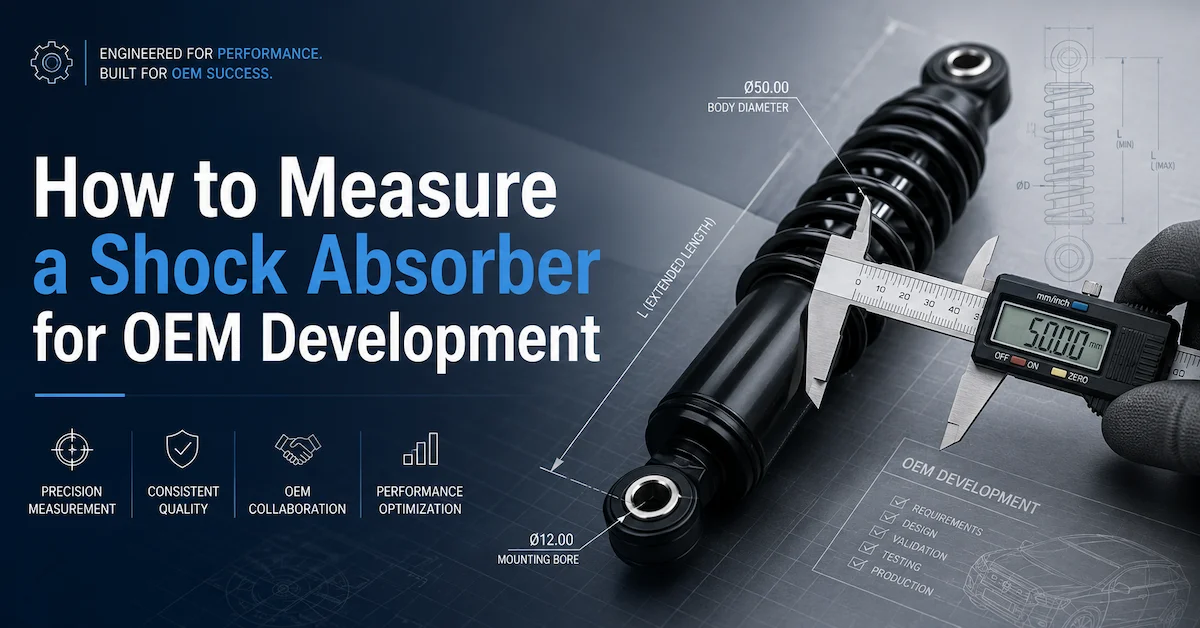
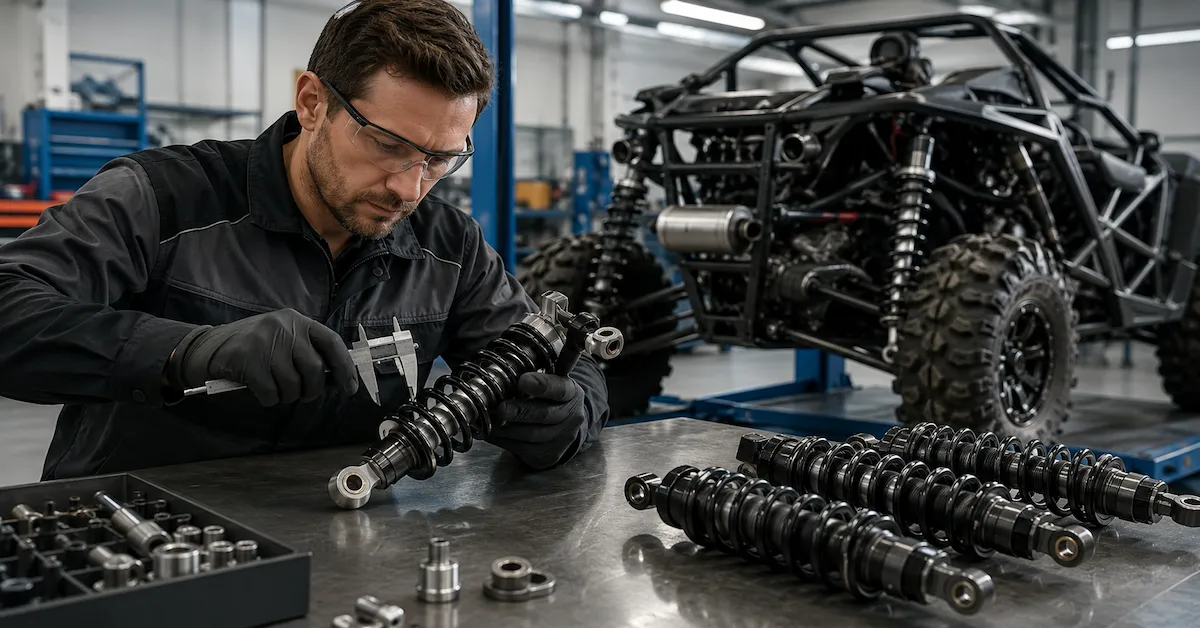
Sample Inspection and Measurement
The first step is collecting detailed information from the physical sample.
Engineers typically evaluate:
- Overall dimensions
- Mounting positions
- Cylinder specifications
- Rod size
- Spring dimensions
- External structure
Accurate measurement creates the foundation for technical reconstruction.
Engineering Analysis and Design Reconstruction
After physical inspection, engineers analyze the internal and external structure.
The evaluation may include:
- Damping system design
- Material selection
- Component arrangement
- Manufacturing requirements
- Performance characteristics
Through engineering analysis, manufacturers can develop technical documentation required for production.
Prototype Development and Performance Validation
Before mass production, prototype samples are created for verification.
The process usually includes:
- Prototype manufacturing
- Installation testing
- Performance evaluation
- Customer feedback
- Design adjustment
This stage helps confirm whether the customized product meets the required application conditions. A complete shock absorber customization from sample process reduces development risks by validating performance before mass production.
Sample-Based Customization vs Standard Shock Absorber Purchasing
| Factor | Standard Shock Absorber Purchase | Sample-Based Customization |
|---|---|---|
| Design Source | Existing catalog models | Customer-provided sample |
| Customization Level | Limited | High |
| Product Differentiation | Low | Strong |
| Development Requirement | Minimal | Engineering involvement |
| Brand Control | Limited | Better control |
For buyers who already have a proven product concept, sample-based customization provides greater flexibility and market control.
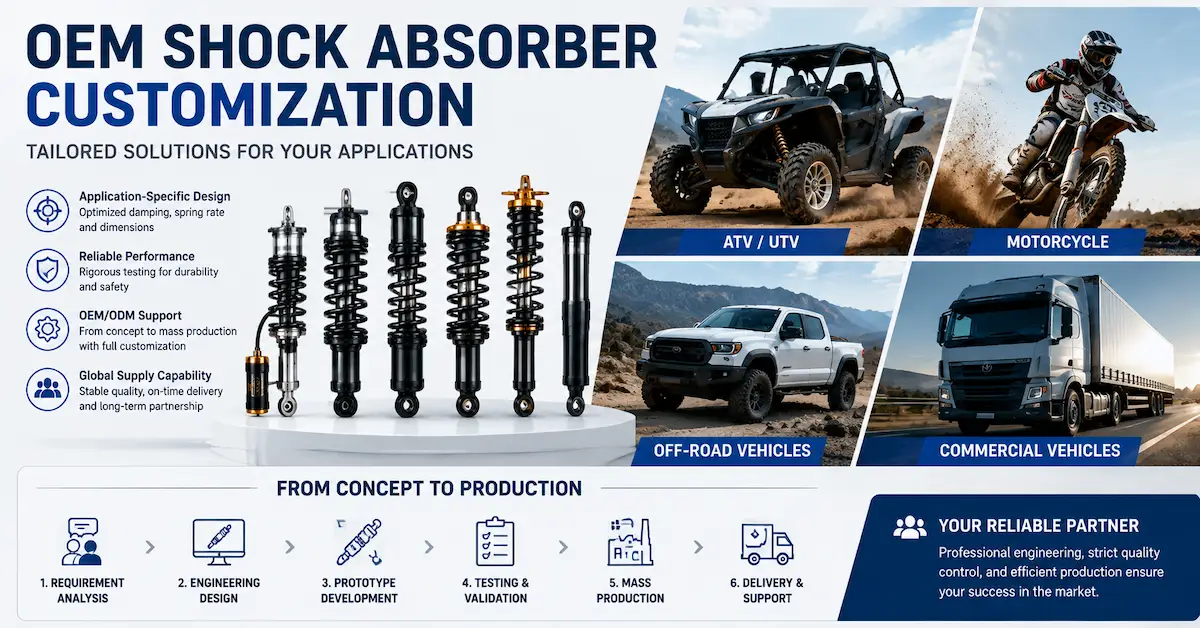
The Complete Process from Sample to Mass Production
A reliable customization project usually follows several stages.
Step 1: Sample Evaluation
The buyer provides:
- Physical sample
- Product photos
- Application information
- Performance requirements
The manufacturer evaluates whether the product can be reproduced or improved.
Step 2: Technical Development
Engineers create:
- Product drawings
- Technical specifications
- Manufacturing requirements
During this stage, improvements can also be introduced based on application needs.
Step 3: Prototype Confirmation
Prototype units are manufactured and tested.
Buyers can verify:
- Installation compatibility
- Performance characteristics
- Product appearance
- Quality requirements
Step 4: Mass Production Preparation
After approval, manufacturers establish:
- Production standards
- Inspection procedures
- Packaging requirements
- Delivery schedules
This ensures stable output during bulk manufacturing.
You can explore available shock absorber products here:
https://www.bedoauto.com/products
Why Sample-Based Customization Benefits Buyers
Faster Product Development
Using an existing sample reduces the time required for initial product definition.
Buyers can start from an existing solution instead of developing every component from the beginning.
Better Product Matching
Sample-based development helps maintain important product characteristics while allowing improvements where needed.
Lower Development Risk
Testing and validation before mass production reduce uncertainty and prevent costly production changes.
Easier Supplier Transition
Companies changing suppliers can reproduce existing products while maintaining market continuity.
Applications of Sample-Based Shock Absorber Customization
Aftermarket Suspension Brands
Brands with existing products can work with manufacturers to improve supply stability or reduce production costs.
Distributors
Distributors can develop exclusive suspension products based on market-proven samples.
OEM Vehicle Projects
Vehicle manufacturers can provide reference products and develop customized suspension solutions.
Replacement Parts Development
When original suppliers stop production, manufacturers can help recreate replacement components.
How to Choose a Manufacturer for Sample-Based Customization
Selecting the right supplier is critical for successful product development.
Buyers should evaluate:
Reverse Engineering Capability
Can the supplier accurately analyze samples and create production data?
Testing Capability
Does the manufacturer have equipment for performance verification?
Manufacturing Experience
Can the supplier support both prototype development and large-volume production?
Quality Control System
Are production standards and inspection procedures clearly defined?
Confidentiality Protection
Does the supplier understand the importance of protecting customer designs and product information?
A capable partner provides not only manufacturing services but also technical support throughout the development process.
Learn more about Bedo’s suspension manufacturing capabilities:
https://www.bedoauto.com/about-us
Sample-Based Customization for Different Buyer Types
| Buyer Type | Main Requirement |
|---|---|
| Aftermarket Brands | Reproduce and improve existing products |
| Distributors | Develop exclusive product lines |
| OEM Buyers | Convert concepts into production solutions |
| Importers | Find reliable replacement suppliers |
Different buyers may have different goals, but manufacturing capability and technical communication determine project success.
Frequently Asked Questions
Can a manufacturer reproduce a shock absorber without original drawings?
Yes. Experienced manufacturers can analyze physical samples through measurement, engineering evaluation, and prototype development to create production specifications.
Can an existing shock absorber design be improved during customization?
Yes. Manufacturers can optimize damping performance, spring rate, materials, and structural design according to application requirements.
How long does sample-based shock absorber customization take?
The timeline depends on product complexity, testing requirements, prototype adjustments, and production preparation.
Can manufacturers protect my sample design and product information?
Professional suppliers should follow confidentiality practices to protect customer designs, specifications, and project information.
Turn Existing Samples into Production-Ready Suspension Solutions
Having an existing sample does not mean buyers need to restart product development from the beginning.
With the right manufacturing partner, an existing shock absorber can be analyzed, optimized, tested, and transformed into a reliable production solution.
Shock absorber customization from sample helps OEM buyers, distributors, and aftermarket brands reduce development risk while creating products that match their market requirements.
At Bedo, we support sample evaluation, engineering development, prototype validation, and mass production for customized suspension projects.
For project evaluation or technical discussion:
Contact our engineering team:
https://www.bedoauto.com/contact-us