
Rear Shock Absorber Suppliers: Ensuring Off-Road Excellence
Challenges in Off-Road Rear Suspension
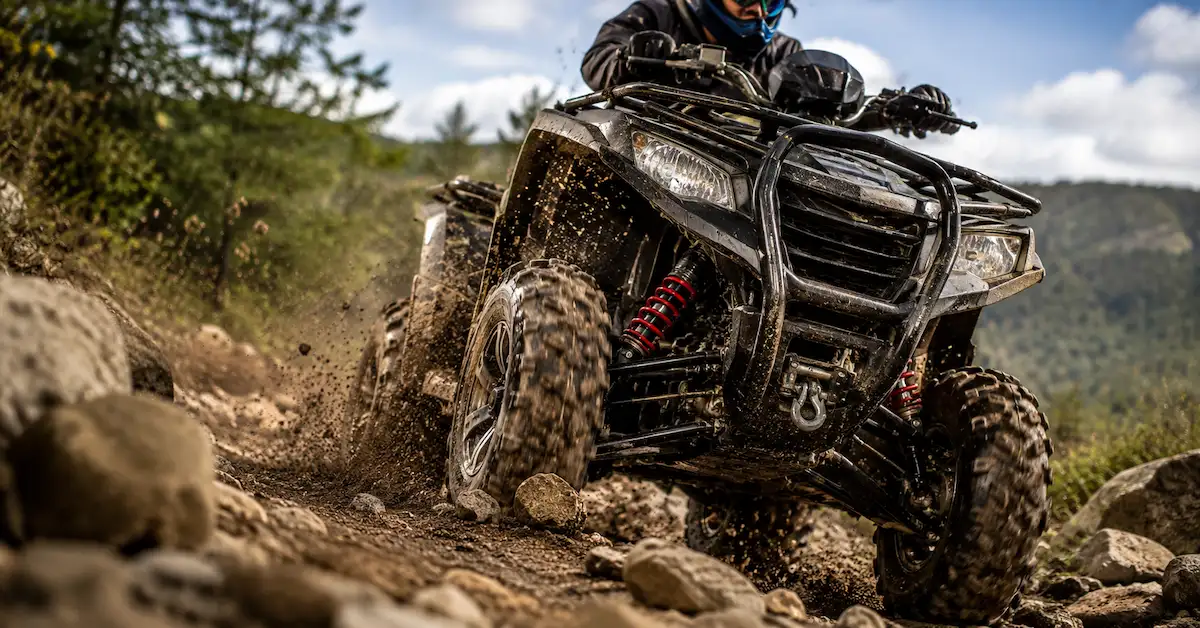
Riding off-road exposes motorcycles to relentless shocks—sharp rocks, steep inclines, and unpredictable impacts. These harsh environments place extraordinary stress on the rear suspension. When rear shock absorbers fail to deliver consistent damping, riders lose traction and comfort, and components face accelerated wear.
For manufacturers, distributors, and workshop operators, the challenge lies in sourcing reliable, performance-tested rear shocks that can handle prolonged strain without frequent maintenance. The goal is not only durability but also precision tuning for terrain diversity, ensuring safety and control.
Hydraulic Dynamics Behind Rear Suspension
The rear shock absorber is the core of off-road control. It stabilizes the rear wheel by converting vertical impact energy into controlled hydraulic resistance.
Key engineering principles in professional rear suspension include:
-
Hydraulic Damping System: Regulates compression and rebound under uneven terrain, minimizing wheel bounce.
-
Progressive Coil Spring Design: Provides variable stiffness depending on rider weight and terrain intensity.
-
Nitrogen-Charged Reservoir: Maintains internal pressure to prevent oil foaming and performance fade.
-
Piston and Seal Precision: CNC-machined components ensure consistent damping curves and reduced friction loss.
This fine-tuned balance between mechanical strength and hydraulic control defines the performance threshold for off-road-grade suspension systems.
Standard vs. Off-Road Rear Shocks
| Feature | Standard Rear Shocks | Off-Road Optimized Rear Shocks |
|---|---|---|
| Oil Stability | Conventional oil, prone to heat fade | High-viscosity hydraulic oil for stable damping |
| Spring Type | Linear rate | Progressive coil design for adaptive stiffness |
| Rod Material | Mild steel | Hardened alloy with anti-corrosion coating |
| Adjustment Range | Fixed preload | Multi-level preload and rebound adjustability |
| Durability | Short lifespan in rough terrain | Extended service life under heavy load |
Modern suppliers have shifted focus from cost reduction to durability-focused precision engineering, addressing the real-world conditions of off-road riding rather than lab simulations.
Off-Road Applications and Market Expansion
Rear shock absorbers are no longer exclusive to motorcycles—they extend into ATVs, cargo bikes, tricycles, and electric models. The off-road market demands shock systems that balance comfort and endurance.
-
Motocross and Rally Bikes: Require rapid rebound control and low-lag damping.
-
Utility Motorcycles: Benefit from higher spring rates and dust-resistant seals.
-
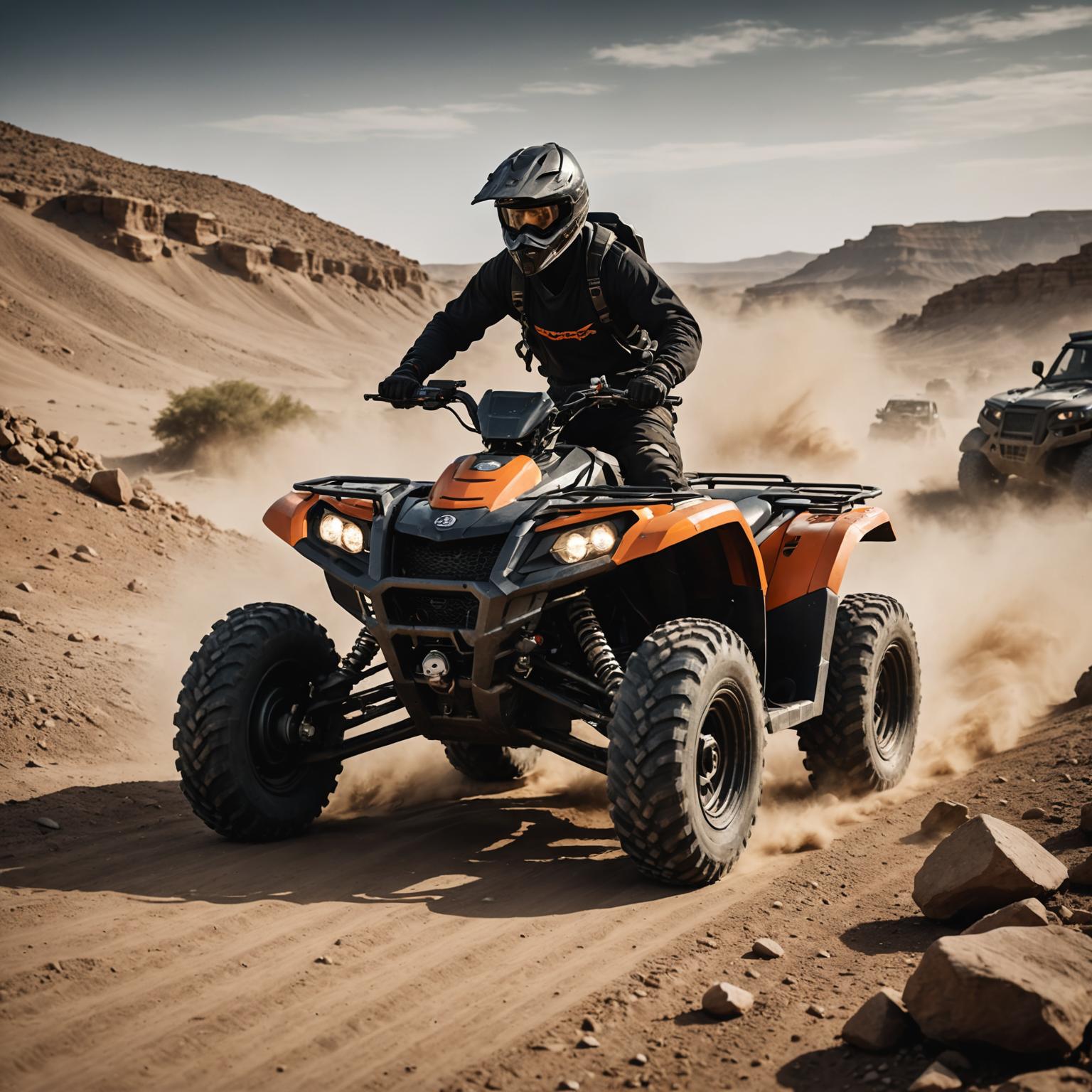
ATVs and Quads: Need dual-tube hydraulic construction for impact absorption.
-
EV Motorcycles: Rely on optimized damping to handle instant torque vibrations.
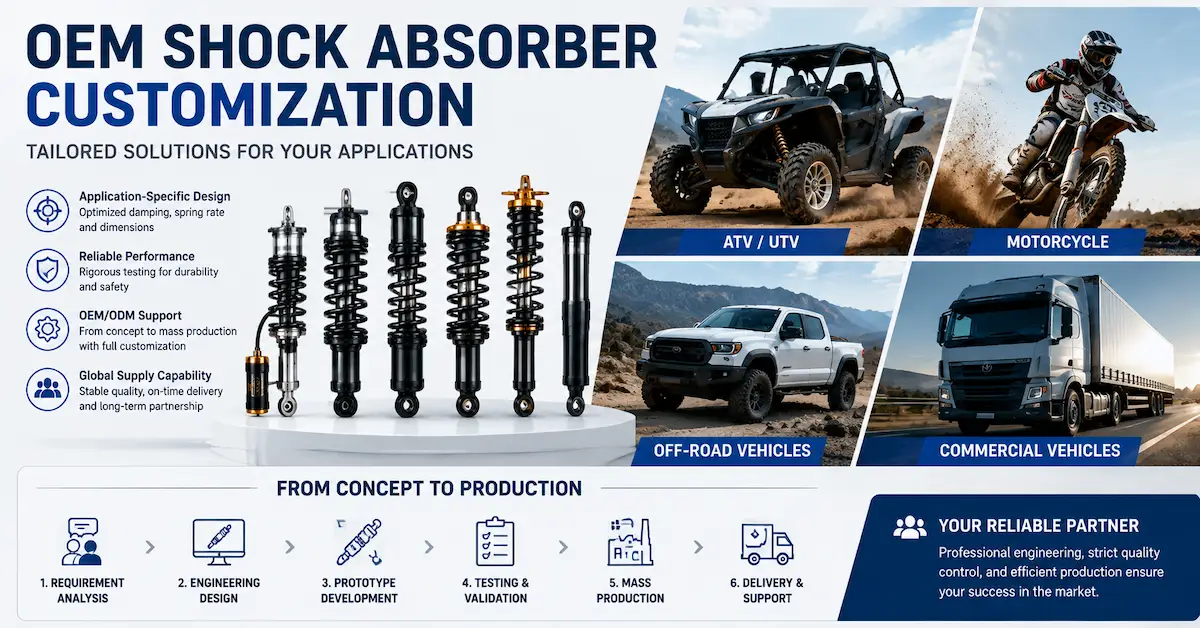
Bedo’s engineering team tailors suspension configurations based on use-case data, ensuring consistency across OEM production lines and aftermarket replacement markets.
Strategic Sourcing and Engineering Guidance
When selecting a rear shock absorber supplier, decision-makers should evaluate more than price. The following benchmarks define professional-grade performance:
-
Testing Standards: Components should pass multi-cycle fatigue and temperature endurance tests.
-
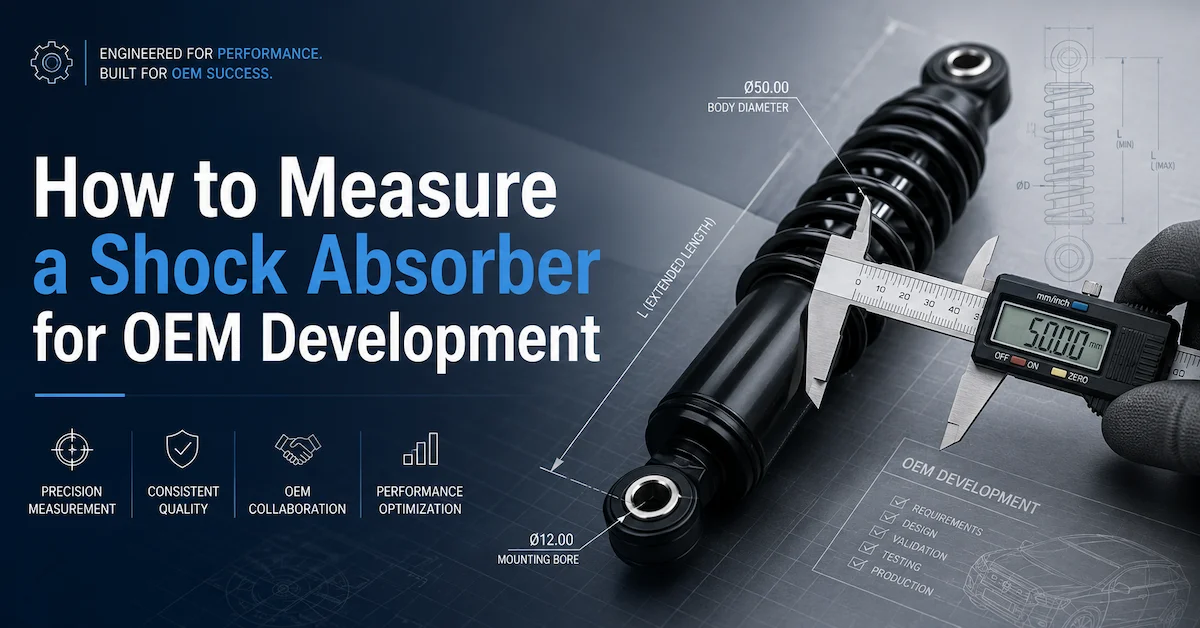
Precision Fitment: Dimensional accuracy ensures compatibility across motorcycle frames and swing arms.
-
Surface Treatment: Zinc or powder coatings extend corrosion resistance in humid and muddy environments.
-
Customization Capability: Adjustable preload and rebound options accommodate diverse rider profiles and terrains.
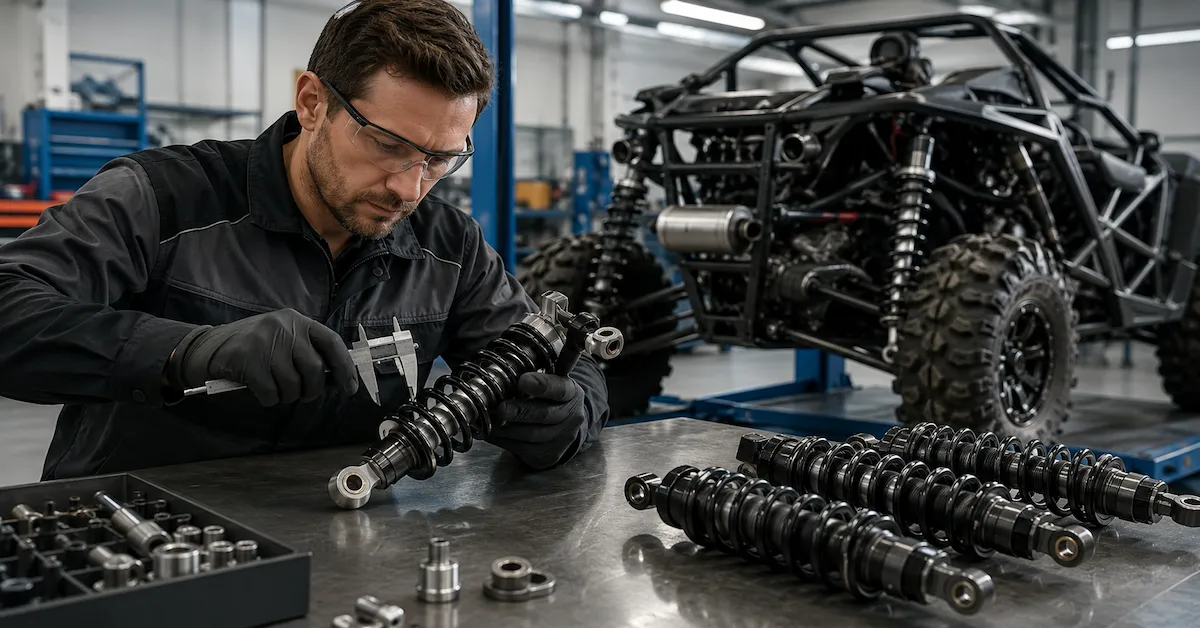
As a rear shock absorber supplier, Bedo integrates these engineering principles with advanced CNC production and automated quality inspection. Each unit is verified through real-load testing to ensure long-term performance consistency.
Practical Buyer Q&A
Q1: Can Bedo supply shocks for different motorcycle types?
Yes. Our catalog covers off-road, city, utility, and racing motorcycles with OEM-fit and customizable options.
Q2: What quality control methods are used?
Every batch undergoes hydraulic flow testing, pressure endurance evaluation, and salt spray corrosion tests before shipment.
Q3: Is OEM or private labeling available?
Yes. Bedo provides white-label and OEM customization for global distributors and motorcycle brands.
Q4: What materials improve durability in off-road environments?
We use heat-treated alloy rods and anti-friction seals, ensuring reliable damping even under heavy load and high temperature.
Building Confidence in Off-Road Performance
Off-road excellence is not achieved through design alone—it’s earned through endurance and consistency. Bedo’s suspension systems combine hydraulic precision, advanced materials, and adaptive tuning to help manufacturers and distributors meet rising global standards.
By emphasizing quality-driven production rather than low-cost replication, Bedo supports long-term reliability and brand trust in the global motorcycle parts market.
Learn more about Bedo’s engineered suspension systems on the homepage or reach our team via the contact page.