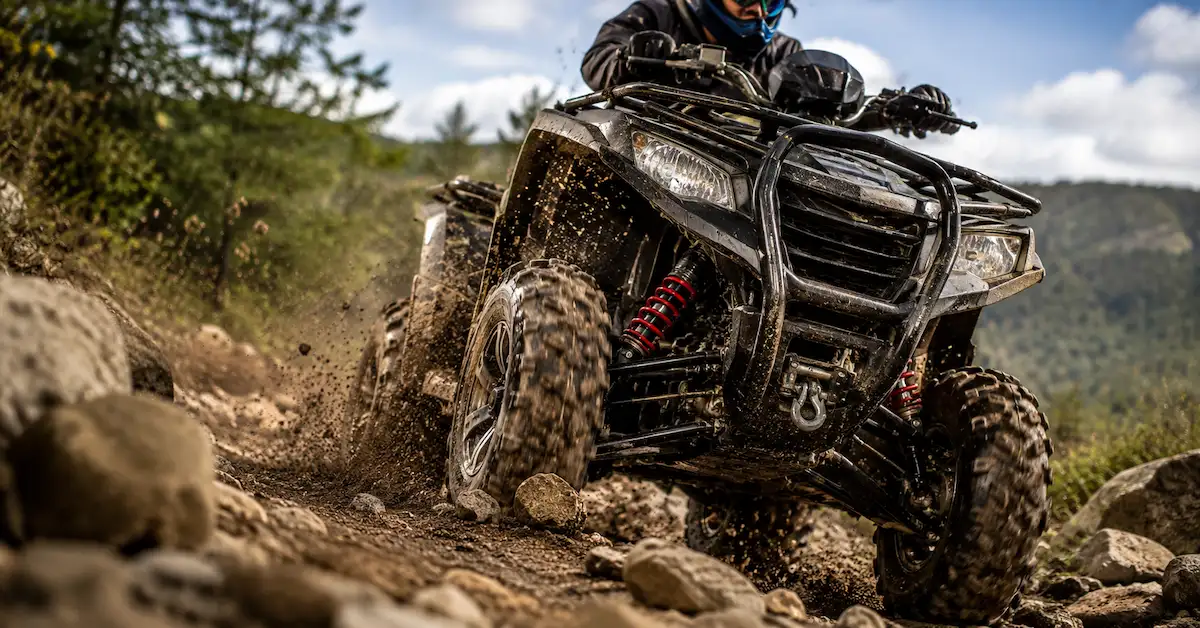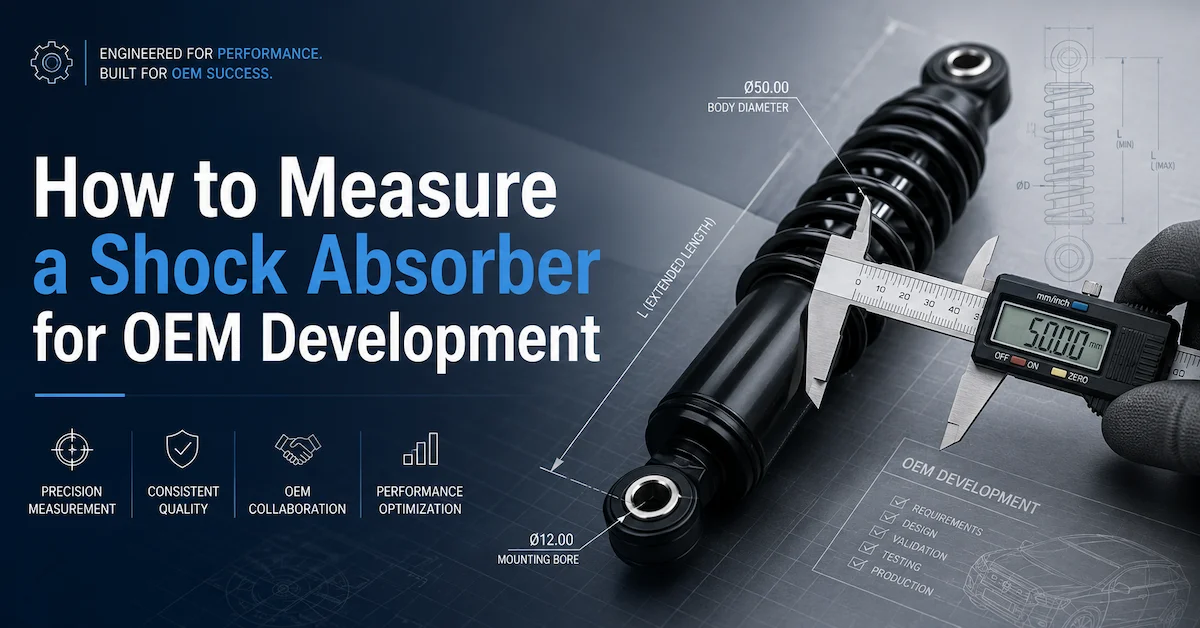

Off-road suspension is not a product that should be selected only by appearance, price, or vehicle category. For ATV, UTV, motorcycle, electric motorcycle, beach buggy, and snowmobile applications, suspension performance depends on detailed technical parameters.
This is why many OEM buyers need Custom Off-Road Suspension Parameters instead of buying standard parts directly.
A shock absorber or suspension spring may look suitable from the outside, but if the stroke length, mounting size, spring rate, damping force, or load range is not matched correctly, the vehicle may feel unstable, too soft, too stiff, or unsafe on rough terrain.
For buyers developing new models, private-label parts, or replacement suspension products, technical parameter confirmation is the foundation of successful customization.
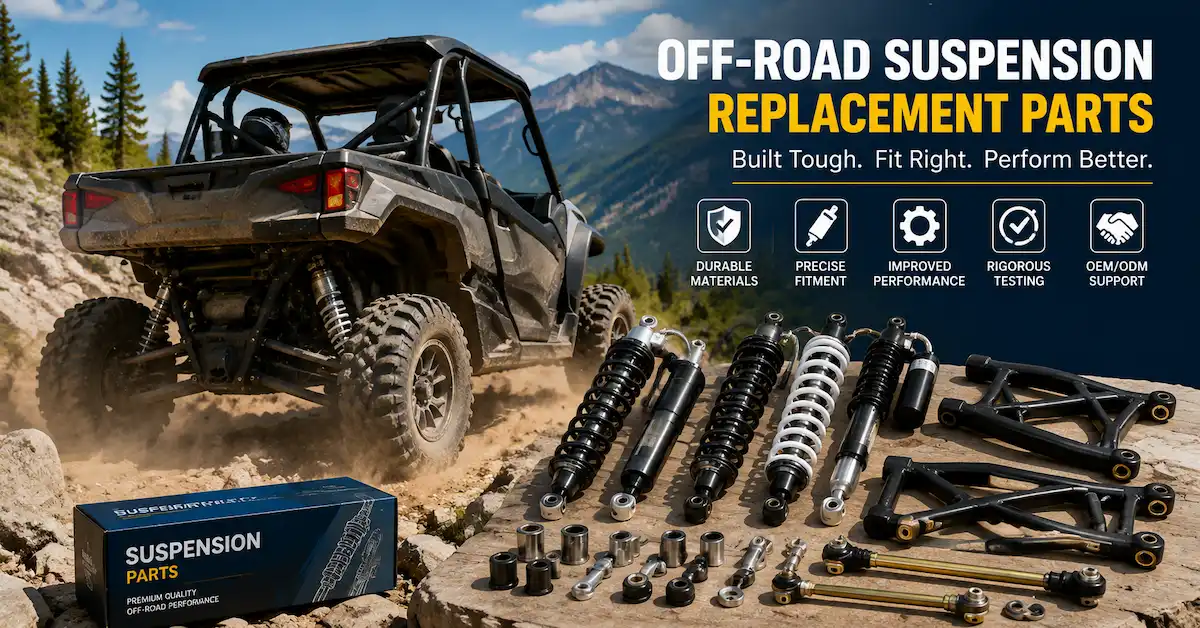
Bedo Auto provides shock absorbers, suspension springs, and related suspension components for off-road and specialty vehicle applications. You can explore the product range on the Bedo Auto Products page.
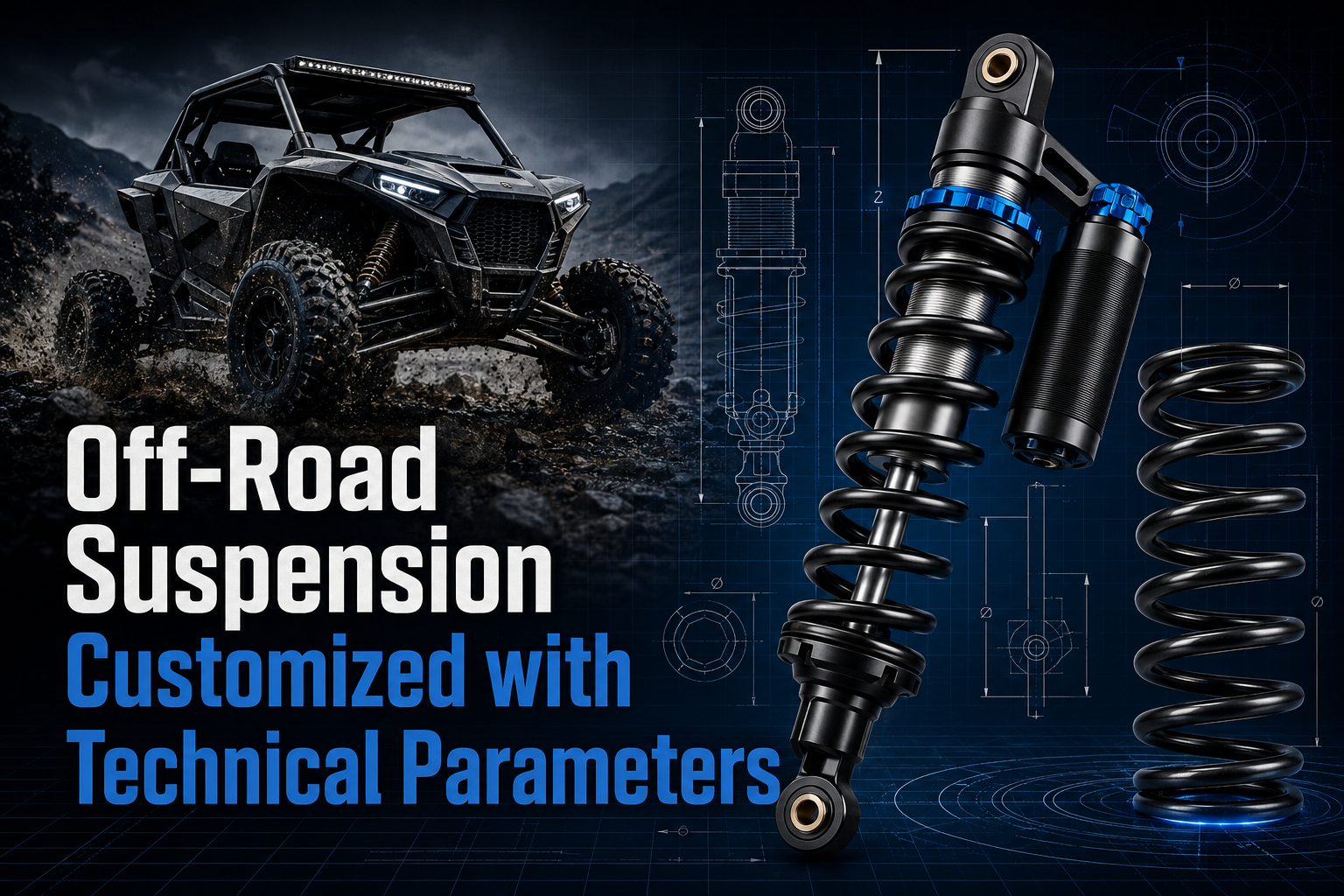
Why Technical Parameters Matter in Off-Road Suspension Customization
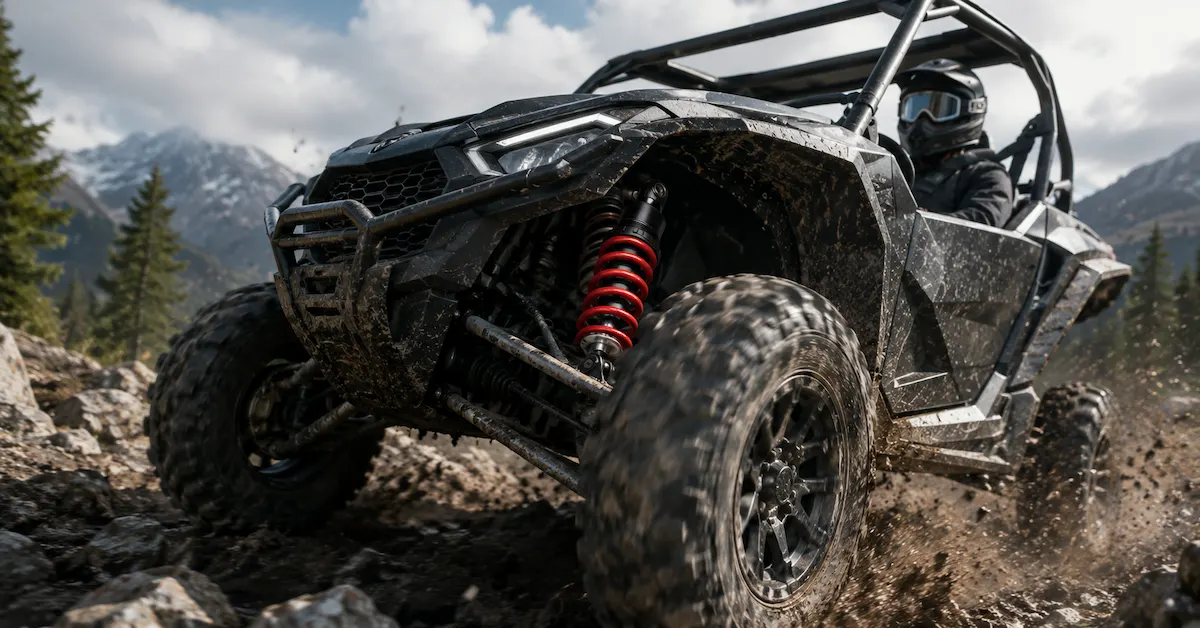
Off-road vehicles work in more complex environments than ordinary road vehicles. They may face mud, rocks, sand, water, snow, slopes, sudden impact, and changing loads.
Because of this, suspension parts must do more than simply fit the frame. They must support the vehicle, absorb impact, control rebound, protect handling stability, and keep the tires connected to the ground.
Technical parameters directly affect:
- Ride comfort
- Vehicle height
- Load support
- Suspension travel
- Handling stability
- Rebound control
- Compression response
- Durability under impact
- Fitment with brackets and frames
- Long-term consistency in batch production
For OEM buyers, accurate parameters reduce the risk of wrong samples, repeated modifications, delayed production, and warranty problems.
Who Needs Parameter-Based Suspension Customization?
Parameter-based customization is especially useful when the buyer needs more than a standard replacement part.
| Buyer Type | Main Requirement |
|---|---|
| ATV manufacturers | Match suspension to vehicle frame, weight, and terrain |
| UTV brands | Confirm load support, stroke, damping, and spring rate |
| Motorcycle factories | Customize comfort, rebound, and installation dimensions |
| Electric motorcycle brands | Match suspension with battery weight and frame geometry |
| Beach buggy developers | Improve corrosion resistance and sand-road stability |
| Snowmobile parts suppliers | Prepare durable parts for winter and low-temperature use |
| Importers and distributors | Build private-label products with reliable specifications |
| Aftermarket sellers | Develop replacement parts based on original samples or drawings |
For these buyers, technical parameter confirmation is not optional. It decides whether the final product can be installed, tested, sold, and reordered successfully.
Key Technical Parameters for Custom Off-Road Suspension
When developing custom off-road suspension, buyers should not only send photos or ask for a price. They should prepare key technical information so the supplier can evaluate the project correctly.
| Technical Parameter | Why It Matters |
| Extended length | Determines the full open length of the shock absorber |
| Compressed length | Ensures the shock absorber does not bottom out too early |
| Stroke length | Affects suspension travel and impact absorption |
| Mounting hole diameter | Ensures the shock absorber fits the bolt and bracket |
| Mounting width | Prevents looseness, interference, or installation failure |
| Spring rate | Controls ride height, load support, and comfort |
| Damping force | Controls rebound, compression, and vehicle stability |
| Rod diameter | Influences strength and durability |
| Body diameter | Affects oil capacity, heat control, and structural strength |
| Load range | Helps match suspension to passengers, cargo, and terrain |
| Surface treatment | Improves rust, water, mud, and corrosion resistance |
| Application environment | Determines material, coating, and sealing requirements |
If these parameters are not confirmed, the supplier may only provide a part that looks similar but does not perform correctly.
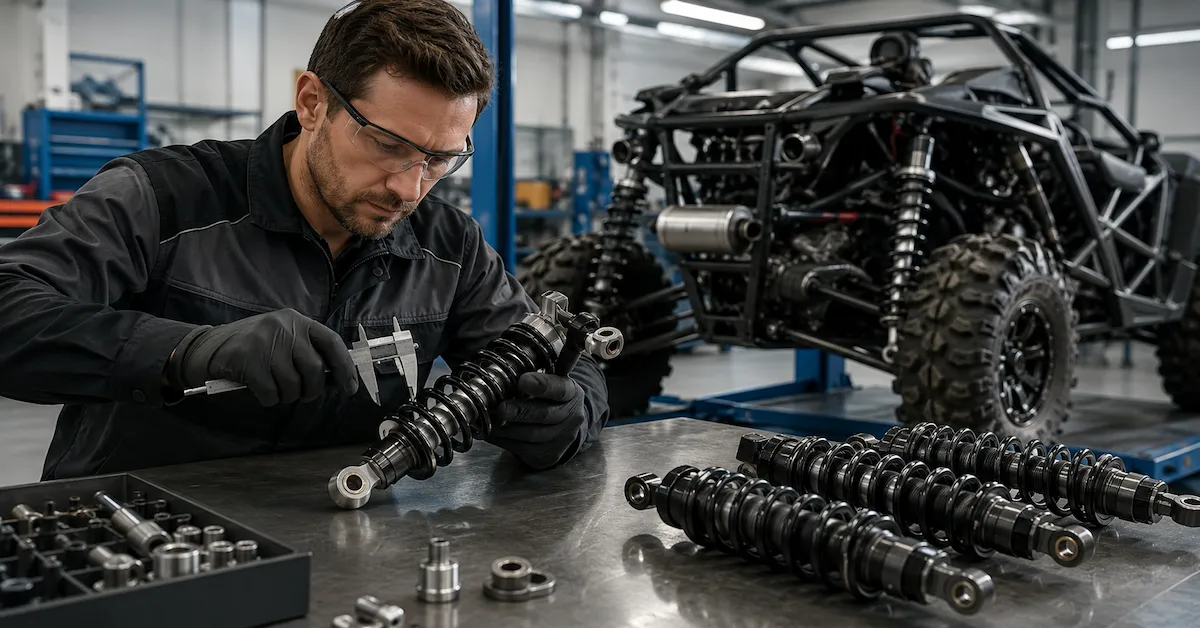
Extended Length, Compressed Length, and Stroke
The basic size of a shock absorber affects both fitment and suspension movement.
Extended length is the total length when the shock absorber is fully stretched.
Compressed length is the shortest length when the shock absorber is fully compressed.
Stroke length is the movement distance between the extended and compressed positions.
These three parameters affect whether the shock absorber can work safely within the suspension system.
If the extended length is too long, it may create installation problems or stress the mounting points. If the compressed length is too short or not matched correctly, the suspension may bottom out under impact. If the stroke is insufficient, the vehicle may lose comfort and control on rough terrain.
For ATV and UTV applications, stroke length is especially important because these vehicles often travel over uneven ground, ruts, rocks, and mud.
Mounting Size and Installation Accuracy
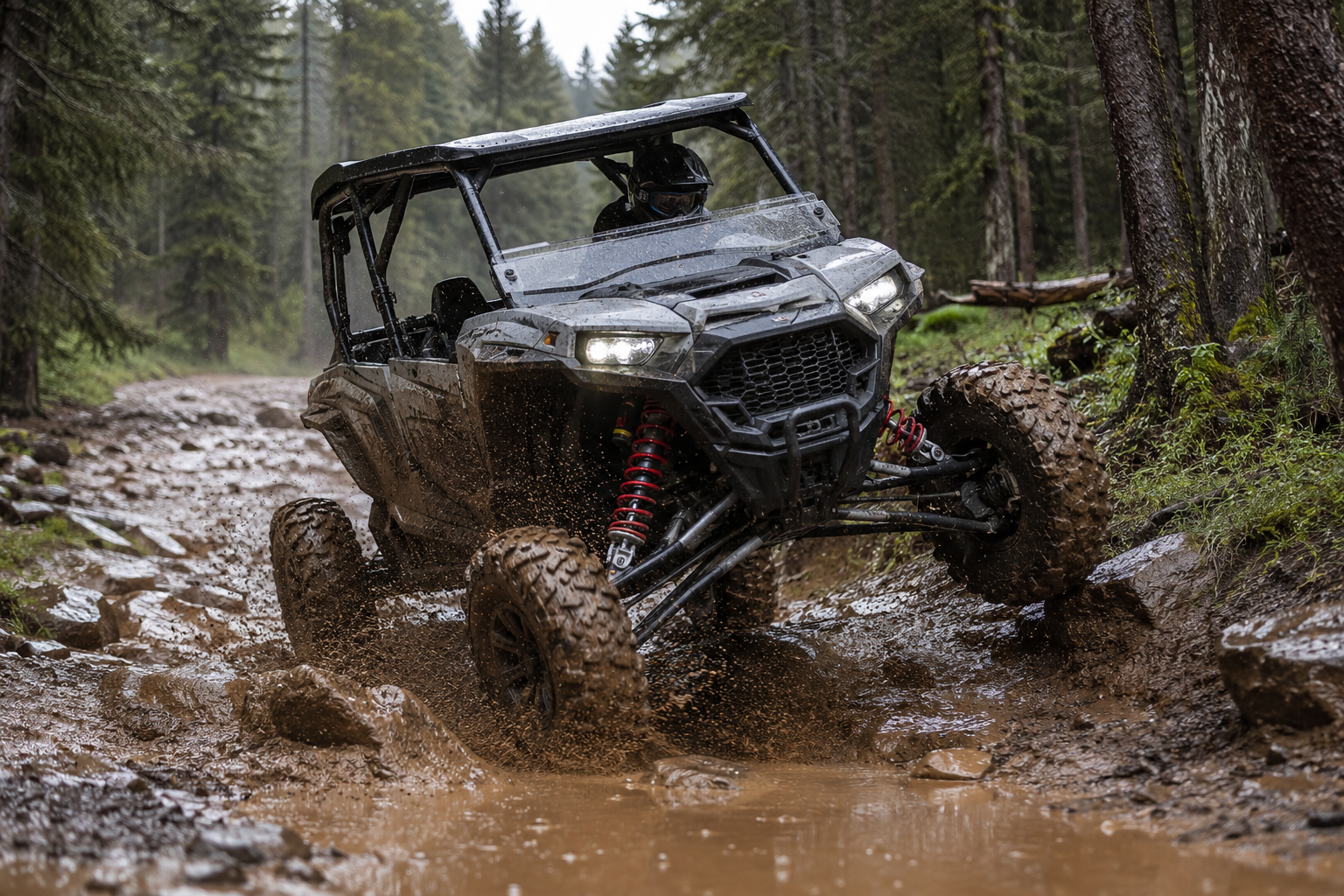
Mounting dimensions are some of the most important details in OEM suspension customization.
Buyers should confirm:
- Mounting hole diameter
- Eyelet width
- Bushing size
- Bolt size
- Bracket clearance
- Front or rear installation position
- Left and right installation requirements
- Any special frame restrictions
Even if the shock absorber has the correct length, it may still fail to install if the mounting hole or eye width is wrong.
For replacement products, buyers can send an original sample for measurement. For new vehicle projects, drawings and frame information are usually needed.
A reliable supplier should check these details before production, not after the sample is finished.
Spring Rate and Load Matching
Spring rate is one of the most important parameters in off-road suspension customization. It determines how much force is needed to compress the spring.
If the spring rate is too low, the vehicle may sag, bottom out, or feel unstable under load. If the spring rate is too high, the ride may become harsh, and the tires may not follow uneven terrain properly.
Spring rate should be selected based on:
- Vehicle weight
- Rider or passenger weight
- Cargo load
- Suspension geometry
- Front or rear position
- Terrain type
- Desired ride comfort
- Utility or performance use
For example, a UTV used for farm work may need stronger spring support than a recreational trail vehicle. An electric motorcycle may need a spring rate matched to the battery weight and frame balance.
This is why custom off-road suspension should be developed with real vehicle data instead of only using general specifications.
Damping Force and Riding Performance
Damping force controls how the suspension moves after the spring compresses or rebounds. It affects stability, control, comfort, and safety.
For off-road vehicles, damping must be matched to the vehicle’s weight, speed, and terrain.
Important damping considerations include:
- Rebound control
- Compression response
- Impact absorption
- Heat stability
- Load response
- High-speed vibration control
- Low-speed comfort
- Long-term consistency
Some projects need fixed damping for simple, stable performance. Other projects may require adjustable damping, especially when the same vehicle model may be used by different riders or under different loads.
For OEM buyers, damping should not be treated as a vague feeling. It should be discussed as a technical performance requirement.
Material and Surface Treatment Parameters
Off-road suspension parts are often exposed to water, mud, sand, stones, dust, and outdoor storage conditions. Because of this, material and surface treatment are important for durability.
Common material and surface requirements include:
- High-strength steel body
- Aluminum alloy components
- Corrosion-resistant coating
- Rust-proof surface treatment
- Waterproof sealing
- Protective spring coating
- Durable bushings
- Stable rod surface finish
For beach buggies and coastal markets, corrosion resistance is especially important. For farm UTVs, mud and water resistance may be more important. For snowmobiles, low-temperature reliability and winter supply planning should be considered.
The correct material choice depends on the buyer’s target market and application environment.
Application Environment Should Guide the Design
A good off-road suspension supplier should ask where and how the vehicle will be used. The same shock absorber may not be suitable for all environments.
| Application Environment | Suspension Requirement |
| Muddy trail | Waterproof sealing, rust resistance, stable rebound |
| Sandy beach | Corrosion resistance, dust protection, durable coating |
| Rocky road | Strong impact absorption and structural strength |
| Farm use | Load support, durability, low maintenance |
| Snowfield | Low-temperature reliability and seasonal supply |
| Daily road + light off-road | Comfort and balanced damping |
| Performance riding | Strong rebound control and adjustable damping |
| Rental or fleet use | Long service life and consistent replacement supply |
This is why Custom Off-Road Suspension Parameters should always start from real application conditions.
Parameter-Based Customization vs Standard Suspension Parts
Standard parts may be useful for simple replacement needs, but they may not solve special fitment or performance requirements.
| Item | Standard Suspension Parts | Parameter-Based Custom Suspension |
| Fitment | Based on general model compatibility | Based on measured dimensions or drawings |
| Spring rate | Usually fixed | Can be adjusted by load and application |
| Damping | Standard setting | Can be matched to performance needs |
| Appearance | Limited options | Color, logo, coating, and packaging can be customized |
| Application | Common replacement use | OEM, ODM, private label, and new vehicle development |
| Risk | May not match special conditions | Lower risk after technical confirmation |
| Best For | Simple aftermarket replacement | Brands, OEM buyers, distributors, and vehicle developers |
For professional buyers, custom development often provides better long-term value because the final product is built around real requirements.
Common Customization Options
Off-road suspension customization can include both performance and appearance changes.
| Custom Option | Purpose |
| Length adjustment | Match frame and suspension travel |
| Stroke adjustment | Improve impact absorption |
| Spring rate customization | Match load support and ride height |
| Damping adjustment | Improve rebound, compression, and stability |
| Rod diameter change | Improve strength and durability |
| Body color | Match product line or brand style |
| Spring color | Support private-label appearance |
| Surface coating | Improve rust and corrosion resistance |
| Bushing selection | Improve fitment and vibration control |
| Logo marking | Support OEM brand identity |
| Packaging design | Support distributor and retail sales |
Buyers should not customize only for appearance. For off-road products, performance and fitment should come first.
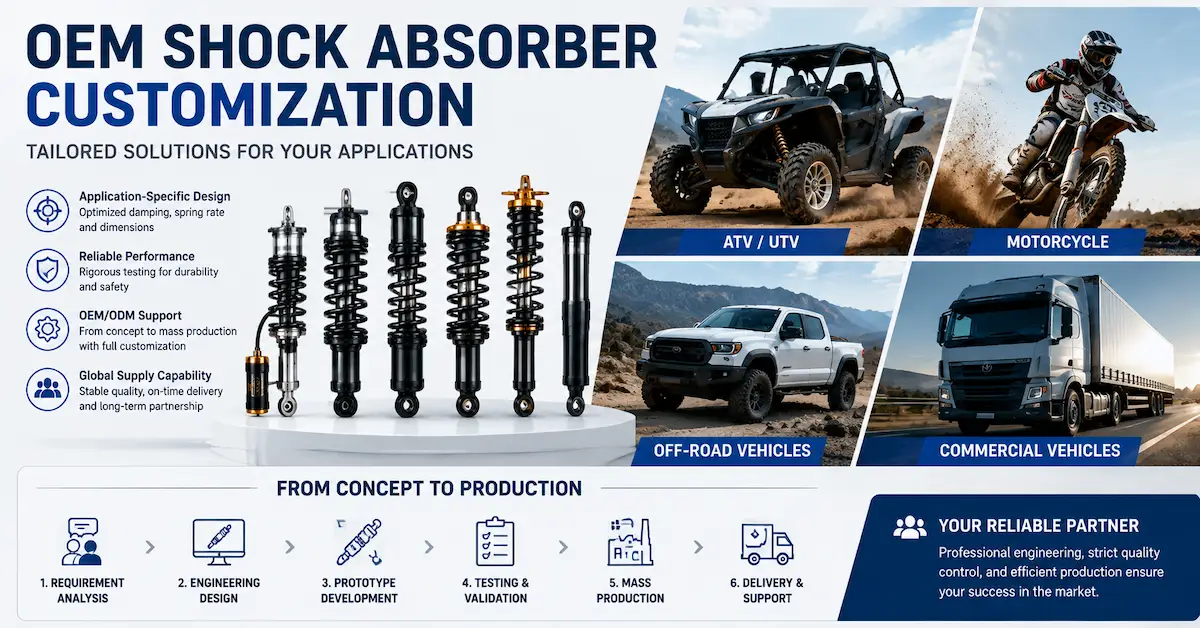
Development Process for Parameter-Based Suspension Customization
A professional OEM project should follow a structured process.
Step 1: Requirement Communication
The buyer explains the vehicle type, target market, application environment, order quantity, and performance goals.
Step 2: Parameter Collection
The supplier collects technical data such as length, stroke, mounting size, spring rate, load range, and damping preference.
Step 3: Sample or Drawing Review
If the buyer has an original sample, the supplier measures it. If the buyer has drawings, the supplier reviews the technical data and confirms feasibility.
Step 4: Design Confirmation
The buyer and supplier confirm whether the new product should match the original part or include improvements.
Step 5: Prototype or Small Batch Production
The supplier produces samples or a small batch for testing.
Step 6: Fitment and Performance Testing
The buyer checks installation, ride comfort, damping behavior, and durability.
Step 7: Final Specification Confirmation
After testing, both sides confirm the final version for batch production.
Step 8: Mass Production and Quality Control
The approved specification becomes the production standard for future orders.
Buyer Checklist Before Requesting a Quote
Before contacting a suspension manufacturer, buyers should prepare as many details as possible.
| Information to Prepare | Example |
| Vehicle type | ATV, UTV, motorcycle, electric motorcycle, beach buggy |
| Installation position | Front, rear, left, right |
| Existing sample | Original part or market sample |
| Drawings | 2D drawing, 3D model, or measured dimensions |
| Extended length | Full open length of shock absorber |
| Compressed length | Shortest working length |
| Stroke length | Suspension movement distance |
| Mounting size | Hole diameter, eye width, bushing size |
| Load condition | Rider, passenger, cargo, battery, tools |
| Terrain | Mud, sand, gravel, rock, snow, farm road |
| Custom needs | Color, logo, spring rate, damping, coating, packaging |
| Order plan | Sample, small batch, future mass production |
The more complete the information, the faster the supplier can evaluate feasibility and provide a practical solution.
Quality Control for Customized Off-Road Suspension
Quality control should be included from the development stage, not only after production.
Important QC points include:
- Dimension inspection
- Mounting hole checking
- Surface finish inspection
- Spring coating inspection
- Rod movement checking
- Damping consistency
- Leakage inspection
- Assembly accuracy
- Packaging protection
- Batch consistency review
For OEM buyers, repeatability is very important. Once the sample is approved, future production must follow the confirmed technical parameters.
A supplier that cannot maintain batch consistency may create problems for importers, distributors, and vehicle manufacturers.
How Bedo Auto Supports Technical Parameter-Based Customization
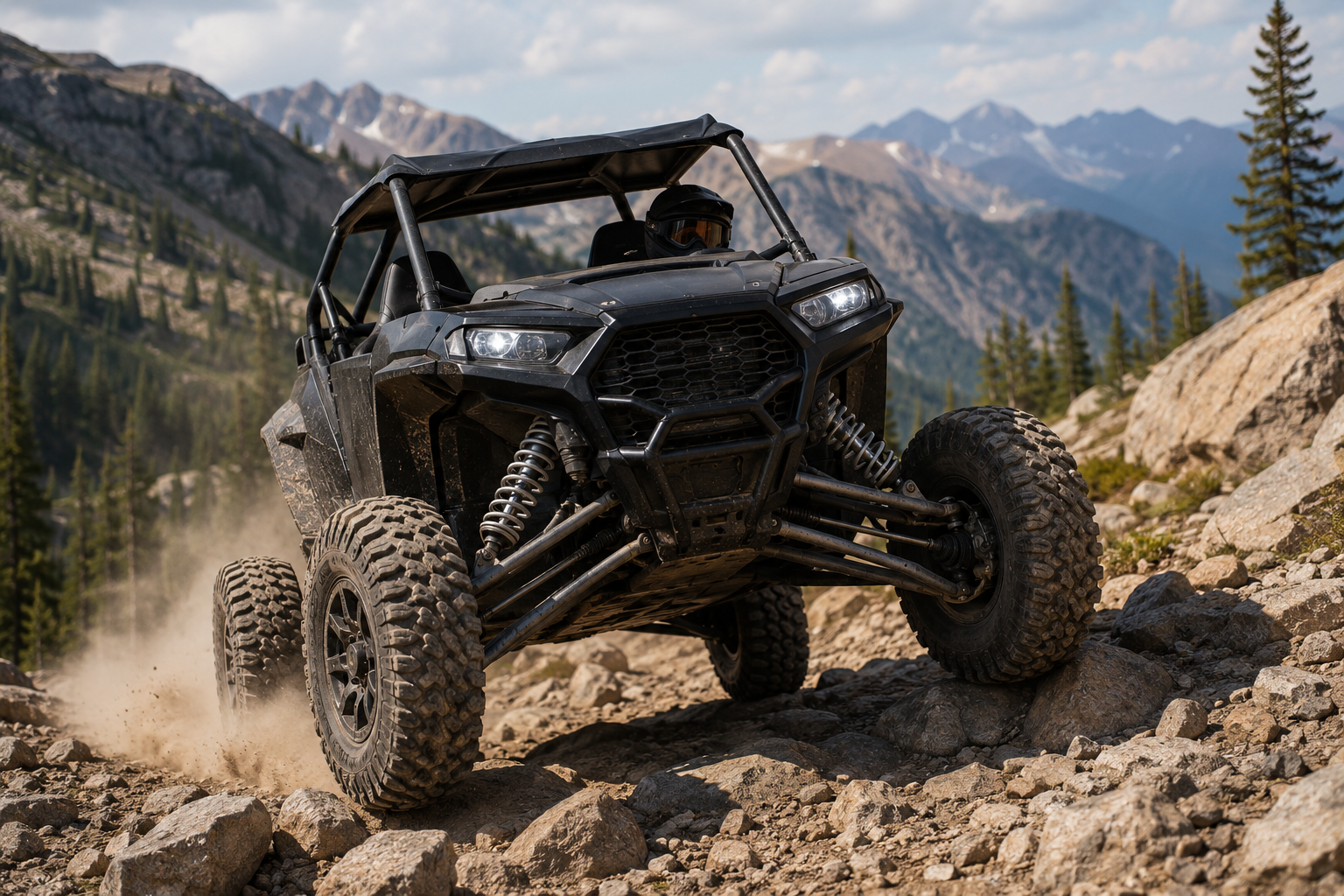
Bedo Auto focuses on shock absorbers, suspension springs, and related suspension components for off-road and specialty vehicle applications. For buyers who need parameter-based customization, Bedo Auto can help review application requirements, confirm key specifications, and support OEM suspension development.
Bedo Auto can help buyers discuss:
- Vehicle application
- Shock absorber size
- Mounting dimensions
- Stroke length
- Spring rate
- Damping preference
- Surface treatment
- Color customization
- Sample or small batch order
- Packaging and export requirements
You can learn more about the company’s background and manufacturing capabilities on the About Bedo Auto page.
If you need custom suspension parts based on technical parameters, you can send your requirements through the Contact Us page.
FAQ
1. What does Custom Off-Road Suspension Parameters mean?
It means the shock absorber or suspension spring is developed based on specific data such as length, stroke, mounting size, spring rate, damping force, vehicle weight, and application environment.
2. Why are technical parameters important for off-road suspension?
Technical parameters affect fitment, comfort, load support, handling, and durability. Without accurate parameters, the product may not install correctly or perform safely.
3. Can suspension parts be customized without drawings?
Yes, if the buyer can provide an original sample. However, drawings or measured dimensions help improve accuracy and reduce development risk.
4. What parameters are needed for a custom shock absorber?
Common parameters include extended length, compressed length, stroke, mounting hole diameter, mounting width, spring rate, damping requirement, rod diameter, body diameter, and application environment.
5. Can spring rate be customized?
Yes. Spring rate can be customized based on vehicle weight, load condition, riding comfort, suspension travel, and terrain type.
6. What vehicles need customized off-road suspension?
Common applications include ATV, UTV, motorcycle, electric motorcycle, beach buggy, snowmobile, utility vehicle, and specialty off-road vehicles.
7. Is parameter-based customization suitable for small batch orders?
Yes. Many OEM buyers start with samples or small batch production to test fitment and performance before moving into larger orders.
8. How can buyers reduce risk in suspension customization?
Buyers should provide clear technical data, samples or drawings, application details, target performance, and expected order plan before production starts.
Conclusion
Custom Off-Road Suspension Parameters helps buyers create shock absorbers and suspension springs that match real vehicle requirements. Instead of relying only on standard parts, parameter-based customization improves fitment accuracy, load support, damping performance, and long-term supply consistency.
For ATV, UTV, motorcycle, electric motorcycle, beach buggy, and snowmobile projects, the right supplier should understand technical data, application environments, OEM production, and quality control.
If you are developing custom off-road suspension parts, explore the Bedo Auto product range or contact the team through the Contact Us page to discuss your technical parameters and project requirements.