
Corrosion-Resistant Shock-Spring Assemblies: Built to Endure Where Others Fade
Why Standard Suspensions Fail in Harsh Conditions
Off-road, coastal, and industrial vehicles face a persistent enemy: corrosion.
When moisture, salt, or acidic dust penetrates a shock-spring assembly, oxidation begins almost immediately. Within months, spring tension drops, piston seals degrade, and the damping system loses stability.
The result? Reduced comfort, increased maintenance, and, eventually, full system failure.
Corrosion-resistant assemblies address this problem by combining advanced materials with layered protection systems, ensuring consistent performance even in the harshest environments.
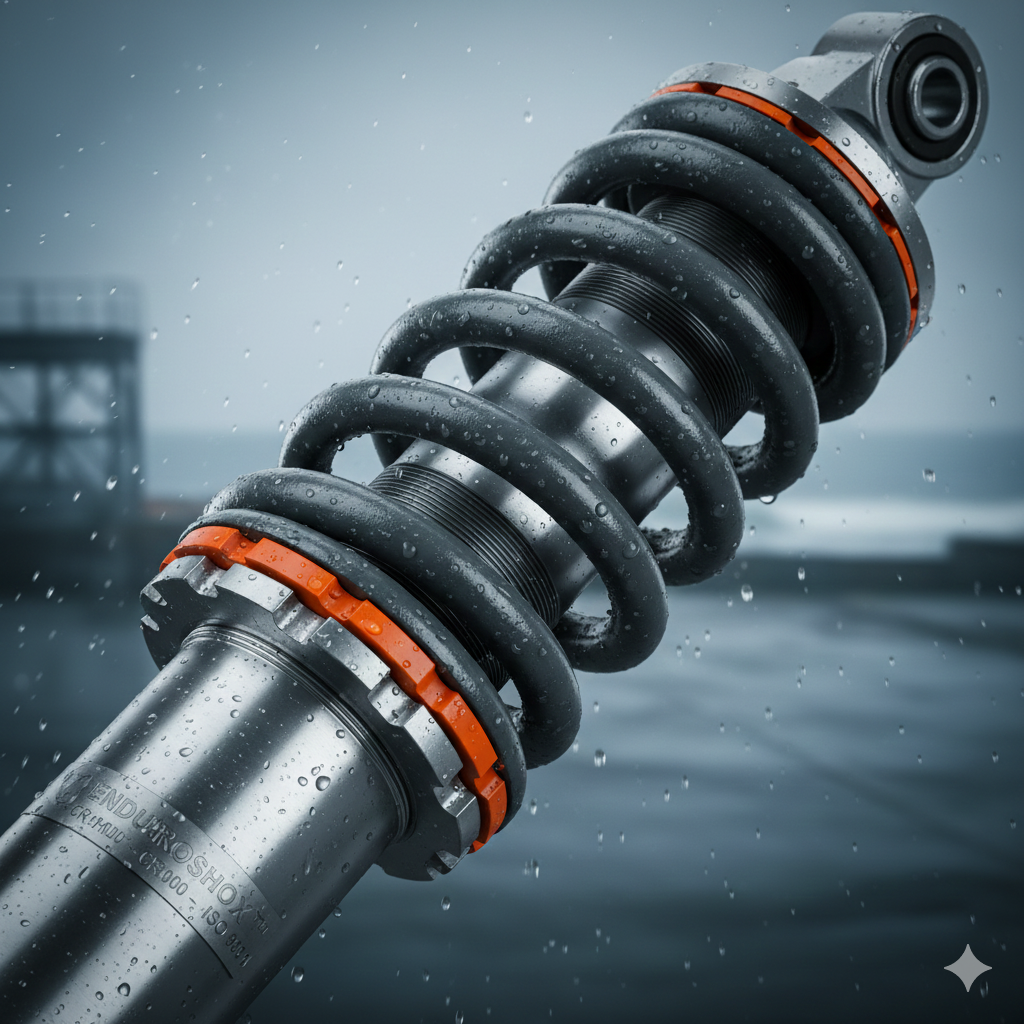
Inside the Protection System: Layer by Layer
Effective corrosion resistance is never a single coating — it’s an integrated design.
-
Base Material Strength:
High-carbon or chromium-alloy steel provides initial structural resilience. -
Surface Pre-Treatment:
Phosphate conversion or electro-galvanizing enhances coating adhesion and base uniformity. -
Protective Coating:
Multi-layer powder or electrophoretic coating (E-coat) resists chipping and saltwater degradation. -
Sealing and Boots:
Silicone or thermoplastic rubber dust covers prevent debris intrusion and chemical exposure. -
Fatigue and Salt Spray Testing:
Every assembly undergoes 500–1000 hours of ASTM B117 salt spray testing, verifying its endurance against corrosion cycles.
Each layer contributes to longevity, enabling assemblies to function flawlessly under snow, mud, or coastal spray.
Comparison: Conventional vs. Corrosion-Resistant Assemblies
| Feature | Standard Suspension | Corrosion-Resistant Assembly |
|---|---|---|
| Base Steel | Mild steel | Chromium-alloy high-tensile steel |
| Coating | Single paint layer | Multi-layer powder & E-coat |
| Salt Spray Test | <100 hours | 500–1000 hours certified |
| Seal Protection | Limited rubber boot | High-grade silicone seal |
| Service Life | 1–2 years | 3–5 years under exposure |
Corrosion-resistant systems transform routine maintenance schedules into long-term performance guarantees, lowering lifecycle costs for commercial fleets and high-usage applications.
Applications That Demand Corrosion Protection
-
Marine and Coastal Vehicles: Continuous salt exposure demands reinforced coatings and sealed dampers.
-
Construction and Mining Machinery: Anti-abrasion finishes withstand mud and mineral contact.
-
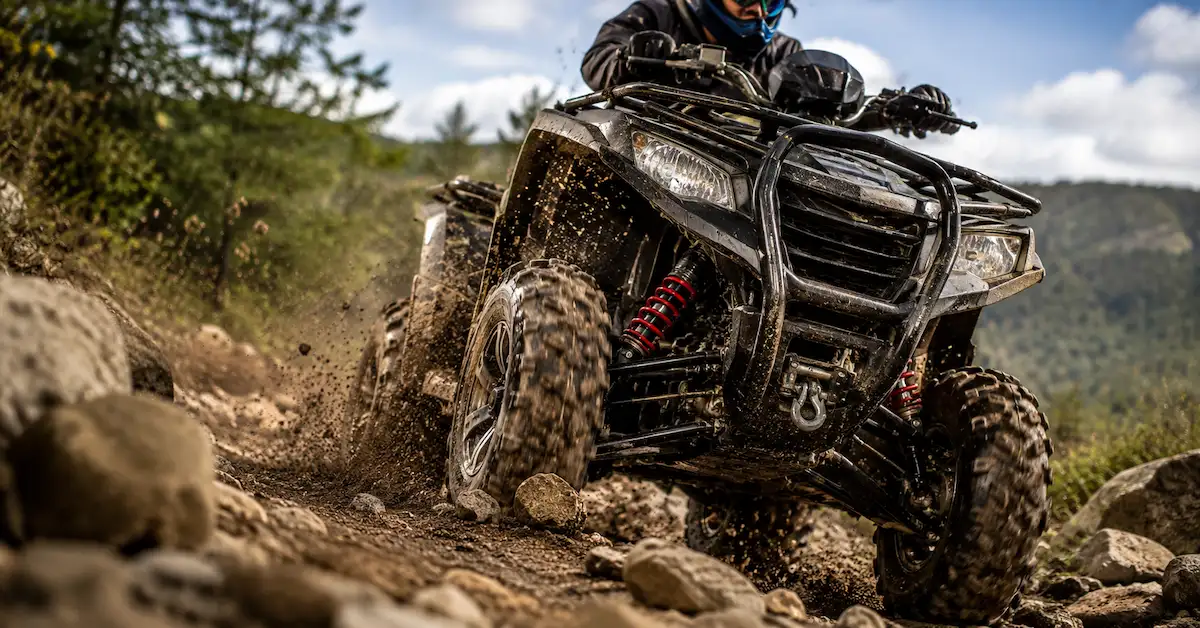
Off-Road and Utility ATVs: Protective boots prevent sand and gravel damage.
-
Agricultural Equipment: Resists fertilizer and soil chemical corrosion.
-
Winter Service Vehicles: Withstands road salt and de-icing chemicals over extended periods.
These real-world conditions prove that corrosion protection isn’t optional — it’s an operational necessity.
Maintenance Insights: Extending Suspension Life
-
Clean shock-spring assemblies regularly to prevent chemical residue buildup.
-
Apply rust inhibitors or silicone-based protectants every 6–12 months.
-
Inspect dust boots for cracking or deformation — early replacement prevents internal contamination.
-
For coastal users, request components rated above 500-hour salt spray endurance.
Routine care amplifies the benefits of corrosion-resistant manufacturing, keeping suspension systems consistent throughout their lifecycle.
Buyer Q&A: What Professionals Ask
Q1: How do I confirm a shock assembly’s corrosion resistance?
Request the ASTM B117 or ISO 9227 salt spray test certificate and coating specification sheet before purchase.
Q2: Can corrosion-resistant assemblies be customized by color or load rating?
Yes. Powder coating allows flexible color matching while retaining anti-rust protection. Spring rate and damping curves can be tuned to specific vehicle models.
Q3: What’s the expected performance lifespan?
Typically 3–5 years under standard off-road exposure, extending to 8 years under controlled maintenance conditions.
Q4: Do these assemblies affect ride comfort?
No. Enhanced coatings and seals protect without changing damping calibration or ride characteristics.
Proven Durability, Measurable Returns
Corrosion-resistant shock-spring assemblies combine mechanical precision and chemical defense — an approach proven across thousands of off-road and industrial deployments.
At Bedo, our suspension systems integrate chromium-alloy coils, electrophoretic coating, and 100% leak-tested dampers under ISO-certified conditions.
This ensures every unit shipped withstands the demands of real-world environments, from humid coastlines to frozen highways.
Explore our full suspension solutions at homepage or contact our team for a tailored consultation via contact page.