
Why Rebound Speed Matters More Than You Think in ATV Suspension
When people talk about suspension, they usually focus on how well it absorbs an impact. But compression is only half the story. The other half—the rebound—is where ride stability lives or dies.
Rebound speed defines how quickly a shock absorber extends back after compression. If it's too fast, the ATV feels jumpy. Too slow, and the suspension "packs down" over bumps.
For riders, rebound speed is the invisible control line between flow and chaos.
What Exactly Is Rebound Speed?
Rebound speed refers to the rate at which the shock shaft extends after being compressed by terrain input. This speed is controlled by:
-
The internal rebound valve
-
The viscosity of the shock oil
-
The tuning of orifices and shims inside the piston
-
Gas pressure stability during repeated use
It determines how fast the wheel can return to the ground—and how much chassis movement the rider will feel during a sequence of bumps or transitions.
Why Rebound Speed Affects Control
The wrong rebound speed leads to problems that don’t always feel like suspension issues, but are:
-
Too fast → the wheel bounces, loses traction, and feels unstable in corners
-
Too slow → the shock never fully recovers before the next bump, causing harshness, “packing down,” and eventual bottom-out
This is especially noticeable in high-frequency terrain like gravel, loose dirt, or desert washboards.
Rebound and Terrain Behavior: Real Examples
-
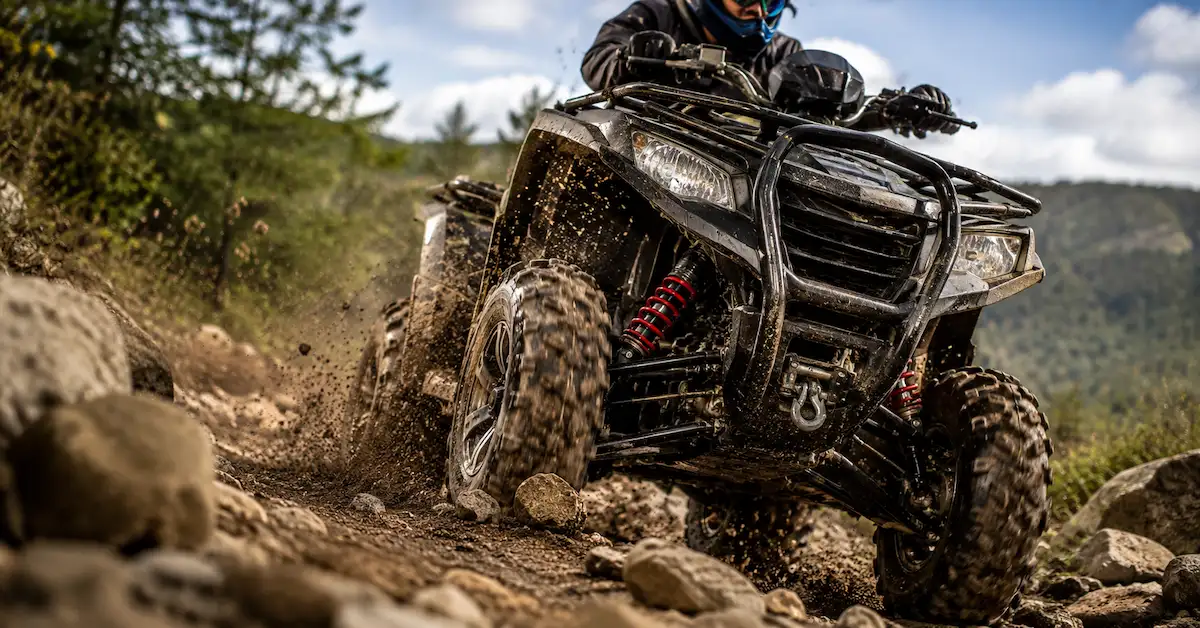
Fast Trail Riding → Requires moderate rebound to keep the wheels planted during high-speed undulations. Too quick, and you’ll lose traction. Too slow, and you’ll experience delay in weight transfer through corners.
-
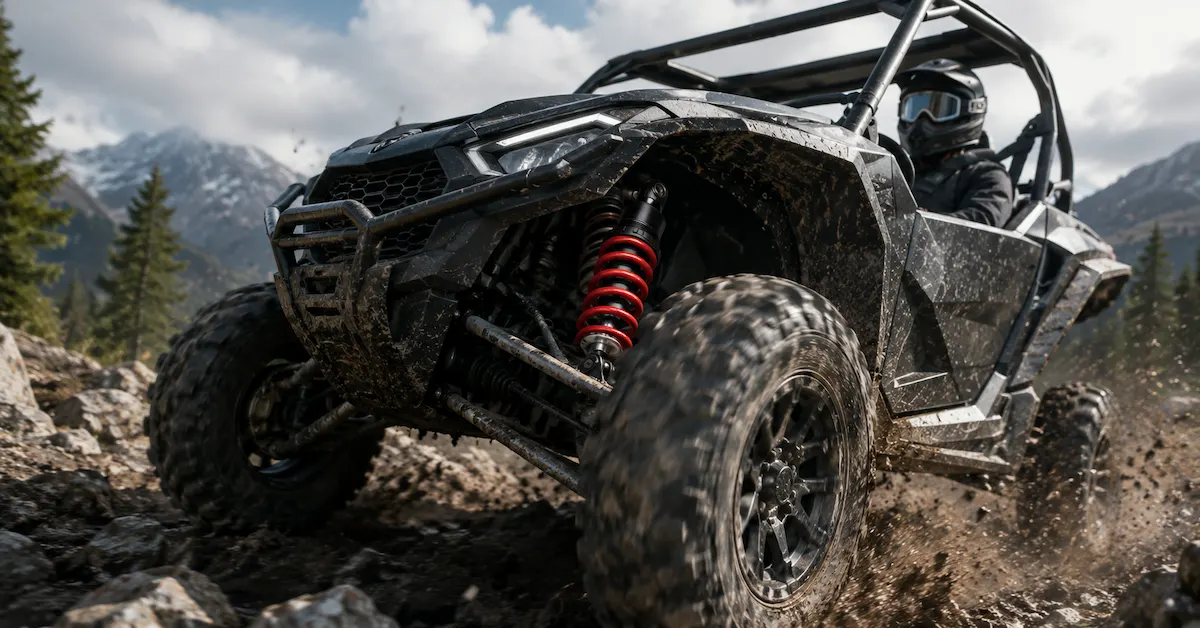
Technical Rock Crawling → Needs precise, slower rebound to avoid chassis bounce and maintain crawl control. Quick rebound here causes “hop” and instability on vertical ascents.
-
Heavy Utility Use → Suspension is under constant load, meaning rebound must be strong enough to restore ride height but not so stiff that it overrides spring motion—balance is critical.
-
Jumps or Drop-Offs → Demands progressive rebound speed: fast enough to reset quickly, but slow enough to prevent harsh kickback on landing. Poor tuning here results in rear-end instability or rider jolt.
How Bedo Tunes Rebound in Our ATV Shocks
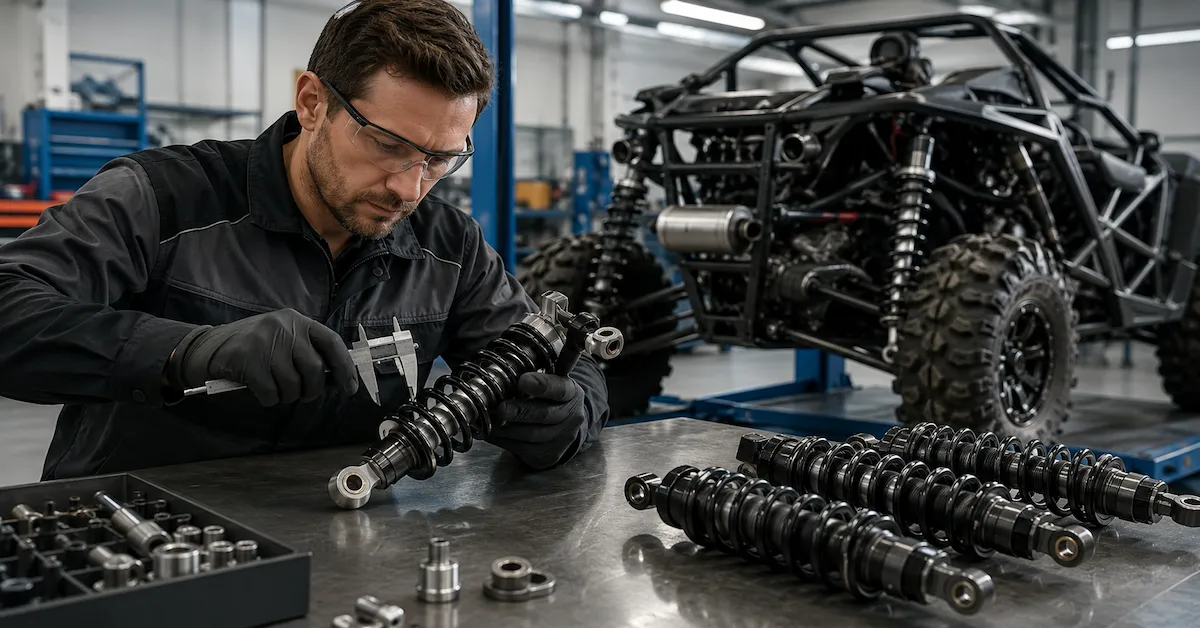
As a precision-focused ATV shock manufacturer, Bedo uses real terrain data and platform-specific geometry to tune rebound behavior that’s not only stable—but consistent across cycles.
Our rebound tuning process includes:
-
Shim stack design variation per application
-
Dyno-tested rebound curve shaping
-
Multi-speed valve control for both low- and high-speed extension
-
Oil and seal matching to preserve rebound under thermal variation
-
Customer-specific rebound tuning support during development or retrofits
Every ATV shock we build has a rebound profile matched to ride behavior—not just damping volume.
How to Know Your Rebound Isn’t Right
Common ride symptoms of rebound mismatch:
-
The ATV feels unsettled after landing
-
Rear kicks upward during braking or bump recovery
-
Turns feel loose or disconnected
-
Chassis "sinks" deeper into its travel with each hit
-
Front end feels unpredictable at higher speeds
These signs mean it's time to re-evaluate how your rebound speed is set—and whether your current shock is capable of doing better.
Rebound Is the Hidden Hand of Control
Great shocks aren’t just soft or stiff—they’re timed.
Rebound speed is how your suspension returns, resets, and gets ready for what’s next.
And when that response is off—even by a little—the whole vehicle feels off.
At Bedo, we treat rebound speed as a core design priority, not an afterthought. Because control isn’t just about absorbing force. It’s about recovering with confidence.
Explore our rebound-tuned ATV suspension systems
Contact our engineers for damping customization