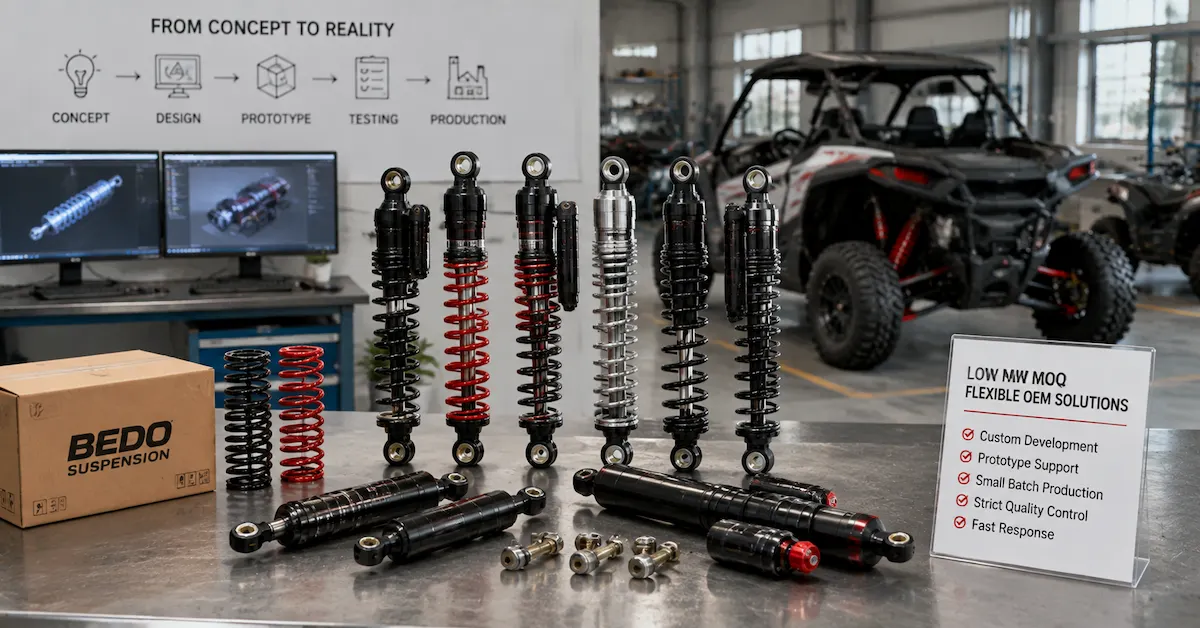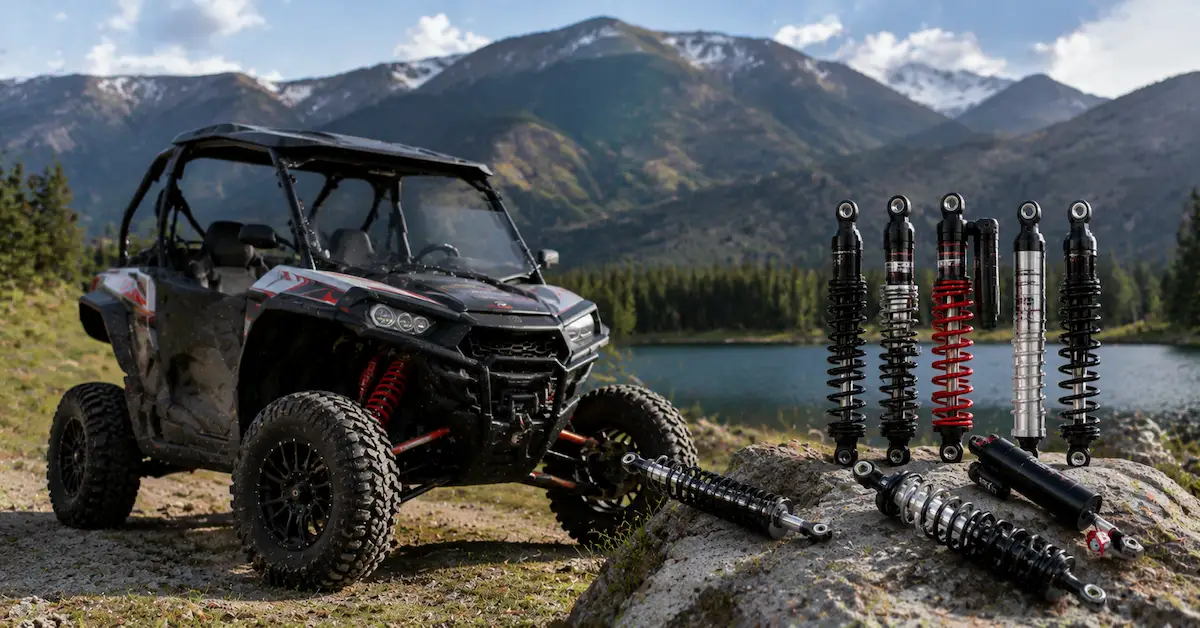

For vehicle manufacturers, aftermarket brands, and engineering companies, suspension prototype development is an essential step before mass production.
A suspension system directly affects:
- Vehicle stability
- Ride comfort
- Load capacity
- Handling performance
- Tire contact
- Safety
- Service life
Before investing in production tooling and large-volume manufacturing, companies need to verify whether the suspension design meets the real application requirements.
A prototype allows engineers to evaluate:
- Shock absorber performance
- Spring characteristics
- Mounting compatibility
- Suspension travel
- Material selection
- Structural strength
- Manufacturing feasibility
A professional suspension prototype supplier helps transform engineering concepts, drawings, and samples into validated products ready for production.
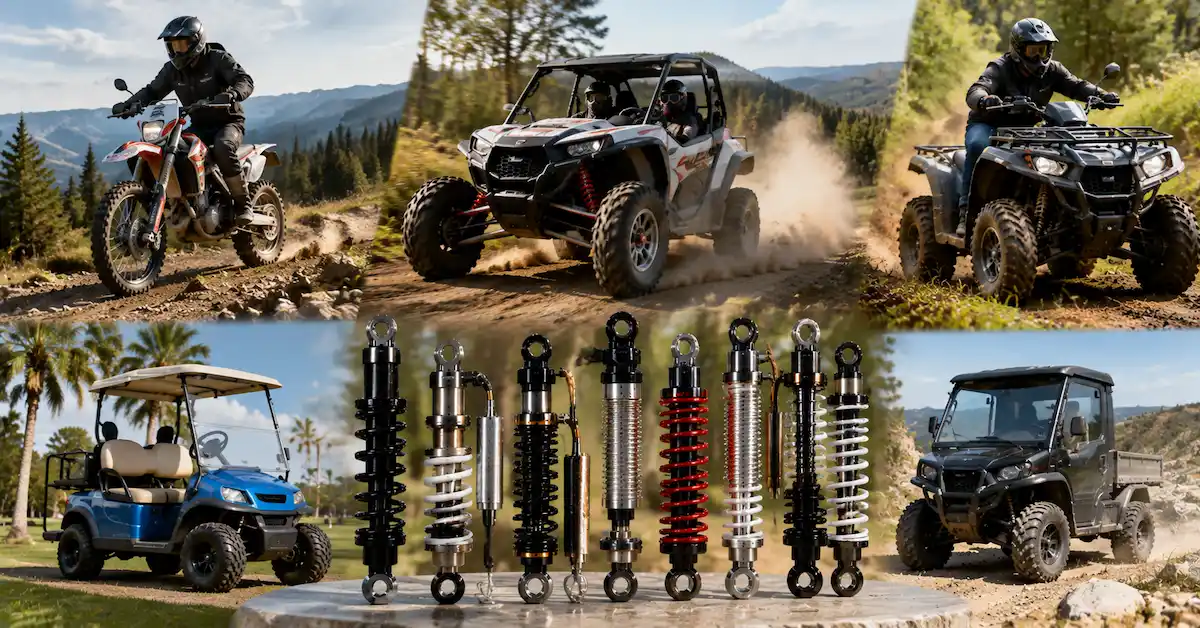
Bedo Auto supports customized suspension prototype development for ATV, UTV, motorcycles, golf carts, utility vehicles, electric vehicles, and specialty vehicle applications.
Why Suspension Prototype Development Is Important
Suspension components involve complex engineering relationships.
A design that looks correct on paper may still fail during real operation because of:
- Incorrect spring rate
- Unsuitable damping
- Poor mounting alignment
- Insufficient stroke
- Structural weakness
- Material limitations
- Installation interference
Without prototype validation, problems may appear after mass production.
Common risks include:
- Expensive redesign
- Production delays
- Increased tooling costs
- Customer complaints
- Warranty issues
- Product recalls
Prototype development allows engineers to discover and solve these issues earlier.
What Is Included in Suspension Prototype Development?
A complete development process may include:
| Development Stage | Main Purpose |
|---|---|
| Requirement analysis | Understand vehicle application |
| Engineering evaluation | Confirm technical feasibility |
| Prototype design | Develop suspension structure |
| Sample manufacturing | Create physical components |
| Testing validation | Verify performance |
| Optimization | Improve design |
| Pilot production | Prepare for mass manufacturing |
A professional supplier supports the entire process instead of only producing a sample.
Applications Requiring Suspension Prototype Development
Different vehicle applications require different suspension solutions.
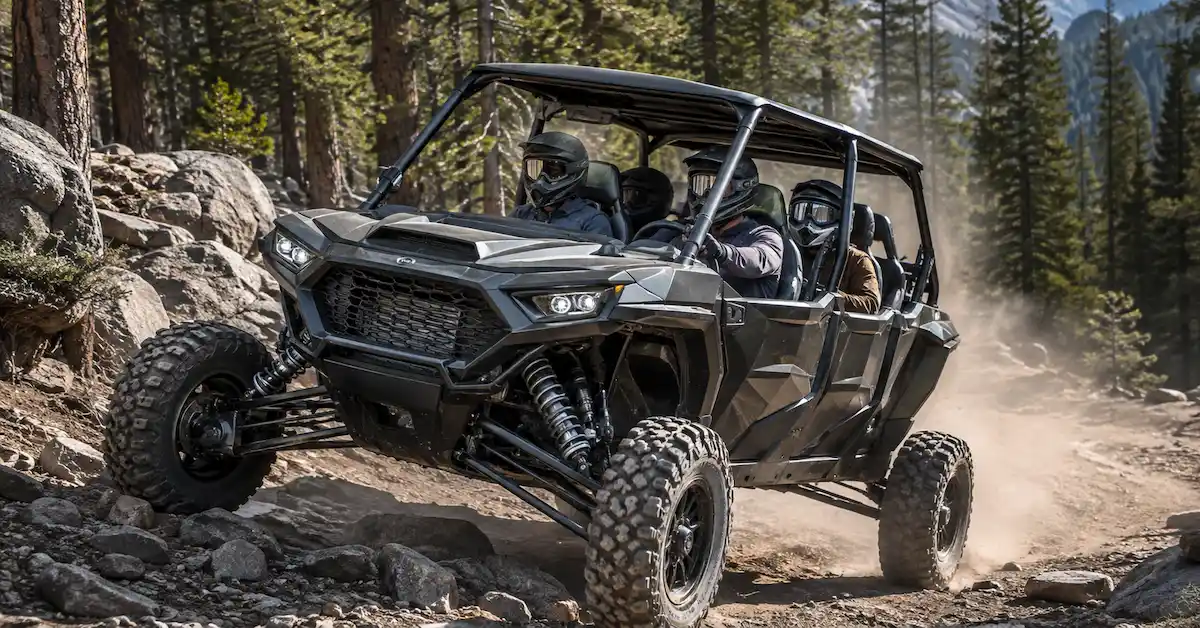
ATV and UTV Suspension
Off-road vehicles require:
- Impact resistance
- Heavy load support
- Long suspension travel
- Durable sealing
- Reliable damping
Prototype testing helps verify performance under:
- Rocks
- Mud
- Uneven terrain
- Heavy payload conditions
Motorcycle Suspension
Motorcycle applications require accurate tuning for:
- Rider weight
- Handling
- Comfort
- Suspension response
- Road conditions
Prototype development helps optimize:
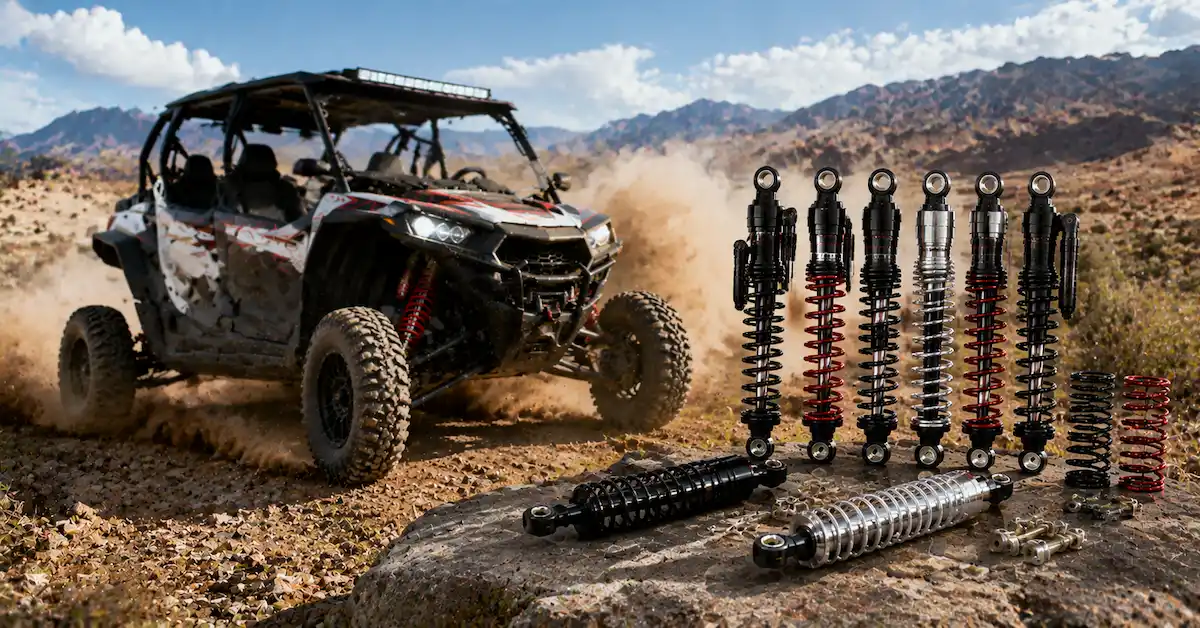
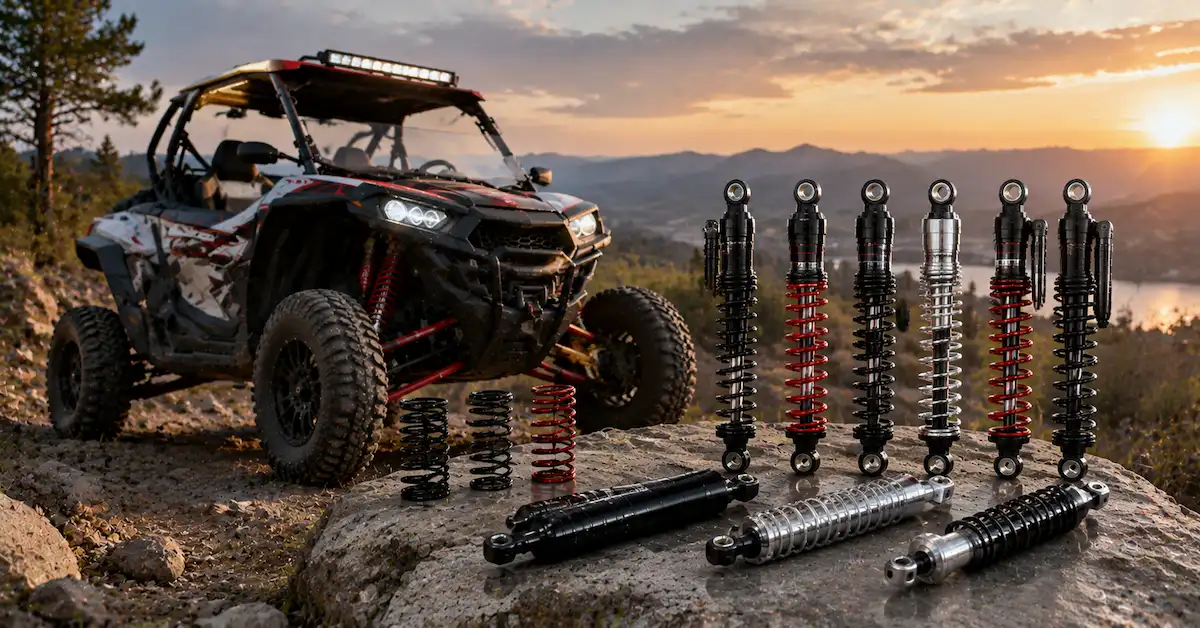
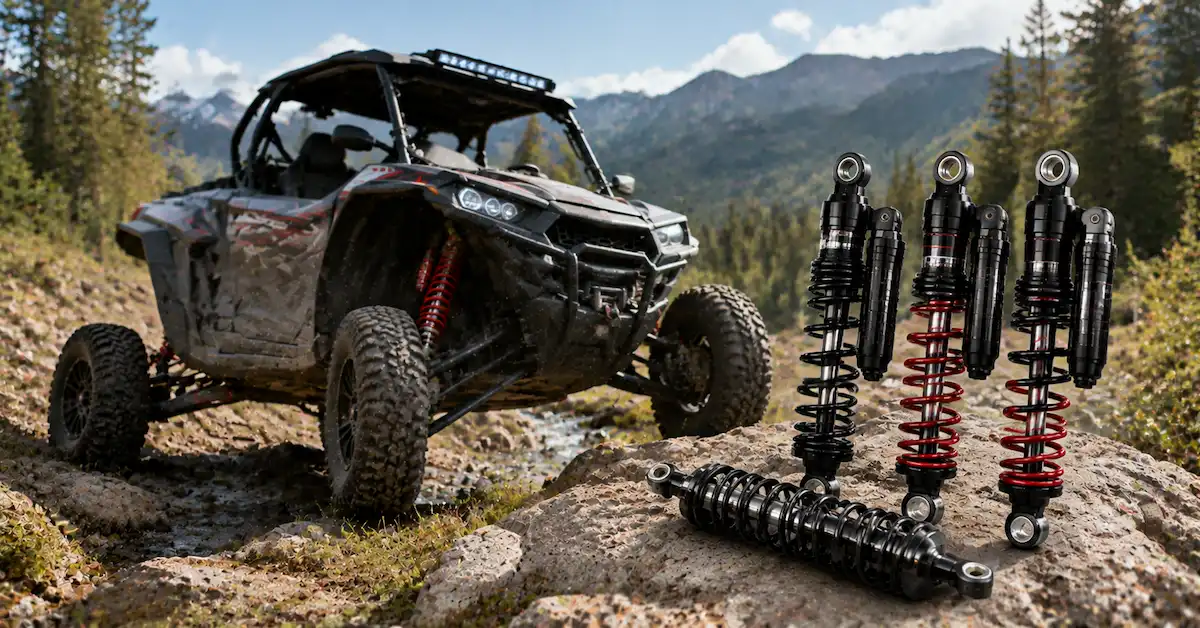
- Rear shock absorbers
- Coil springs
- Mounting structures
- Damping settings
Golf Cart Suspension
Golf carts require suspension systems designed around:
- Passenger comfort
- Battery weight
- Utility loads
- Resort or commercial operation
Prototype testing helps confirm:
- Ride quality
- Load support
- Vehicle stability
Electric Vehicle Suspension
Electric vehicles create unique challenges because of:
- Battery weight
- Different weight distribution
- Increased vehicle mass
- Commercial operation requirements
Custom prototypes help ensure suspension performance matches the vehicle platform.
Key Information Required Before Prototype Development
A successful suspension prototype development project starts with complete technical information.
| Information | Why It Matters |
|---|---|
| Vehicle model | Defines application |
| Vehicle weight | Determines suspension load |
| Payload | Defines support requirements |
| Suspension position | Front or rear design |
| Shock dimensions | Confirms fitment |
| Mounting structure | Ensures installation |
| Wheel travel | Defines suspension movement |
| Operating environment | Determines durability |
| Performance target | Guides tuning |
| Existing sample | Supports analysis |
| Technical drawing | Defines specifications |
| Production quantity | Supports planning |
Buyers should also explain the project objective:
- Replace existing suspension
- Improve performance
- Reduce cost
- Increase durability
- Develop a new vehicle
- Create aftermarket products
Suspension Prototype Development Process
Step 1: Requirement Analysis
Engineers first evaluate:
- Vehicle application
- Load requirements
- Installation space
- Performance expectations
- Operating conditions
This stage defines the development direction.
Step 2: Sample and Drawing Review
Many projects begin with:
- Existing shock absorber samples
- Technical drawings
- CAD files
- Vehicle specifications
Engineers analyze:
- Dimensions
- Mounting points
- Spring requirements
- Suspension geometry
Step 3: Prototype Design
Prototype design may include:
- Shock absorber structure
- Spring selection
- Reservoir configuration
- Mounting design
- Adjustment system
Important factors include:
- Strength
- Weight
- Cost
- Manufacturing feasibility
- Service requirements
Step 4: Prototype Manufacturing
Prototype production may involve:
- CNC machining
- Spring manufacturing
- Welding
- Surface treatment
- Assembly
- Manual adjustment
The purpose is to create a functional product for validation.
Step 5: Testing and Optimization
Prototype testing evaluates:
- Fitment
- Suspension movement
- Ride height
- Load support
- Compression response
- Rebound behavior
Based on results, engineers may adjust:
- Spring rate
- Damping force
- Mounting dimensions
- Material selection
- Structural design
Shock Absorber Prototype Validation
Shock absorbers are critical components in suspension systems.
Prototype validation may include:
Dimensional Testing
Verify:
- Extended length
- Compressed length
- Stroke
- Mounting dimensions
Functional Testing
Evaluate:
- Compression movement
- Rebound recovery
- Adjustment operation
Leakage Testing
Check:
- Oil sealing
- Pressure stability
Load Testing
Verify:
- Structural strength
- Suspension support
Vehicle Testing
Confirm:
- Installation
- Driving behavior
- Real-world performance
Coil Spring Prototype Development
Spring prototypes require evaluation of:
- Wire diameter
- Outer diameter
- Free length
- Coil count
- Spring rate
- Material properties
Spring testing verifies:
- Load capacity
- Compression behavior
- Fatigue performance
The spring must be developed together with the shock absorber because both components work as a complete suspension system.
Material Selection During Prototype Development
Material selection affects:
- Strength
- Durability
- Weight
- Corrosion resistance
- Service life
Important components include:
Shock Body
Requirements:
- High strength
- Heat resistance
- Machining accuracy
Piston Rod
Requirements:
- Wear resistance
- Surface hardness
- Corrosion protection
Spring Material
Requirements:
- Fatigue resistance
- Stable spring rate
- Elastic recovery
Sealing Components
Requirements:
- Oil compatibility
- Temperature resistance
- Long service life
Prototype materials should represent future production materials whenever possible.
Prototype Testing Equipment
A professional suspension development supplier may use:
- Dimensional measuring tools
- Spring testing machines
- Shock dyno testing equipment
- Load testing equipment
- CAD systems
- Inspection equipment
These tools help verify:
- Design accuracy
- Performance consistency
- Manufacturing feasibility
Prototype vs Mass Production
| Factor | Prototype Stage | Mass Production |
|---|---|---|
| Main goal | Validate design | Produce consistently |
| Quantity | Small | Large |
| Flexibility | High | Controlled |
| Changes | Easy | Expensive |
| Focus | Testing and improvement | Efficiency and stability |
A successful prototype creates the foundation for reliable production.
Why Small-Batch Validation Matters
After prototype approval, small-batch production provides additional verification.
It helps confirm:
- Manufacturing consistency
- Assembly process
- Product quality
- Customer installation feedback
Small-batch validation reduces risks before large investment.
How to Choose a Suspension Prototype Supplier
Buyers should evaluate:
Engineering Capability
The supplier should be able to:
- Analyze samples
- Review drawings
- Develop prototypes
- Provide technical recommendations
Manufacturing Capability
Evaluate:
- Machining capability
- Spring production
- Assembly process
- Surface treatment
- Production capacity
Testing Capability
Confirm whether the supplier can perform:
- Dimensional testing
- Leakage testing
- Load testing
- Performance validation
Production Transition Capability
A good prototype supplier should also support:
- Pilot production
- Quality documentation
- Mass manufacturing
How Bedo Auto Supports Suspension Prototype Development
As an experienced suspension prototype development partner, Bedo Auto supports global customers from concept verification to OEM production.
Support includes:
- Sample analysis
- Technical drawing review
- Suspension design support
- Prototype manufacturing
- Spring development
- Shock absorber tuning
- Performance testing
- Small-batch validation
- OEM manufacturing
Applications include:
- ATV
- UTV
- Motorcycle
- Golf cart
- Utility vehicle
- Electric vehicle
- Specialty vehicle
Buyers can review suspension solutions through the Bedo Auto Products page.
For prototype projects, samples, drawings, and technical requirements can be submitted through the Contact Us page.
FAQ
What is suspension prototype development?
It is the process of designing, manufacturing, and testing suspension components before mass production.
Why are suspension prototypes necessary?
Prototypes help verify fitment, performance, durability, and manufacturing feasibility before large investment.
Can suspension prototypes be developed from existing samples?
Yes. Suppliers can analyze existing components and develop improved suspension solutions.
What vehicles require suspension prototypes?
Applications include motorcycles, ATV, UTV, golf carts, electric vehicles, utility vehicles, and specialty vehicles.
How long does prototype development take?
The timeline depends on design complexity, testing requirements, customization level, and project communication.
Can prototypes transition into mass production?
Yes. A qualified supplier should support prototype validation, pilot production, and OEM manufacturing.
Conclusion
Effective suspension prototype development helps vehicle manufacturers and aftermarket brands reduce risks and create reliable suspension systems.
By validating dimensions, materials, spring characteristics, damping performance, and vehicle compatibility before mass production, companies can avoid costly redesigns and production problems.
Through engineering support, prototype manufacturing, testing validation, and OEM production capability, Bedo Auto helps global buyers develop customized suspension solutions for different vehicle applications.