
What Should OEM Buyers Expect From a Premium UTV Shock Supplier?
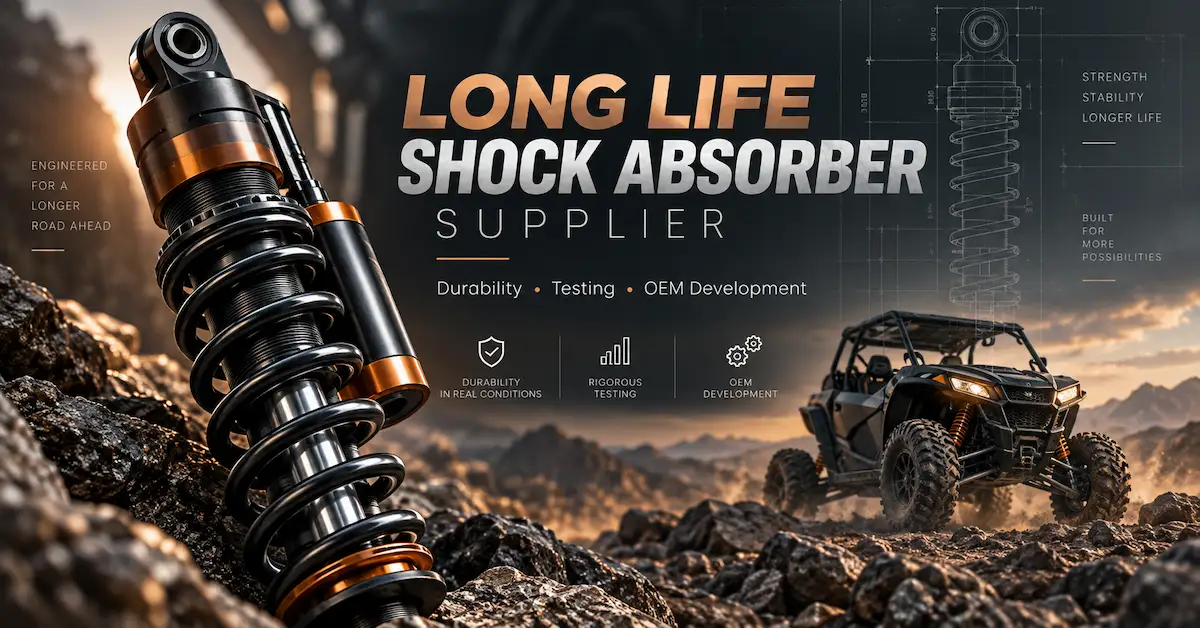
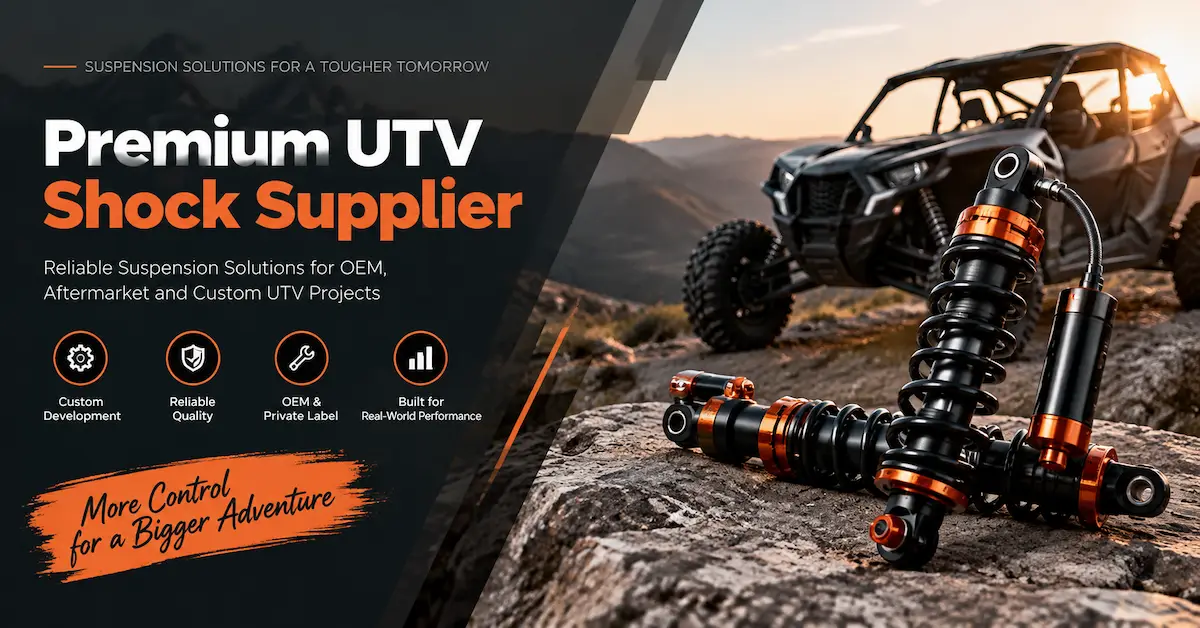
A premium UTV shock supplier should provide more than a finished shock absorber. For OEM manufacturers, aftermarket brands, and distributors, the supplier needs to understand how suspension components work together with vehicle weight, terrain, load conditions, spring specifications, damping requirements, and production goals.
Premium suspension performance is not determined only by product appearance, reservoir size, or the number of adjustment options. A reliable supplier should be able to support the complete development process from application analysis and engineering review to prototype validation and production consistency.
BEDO provides shock absorber and suspension spring solutions for off-road applications, including customized suspension projects. Buyers can review the available UTV and ATV shock absorber products to understand different suspension configurations and application possibilities.
Why Choosing the Right UTV Shock Supplier Matters
UTV suspension systems are designed for demanding environments. Compared with standard vehicle applications, UTV shocks often need to handle:
- uneven terrain;
- repeated impacts;
- changing vehicle loads;
- additional accessories;
- cargo requirements;
- performance-oriented driving conditions.
A supplier that only manufactures according to existing drawings may not provide enough support for a new OEM suspension program.
For OEM buyers, the supplier selection process should consider:
| Evaluation Area | Buyer Concern |
|---|---|
| Engineering capability | Can the supplier analyze the application? |
| Customization ability | Can spring and damping be developed? |
| Prototype support | Can the supplier validate new designs? |
| Testing capability | Are performance checks available? |
| Production control | Can the approved design be reproduced? |
| Communication | Can technical changes be managed clearly? |
The right supplier should help transform vehicle requirements into a controlled suspension solution.
What Defines a Premium UTV Shock Supplier?
A premium supplier usually combines engineering capability, manufacturing experience, testing support, and customization flexibility.
Engineering Capability
A professional UTV suspension supplier should understand:
- suspension geometry;
- shock dimensions;
- spring selection;
- damping requirements;
- vehicle load;
- application environment.
A shock absorber cannot be selected correctly by dimensions alone.
Two UTVs may have similar shock lengths but different:
- suspension layouts;
- weight distribution;
- intended terrain;
- rider expectations.
The supplier should evaluate the complete application instead of simply matching external dimensions.
Customization Capability
OEM and aftermarket customers often require different levels of customization.
Examples include:
- custom shock length;
- different mounting dimensions;
- custom spring rate;
- compression damping;
- rebound damping;
- reservoir configuration;
- private-label appearance.
BEDO's custom shock absorber development process explains that suspension customization should begin with vehicle requirements, technical data, samples, and performance objectives.
Premium UTV Shocks Require Application-Based Development
A common mistake in suspension purchasing is selecting products based only on catalog specifications.
A premium UTV shock supplier should first understand:
- vehicle weight;
- rider load;
- cargo requirements;
- terrain;
- suspension travel;
- tire configuration;
- performance expectations.
For example, a recreational trail UTV and a heavy-duty utility UTV may use similar shock dimensions but require different suspension tuning.
A reliable development process should follow:
Vehicle Requirement
↓
Suspension Specification
↓
Spring and Damping Development
↓
Prototype Testing
↓
Production Approval
This approach reduces the risk of selecting a shock that physically fits but does not perform correctly.
Spring Development Is an Important Supplier Capability
The spring is one of the most important components in UTV suspension performance.
A premium supplier should understand how spring requirements change with:
- vehicle weight;
- rider weight;
- passenger load;
- cargo;
- accessories;
- suspension geometry.
A heavier spring is not automatically better.
An excessively stiff spring can reduce comfort and suspension compliance, while an insufficient spring can create:
- excessive sag;
- reduced ground clearance;
- frequent bottoming;
- poor load support.
BEDO's custom spring rate guide explains why spring selection should consider actual vehicle conditions rather than only maximum load.
Custom Damping Separates Premium From Standard Products
The main difference between basic replacement shocks and premium suspension solutions often comes from damping development.
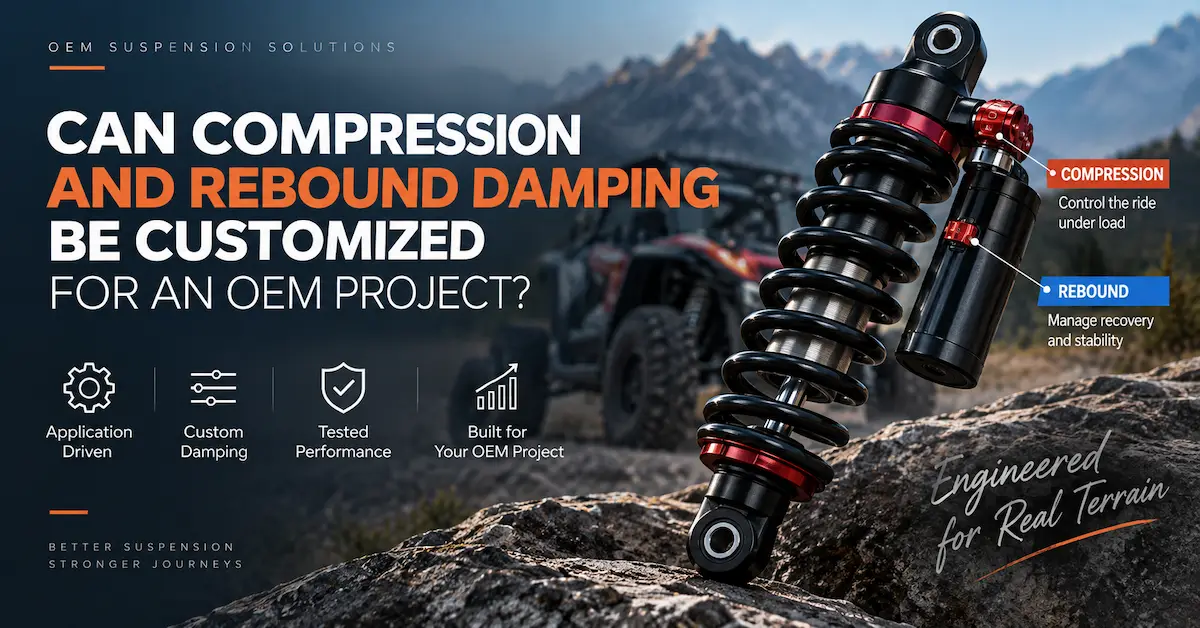
Compression damping controls suspension movement during compression.
Rebound damping controls suspension recovery after compression.
A premium UTV shock supplier should understand how damping interacts with:
- spring rate;
- vehicle load;
- suspension geometry;
- terrain;
- driving style.
BEDO's compression and rebound damping customization guide explains that damping should be developed around application requirements rather than simply increasing resistance.
A supplier should be able to discuss:
- damping objectives;
- prototype adjustments;
- testing methods;
- production consistency.
Should OEM Buyers Choose Adjustable UTV Shocks?
Adjustable shocks can provide additional tuning flexibility, but they also introduce more complexity.
Common adjustment functions include:
- preload adjustment;
- compression adjustment;
- rebound adjustment.
Before selecting adjustable suspension, buyers should understand:
- what each adjustment changes;
- the validated adjustment range;
- the factory baseline setting;
- how production units are controlled.
More adjustment does not automatically mean better suspension.
The best solution is the one that provides meaningful control for the intended application.
Remote Reservoir Systems Require Additional Engineering
Remote reservoir shocks are commonly associated with performance-oriented UTV applications, but they should be selected based on actual requirements.
A reservoir system can introduce additional considerations:
- reservoir position;
- hose routing;
- mounting;
- sealing points;
- packaging clearance.
A premium supplier should evaluate whether the architecture provides a real benefit for:
- thermal management;
- packaging;
- performance requirements;
- vehicle usage.
BEDO's remote reservoir shock guide discusses reservoir-related suspension considerations.
Prototype Validation Is Essential for OEM Projects
A premium UTV shock supplier should support prototype development before mass production.
Prototype validation can confirm:
- installation;
- mounting compatibility;
- spring behavior;
- damping performance;
- clearance;
- vehicle response.
BEDO's prototype shock absorber development guide explains why prototypes help verify engineering assumptions before larger production commitments.
For OEM buyers, prototype testing reduces the risk of discovering problems after inventory has already been manufactured.
Testing Capability Should Be Part of Supplier Evaluation
A supplier’s testing capability is an important part of long-term reliability.
Relevant checks may include:
- dimensional inspection;
- leakage testing;
- damping verification;
- adjustment testing;
- vehicle validation;
- production inspection.
BEDO's shock absorber testing guide covers different validation areas used during suspension development.
A buyer should ask:
- Which tests are available?
- Which tests are included in development?
- Which tests are used for production control?
- How are results recorded?
Testing should support engineering decisions, not simply become a marketing statement.
How Should Buyers Compare Premium UTV Shock Suppliers?
Price alone is not enough when selecting a suspension partner.
A better comparison includes:
| Factor | Questions |
|---|---|
| Product capability | Does the supplier support the required shock type? |
| Engineering | Can they help solve suspension problems? |
| Customization | Can spring and damping be developed? |
| Testing | Can performance be verified? |
| Manufacturing | Can production remain consistent? |
| Documentation | Are revisions controlled? |
| Communication | Are technical changes managed effectively? |
| Long-term support | Can the supplier support future orders? |
A premium supplier should provide confidence throughout the product lifecycle.
OEM, Aftermarket, and Distributor Requirements Are Different
Different customers should evaluate suppliers differently.
UTV Manufacturers
Important factors:
- engineering cooperation;
- prototype support;
- production stability;
- technical documentation.
Aftermarket Suspension Brands
Important factors:
- performance differentiation;
- customization;
- branding;
- product consistency.
Distributors
Important factors:
- reliable supply;
- product coverage;
- replacement support;
- application accuracy.
The best supplier depends on the buyer’s business model and technical requirements.
MOQ and Lead Time Should Be Evaluated Carefully
Custom suspension projects often include several stages:
- prototype;
- revision;
- pilot batch;
- production.
Buyers should not only ask:
“What is the MOQ?”
They should ask:
- prototype quantity;
- pilot quantity;
- production MOQ;
- repeat-order conditions.
BEDO's custom shock absorber MOQ guide explains why quantities can depend on customization, components, testing, and production requirements.
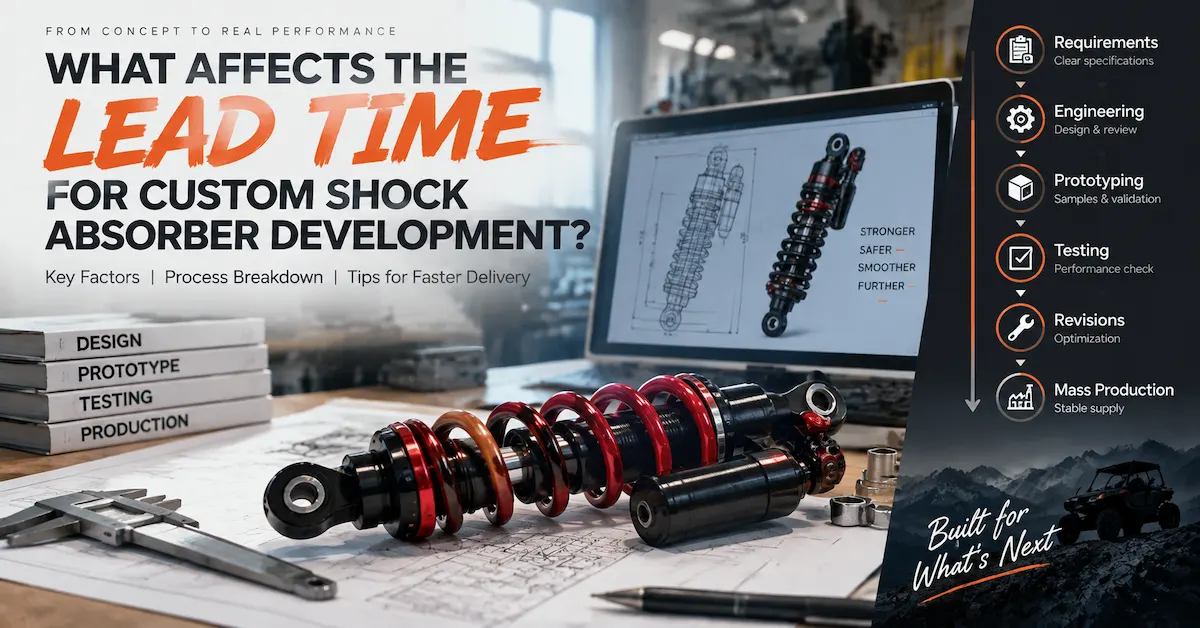
Development schedules should also separate:
- engineering review;
- prototype production;
- testing;
- revisions;
- mass production.
BEDO's custom shock development lead time guide provides related planning considerations.
What Information Should Buyers Provide a UTV Shock Supplier?
A complete RFQ helps suppliers provide a more accurate solution.
Recommended information includes:
| Information | Purpose |
|---|---|
| Vehicle model | Defines application |
| Suspension position | Determines product requirements |
| Existing shock | Provides reference |
| Dimensions | Defines fitment |
| Vehicle weight | Supports spring selection |
| Rider/cargo load | Supports tuning |
| Terrain | Defines performance target |
| Tire configuration | Checks clearance |
| Spring requirements | Defines load support |
| Damping requirements | Defines tuning direction |
| Drawings/CAD | Supports engineering |
| Prototype plan | Defines development scope |
| Production forecast | Supports planning |
BEDO's ATV suspension RFQ data guide provides related information for preparing technical requirements.
How BEDO Supports UTV Suspension Development
BEDO supports suspension projects involving:
- shock absorber customization;
- spring development;
- damping adjustment;
- prototype validation;
- low-volume production;
- OEM supply.
For buyers searching for a premium UTV shock supplier, the key is finding a partner that understands both engineering requirements and production needs.
Prepare:
- vehicle information;
- suspension requirements;
- load conditions;
- prototype goals;
- expected quantity.
Then contact BEDO through Contact Us for project evaluation.
Frequently Asked Questions
1. What Makes a Premium UTV Shock Supplier Different?
A premium supplier supports engineering, customization, testing, and production consistency instead of only manufacturing standard replacement products.
2. Can a Premium UTV Shock Supplier Customize Spring Rate?
Yes. Spring development can be adjusted according to vehicle load, suspension requirements, and application conditions.
3. Can Compression and Rebound Damping Be Customized?
Yes. Suitable shock designs can be developed with application-specific damping characteristics.
4. Are Adjustable Shocks Always Better?
No. Adjustment should provide meaningful value for the intended application. A fixed validated setup can also be suitable.
5. Do Premium UTV Shocks Require Remote Reservoirs?
Not always. Reservoir systems should be selected according to performance and packaging requirements.
6. How Are Custom UTV Shocks Validated?
Validation may include fitment checks, damping evaluation, leakage inspection, vehicle testing, and production verification.
7. Can a Supplier Support Low-Volume UTV Shock Orders?
Many custom suspension projects begin with prototypes or smaller batches before scaling into production.
8. What Data Should Be Sent Before Requesting a Quote?
Provide vehicle information, shock dimensions, loads, terrain, spring requirements, damping goals, drawings or samples, and production expectations.
9. How Long Does Custom UTV Shock Development Take?
Timing depends on engineering scope, prototype requirements, testing, revisions, and production preparation.
10. How Should I Select the Right UTV Shock Supplier?
Compare engineering ability, customization support, testing capability, quality control, communication, and long-term supply reliability.
Conclusion
Selecting a premium UTV shock supplier requires evaluating more than product specifications or pricing. A reliable suspension partner should understand vehicle applications, spring requirements, compression and rebound damping, prototype validation, testing methods, production control, and long-term OEM requirements. Premium suspension performance comes from developing the right system for the vehicle rather than simply adding more features. The ideal process is Vehicle Requirements → Suspension Engineering → Spring and Damping Development → Prototype Testing → Validation → Production Control. BEDO supports custom shock absorber and suspension spring projects for ATV and UTV applications, including OEM-oriented development and low-volume production. To evaluate your suspension project, contact BEDO with your vehicle data, technical requirements, prototype objectives, and production plans to discuss the appropriate premium UTV shock supplier solution.