
How Shock Absorber Manufacturers Adapt to Different Terrains and Payloads
Terrain Shapes the Suspension Challenge
No single terrain drives shocks the same way. A shock absorber manufacturer must design with extremes in mind:
-
Desert racing creates relentless cycles of rebound and compression, with oil temperatures spiking inside dampers.
-
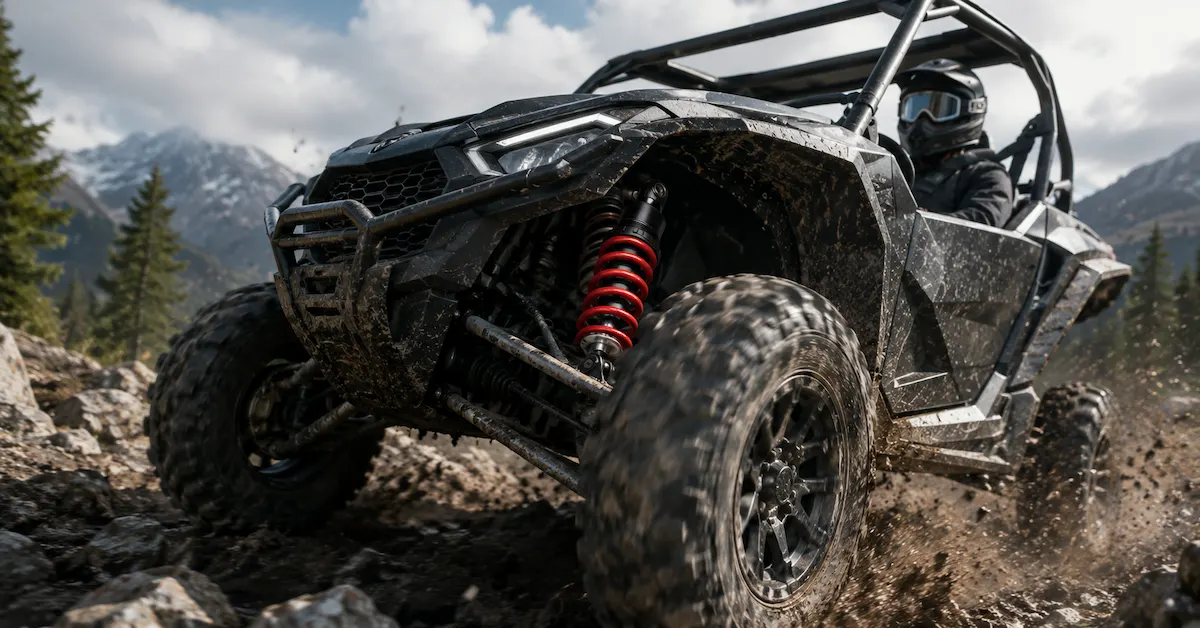
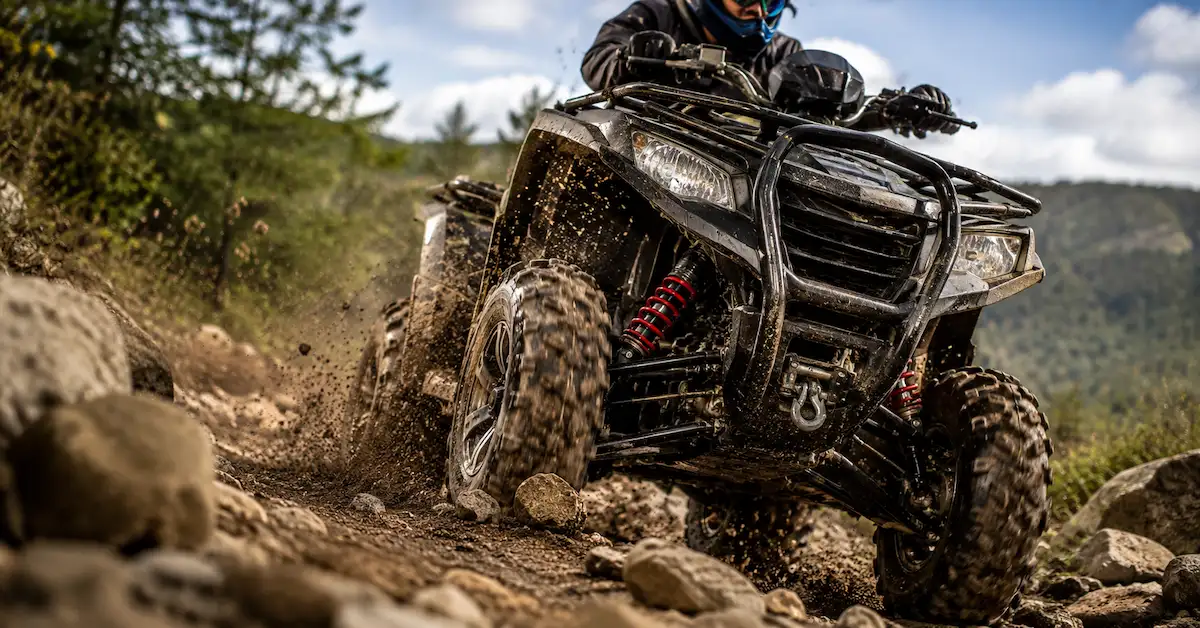
Mountain trails deliver sharp impacts at low speeds, demanding agility and traction control.
-
Mixed terrain riding forces shocks to transition quickly between soft and hard surfaces.
The manufacturer’s challenge is turning chaotic ground inputs into predictable vehicle behavior—something that requires both material strength and intelligent damping design.
Payloads: The Hidden Variable in Suspension Design
Even on the same terrain, a vehicle’s payload drastically changes suspension demands. Carrying tools, extra passengers, or towing equipment places unique strain on coil springs and damping systems.
For example:
-
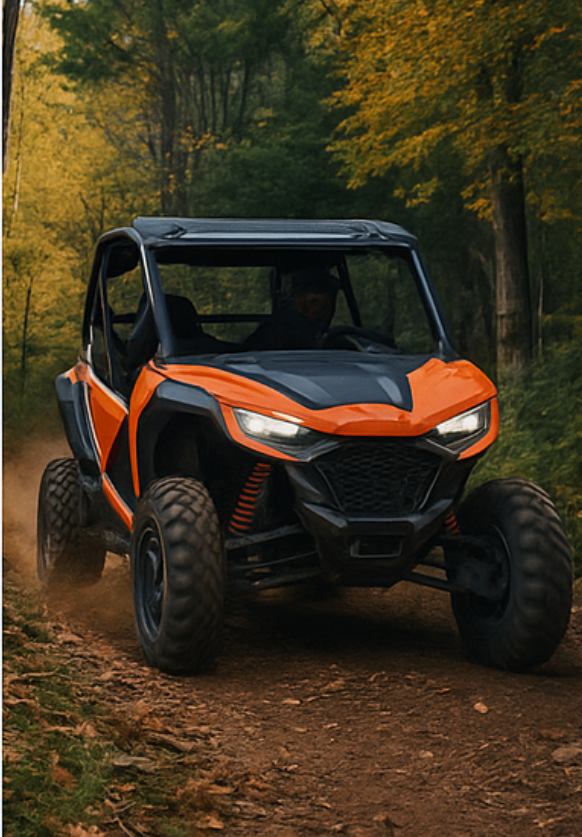
Utility UTVs require stiffer compression resistance to prevent bottoming out under heavy cargo.
-
Trail ATVs often prioritize progressive rebound for comfort during long rides.
-
Sport buggies with uneven load distribution stress shocks asymmetrically, requiring reinforced mounts.
A reliable factory doesn’t just provide “stronger parts”—it engineers solutions that account for how load shifts in real-world conditions.
Manufacturing Responses: How Factories Adapt
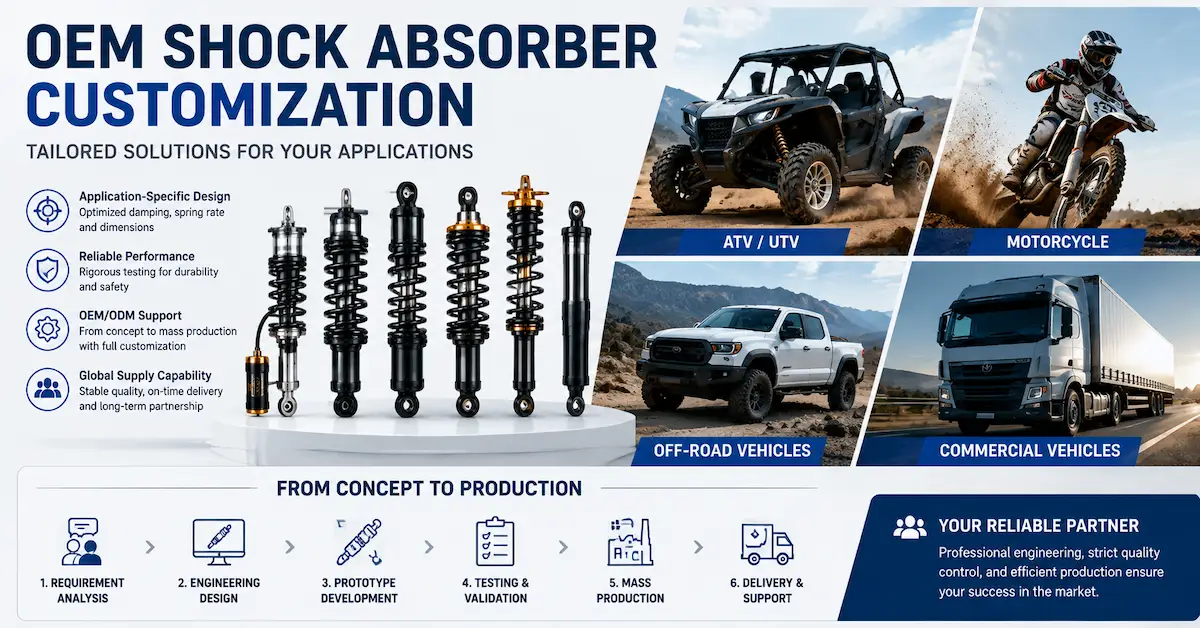
To meet these challenges, top-tier shock absorber manufacturers adapt their production in several ways:
-
Material selection → heat-treated steels, advanced alloys, and protective coatings for durability.
-
Custom valving → tuned piston systems to deliver damping curves suited for each terrain.
-
Spring integration → progressive or dual-rate springs for better adaptability across load ranges.
-
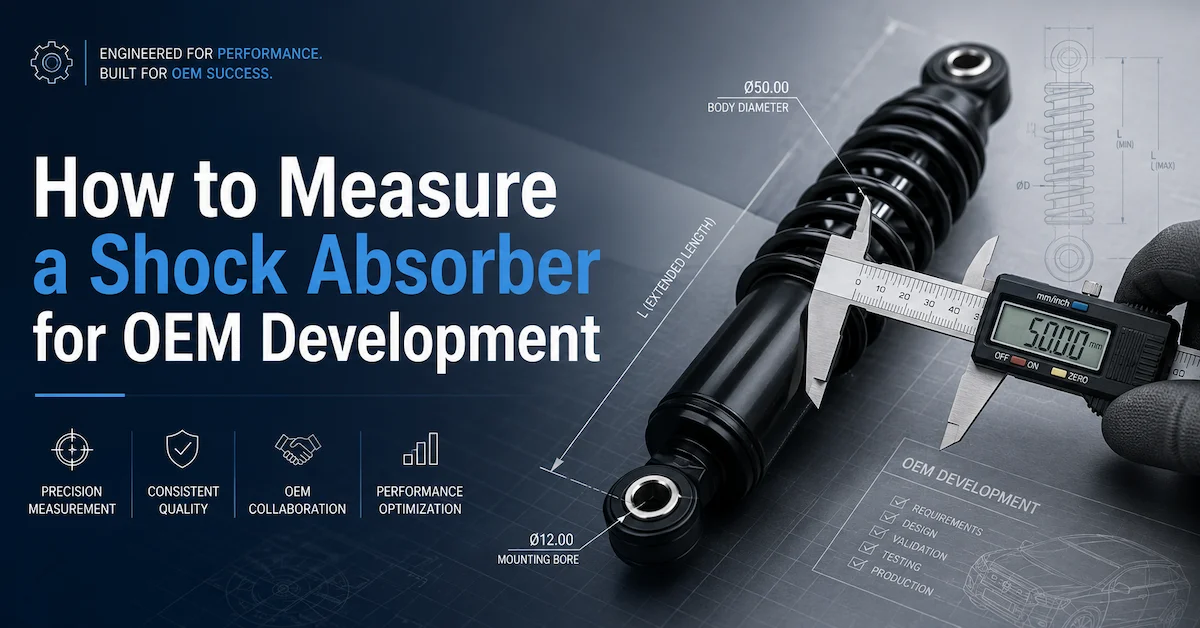
Platform-specific geometry → bore sizes, stroke lengths, and mounting points matched to vehicle design.
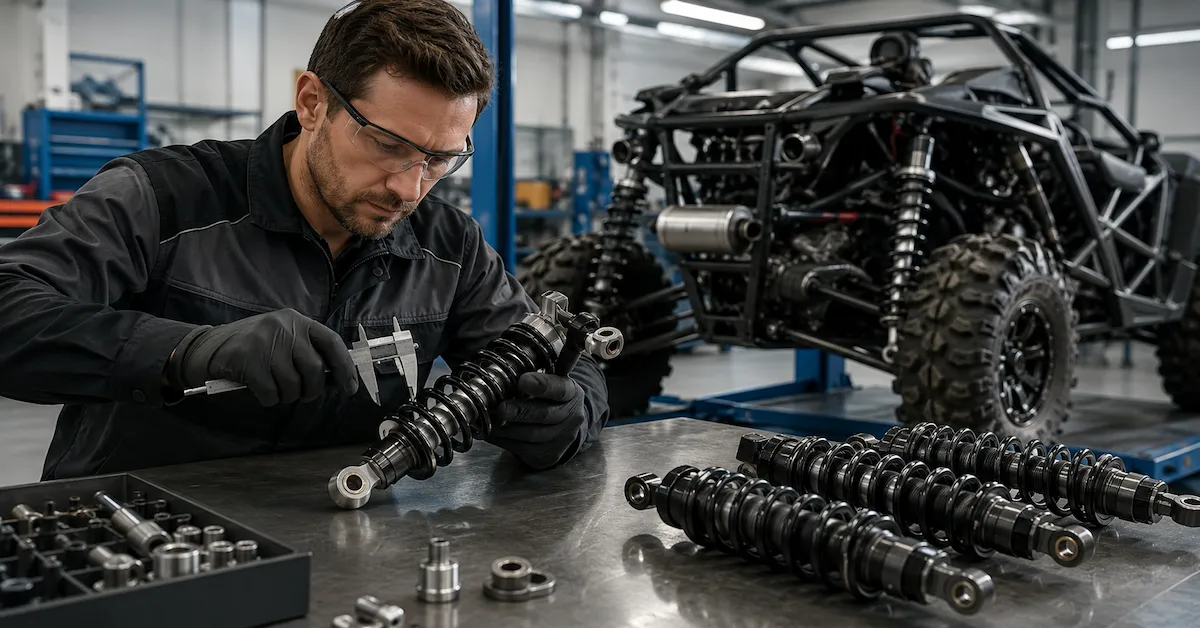
At Bedo, each of these factors is validated through CAD modeling, terrain simulation, and fatigue testing before production scaling.
Testing for Real Conditions
A factory’s credibility is proven not on paper but in testing. Bedo’s validation includes:
-
Fatigue tests with over 100,000 compression cycles.
-
Salt spray trials to simulate corrosion from coastal or winter exposure.
-
Thermal fade tests replicating desert racing conditions.
-
Dynamic rebound checks for fast terrain transitions.
By simulating field stresses, we ensure every shock absorber can handle the same punishment riders and machines face daily.
Bedo’s Edge in Terrain and Payload Engineering
Unlike suppliers who sell generic parts, Bedo engineers suspension with terrain and payload diversity as the design starting point.
-
Utility platforms → load-calibrated springs with heavy-duty damping.
-
Sport vehicles → agile shocks with quick rebound and heat management.
-
Trail machines → balanced systems for comfort and consistent traction.
Backed by ISO-certified processes, our shocks meet OEM standards while providing flexibility for aftermarket distributors.
Adaptability Defines Reliability
A shock absorber’s value is not judged on the factory floor—it is proven in deserts, mountains, and work fields. Manufacturers that adapt their systems to terrain and payload deliver reliability; those that don’t risk premature failures.
At Bedo, our shocks are built to handle it all: harsh environments, variable payloads, and demanding OEM requirements. We don’t just manufacture parts—we engineer confidence.
Explore Bedo’s suspension solutions
Contact us for OEM-ready shock absorber projects