
Nitrogen Charged Motorcycle Dampers: Engineering Stability for Demanding Terrains
Why Traditional Dampers Fail in Real-World Conditions
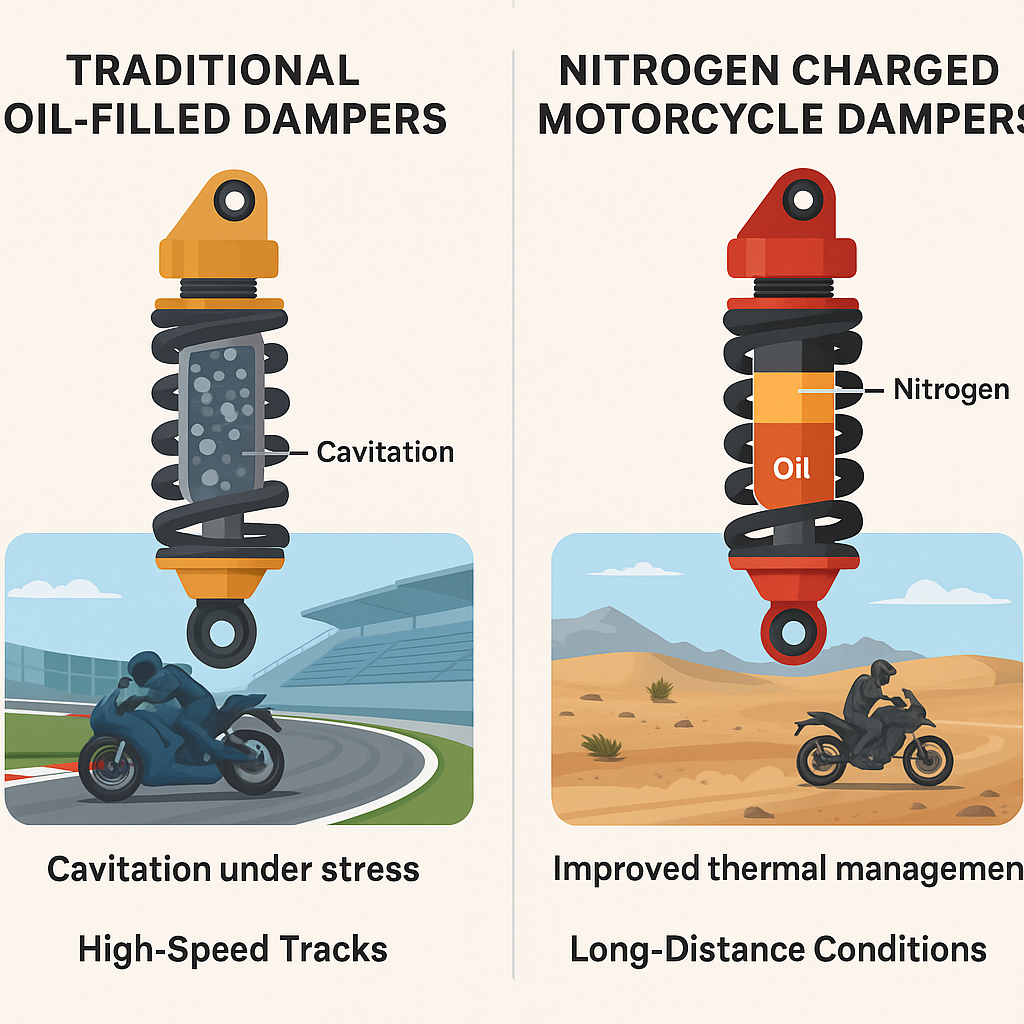
In conventional oil-filled dampers, continuous compression leads to cavitation—tiny air bubbles form in the oil when pressure drops during rapid movement. These bubbles collapse under load, reducing damping force and creating unpredictable handling.
Symptoms include:
-
Loss of rebound control during aggressive riding.
-
Overheating after long operation, leading to “suspension fade.”
-
Reduced service life as seals and oil degrade faster.
For motorcycles facing heavy loads or rough terrain, these failures are not minor inconveniences—they are system-breaking issues.
What Nitrogen Charging Brings to Suspension Systems
A nitrogen charged motorcycle damper introduces high-pressure nitrogen gas into a sealed chamber above the oil. This prevents cavitation, maintains consistent damping, and resists thermal fade.
Key Advantages
-
Stable Damping Force → Smooth control even in high-frequency impacts.
-
Thermal Management → Nitrogen keeps fluid pressure stable under heat.
-
Extended Component Life → Less wear on seals, longer intervals before replacement.
-
Predictable Handling → Improved stability across variable terrain.
According to testing by Motorcycle Industry Council, nitrogen-charged dampers can maintain up to 30% more consistent damping compared to standard oil-only systems after prolonged stress testing.
Environments Where Nitrogen Dampers Excel
-
High-Speed Tracks → Continuous damping demands at extreme velocity.
-
Mountain Roads and Trails → Uneven terrain requires responsive rebound control.
-
Heavy-Duty Work Conditions → Continuous load-bearing needs suspension that resists sagging.
-
Extended Touring → Hours of riding under changing conditions test the damper’s ability to resist fade.
Here, performance dampers ensure vehicles remain stable, reducing fatigue and minimizing downtime for maintenance.
Technical Comparison: Traditional vs. Nitrogen Charged Dampers
| Feature | Traditional Oil-Filled Damper | Nitrogen Charged Motorcycle Damper |
|---|---|---|
| Cavitation Resistance | Poor, bubbles form under stress | High, nitrogen prevents bubble formation |
| Thermal Stability | Limited, oil overheats quickly | Excellent, gas maintains pressure under heat |
| Damping Consistency | Declines over long use | Stable even after extended cycles |
| Service Life | Shorter, seals degrade faster | Longer, components face less stress |
| Application Scope | Light to moderate use | Heavy-duty, racing, touring, rough terrain |
This makes nitrogen charging not a “luxury upgrade,” but a necessary standard for performance and reliability.
Manufacturing and Validation: Where Reliability Begins
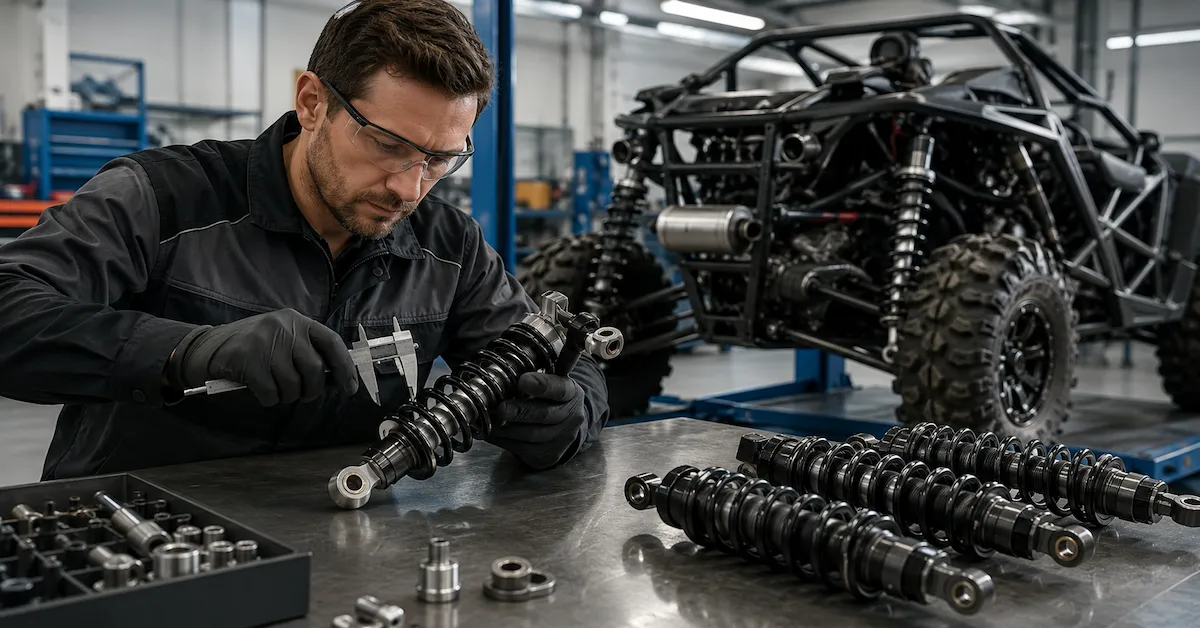
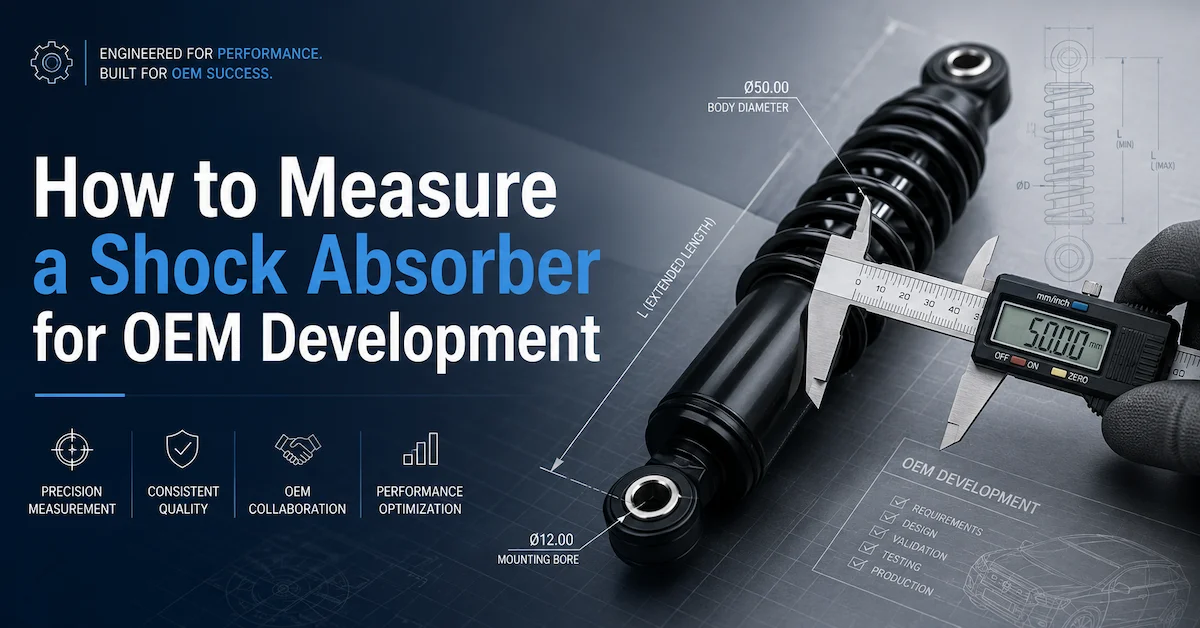
The reliability of a motorcycle suspension system depends on more than design—it relies on manufacturing precision and rigorous validation.
Core Practices in Advanced Damper Production
-
CNC Machining → Guarantees consistent geometry and tight tolerances.
-
High-Grade Alloys → Heat-treated steel ensures rod strength and fatigue resistance.
-
Sealed Nitrogen Chambers → Prevents leakage and pressure drop.
-
Surface Treatments → Anti-corrosion coatings extend service life in harsh climates.
-
Fatigue Testing → Simulates over 100,000 compression cycles to validate durability.
At Bedo, these practices are standard, not optional.
Bedo’s Approach to Nitrogen Charged Dampers
As a suspension manufacturer, Bedo integrates material science, precision engineering, and rigorous validation to create dampers that perform under extreme conditions.
-
Performance Focus → Stable damping in high-stress riding conditions.
-
Consistency → Every batch produced with ISO-certified quality standards.
-
Adaptability → Designs refined for different suspension geometries and environments.
-
Durability → Proven in fatigue, thermal, and corrosion resistance testing.
Bedo’s nitrogen charged dampers represent not just a product, but a complete engineering solution.
Damping That Defines Control
Suspension is more than a comfort system—it is the foundation of motorcycle stability and control. Conventional designs can’t keep up with the demands of modern environments.
By contrast, nitrogen charged motorcycle dampers ensure consistent damping, improved thermal management, and longer service life.
At Bedo, every damper is engineered with these principles in mind, combining advanced materials, precise manufacturing, and validated performance—so suspension systems deliver reliability where it matters most.
View Bedo’s motorcycle suspension products
Contact Bedo for suspension projects