
Ningbo Bedo Auto Parts Co., Ltd.

+86 13123836189

Heat and Fade: The Invisible Threat to ATV Shock Performance

Posted by NingboBEDO On Sep 01 2025

ATV shock manufacturer

Heat and Fade: The Invisible Threat to ATV Shock Performance

Not All Shock Failure Is Loud

Most ATV riders think of shock failure as a dramatic event—a broken shaft, a leaking seal, a loud knock. But in reality, many suspension systems fail silently, through a process called fade.

Fade isn’t the result of one hit. It’s the result of heat build-up, fluid degradation, and internal pressure loss over time. And it happens faster in aggressive riding, high-speed terrain, or heavy-load conditions.

Understanding how thermal management affects ATV shock performance is critical to building—and choosing—durable, ride-stable suspension systems.

What Causes Shock Fade?

Fade is the gradual loss of damping control due to temperature-related changes inside the shock body. The core causes include:

  • Heat buildup in the shock oil from repeated compression

  • Aeration or foaming of oil under high-speed movement

  • Seal expansion and friction changes

  • Gas pressure drop in non-separated chambers

The result: damping force weakens, rebound becomes inconsistent, and the rider feels float, bounce, or loss of tire contact.

When Does It Happen Most?

Shock fade is most likely during:

  • Long-distance high-speed riding

  • Repeated off-road jumps or drops

  • High ambient temperatures (summer riding)

  • Heavy loads or towing

Even a well-tuned ATV shock can fade if the internal system isn’t designed for thermal resilience.

What Bedo Does to Prevent Shock Fade

As a performance-focused ATV shock manufacturer, Bedo incorporates multiple strategies into our suspension systems to protect against thermal breakdown:

1. High-Viscosity, Heat-Stable Shock Oil

Our oils are engineered to resist viscosity thinning and bubble formation, even under repeated compression cycles and temperature swings.

2. Nitrogen-Charged IFP Design

We use Internal Floating Piston (IFP) designs to separate gas from oil, maintaining consistent pressure and preventing aeration.

3. Thermal-Stable Seal Materials

Our seals are made from materials that maintain integrity across temperature extremes—reducing drag and leak risk.

4. Optional External Reservoirs

For high-performance applications, we offer external reservoir configurations that increase oil volume and improve heat dissipation.

How You Can Tell a Shock Is Fading

Unlike structural failures, fade shows up in subtle ways:

  • Suspension feels “soft” after long rides

  • Ride height appears lower under same load

  • ATV feels “floaty” or less responsive

  • Small bumps become more noticeable

  • Heat is detectable by touch on the shock body

These are signs the system has lost its damping capacity temporarily—or permanently.

Heat Is a Hidden Factor—But Not an Unsolvable One

In the world of ATV suspension, performance isn’t just about strength or stiffness. It’s about stability under changing conditions.
And nothing changes shock conditions more than heat.

At Bedo, we design every shock system with thermal fatigue in mind—because your terrain doesn’t cool down just because your shock isn’t ready.

Explore our fade-resistant shock systems
Contact us to discuss terrain-specific thermal tuning
Featured Blogs
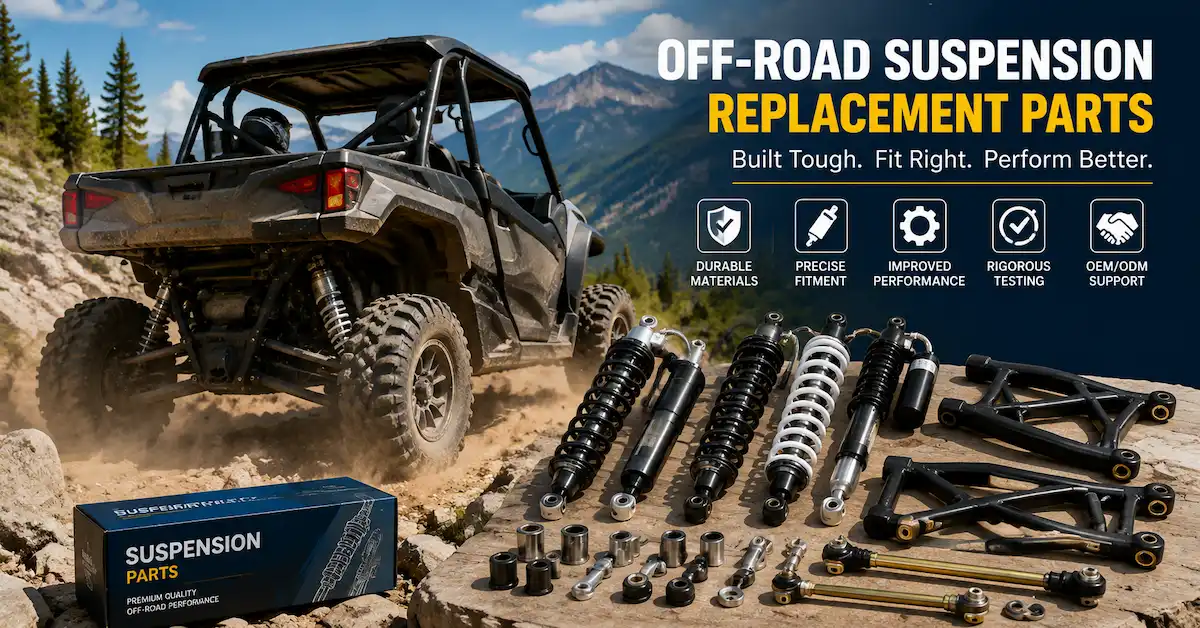
Off-Road Suspension Replacement Parts: B2B Sourcing Guide

Off-Road Suspension Replacement Parts: B2B Sourcing Guide

Off-road suspension replacement parts must restore correct fitment, load support, damping control, suspension travel, durability, and reliable vehicle handling. This guide helps importers, wholesalers, distributors, repair-parts brands, and aftermarket buyers evaluate shock absorbers, springs, bushings, mounts, materials, testing, customization, and supplier capabilities.

UTV Replacement Shock Absorber: B2B Sourcing Guide

UTV Replacement Shock Absorber: B2B Sourcing Guide

A reliable UTV replacement shock absorber must restore correct fitment, load support, damping control, suspension travel, and durability. This guide helps importers, wholesalers, distributors, repair-parts brands, and aftermarket buyers evaluate dimensions, spring rates, damping, materials, testing, customization, and supplier capabilities.

ATV Replacement Suspension Parts: B2B Sourcing Guide

ATV Replacement Suspension Parts: B2B Sourcing Guide

ATV replacement suspension parts must restore correct fitment, load support, damping control, durability, and stable suspension movement. This guide helps importers, wholesalers, distributors, repair-parts brands, and aftermarket buyers evaluate shock absorbers, springs, bushings, mounts, quality control, customization, and supplier capabilities.

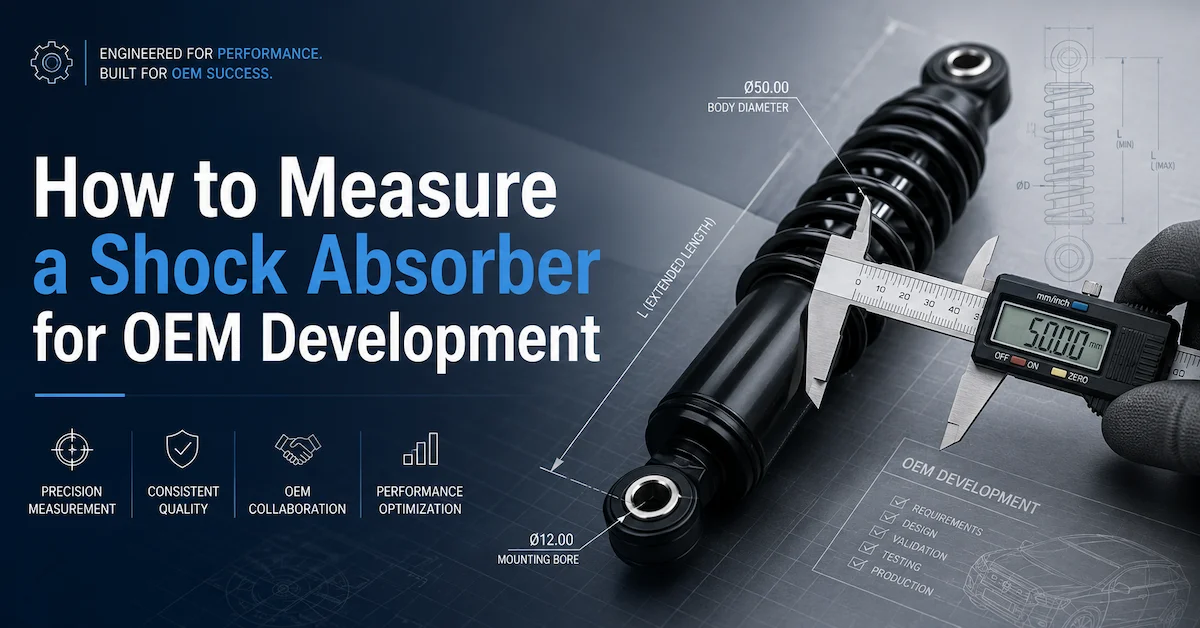
How to Measure a Shock Absorber for OEM Development

How to Measure a Shock Absorber for OEM Development

Accurate shock absorber measurements are essential for correct fitment, suspension travel, spring matching, and OEM product development. This guide explains how B2B buyers should measure extended length, compressed length, stroke, mounting dimensions, spring specifications, and installation geometry before requesting a customized shock absorber quotation.

Dirt Bike Suspension Supplier China: OEM Sourcing Guide for Global Buyers

Dirt Bike Suspension Supplier China: OEM Sourcing Guide for Global Buyers

A professional dirt bike suspension supplier China buyers can work with should provide more than standard replacement parts. The supplier must understand rider weight, suspension linkage, spring rate, damping, shock travel, terrain, sealing, heat management, prototype validation, and repeatable production. This guide explains how global manufacturers, importers, distributors, and aftermarket brands can evaluate a Chinese dirt bike suspension supplier for OEM and ODM projects.

Dirt Bike Shock Absorber OEM: Technical Sourcing Guide for Global Buyers

Dirt Bike Shock Absorber OEM: Technical Sourcing Guide for Global Buyers

A dirt bike shock absorber OEM project requires more than matching overall dimensions. Spring rate, damping force, stroke, linkage geometry, rider weight, terrain, heat management, sealing, and mounting strength must work together. This guide explains customization, prototype development, testing, quality control, and supplier evaluation for dirt bike manufacturers, importers, distributors, and aftermarket brands.