
Choosing a reliable dirt bike suspension supplier China is an important decision for motorcycle manufacturers, importers, distributors, suspension brands, modification companies, and private-label aftermarket businesses.
Dirt bike suspension must operate under repeated jumps, rocks, roots, mud, dust, rapid compression cycles, and changing rider loads. A product that looks similar to the original shock absorber may still perform poorly if its spring rate, stroke, compression damping, rebound damping, mounting dimensions, sealing structure, or reservoir configuration is incorrect.
For B2B buyers, price is only one part of the purchasing decision. The supplier must also be able to understand the motorcycle application, convert samples or drawings into controlled specifications, produce prototypes, support realistic testing, and reproduce approved performance consistently.
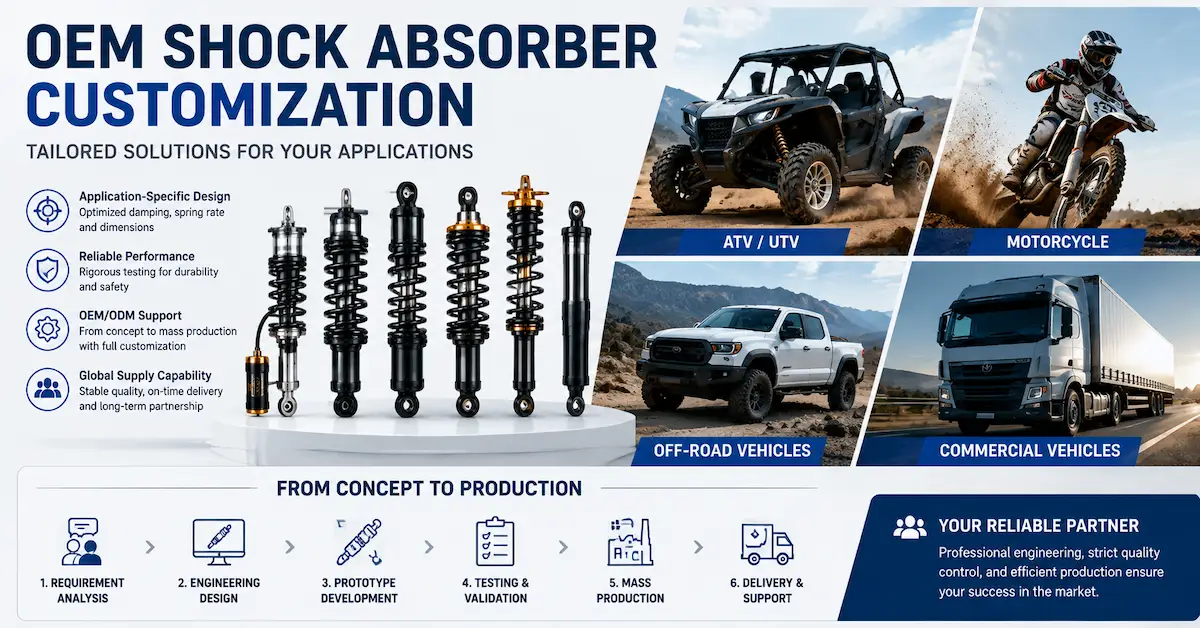
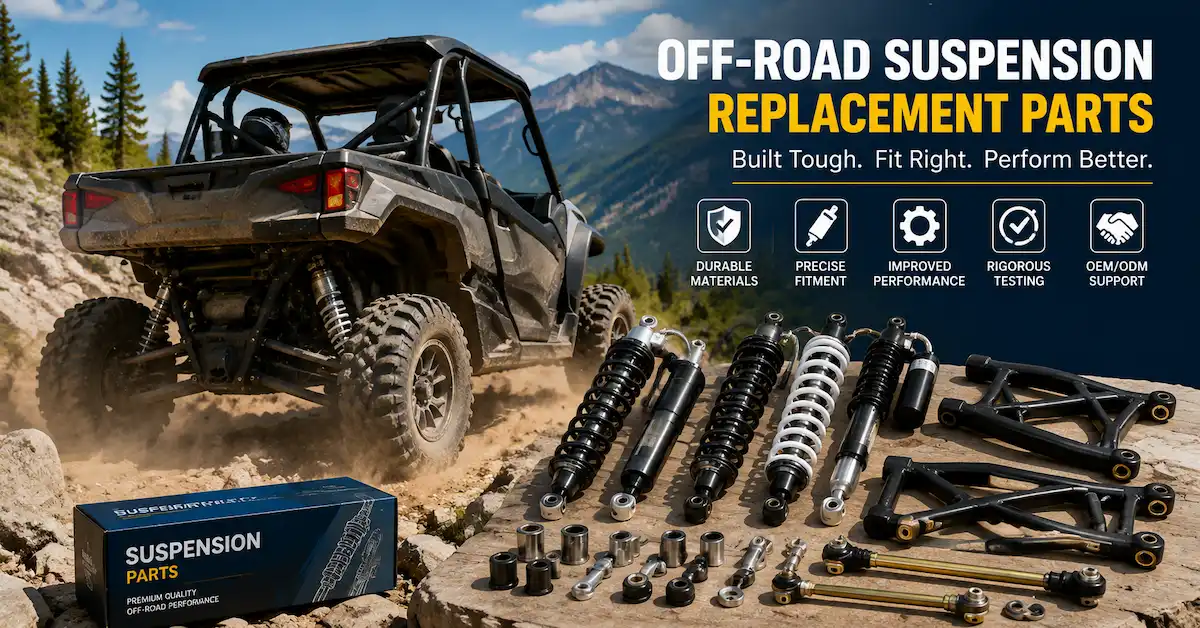
Bedo Auto supports customized shock absorbers, suspension springs, and related components for dirt bikes, motorcycles, electric motorcycles, ATV, UTV, snowmobiles, and specialty vehicles. Buyers can review available suspension solutions through the Bedo Auto Products page.
Why Source Dirt Bike Suspension from China?
China has a broad manufacturing supply chain for machined metal parts, springs, seals, bushings, shock absorber bodies, surface treatments, packaging, and vehicle components.
For international buyers, sourcing from China may provide:
- Flexible OEM and ODM development
- Sample-based manufacturing
- Drawing-based customization
- Small-batch pilot production
- Different material and surface options
- Custom spring colors
- Private-label branding
- Packaging customization
- Scalable production capacity
- Integrated component sourcing
However, not every supplier provides the same engineering or quality-control capability.
Some factories mainly produce standard replacement shocks, while others can support application analysis, spring-rate development, damping adjustment, reservoir configuration, and prototype validation.
The buyer should therefore evaluate the supplier according to the project requirements rather than selecting only by quotation.
Who Needs a Dirt Bike Suspension Supplier in China?
A Chinese suspension supplier may serve several types of B2B buyers.
| Buyer type | Typical purchasing requirement |
|---|---|
| Dirt bike manufacturer | Suspension for a new production model |
| Motorcycle brand | Customized suspension for model upgrades |
| Electric dirt bike company | Shocks matched to battery weight |
| Importer | Replacement shocks for regional markets |
| Distributor | Stable inventory and broad model coverage |
| Aftermarket brand | Adjustable performance suspension |
| Racing supplier | Spring and damping customization |
| Modification workshop | Small-batch special dimensions |
| Private-label company | Logo, colors, labels, and packaging |
Each buyer has a different priority.
A vehicle manufacturer may focus on fitment, consistency, production capacity, and cost control. A performance brand may prioritize damping adjustment, heat management, low weight, reservoir design, and premium appearance.
A professional supplier should adapt the development process to the buyer’s target market.
What Products Can a Dirt Bike Suspension Supplier Provide?
A complete dirt bike suspension project may include more than the rear shock absorber.
| Product or component | Main function |
|---|---|
| Rear shock absorber | Controls rear suspension movement |
| Coil spring | Supports motorcycle and rider weight |
| Piston rod | Transfers movement through the shock |
| Shock body | Contains oil, piston, and valve system |
| Reservoir | Increases oil and gas capacity |
| Spring seat | Holds and positions the spring |
| Mounting eye | Connects the shock to the motorcycle |
| Bushing | Reduces vibration and supports mounting movement |
| Preload adjuster | Changes spring preload and sag |
| Compression adjuster | Controls compression resistance |
| Rebound adjuster | Controls extension speed |
| Mounting hardware | Secures suspension components |
Some buyers purchase complete shock absorber assemblies, while motorcycle manufacturers with internal assembly capability may source springs, shock bodies, bushings, or mounting components separately.
The supply format should be confirmed before quotation.
Why Dirt Bike Suspension Requires Specialized Development
Dirt bike suspension experiences much faster and more severe movement than ordinary road motorcycle suspension.
Common operating conditions include:
- Jump landings
- Rocky trails
- Forest roots
- Deep holes
- Sand
- Mud
- Enduro routes
- Motocross tracks
- High-speed off-road riding
- Repeated braking and acceleration
These conditions place high demands on:
- Bottoming resistance
- Rear-wheel traction
- Suspension recovery
- Heat management
- Sealing
- Rod strength
- Mounting durability
- Damping consistency
A standard road motorcycle shock may fit physically but fail to provide sufficient impact control or heat resistance.
A qualified dirt bike suspension supplier China should ask about the specific riding environment before recommending a shock structure.
Key Information Buyers Should Provide
Accurate project information helps reduce prototype revisions and quotation uncertainty.
| Required information | Why it matters |
|---|---|
| Dirt bike model | Establishes the vehicle application |
| Motorcycle weight | Influences spring and damping |
| Rider weight range | Determines operating load |
| Front or rear position | Defines suspension function |
| Extended length | Confirms maximum shock length |
| Compressed length | Prevents interference |
| Effective stroke | Defines shock movement |
| Mounting-hole diameter | Ensures bolt compatibility |
| Mounting width | Confirms bracket fitment |
| Wheel travel | Supports motion-ratio analysis |
| Linkage geometry | Influences shock force and speed |
| Spring specification | Provides a load-support reference |
| Riding terrain | Defines damping and durability needs |
| Rider level | Recreational, enduro, motocross, or racing |
| Existing sample | Supports structural analysis |
| Technical drawing | Defines dimensions and tolerances |
| Estimated order quantity | Supports production planning |
Buyers should also explain whether the new suspension must:
- Match the original product
- Support a heavier rider
- Improve bottoming resistance
- Increase rear-wheel traction
- Reduce harshness
- Add damping adjustment
- Improve sealing
- Create a premium aftermarket version
- Reduce manufacturing cost
Sample-Based Development
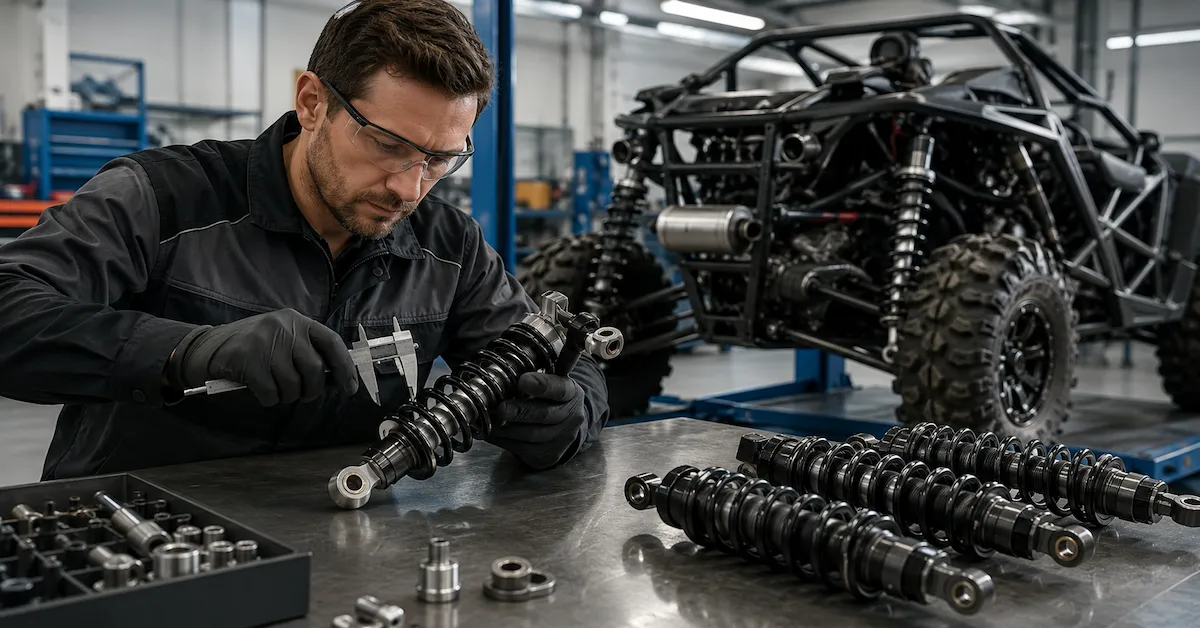
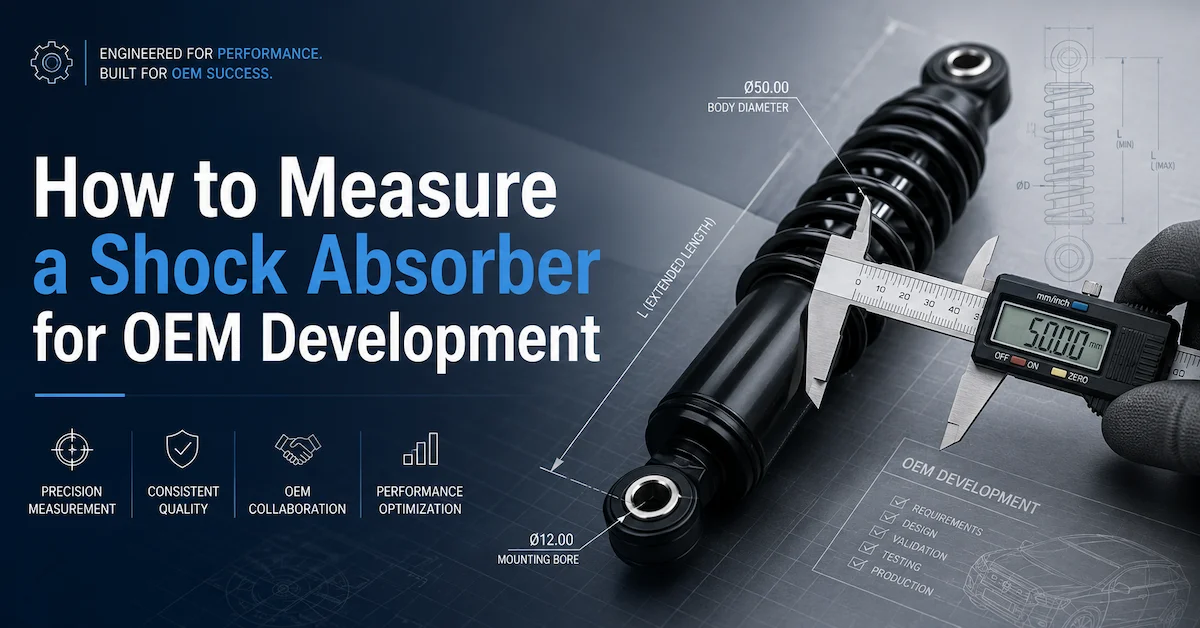
Many replacement and aftermarket projects begin with an existing dirt bike shock absorber sample.
The supplier can measure:
- Extended length
- Compressed length
- Effective stroke
- Mounting dimensions
- Shock-body diameter
- Piston-rod diameter
- Spring dimensions
- Reservoir structure
- Adjustment mechanisms
- Surface treatment
A physical sample is valuable, but external dimensions alone do not define performance.
Hidden specifications include:
- Spring rate
- Compression force
- Rebound force
- Valve structure
- Oil type
- Oil volume
- Gas pressure
- Internal friction
- Seal material
- Internal tolerances
The buyer should provide vehicle and performance information together with the sample.
Drawing-Based OEM Development
Technical drawings provide a clearer production standard for new motorcycle models and original equipment projects.
A drawing may define:
- Extended and compressed lengths
- Shock stroke
- Mounting-hole diameter
- Mounting width
- Body diameter
- Rod diameter
- Reservoir location
- Hose length
- Spring dimensions
- Material requirements
- Surface treatment
- Tolerance range
- Branding position
Before prototype production, the supplier should review:
- Installation clearance
- Linkage movement
- Swingarm position
- Full-compression interference
- Full-extension movement
- Reservoir clearance
- Exhaust proximity
- Adjustment access
- Manufacturing feasibility
Early engineering review can reduce tooling changes and sample delays.
Why Suspension Linkage Must Be Considered
Many dirt bikes use a linkage between the swingarm, frame, and rear shock.
The linkage determines:
- How far the shock moves
- How quickly the shock moves
- How force increases through the suspension travel
- How shock stroke relates to wheel travel
- How spring and damping requirements change
A shock absorber cannot be developed accurately from eye-to-eye length alone.
For new vehicle projects, buyers should provide:
- Linkage drawings
- Swingarm dimensions
- Shock mounting points
- Installation angle
- Wheel travel
- Full-extension geometry
- Full-compression geometry
Without this information, a shock may fit the motorcycle but deliver the wrong suspension behavior.
Spring Rate Development
The spring supports:
- Motorcycle weight
- Rider weight
- Protective equipment
- Fuel
- Battery weight
- Accessories
Spring rate affects:
- Static sag
- Rider sag
- Ride height
- Bottoming resistance
- Available travel
- Rear-wheel traction
- Chassis balance
A spring that is too soft may cause:
- Excessive sag
- Frequent bottoming
- Reduced ground clearance
- Unstable jump landings
- Limited suspension travel
A spring that is too stiff may cause:
- Harsh riding
- Poor small-bump response
- Reduced traction
- Rear-wheel skipping
- Increased rider fatigue
The supplier should develop spring specifications according to motorcycle weight, rider weight, suspension geometry, terrain, and riding level.
Compression Damping
Compression damping controls resistance as the shock absorber compresses.
It affects the motorcycle’s response to:
- Jump landings
- Rocks
- Roots
- Deep holes
- Braking
- Acceleration
- Sudden terrain changes
Insufficient compression damping may cause:
- Frequent bottoming
- Excessive chassis movement
- Poor landing control
- Insufficient support
Excessive compression damping may cause:
- Harsh impacts
- Reduced traction
- Rider fatigue
- Increased frame stress
- Poor performance over repeated bumps
The correct target should absorb impacts while allowing useful suspension movement.
High-Speed and Low-Speed Compression
Advanced shocks may separate compression adjustment into high-speed and low-speed circuits.
These terms describe piston speed rather than motorcycle speed.
Low-Speed Compression
Low-speed compression influences movement caused by:
- Braking
- Acceleration
- Weight transfer
- Smooth terrain changes
- Chassis movement
High-Speed Compression
High-speed compression controls rapid movement caused by:
- Jump landings
- Rocks
- Sharp edges
- Deep holes
- Sudden impacts
Separate adjustment can provide greater tuning flexibility, but it also requires more precise machining, assembly, testing, and user instructions.
Rebound Damping
Rebound damping controls how quickly the shock extends after compression.
Too little rebound damping may cause:
- Repeated bouncing
- Fast rear suspension extension
- Poor jump recovery
- Reduced traction
- Unstable rear movement
Too much rebound damping may cause:
- Slow recovery
- Suspension packing
- Reduced available travel
- Poor response over repeated obstacles
- Reduced tire contact
The shock must recover quickly enough for the next obstacle without extending uncontrollably.
Spring rate and rebound damping should always be developed together.
Fixed vs Adjustable Dirt Bike Shocks
| Evaluation point | Fixed shock | Adjustable shock |
|---|---|---|
| Damping | Factory preset | Rider or technician adjustable |
| Product complexity | Lower | Higher |
| Cost | Generally lower | Generally higher |
| Setup | Simple | Requires correct adjustment |
| Rider flexibility | Limited | Suitable for different rider weights |
| Terrain flexibility | One general setting | Can adapt to terrain |
| Market position | Standard replacement | Performance or premium product |
Adjustment options may include:
- Spring preload
- Rebound damping
- Compression damping
- High-speed compression
- Low-speed compression
- Shock-length adjustment
A higher number of adjustment clicks does not automatically mean better performance. Repeatability and useful adjustment range are more important.
Piggyback vs Remote Reservoir
Reservoir shocks are common in demanding dirt bike applications.
Piggyback Reservoir
A piggyback reservoir is attached directly to the main shock body.
Advantages may include:
- Integrated structure
- No external hose
- Compact packaging
- Strong mechanical protection
The motorcycle must provide sufficient reservoir clearance.
Remote Reservoir
A remote reservoir connects through a hose.
Advantages may include:
- Flexible mounting location
- More installation options
- Increased oil capacity
- Alternative heat-management layout
The supplier should confirm:
- Hose length
- Hose routing
- Reservoir mounting
- Abrasion protection
- Exhaust clearance
- Full-suspension movement
The reservoir configuration should be selected according to the motorcycle structure rather than appearance alone.
Heat Management and Damping Consistency
Repeated suspension movement produces heat.
Heat may increase during:
- Motocross racing
- Long enduro riding
- Repeated jumps
- Rocky trails
- High ambient temperatures
- Aggressive riding
Damping stability may be influenced by:
- Oil specification
- Oil volume
- Reservoir capacity
- Shock-body diameter
- Body material
- Valve design
- Piston structure
- Gas pressure
- Operating duration
A supplier should understand the expected riding cycle before defining the shock structure.
Short manual compression tests cannot verify long-duration performance.
Sealing and Contamination Protection
Dirt bike shocks are exposed to mud, water, sand, dust, stones, and cleaning chemicals.
A reliable sealing system may include:
- Oil seals
- Dust seals
- Wipers
- Guide components
- Piston-rod coatings
- Protective finishes
Poor contamination control may cause:
- Oil leakage
- Damaged seals
- Scratched rods
- Increased friction
- Inconsistent damping
- Shorter service life
The supplier should also control cleanliness during assembly because internal particles may affect oil flow and valve performance.
Material and Surface Requirements
Important dirt bike shock components include:
- Shock body
- Piston rod
- Piston
- Valve components
- Reservoir
- Mounting eyes
- Spring seats
- Bushings
- Coil spring
- Adjusters
Material selection should consider:
- Strength
- Fatigue resistance
- Wear resistance
- Heat transfer
- Corrosion resistance
- Machining accuracy
- Product weight
- Target cost
Surface treatments may include:
- Powder coating
- Painting
- Plating
- Anodizing
- Polishing
- Protective finishing
The selected finish should support both appearance and off-road durability.
OEM Branding and Packaging Options
International buyers may request:
- Custom spring colors
- Shock-body finishes
- Laser logos
- Model labels
- Adjustment markings
- Product barcodes
- Installation instructions
- Custom cartons
- Private-label packaging
Technical approval should be completed before finalizing visual customization.
Quality Control Requirements
A reliable production process should cover materials, dimensions, assembly, function, damping, and appearance.
Incoming Inspection
The factory should inspect:
- Tubes
- Rods
- Springs
- Seals
- Bushings
- Valve components
- Reservoir parts
- Hoses and fittings
- Machined parts
Dimensional Inspection
Critical dimensions include:
- Extended length
- Compressed length
- Stroke
- Mounting-hole diameter
- Mounting width
- Rod diameter
- Body diameter
- Spring dimensions
- Reservoir position
Assembly Control
The process should control:
- Cleanliness
- Seal installation
- Valve assembly
- Oil filling
- Gas charging
- Tightening torque
- Spring preload
- Adjustment mechanisms
- Mounting alignment
Leakage and Functional Testing
Finished shocks should be checked for:
- Oil leakage
- Pressure loss
- Hose leakage
- Sticking
- Abnormal noise
- Excessive friction
- Uneven resistance
- Adjustment failure
Damping Verification
Compression and rebound forces should be compared with the approved target.
For adjustable shocks, different settings should produce controlled and repeatable changes.
Prototype and Vehicle Testing
A prototype should be installed and tested on the target motorcycle.
Testing should evaluate:
- Fitment
- Mounting alignment
- Rider sag
- Spring support
- Bottoming resistance
- Compression response
- Rebound recovery
- Rear-wheel traction
- Heat behavior
- Seal performance
- Reservoir clearance
- Adjustment range
Testing should use the intended rider weight, terrain, and riding style.
Why Pilot-Batch Validation Matters
One prototype confirms the design concept, but a pilot batch verifies whether the factory can reproduce it consistently.
Pilot production helps identify:
- Dimensional variation
- Spring-rate differences
- Damping variation
- Gas-pressure inconsistency
- Leakage risks
- Adjustment differences
- Surface defects
- Packaging problems
This step reduces the risk of placing a large order before the process is stable.
How to Evaluate a Dirt Bike Suspension Supplier China
When selecting a dirt bike suspension supplier China, B2B buyers should evaluate more than price and sample appearance.
Engineering Capability
Confirm whether the supplier can:
- Review samples and drawings
- Understand linkage geometry
- Develop spring specifications
- Adjust compression and rebound
- Evaluate reservoir requirements
- Produce prototypes
- Document approved settings
Manufacturing Capability
Evaluate:
- Material control
- Machining accuracy
- Spring-production control
- Assembly cleanliness
- Small-batch flexibility
- Production capacity
- Batch traceability
- Repeat-order consistency
Testing Capability
Ask whether the supplier can support:
- Dimensional inspection
- Spring inspection
- Leakage testing
- Functional testing
- Damping verification
- Adjustment testing
- Pilot-batch inspection
Communication Capability
A professional supplier should ask about:
- Motorcycle model
- Rider weight
- Shock dimensions
- Suspension linkage
- Wheel travel
- Terrain
- Riding level
- Current suspension problem
- Target performance
- Order quantity
A supplier that quotes only from a photograph may overlook serious fitment and performance risks.
How Bedo Auto Supports Dirt Bike Suspension Projects
As a dirt bike suspension supplier China, Bedo Auto supports customized shock absorbers and suspension springs for dirt bikes, motorcycles, electric motorcycles, ATV, UTV, snowmobiles, beach buggies, and specialty vehicles.
Project support can include:
- Existing-sample analysis
- Technical drawing review
- Motorcycle and rider-load evaluation
- Mounting-dimension confirmation
- Spring-rate development
- Compression and rebound adjustment
- Reservoir configuration
- Material selection
- Surface-treatment customization
- Prototype production
- Small-batch validation
- OEM and ODM branding
- Customized labels and packaging
- Repeat-production support
Buyers can review available products through the Bedo Auto Products page, learn more about the company through the About Bedo Auto page, or submit samples, drawings, and project requirements through the Contact Us page.
FAQ
What information should I send to a dirt bike suspension supplier?
Provide the motorcycle model, weight, rider weight, shock dimensions, stroke, mounting details, wheel travel, linkage information, terrain, riding level, existing sample, and target performance.
Can dirt bike shocks be developed from existing samples?
Yes. Samples provide structural and dimensional references, but vehicle data and performance requirements should also be supplied.
Can spring rates be customized for different riders?
Yes. Spring rate and preload can be developed according to motorcycle weight, rider range, suspension geometry, terrain, and riding style.
Are adjustable shocks better than fixed shocks?
Not always. A properly tuned fixed shock can perform well for a defined application. Adjustable shocks provide more flexibility for changing riders and terrain.
Is a reservoir necessary for every dirt bike?
No. Reservoirs may improve oil capacity and heat management, but the requirement depends on the motorcycle, duty cycle, and target market.
Can the supplier provide private-label products?
Yes. OEM projects may include customized colors, logos, labels, adjustment markings, instructions, cartons, and private-label packaging.
Why should buyers test a pilot batch?
A pilot batch helps verify dimensional consistency, spring rate, damping, leakage control, adjustment performance, appearance, and packaging before mass production.
Conclusion
Choosing a reliable dirt bike suspension supplier China requires evaluating engineering support, suspension knowledge, quality control, testing capability, production consistency, and communication—not only price.
A successful dirt bike suspension product must match the motorcycle’s weight, rider load, linkage geometry, wheel travel, spring rate, compression damping, rebound damping, heat requirements, sealing, and terrain.
Through sample analysis, drawing review, suspension development, prototype testing, pilot-batch validation, and controlled OEM/ODM production, Bedo Auto helps global manufacturers, importers, distributors, and aftermarket brands develop dirt bike suspension products with reliable fitment and repeatable performance.