
신뢰할 수 있는 고성능 완충 장치 공급업체를 선택하는 것은 차량 브랜드, 수입업체, 유통업체, 도매업체, 개조 회사 및 업그레이드된 서스펜션 제품을 개발하는 애프터마켓 기업에 필수적입니다.
성능 완충 장치는 스포티한 외관, 더 큰 본체, 조절 가능한 손잡이만으로 정의되지 않습니다. 적절하게 개발된 제품은 차량의 중량, 서스펜션 형상, 이동 거리, 스프링 비율, 댐핑 요구 사항, 작동 온도, 지형 및 사용 목적과 일치해야 합니다.
이러한 요소가 올바르게 일치하지 않으면 정지로 인해 다음이 발생할 수 있습니다.
- 과도한 수신 거부
- 가혹한 충격 대응
- 잦은 바닥
- 느린 정지 복구
- 타이어 접촉 불량
- 불안정한 코너링
- 열 축적 증가
- 조기 씰 마모
- 고객 불만사항
- 높은 보증 비용
B2B 구매자의 경우 적합한 공급업체는 기존 카탈로그 제품보다 더 많은 것을 제공해야 합니다. 제어되고 반복 가능한 서스펜션 솔루션을 개발하기 전에 샘플, 도면, 차량 데이터 및 목표 성능을 검토할 수 있어야 합니다.
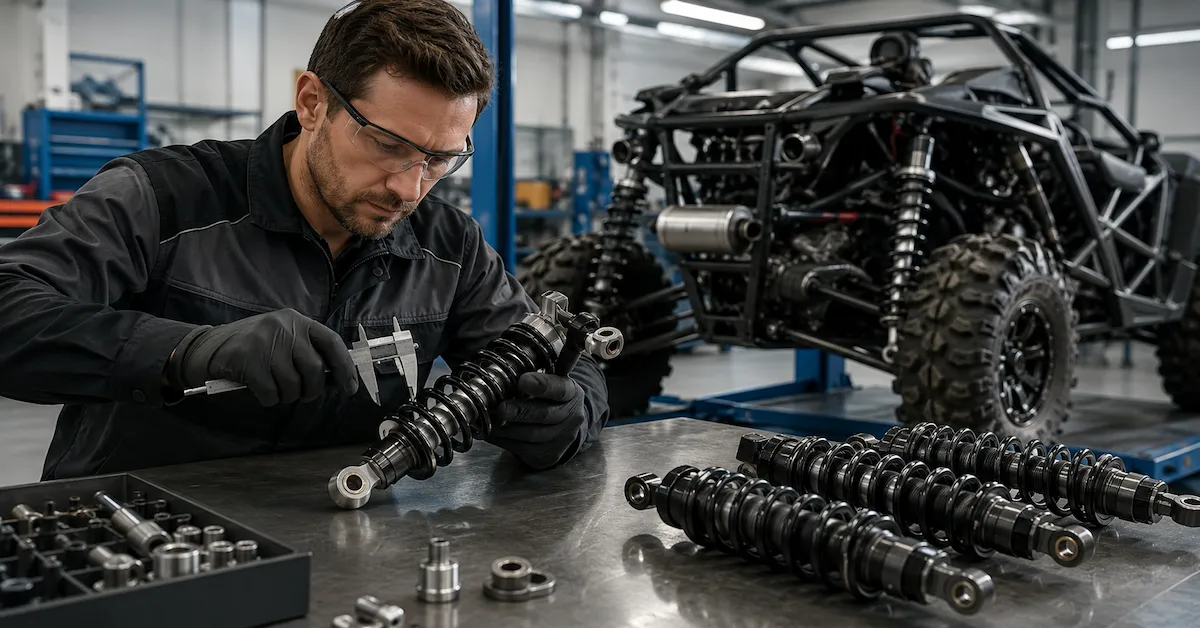
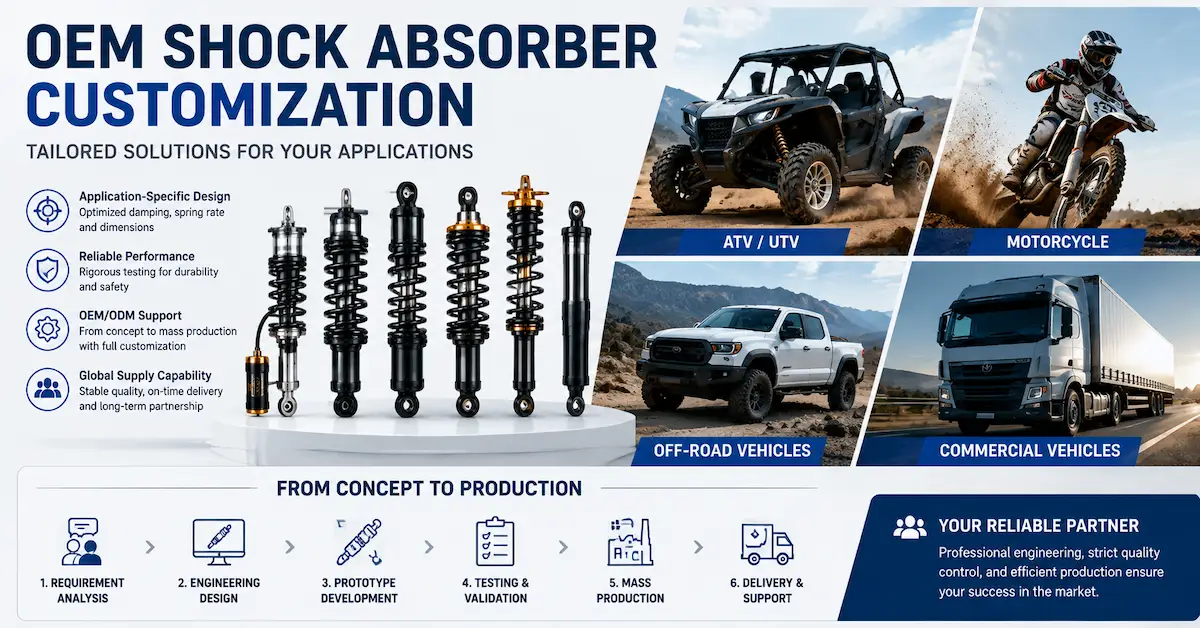
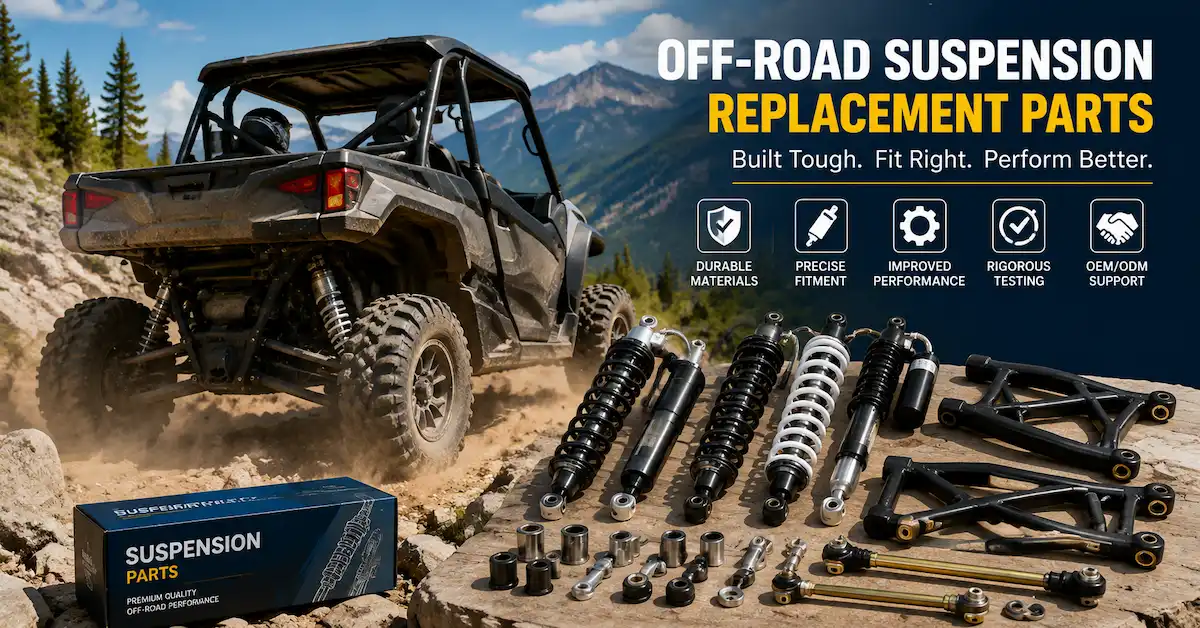
Bedo Auto는 오토바이, 전기 오토바이, ATV, UTV, 스노모빌, 해변용 버기 및 특수 차량 애플리케이션을 위한 맞춤형 충격 흡수 장치와 서스펜션 스프링을 지원합니다. 사용 가능한 옵션은 Bedo Auto 제품군을 통해 검토할 수 있습니다.
성능 완충 장치란 무엇입니까?
고성능 충격 흡수 장치는 기본 교체 제품보다 더욱 제어된 서스펜션 움직임을 제공하기 위해 개발되었습니다.
애플리케이션에 따라 다음이 개선될 수 있습니다.
- 압축 제어
- 리바운드 제어
- 코너링 안정성
- 타이어 접촉
- 바닥 저항
- 지원 로드
- 열 관리
- 승객의 편안함
- 정지 조치
- 조정 유연성
성능이 항상 최대 강성을 의미하는 것은 아닙니다.
충격 흡수 장치가 너무 뻣뻣하면 편안함이 줄어들고 바퀴가 고르지 않은 지형을 따라가는 것을 방해할 수 있습니다. 너무 약한 충격은 과도한 움직임과 빈번한 바닥을 유발할 수 있습니다.
올바른 목표는 의도된 작동 조건에서 서스펜션 움직임을 제어하는 것입니다.
성능 정지 제품이 필요한 사람은 누구인가요?
고성능 충격 흡수 장치는 OEM 시장과 애프터마켓 시장 모두에 사용됩니다.
일반적인 구매자는 다음과 같습니다.
- 오토바이 제조업체
- 전기 오토바이 브랜드
- ATV 및 UTV 제조업체
- 스노우모빌 회사
- 오프로드 자동차 브랜드
- 서스펜션 도매업체
- 애프터마켓 유통업체
- 수정 워크숍
- 레이싱 부품 공급업체
- 자체 상표 브랜드
- 수입업체
- OEM 및 ODM 구매팀
구매자마다 실적 목표가 다를 수 있습니다.
유틸리티 UTV 브랜드에는 더 나은 부하 제어가 필요할 수 있습니다. 오토바이 애프터마켓 회사에서는 조정 가능한 리바운드와 프리미엄 스타일이 필요할 수 있습니다. ATV 제조업체는 거친 지형보다 바닥 저항과 내구성을 우선시할 수 있습니다.
공급업체는 제품을 정의하기 전에 대상 고객을 이해해야 합니다.
표준 교체 충격 흡수 장치와 고성능 충격 흡수 장치
| 평가 포인트 | 표준 교체 충격 | 성능 완충 장치 |
|---|---|---|
| 애플리케이션 | 일반 교체 | 특정 차량 및 성능 목표 |
| 봄비 | 고정 표준 | 차량 및 하중에 일치 |
| 댐핑 | 일반 설정 | 애플리케이션별 조정 |
| 조정 | 보통 제한됨 | 사전 로드, 리바운드 또는 압축 옵션 |
| 열 관리 | 표준 작동 | 요구적인 사용을 위해 개발 |
| 재료 | 기본 사양 | 강도, 무게, 내구성을 고려하여 선택 |
| 브랜딩 | 제한됨 | OEM 색상, 로고, 라벨 및 포장 |
| 검증 | 일반 기능 검사 | 프로토타입 및 차량 테스트 |
| 가장 적합한 대상 | 정기 교체 | 업그레이드, OEM, 자체 상표 및 성능 시장 |
원래 사양이 이미 알려져 있고 차량이 정상적인 조건에서 작동하는 경우 표준 제품이 적합할 수 있습니다.
맞춤형 성능 개발은 차량 중량, 액세서리, 지형, 서스펜션 형상 또는 고객 기대치가 변할 때 더욱 중요해집니다.
성능 완충 장치 공급업체에 필요한 주요 정보
정확한 프로젝트 정보는 프로토타입 수정을 줄이고 서스펜션 매칭을 향상시키는 데 도움이 됩니다.
| 프로젝트 정보 | 중요한 이유 |
|---|---|
| 차량 유형 | 기본 정지 적용 정의 |
| 차량 모델 | 장착 확인에 도움 |
| 설치 위치 | 전면 및 후면 샥은 서로 다른 역할을 수행합니다 |
| 차량 중량 | 스프링 및 댐핑 요구사항에 영향 |
| 탑승자 및 승객 중량 | 작동 부하 변경 |
| 화물 또는 장비 | 정지 지원에 영향 |
| 확장된 길이 | 전체 충격 길이 정의 |
| 압축된 길이 | 간섭 방지 |
| 유효 스트로크 | 서스펜션 이동 결정 |
| 장착 치수 | 설치 호환성 보장 |
| 서스펜션 지오메트리 | 충격 이동 및 하중에 영향 |
| 지형 | 충격 및 내구성 요구 사항 정의 |
| 주행 속도 | 댐핑 및 발열에 영향 |
| 성능 목표 | 편안함, 제어, 레이싱 또는 고부하 사용 |
| 기존 샘플 | 구조적 참조 제공 |
| 기술 도면 | 치수 및 공차 정의 |
| 예상 수량 | 프로토타입 및 생산 계획 지원 |
구매자는 새로운 서스펜션 제품이 해결해야 할 문제도 설명해야 합니다.
일반적인 목표는 다음과 같습니다.
- 바닥 감소
- 코너링 안정성 개선
- 더 무거운 부하 지원
- 정지 여행 증가
- 가혹함 줄이기
- 리바운드 제어 개선
- 조정 기능 추가
- 프리미엄 제품군 만들기
- 사용할 수 없는 원본 구성요소 교체
스프링 레이트가 성능에 미치는 영향
스프링은 차량, 탑승자, 승객, 화물, 배터리 및 액세서리를 지지합니다.
봄철은 다음에 영향을 미칩니다.
- 탑승 높이
- 정적 처짐
- 정지 여행
- 지원 로드
- 바닥 저항
- 초기 승차감
- 차량 잔액
스프링이 너무 부드러우면 다음이 발생할 수 있습니다.
- 과도한 처짐
- 지상고 감소
- 잦은 바닥
- 불안정한 로드 처리
- 사용 가능한 여행 제한
스프링이 너무 뻣뻣하면 다음이 발생할 수 있습니다.
- 가혹한 라이딩
- 편안함 감소
- 작은 충격에 대한 반응 불량
- 낮은 타이어 접촉
- 진동 증가
전문 성능 완충 장치 공급업체는 차량 카테고리만을 기준으로 스프링을 선택하기보다는 전체 애플리케이션에 따라 스프링 비율을 평가해야 합니다.
중요한 요소는 다음과 같습니다:
- 차량 중량
- 페이로드
- 서스펜션 모션 비율
- 원하는 처짐
- 이용 가능한 여행
- 운전 스타일
- 지형
- 전후 밸런스
압축 감쇠 및 충격 제어
압축 댐핑은 충격 흡수 장치가 짧아짐에 따라 저항을 제어합니다.
정지장치가 다음에 반응하는 방식에 영향을 미칩니다.
- 바위
- 구멍
- 제동
- 가속화
- 코너링
- 점프 착지
- 갑작스러운 지형 변화
- 화물 이동
부족한 압축 댐핑으로 인해 다음이 발생할 수 있습니다.
- 빠른 정지 축소
- 잦은 바닥
- 과도한 신체 움직임
- 불량한 로드 제어
- 불안정한 처리
과도한 압축 댐핑으로 인해 다음이 발생할 수 있습니다.
- 가혹한 충격 전달
- 편안함 감소
- 반복적인 충돌로 인한 반응 불량
- 마운트에 대한 스트레스 증가
- 타이어 접촉 감소
올바른 설정은 필요한 서스펜션 움직임을 방해하지 않으면서 충분한 지지력을 제공해야 합니다.
리바운드 댐핑 및 서스펜션 복구
리바운드 댐핑은 압축 후 충격 흡수 장치가 확장되는 속도를 제어합니다.
리바운드 댐핑이 너무 약하면 서스펜션이 너무 빨리 복귀하여 다음과 같은 원인이 될 수 있습니다.
- 반복적인 수신 거부
- 빠른 체중 이동
- 불안정한 후방 움직임
- 타이어 접촉 감소
- 충격 후 제어 불량
리바운드 댐핑이 너무 강하면 서스펜션이 너무 느리게 회복되어 다음과 같은 원인이 될 수 있습니다.
- 사용 가능한 여행 감소
- 서스펜션 패킹
- 견인력 부족
- 반복적인 충돌에 대한 가혹한 행동
- 압축 후 느린 복구
스프링 레이트와 리바운드 댐핑은 함께 개발되어야 합니다. 스프링이 강할수록 리바운드 제어가 더 많이 필요할 수 있지만 최종 설정에서는 서스펜션이 효율적으로 회복될 수 있어야 합니다.
고속 및 저속 압축
일부 고성능 충격 흡수 장치는 압축 조정을 고속 및 저속 회로로 분리합니다.
이 용어는 차량 속도가 아닌 피스톤 이동 속도를 나타냅니다.
저속 압축
저속 압축은 다음으로 인해 점진적인 서스펜션 움직임에 영향을 미칩니다.
- 바디 롤
- 제동
- 가속화
- 체중 이동
- 부드러운 지형 변화
저속 압축을 높이면 지지력과 안정성이 향상될 수 있지만 과도한 저항은 편안함을 감소시킬 수 있습니다.
고속 압축
고속 압축은 다음으로 인한 빠른 충격 움직임을 제어합니다.
- 바위
- 뾰족한 구멍
- 점프 착지
- 갑작스런 장애물
- 심각한 영향
고속 압축이 충분하지 않으면 바닥이 발생할 수 있습니다. 과도한 저항으로 인해 충격력이 차량 구조에 직접 전달될 수 있습니다.
별도의 조정을 통해 튜닝 유연성을 높일 수 있지만 제품 복잡성과 제조 요구사항도 증가합니다.
고정 및 조정 가능한 성능 충격
| 기능 | 성능 충격 수정 | 조정 가능한 성능 충격 |
|---|---|---|
| 댐핑 | 공급업체별 사전 설정 | 사용자 또는 기술자 조정 가능 |
| 복잡성 | 낮음 | 더 높음 |
| 비용 | 일반적으로 낮음 | 일반적으로 더 높음 |
| 사용자 설정 | 간단 | 올바른 조정 필요 |
| 지형 유연성 | 하나의 최적화된 설정 | 다양한 조건에 적응 가능 |
| 페이로드 유연성 | 제한됨 | 사전 로드는 로드 변경을 지원할 수 있음 |
| 최고의 애플리케이션 | 정의된 차량 및 용도 | 가변 로드 및 프리미엄 시장 |
고정식 충격은 차량과 애플리케이션이 명확하게 정의될 때 탁월한 성능을 제공할 수 있습니다.
조정 가능한 충격은 다음과 같은 경우에 적합합니다.
- 페이로드가 자주 변경됨
- 고객은 다양한 지형에서 라이딩합니다
- 수정 시장을 대상으로 하는 제품
- 탑승자는 맞춤 설정이 필요합니다
- 프리미엄 제품 포지셔닝이 중요
조정 옵션에는 다음이 포함될 수 있습니다.
- 스프링 프리로드
- 리바운드 댐핑
- 압축 댐핑
- 고속 압축
- 저속 압축
- 충격 길이
조정 위치가 더 많다고 해서 자동으로 더 나은 서스펜션이 만들어지는 것은 아닙니다. 조정 범위는 의미 있고 반복 가능한 변경을 제공해야 합니다.
성능 완충 장치 구조
차량과 시장에 따라 충격 구성도 달라야 합니다.
코일오버 충격 흡수 장치
코일오버는 스프링과 댐퍼를 하나의 어셈블리로 결합합니다.
일반적으로 다음 용도로 사용됩니다.
- 오토바이
- 전기 오토바이
- ATV
- UTV
- 해변용 버기
- 특수 차량
이 디자인은 통합 스프링 지지대와 컴팩트한 설치를 제공합니다.
모노쇼크
모노쇼크는 중앙에 장착된 후면 쇼크 1개를 사용합니다.
하나의 충격으로 기본 후방 서스펜션 하중이 전달되므로 스프링 비율, 댐핑, 스트로크 및 장착 강도가 특히 중요합니다.
트윈 쇼크 시스템
일부 오토바이와 다용도 차량은 2개의 후방 충격 장치를 사용합니다.
두 충격 모두 일관되어야 합니다.
- 확장된 길이
- 봄비
- 댐핑
- 장착 치수
- 설정 미리 로드
- Surface finish
Differences between the left and right shock may create uneven suspension behavior.
Piggyback Reservoir
A piggyback reservoir is attached directly to the shock body.
It can provide:
- Additional oil capacity
- Compact installation
- Strong performance appearance
- No external hose
The vehicle must provide sufficient clearance.
Remote Reservoir
A remote reservoir is connected through a hose.
It may provide:
- Flexible installation
- Increased oil volume
- More heat-management options
- Alternative packaging for limited spaces
The supplier must confirm hose routing, abrasion protection, reservoir mounting, and full-suspension clearance.
Material Selection for Performance Shocks
Performance shock absorbers operate under repeated loading, vibration, heat, contamination, and environmental exposure.
Important components include:
- Shock body
- Piston rod
- Piston
- Valve components
- Mounting eyes
- Bushings
- Spring seats
- Springs
- Reservoirs
- Adjustment mechanisms
- Hoses and fittings
Material selection should consider:
- Fatigue resistance
- Bending strength
- Wear resistance
- Heat transfer
- Corrosion protection
- Machining accuracy
- Product weight
- Target price
Steel and aluminum may be used in different parts depending on structural and performance requirements.
The lightest material is not always the best, and the heaviest component is not automatically the most durable. The complete design must balance strength, weight, temperature control, and cost.
Piston Rod and Seal Reliability
The piston rod moves through the sealing system during every suspension cycle.
Its surface quality influences:
- Seal life
- Friction
- Smooth movement
- Oil retention
- Corrosion resistance
- Long-term damping stability
Potential problems include:
- Scratched rod surfaces
- Bent rods
- Corrosion
- Poor coating quality
- Contamination
- Excessive side loading
A reliable sealing system may include:
- Oil seals
- Dust seals
- Wipers
- Guide components
- Rod surface treatments
For off-road applications, protection against mud, water, dust, sand, and debris is especially important.
Oil, Gas Pressure, and Damping Consistency
Shock absorber oil affects:
- Damping force
- Temperature stability
- Internal friction
- Valve response
- Long-term consistency
Gas pressure may be used in certain structures to reduce cavitation and maintain pressure stability.
Incorrect oil volume or gas pressure may cause:
- Inconsistent damping
- Foaming
- Noise
- Poor response
- Seal stress
- Reduced service life
The supplier should control oil filling, gas charging, assembly cleanliness, and approved production specifications.
Heat Management in Performance Applications
Repeated suspension movement generates heat.
Heat buildup may become significant during:
- Racing
- High-speed trail riding
- Repeated jumps
- Long-distance off-road use
- Heavy cargo transportation
- Commercial operation
- Mountain terrain
Damping consistency may be influenced by:
- Oil specification
- Oil volume
- Shock-body size
- Body material
- Reservoir capacity
- Piston design
- Valve structure
- Ambient temperature
- Operating duration
A performance shock absorber should be developed around the expected duty cycle rather than short-term workshop testing alone.
Customization Options for OEM and ODM Buyers
A performance suspension project may require both technical and commercial customization.
| Custom option | Purpose |
|---|---|
| Extended length | Matches vehicle geometry |
| Compressed length | Prevents interference |
| Stroke | Defines suspension movement |
| Mounting dimensions | Ensures accurate fitment |
| Spring rate | Supports vehicle and payload |
| Preload range | Adjusts sag and ride height |
| Compression damping | Controls impacts |
| Rebound damping | Controls suspension recovery |
| Reservoir design | Supports oil and heat management |
| Rod diameter | Matches structural requirements |
| Body material | Balances strength and weight |
| Surface treatment | Improves durability and appearance |
| Spring color | Supports product differentiation |
| Logo marking | Supports OEM branding |
| Product label | Identifies model and settings |
| Packaging | Supports retail and distribution |
The supplier should recommend options that create practical value instead of adding unnecessary cost.
Developing a Performance Shock from a Sample
Many replacement and aftermarket projects begin with an existing shock absorber.
The supplier can inspect:
- Extended length
- Compressed length
- Stroke
- Mounting dimensions
- Spring dimensions
- Rod diameter
- Body diameter
- Reservoir configuration
- Adjustment structure
- Surface finish
However, external dimensions do not reveal every internal specification.
Important hidden factors include:
- Spring rate
- Compression force
- Rebound force
- Valve design
- Oil specification
- Gas pressure
- Internal friction
- Adjustment range
Buyers should explain whether the new product must match, improve, or completely change the original performance.
Common improvement targets include:
- Better load support
- Reduced bottoming
- Faster suspension response
- Improved comfort
- Adjustable damping
- Better heat management
- Stronger sealing
- Premium appearance
Drawing-Based OEM Development
Technical drawings are especially useful for original equipment and new vehicle projects.
A drawing may define:
- Extended and compressed lengths
- Effective stroke
- Mounting-hole diameter
- Mounting width
- Body diameter
- Rod diameter
- Spring dimensions
- Reservoir position
- Hose length
- Materials
- Surface treatment
- Tolerances
Before prototype production, the supplier should review:
- Suspension clearance
- Full-compression movement
- Full-extension movement
- Mounting alignment
- Structural strength
- Stroke-to-length relationship
- Reservoir position
- Adjustment access
- Hose routing
- Manufacturing feasibility
Early technical review helps reduce prototype revisions and development costs.
Quality Control in Performance Shock Production
A reliable supplier should control materials, dimensions, assembly, performance, appearance, and packaging.
Incoming Material Inspection
The supplier should inspect:
- Tubes
- Piston rods
- Springs
- Seals
- Bushings
- Machined parts
- Reservoir components
- Adjustment components
- Hoses and fittings
- Surface condition
Dimensional Inspection
Important dimensions include:
- Extended length
- Compressed length
- Effective stroke
- Mounting width
- Hole diameter
- Spring free length
- Spring outside diameter
- Rod diameter
- Body diameter
- Reservoir position
Assembly Control
The production process should control:
- Component cleanliness
- Seal installation
- Valve assembly
- Oil filling
- Gas charging
- Tightening torque
- Spring preload
- Adjuster installation
- Mounting alignment
Leakage Testing
Finished shocks should be checked for:
- Oil leakage
- Pressure loss
- Hose leakage
- Seal damage
- Surface contamination
Functional Testing
The shock absorber should move smoothly without:
- Sticking
- Abnormal noise
- Excessive friction
- Uneven resistance
- Adjustment failure
Damping Verification
Compression and rebound forces should be compared with approved specifications where damping testing is required.
For adjustable shocks, different adjustment positions should produce controlled and measurable changes.
Final Inspection
Final checks should include:
- Surface finish
- Dimensions
- Spring color
- Logo position
- Labels
- Adjustment markings
- Packaging
- Quantity
- Carton condition
Why Prototype Testing Is Essential
A prototype allows buyers to evaluate:
- Installation compatibility
- Suspension clearance
- Shock travel
- Spring support
- Ride height
- Compression behavior
- Rebound recovery
- Adjustment access
- Reservoir position
- Product appearance
Testing should reflect the intended application.
A performance shock designed for a loaded UTV should not be approved only through an unloaded workshop test. Similarly, a motorcycle shock intended for rough terrain should be evaluated under realistic road or trail conditions.
Why Small-Batch Validation Reduces Risk
A prototype confirms the design concept, but a pilot batch helps evaluate production consistency.
Small-batch validation may reveal:
- Dimensional variation
- Damping variation
- Spring-rate differences
- Leakage risks
- Adjustment inconsistencies
- Coating defects
- Packaging problems
- Installation feedback
- Market response
This stage helps buyers avoid placing large inventory orders before the product and production process have been fully verified.
How to Evaluate a Performance Shock Absorber Supplier
Before starting an OEM or ODM project, B2B buyers should evaluate the supplier’s technical, manufacturing, testing, and communication capabilities.
Engineering Capability
Confirm whether the supplier can:
- Review samples and drawings
- Analyze vehicle applications
- Evaluate vehicle weight and load
- Confirm mounting geometry
- Develop spring specifications
- Adjust compression and rebound
- Design practical adjustment ranges
- Produce prototypes
- Record approved specifications
Manufacturing Capability
Evaluate:
- Material management
- Machining accuracy
- Assembly procedures
- Cleanliness control
- Quality inspection
- Small-batch flexibility
- Mass-production capacity
- Batch traceability
- Repeat-order consistency
Testing Capability
Ask whether the supplier can support:
- Dimensional inspection
- Leakage testing
- Functional testing
- Damping verification
- Adjustment testing
- Spring inspection
- Surface-quality inspection
Communication Capability
A professional supplier should ask questions about:
- Vehicle model
- Installation position
- Vehicle weight
- Payload
- Suspension stroke
- Mounting dimensions
- Terrain
- Riding speed
- Performance target
- Estimated order quantity
A quotation based only on a product photograph may overlook critical fitment and performance risks.
How Bedo Auto Supports Performance Shock Projects
Bedo Auto supports customized shock absorbers, suspension springs, and suspension components for motorcycle, electric motorcycle, ATV, UTV, snowmobile, beach buggy, and specialty vehicle applications.
Project support can include:
- Sample analysis
- Technical drawing review
- Application evaluation
- Vehicle and load analysis
- Mounting-dimension confirmation
- Spring-rate development
- Compression and rebound adjustment
- Reservoir configuration
- Material selection
- Surface-treatment customization
- Prototype production
- Small-batch validation
- OEM and ODM branding
- Customized labels and packaging
- Repeat-production support
Buyers can learn more about the company’s capabilities through the About Bedo Auto page.
For performance suspension development, drawings, samples, vehicle data, and purchasing requirements can be submitted through the Contact Us page.
FAQ
What is a performance shock absorber?
A performance shock absorber is developed to provide application-specific spring support, compression control, rebound control, heat management, and suspension response beyond a basic replacement product.
Can a performance shock absorber be developed from a sample?
Yes. A supplier can measure and analyze the sample, but vehicle data, target performance, load requirements, and terrain should also be provided.
Can spring rate and damping be customized?
Yes. Spring rate, preload, compression damping, rebound damping, and adjustment ranges can be developed according to the vehicle and application.
Are adjustable shocks always better than fixed shocks?
No. A correctly tuned fixed shock may provide excellent performance for a clearly defined application. Adjustable shocks are more suitable when loads, terrain, or rider preferences vary.
Is a reservoir required for performance shock absorbers?
Not always. Reservoirs may provide additional oil capacity and heat-management benefits, but the need depends on the operating conditions and shock structure.
Can product colors and packaging be customized?
Yes. OEM and private-label projects may include spring colors, body finishes, logos, product labels, cartons, and customized packaging.
Why should buyers test a small batch before mass production?
Small-batch testing helps verify fitment, damping consistency, spring consistency, sealing, adjustment functions, appearance, and packaging before a larger order.
Conclusion
Choosing a reliable performance shock absorber supplier helps vehicle brands and aftermarket companies develop suspension products with controlled movement, accurate fitment, stable damping, dependable sealing, and clear market differentiation.
Performance should not be defined by appearance or maximum stiffness. The spring rate, compression force, rebound force, stroke, materials, heat capacity, sealing, mounting geometry, and adjustment functions must all match the vehicle and operating environment.
Through sample evaluation, drawing review, suspension development, prototype testing, small-batch validation, and controlled OEM/ODM production, Bedo Auto supports performance shock absorber projects for global brands, importers, wholesalers, distributors, and aftermarket buyers.