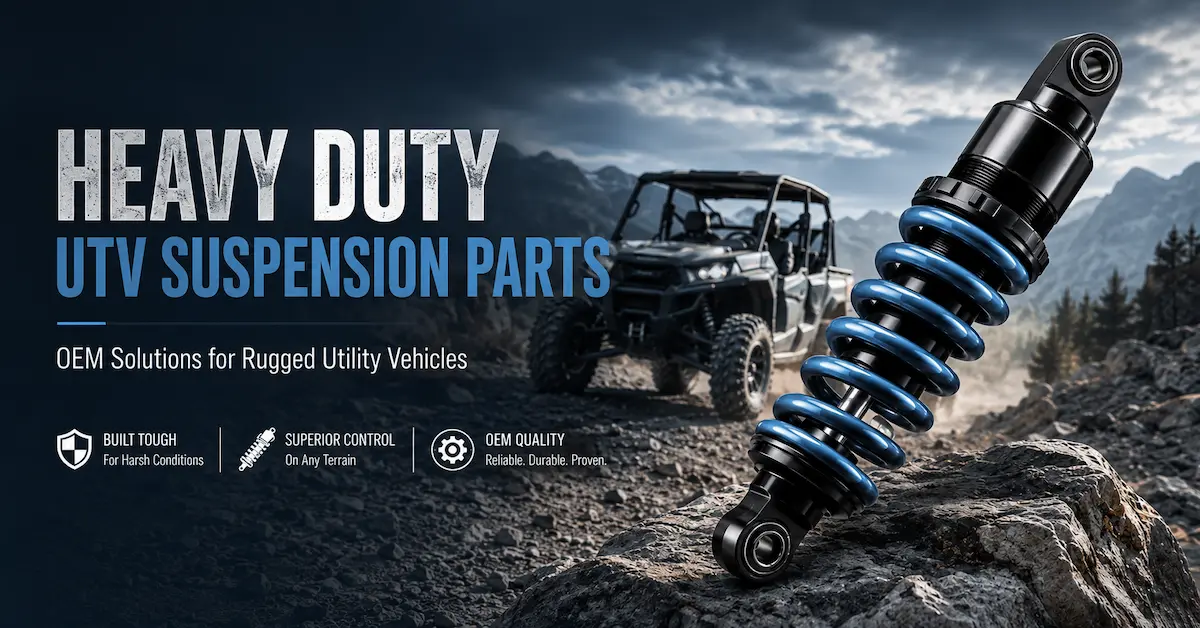
أجزاء تعليق UTV للخدمة الشاقة: دليل مصادر OEM للمشترين العالميين
Posted by NingboBEDO On Jul 21 2026
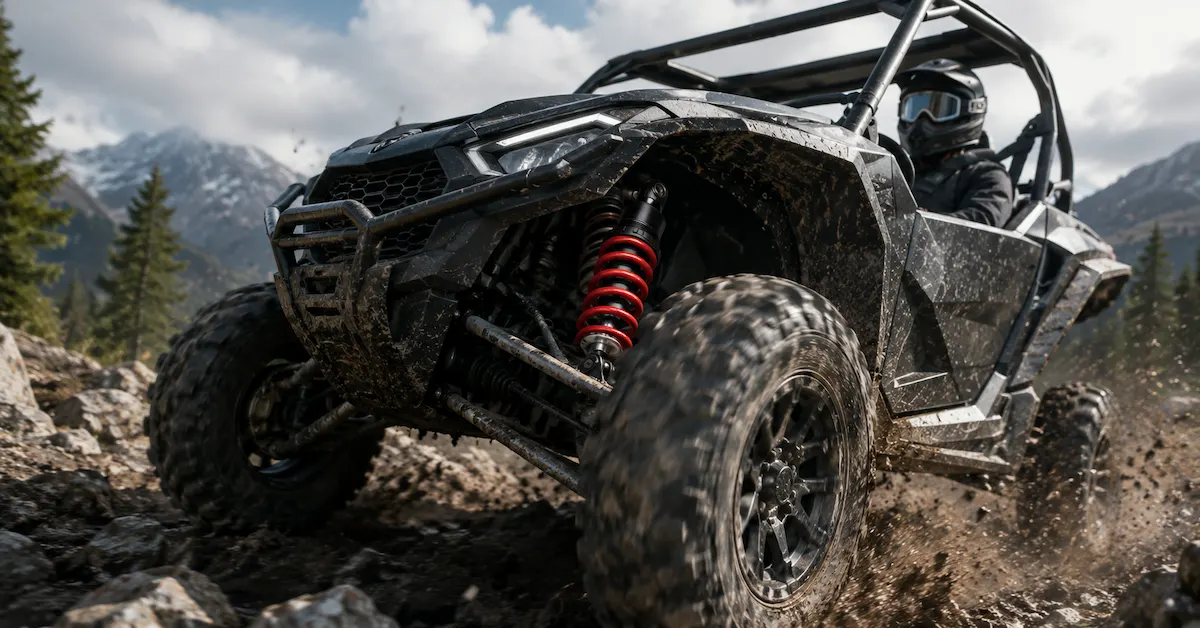
يعد اختيار أجزاء تعليق UTV للخدمة الشاقة أمرًا ضروريًا للعلامات التجارية لمركبات الخدمات، ومصنعي الطرق الوعرة، والمستوردين، وتجار الجملة، والموزعين، ومشغلي الأساطيل، وشركات ما بعد البيع.
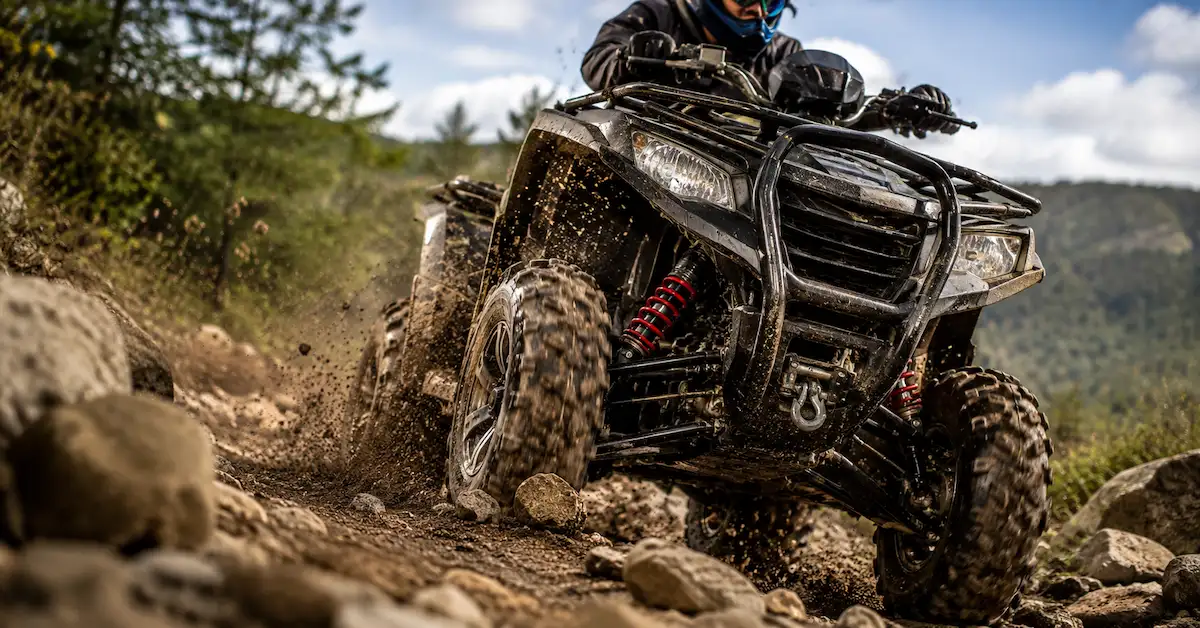
تُستخدم أجهزة UTV بشكل شائع في الزراعة والغابات والبناء والصيد والدوريات والصيانة ونقل البضائع والترفيه والجولات على الطرق الوعرة. تضع هذه التطبيقات أحمالًا كبيرة على نظام التعليق.
يجوز أن تحمل مركبة الخدمات ما يلي:
ركاب متعددون
الأدوات والمعدات
المستلزمات الزراعية
معدات الصيد
صناديق الشحن
الروافع
هياكل الحماية
محاريث الثلج
إطارات كبيرة الحجم
ملحقات القطر
تعمل هذه الإضافات على زيادة وزن السيارة وتغيير كيفية ضغط نظام التعليق، وارتداده، ونقل الحمل، والتفاعل مع التضاريس الوعرة.
قد تناسب مكونات التعليق القياسية السيارة ولكنها تفشل في توفير دعم مناسب للحمل، أو التحكم في الصدمات، أو الحماية من التآكل، أو المتانة على المدى الطويل. بالنسبة إلى التطبيقات كثيرة المتطلبات، يحتاج المشترون في مجال B2B إلى أجزاء تعليق تم تطويرها وفقًا للحمل الفعلي للمركبة، وهندستها، وتضاريسها، ودورة العمل.
يدعم Bedo Auto ممتصات الصدمات ونوابض التعليق ومكونات التعليق المخصصة لتطبيقات UTV وATV والدراجات النارية والدراجات النارية الكهربائية وعربات الثلوج وتطبيقات المركبات المتخصصة. يمكن للمشترين مراجعة الحلول المتاحة من خلال صفحة منتجات Bedo Auto.
ما هي أجزاء تعليق UTV للخدمة الشاقة؟
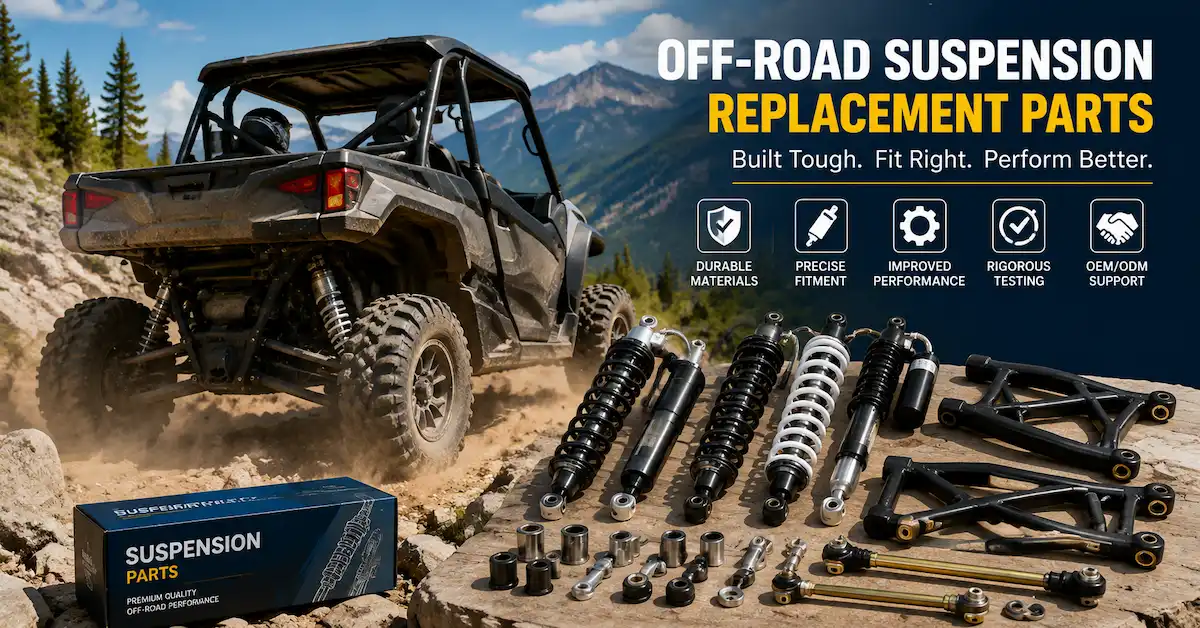
أجزاء تعليق UTV للخدمة الشاقة هي مكونات مصممة لزيادة الأحمال والتأثيرات المتكررة والتضاريس القاسية ودورات التشغيل الأطول.
يجب أن يمثل المصطلح تحسينات هندسية قابلة للقياس بدلاً من مجرد أبعاد أكبر أو مظهر أكثر عدوانية.
قد تتضمن المكونات الثقيلة ما يلي:
ممتصات الصدمات الأمامية
ممتصات الصدمات الخلفية
زنبركات لولبية
الينابيع المساعدة
جلبات التعليق
عيون التركيب
المقاعد الزنبركية
خزانات ممتص الصدمات
آليات التعديل
أجهزة التثبيت
مكونات الاتصال المخصصة
اعتمادًا على التطبيق، قد توفر هذه الأجزاء:
إمكانية دعم تحميل أعلى
تحسين مقاومة القاع
تخميد أكثر استقرارًا
هياكل تثبيت أقوى
إدارة أفضل للحرارة
زيادة مقاومة التعب
الختم المُحسّن
حماية أكبر من التآكل
عمر خدمة أطول
يجب على المورد المحترف تطوير نظام التعليق الكامل حول السيارة بدلاً من جعل كل مكون متصلبًا دون داعٍ.
من يحتاج إلى مكونات تعليق UTV للخدمة الشاقة؟
مكونات UTV للخدمة الشاقة مطلوبة بشكل شائع للمركبات التي تعمل تحت حمولات عالية أو ظروف عمل قاسية.
تتضمن التطبيقات النموذجية ما يلي:
أجهزة UTV الزراعية
مركبات الغابات
أجهزة UTV في مواقع البناء
مركبات الصيد
مركبات الدورية والأمن
مركبات الإنقاذ والطوارئ
أسطول مركبات المرافق
مركبات UTV للنقل التجاري
المركبات المجهزة بجرافة الثلوج
تطبيقات الشحن والقطر
أجهزة UTV الترفيهية المعدلة
مركبات السباق والأداء
أساطيل الإيجار
ترقيات متميزة لما بعد البيع
تتطلب التطبيقات المختلفة أولويات تعليق مختلفة.
قد تحتاج المركبة الزراعية إلى دعم قوي للحمل الخلفي وتخميد ثابت منخفض السرعة. قد يعطي UTV الترفيهي الأولوية للراحة والسفر وامتصاص الصدمات. قد تتطلب سيارة السباق التحكم في الحرارة، والتخميد القابل للتعديل، والاستجابة السريعة للتعليق.
لهذا السبب، لا يمكن لمواصفات واحدة "شديدة التحمل" أن تخدم كل UTV.
أجزاء تعليق UTV الرئيسية للخدمة الشاقة
يتضمن حل تعليق UTV الكامل عادةً عدة مكونات متفاعلة.
قد يؤدي تركيب زنبرك أقوى دون تقييم التخميد إلى حدوث ارتداد غير مستقر. قد تؤدي زيادة ضربة الصدمة دون التحقق من هندسة التعليق إلى حدوث تداخل. قد يؤدي استخدام مكونات تركيب أقوى دون التأكد من محاذاة الدعامة إلى نقل الضغط الزائد إلى إطار السيارة.
لماذا قد تكون أجزاء تعليق UTV القياسية غير كافية
يتم تطوير الأجزاء القياسية عادةً لتكوين محدد للمركبة وحمل التشغيل العام.
قد يصبح أداء التعليق غير كافٍ عند تعديل السيارة أو استخدامها تجاريًا.
تتضمن المشاكل الشائعة ما يلي:
الترهل الخلفي الزائد
انخفاض الخلوص الأرضي
القاع المتكرر
ضعف ثبات التوجيه
التدحرج المفرط للجسم
ارتداد غير منضبط
التأثيرات القاسية
تآكل الختم المبكر
البطانات التالفة
ممتصات الصدمات المحمومة
مكونات التثبيت المتشققة
التلامس غير المتساوي للإطارات
قد تظهر هذه المشكلات بعد الإضافة:
الإطارات الأكبر حجمًا
الروافع
مرفقات الكابينة
رفوف الشحن
مربعات الأدوات
مقاعد الركاب
محاريث الثلج
ملصقات صغيرة ثقيلة
أنظمة القطر
المعدات التجارية
يجب على المورد المحترف تحليل الوزن التشغيلي الجديد وتوزيع الأحمال قبل التوصية بقطع الغيار.
المعلومات الأساسية التي يجب على المشترين تقديمها
تساعد البيانات الفنية الدقيقة المورد على تطوير أجزاء تعليق UTV شديدة التحمل وتقلل من مراجعات النموذج الأولي المتكررة.
يجب على المشترين أيضًا شرح المشكلة التي يحاولون حلها.
وتشمل الأمثلة ما يلي:
تدلي نظام التعليق الخلفي تحت الحمولة
القاع المتكرر
ضعف الثبات مع الركاب
الارتداد المفرط
قصر عمر ممتص الصدمات
التآكل في البيئات الرطبة
التعامل غير المستقر بعد تركيب الإطارات الأكبر حجمًا
الحاجة إلى مجموعة تعليق ممتازة لما بعد البيع
كيف يؤثر حمل المركبة على تصميم تعليق UTV
يجب أن يدعم نظام تعليق UTV الوزن التشغيلي الكامل، وليس فقط السيارة الفارغة.
قد يتضمن إجمالي التحميل ما يلي:
بنية المركبة
السائق والركاب
البضائع
البطاريات
الأدوات
الملحقات
وزن لسان القطر
هياكل الحماية
المعدات التجارية
توزيع الأحمال مهم بشكل خاص.
يضع محراث الثلج المثبت في الأمام ضغطًا إضافيًا على نظام التعليق الأمامي. يعمل صندوق الشحن الخلفي أو نظام القطر على زيادة حمل المحور الخلفي. تعمل حاوية السقف على رفع مركز الجاذبية وقد تؤثر على دوران الجسم.
لذلك يجب على المورد تقييم:
تحميل المحور الأمامي
تحميل المحور الخلفي
الحد الأقصى لحالة التحميل
حالة التشغيل النموذجية
حالة التفريغ
تغيرات مركز الثقل
قد يبدو نظام التعليق المصمم للحمل الأقصى فقط شديد الصلابة عند تفريغه. الهدف هو إنشاء توازن مقبول عبر نطاق التشغيل المقصود.
اختيار معدل الربيع لأجهزة UTV شديدة التحمل
يدعم الزنبرك المركبة والحمولة.
تؤثر مواصفاته على:
ارتفاع الركوب
تدلي التعليق
الخلوص الأرضي
مقاومة القاع
الراحة
سعة التحميل
السفر المعلق المتاح
توازن السيارة
قد يتسبب الزنبرك الناعم جدًا في حدوث ما يلي:
الترهل الزائد
القاع المتكرر
انخفاض الخلوص الأرضي
ضعف استقرار البضائع
زيادة الضغط على ممتصات الصدمات
قد يتسبب الزنبرك المتصلب للغاية في حدوث ما يلي:
القيادة القاسية
استجابة منخفضة للمطبات الصغيرة
تلامس الإطار السفلي
الاهتزاز المفرط
ضعف الراحة عند التفريغ
يجب مراعاة الاختيار الربيعي:
وزن السيارة
نطاق الحمولة
هندسة التعليق
نسبة الحركة
الترهل المطلوب
السفر المتاح
التوازن من الأمام إلى الخلف
التضاريس
سرعة التشغيل
قد تستفيد بعض التطبيقات من النوابض التقدمية، أو النوابض ثنائية المعدل، أو النوابض المساعدة، أو التحميل المسبق القابل للتعديل.
تخميد الضغط للتحكم في الحمل والتأثير
يتحكم تخميد الضغط في المقاومة أثناء ضغط ممتص الصدمات.
يؤثر على كيفية تفاعل التعليق مع:
الصخور
الثقوب العميقة
الأشواك
حركة البضائع
القفز السريع
تغيرات التضاريس المفاجئة
الفرملة والتسارع
تدحرج الجسم
قد يؤدي تخفيف الضغط غير الكافي إلى:
انهيار التعليق السريع
القاع المتكرر
حركة الهيكل المفرطة
ضعف التحكم في التحميل
الانعطاف غير المستقر
قد يؤدي تخميد الضغط الزائد إلى:
انتقال التأثيرات القاسية
تقليل الراحة
استجابة ضعيفة بسبب المطبات المتكررة
زيادة الضغط على الحوامل والبطانات
تلامس منخفض للإطارات
يجب أن يدعم هدف التخميد الحمل مع السماح بحركة التعليق الكافية.
التخميد الارتدادي واسترداد التعليق
يتحكم التخميد الارتدادي في مدى سرعة تمديد التعليق بعد الضغط.
إذا كان التخميد الارتدادي ضعيفًا جدًا، فقد يتعرض UTV لما يلي:
الارتداد المتكرر
نقل الوزن السريع
تلامس منخفض للإطارات
حركة خلفية غير مستقرة
ضعف التحكم بعد التأثيرات الكبيرة
إذا كان التخميد الارتدادي قويًا جدًا، فقد يؤدي التعليق إلى:
التعافي بطيء جدًا
فقدان السفر المتاح
احزم أمتعتك أثناء المطبات المتكررة
تشعر بقسوة على المسارات الوعرة
تقليل الجر
يتطلب الزنبرك الأقوى عادةً تقييم الارتداد المقابل. يجب دائمًا تطوير مواصفات النوابض والتخميد معًا.
خيارات التعليق الثابتة والقابلة للتعديل
يمكن أن تستخدم صدمات UTV شديدة التحمل تكوينات ثابتة أو قابلة للتعديل.
الميزة
التعليق الثابت
تعليق قابل للتعديل
التخميد
إعدادات المصنع المسبقة
قابل للتعديل من قبل المستخدم أو الفني
التعقيد
أقل
أعلى
التكلفة
أقل عادةً
أعلى عادةً
مرونة التحميل
محدود
يمكن أن يدعم التحميل المسبق الأحمال المتغيرة
القدرة على التكيف مع التضاريس
إعداد عام واحد
يمكن أن يناسب ظروفًا مختلفة
الصيانة
أبسط
Adjusters require additional control
Best application
Predictable commercial use
Variable payload or performance use
Fixed shocks can be effective for fleet applications with stable loads.
Adjustable shocks are suitable for:
Variable payloads
Recreational and utility crossover vehicles
Modified UTVs
Premium aftermarket products
Performance applications
Different terrain conditions
Adjustment functions may include:
Spring preload
Rebound damping
Compression damping
High-speed compression
Low-speed compression
Shock length
More adjustment settings do not automatically mean better performance. The adjustment range must be practical and repeatable.
Remote Reservoir and Piggyback Shock Options
Reservoir shocks may provide additional oil and gas capacity for demanding UTV applications.
Piggyback Reservoir
A piggyback reservoir is attached directly to the shock body.
Potential advantages include:
Compact integrated design
No external hose
Strong performance appearance
Simplified installation where space permits
The vehicle must provide sufficient clearance around the reservoir during full suspension movement.
Remote Reservoir
A remote reservoir connects to the shock through a hose.
Potential advantages include:
Flexible installation position
Increased oil capacity
More packaging options
Improved heat management in some applications
The supplier should confirm:
Hose length
Hose routing
Abrasion protection
Reservoir mounting
Suspension clearance
Heat exposure
Reservoir shocks are not necessary for every heavy duty project. The final structure should match the duty cycle and performance target.
Materials for Heavy Duty UTV Suspension Parts
Material selection affects structural strength, fatigue life, weight, corrosion resistance, heat control, and manufacturing cost.
Important components include:
Shock bodies
Piston rods
Pistons
Mounting eyes
Spring seats
Bushings
Springs
Reservoirs
Adjusters
Connection hardware
Materials may include different grades of steel, aluminum, rubber, elastomers, and engineered sealing materials.
The supplier should consider:
Maximum load
Repeated stress
Impact risk
Temperature
Water and mud exposure
Salt or chemical exposure
Required service life
Product weight
Target price
Using the thickest or heaviest material is not automatically the best solution. Unnecessary weight can reduce vehicle performance and increase cost.
Spring Material and Fatigue Resistance
UTV suspension springs operate under repeated compression cycles.
Spring reliability depends on:
Wire material
Wire diameter
Coil diameter
Number of active coils
Heat treatment
Surface condition
Shot peening where required
Coating quality
Dimensional consistency
A spring may initially support the load but lose height or performance if fatigue resistance is insufficient.
B2B buyers should confirm whether the supplier controls:
Free length
Spring rate
Load height
Surface finish
Permanent deformation
Batch consistency
The approved spring specification should be documented for future production.
Bushings and Mounting Components
Bushings and mounting eyes are often overlooked during sourcing, but they influence noise, alignment, vibration, and service life.
Poor-quality bushings may cause:
Mounting looseness
Noise
Excessive movement
Poor alignment
Accelerated wear
Reduced damping effectiveness
Mounting components should be checked for:
Hole diameter
Mounting width
Material strength
Bonding quality
Rubber hardness
Surface treatment
Alignment
The shock absorber and mounting system should be evaluated together.
Sealing and Contamination Protection
UTVs frequently operate in mud, water, dust, snow, sand, and debris.
Contamination may damage:
Piston rod surfaces
Oil seals
Dust seals
Bushings
Adjustment mechanisms
Hose connections
A suitable protection system may include:
Oil seals
Dust seals
Wipers
Rod coatings
Protective boots
Corrosion-resistant finishes
Sealed adjusters
Poor contamination control can lead to:
Oil leakage
Increased friction
Scratched rods
Damaged seals
Inconsistent damping
Shortened service life
Clean assembly conditions are also important because internal contamination can affect oil flow and valve performance.
Corrosion Protection for Outdoor UTV Applications
Heavy duty UTV suspension parts may be exposed to:
Rain
Mud
Snow
Fertilizers
Road salt
Cleaning chemicals
Coastal air
High humidity
Surface-treatment options may include:
Powder coating
Painting
Plating
Anodizing
Protective finishing
Corrosion-resistant materials
The correct treatment depends on the operating environment, product positioning, and budget.
Final inspection should check:
Coating adhesion
Surface coverage
Scratches
Exposed metal
Color consistency
Thread protection
Logo and label position
Heat Management During Continuous Operation
Repeated shock movement generates heat.
Heat can become significant during:
Long-distance trail use
Heavy cargo transportation
High-speed riding
Repeated bumps
Commercial fleet operation
Racing
Mountain terrain
Damping consistency may be affected by:
Oil specification
Oil volume
Shock body size
Reservoir capacity
Piston design
Valve structure
Operating duration
Ambient temperature
A heavy duty UTV suspension system should be developed around the expected duty cycle rather than only short workshop testing.
Customization Options for B2B Projects
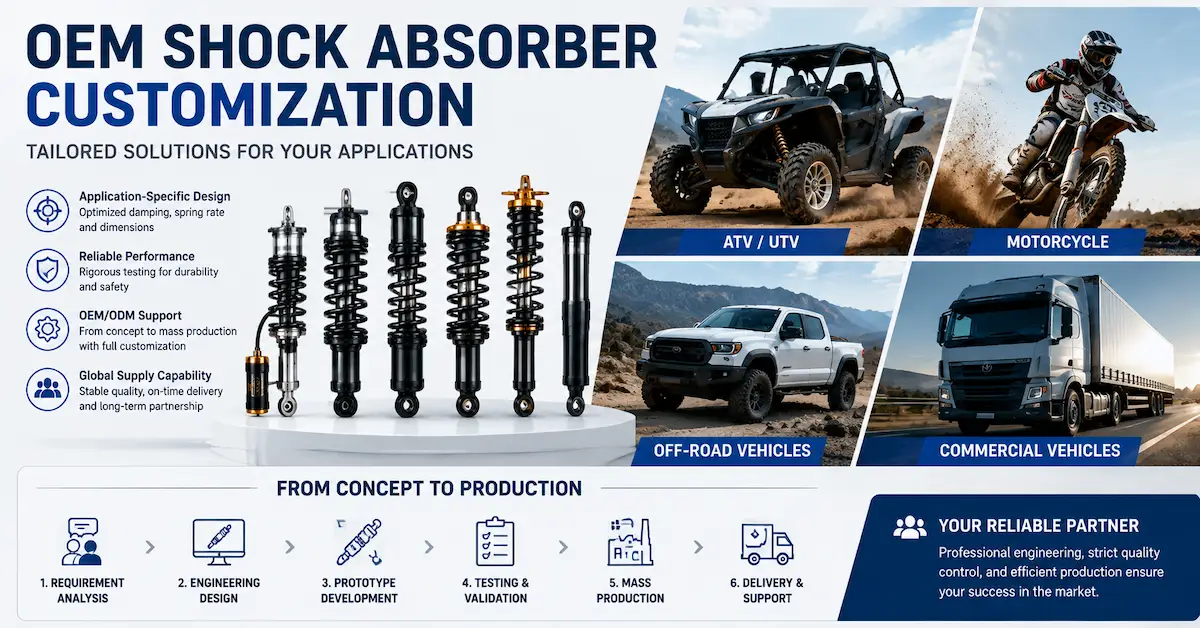
OEM and ODM buyers may need technical, appearance, and packaging customization.
Custom option
B2B purpose
Shock length
Matches vehicle geometry
Stroke
Defines suspension travel
Mounting dimensions
Ensures fitment
Spring rate
Matches vehicle and payload
Preload range
Supports changing loads
Compression damping
Controls impacts
Rebound damping
Controls recovery
Reservoir design
Supports heat and pressure management
Body material
Balances strength and weight
Surface treatment
Improves corrosion resistance
Spring color
Supports product differentiation
Logo marking
Builds private-label identity
Product labels
Identifies model and specification
Packaging
Supports wholesale and retail distribution
The supplier should recommend options according to the vehicle and customer market rather than adding unnecessary cost.
Development from Samples
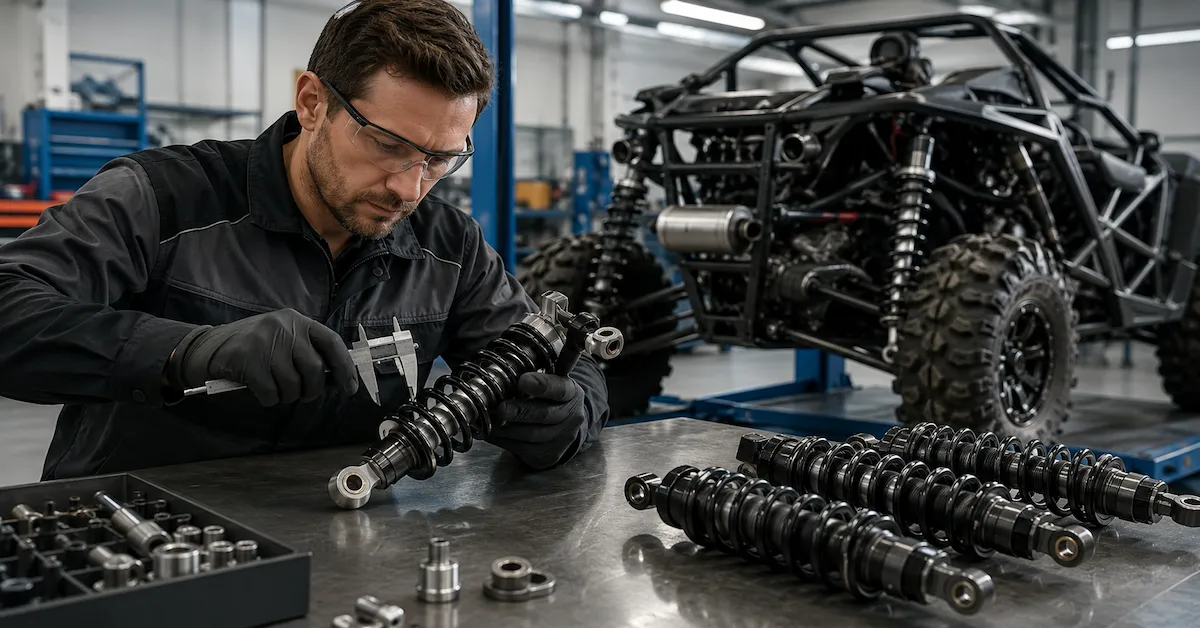
Many replacement and aftermarket projects begin with an existing suspension sample.
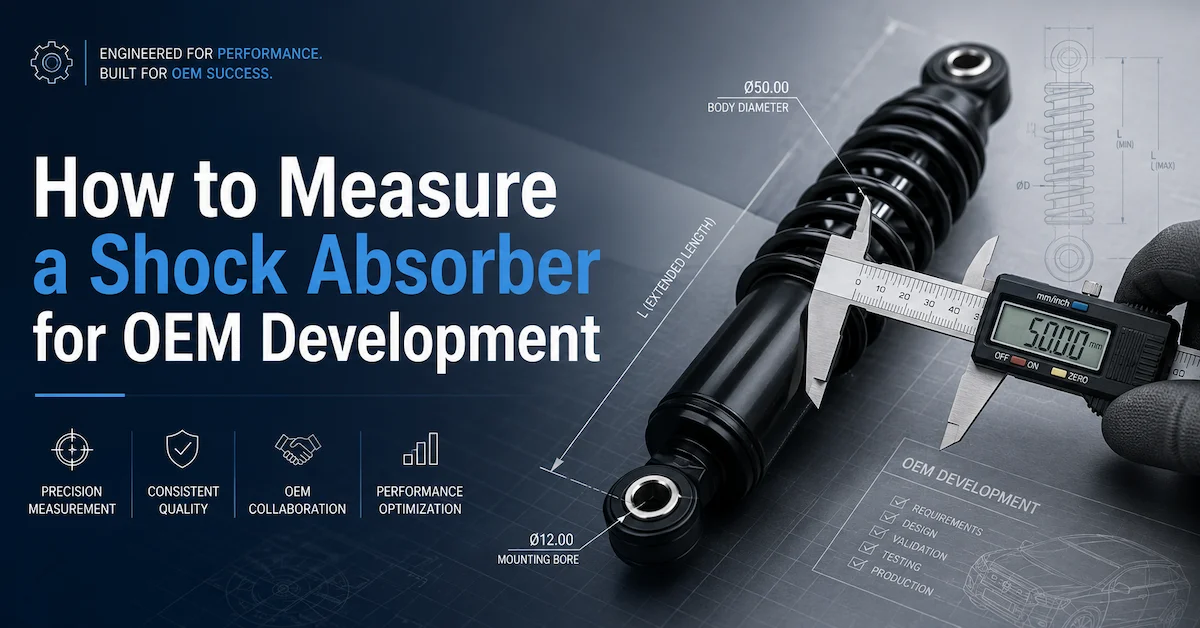
The supplier may inspect:
Extended length
Compressed length
Stroke
Mounting dimensions
Spring specifications
Rod diameter
Body diameter
Reservoir structure
Adjustment mechanisms
Surface treatment
However, external measurements do not fully reveal:
Internal valve design
Compression force
Rebound force
Oil specification
Gas pressure
Friction characteristics
Spring rate
The buyer should clarify whether the new product must match the sample or improve it.
Common improvement targets include:
Higher payload support
Reduced bottoming
Better ride comfort
Adjustable damping
Improved corrosion resistance
Stronger mounting parts
Better heat management
Premium appearance
Drawing-Based OEM Development
Technical drawings provide a clearer reference for new UTV models and original equipment projects.
Drawings may define:
Extended and compressed lengths
Stroke
Mounting-eye dimensions
Hole diameters
Mounting widths
Body and rod dimensions
Spring specifications
Materials
Surface treatments
Tolerances
Reservoir positions
Before prototype production, the supplier should review:
Suspension clearance
Full-compression movement
Full-extension movement
Mounting alignment
Structural strength
Stroke-to-length relationship
Reservoir clearance
Hose routing
Manufacturing feasibility
Early engineering review helps prevent repeated prototype modifications.
Quality Control for Heavy Duty UTV Suspension Parts
Quality control should cover incoming materials, dimensions, assembly, function, performance, and packaging.
Incoming Material Inspection
The supplier should inspect:
Tubes
Piston rods
Springs
Seals
Bushings
Machined parts
Mounting components
Reservoir parts
Hoses and fittings
Surface condition
Dimensional Inspection
Critical dimensions include:
Extended length
Compressed length
Effective stroke
Mounting width
Hole diameter
Spring length
Spring diameter
Rod diameter
Body diameter
Reservoir location
Assembly Control
The manufacturing process should control:
Component cleanliness
Seal installation
Valve assembly
Oil filling
Gas charging
Tightening torque
Spring preload
Adjustment function
Mounting alignment
Leakage Testing
Finished shocks should be checked for:
Oil leakage
Pressure loss
Hose leakage
Seal damage
Abnormal contamination
Functional Testing
The shock absorber should move smoothly without:
Sticking
Unusual noise
Excessive friction
Uneven resistance
Adjustment failure
Damping Verification
Compression and rebound forces should be compared with approved specifications when damping testing is required.
Final Inspection
Final checks should include:
Surface finish
Dimensions
Spring color
Logo position
Labels
Packaging
Quantity
Carton condition
Why Prototype Testing Is Essential
A prototype allows buyers to evaluate:
Installation compatibility
Mounting clearance
Suspension travel
Ride height
Spring support
Compression response
Rebound control
Reservoir position
Appearance
Testing should be conducted under realistic loads.
An unloaded workshop test cannot confirm how the suspension behaves with passengers, cargo, towing weight, or rough terrain.
A pilot batch helps confirm whether the approved design can be reproduced consistently.
Small-batch evaluation may identify:
Dimensional variation
Damping variation
Spring-rate inconsistency
Leakage risks
Mounting problems
Coating defects
Packaging issues
Installer feedback
End-user complaints
This stage reduces the risk of placing a large production order before the product and production process are fully validated.
Standard UTV Parts vs Heavy Duty UTV Suspension Parts
Evaluation point
Standard UTV suspension
Heavy duty UTV suspension
Load support
General factory load
Increased or customized payload
Spring specification
Standard
Application-specific
Damping
General-purpose
Developed for load and terrain
Mounting components
Standard design
Strengthened where required
Heat management
Normal use
Longer or more severe duty cycles
Sealing
General protection
Enhanced contamination protection
Corrosion resistance
Standard environment
Outdoor and commercial environments
Customization
Limited
Dimensions, damping, branding, packaging
Best application
Recreational replacement
Utility, fleet, modified, and commercial UTVs
A larger-looking suspension component is not automatically heavy duty. Its technical specifications must match the actual vehicle.
How to Evaluate a UTV Suspension Parts Supplier
B2B buyers should assess the supplier’s engineering, production, testing, and communication capabilities.
Engineering Capability
Confirm whether the supplier can:
Review samples and drawings
Analyze vehicle and payload data
Confirm mounting geometry
Develop spring specifications
Adjust compression and rebound
Evaluate reservoir requirements
Produce prototypes
Document approved specifications
Manufacturing Capability
Evaluate:
Material management
Machining accuracy
Assembly procedures
Quality control
Small-batch flexibility
Mass-production capacity
Batch traceability
Repeat-order consistency
Testing Capability
Ask whether the supplier can support:
Dimensional inspection
Leakage testing
Functional testing
Damping verification
Adjustment testing
Spring inspection
Surface-quality inspection
Communication Capability
A professional supplier should ask detailed questions about:
UTV model
Vehicle weight
Payload
Cargo position
Terrain
Mounting dimensions
Shock stroke
Suspension position
Performance target
A quotation based only on a photograph may overlook critical technical risks.
How Bedo Auto Supports Heavy Duty UTV Projects
Bedo Auto supports customized shock absorbers, suspension springs, and related suspension components for UTV, ATV, motorcycle, electric motorcycle, snowmobile, beach buggy, and specialty vehicle applications.
They are shock absorbers, springs, bushings, mounts, reservoirs, and related components developed for higher payloads, rough terrain, repeated impacts, or commercial duty cycles.
Can UTV suspension parts be developed from samples?
Yes. A supplier can measure and analyze existing parts. Vehicle weight, payload, terrain, and performance requirements should also be provided.
Does a heavy duty UTV need stiffer springs?
Not always. The correct spring rate depends on vehicle weight, payload range, suspension geometry, and ride requirements. Excessive stiffness may reduce comfort and traction.
Can front and rear UTV suspension use the same settings?
Usually not. Front and rear suspension positions carry different loads and perform different handling functions, so spring and damping settings normally differ.
Are reservoir shocks necessary for heavy duty UTVs?
Not for every application. Reservoir shocks may provide greater oil capacity and heat-management benefits, but their value depends on the duty cycle and installation space.
Can UTV suspension components be customized with a logo?
Yes. OEM projects may include custom spring colors, body finishes, logos, labels, cartons, and private-label packaging.
Why is pilot-batch testing recommended?
A pilot batch helps verify fitment, spring consistency, damping consistency, leakage control, appearance, and packaging before mass production.
Conclusion
Reliable heavy duty UTV suspension parts must be developed around the vehicle’s actual payload, suspension geometry, terrain, speed, and duty cycle.
The correct solution may involve customized shock absorbers, springs, bushings, mounts, reservoirs, damping settings, sealing systems, and corrosion protection. Making every component larger or stiffer does not guarantee better performance.
For B2B buyers, the right supplier should be able to analyze vehicle requirements, develop prototypes, verify technical performance, control production quality, and reproduce approved specifications consistently.
Through sample evaluation, drawing review, spring and damping development, prototype testing, small-batch validation, and OEM/ODM production, Bedo Auto supports heavy duty UTV suspension projects for global vehicle brands, importers, wholesalers, distributors, and aftermarket companies.